Kentucky governor, AG spar over whether state can bring back death penalty
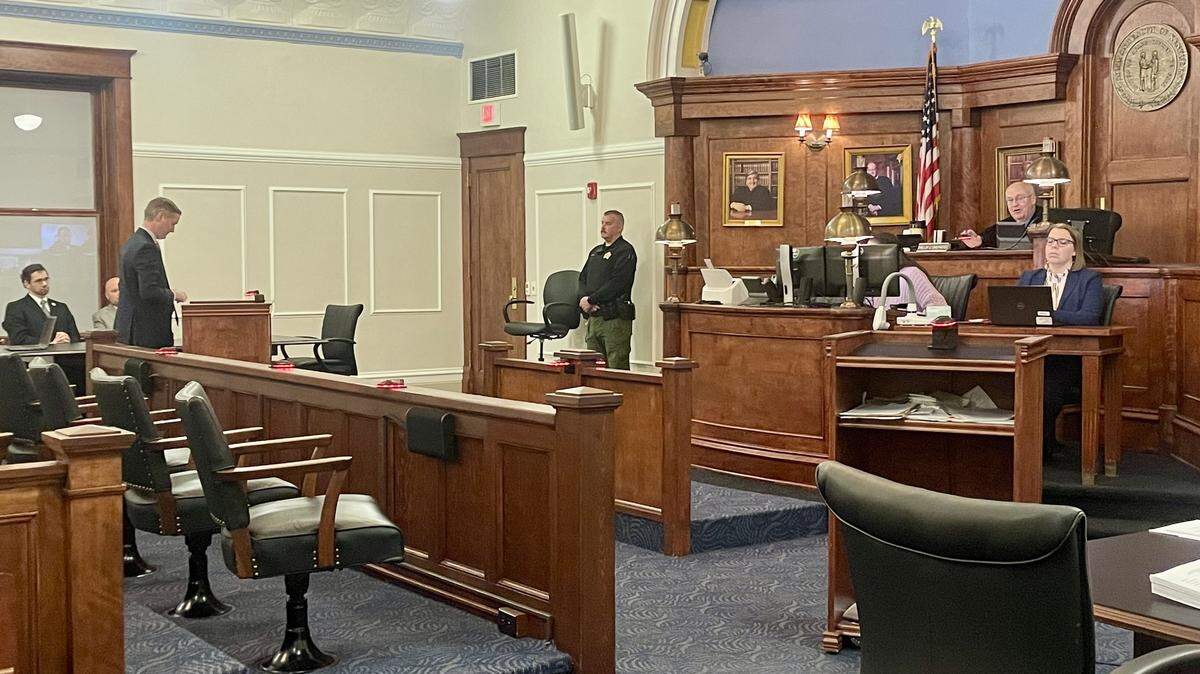
Kentucky’s attorney general is asking a circuit court judge to clarify a previous decision and rule that Gov. Andy Beshear can sign a death warrant for a man who’s been on death row since 1994.
A hearing Monday morning was the latest in a yearslong effort by Attorney General Russell Coleman to reinstate the death penalty in the commonwealth, starting with Ralph Baze, a man sentenced to death more than 30 years ago.
Attorneys for Coleman and Baze debated in a Franklin Circuit courtroom whether a previous ruling prohibited Beshear from approving Baze’s execution.
Coleman’s attorneys made clear that they aren’t requesting the judge order Beshear to issue a death warrant, but rather, clarify that an injunction does not stop him from doing so.
Baze, a now-70-year-old man, was sentenced to death by a jury in 1994.
Coleman’s office has argued the governor can sign Baze’s death warrant, which establishes his date of execution. Beshear has said he can’t sign the warrant because of concerns over a lack of access to execution drugs and questions about safeguards that would stop the state from executing an “insane” or intellectually disabled person.
Baze’s case went before the U.S. Supreme Court in 2007, as lawyers questioned the constitutionality of lethal injection. The case prompted a seven-month pause on executions nationwide while the highest court considered a ruling.
Lethal injections briefly resumed in many states, including Kentucky, but not for Baze. The state’s most recent execution was in 2008.
A 2010 ruling from Judge Phillip Shepherd halted executions in Kentucky, and Baze’s administration argues that injunction still applies.
Coleman argues that injunction is now moot, specifically for Baze, and the governor is using the injunction to “kick the can down the road.”
Baze’s lawyers wrote in a response to the motion that there is “no reason to revisit the Commonwealth’s disagreement with this Court’s order yet again, particularly when nothing has since changed other than that the Attorney General requested an execution warrant on Baze, and the Governor then exercised his discretion to not now schedule Baze’s execution.”
Shepherd said the dispute before him was “legally abstract,” and questioned what was different now from earlier this year when he ruled on the same matter but for a different death row prisoner.
In that case, Shepherd agreed with the attorney general that parts of his earlier ruling were no longer in effect, but he declined to lift the injunction in its entirety.
Shepherd said the issue at hand was an argument about separation of powers between two top officials in the state’s executive branch.
“The attorney general interprets it one way, and the governor doesn’t agree with him,” Shepherd said. “It’s almost like the AG’s office is now asking the court to direct the governor to set their legal precedent. The governor is the chief executive officer, and the AG is the chief legal officer. ... It’s not proper decorum to weigh in on that, certainly in the situation we have here.
“I am not sure how much more I can say than that I haven’t said in the last order that I issued,” Shepherd said.
Shepherd also said he was not comfortable making a definite ruling on whether the drugs are available.
Several pharmaceutical companies such as Meitheal, Alvogen and Primal Critical Care sent letters to Kentucky in recent years saying they would not provide their drugs for capital punishment.
For example, Chicago-based Meitheal wrote to the state that while it takes no position on the death penalty itself, the company objects to the use of its products in capital punishment.
However, on President Donald Trump’s first day in office, he signed an executive order that ordered U.S. Attorney General Pam Bondi to “ensure that each state that allows capital punishment has a sufficient supply of drugs” to carry out lethal injection.
Jack Heyburn, Kentucky’s principal deputy solicitor general, said the drugs did not need to be available before a death warrant was signed. He did not foresee there being an issue getting the drugs necessary, as 44 executions have been carried out in the United States this year alone.
Fourteen of those used pentobarbital, the drug used in Kentucky to administer executions.
David Barron, an attorney for Baze, said while some states were able to acquire the execution drugs, sometimes it cost millions of dollars or veterinarian versions of the drug had been purchased.
In some states, executions were ordered, and later stayed, after the drugs could not be obtained.
Shepherd will issue a ruling at a later date.
“My regret is that this case has taken so long. I am frustrated by it, and I am tempted to say I am as frustrated as you, but I have not lost a loved one,” Shepherd said Monday to the victim’s family. “We are going to do our best to move this case towards a resolution. When we deal with legal questions that are life and death, our legal systems are not equipped, and it often becomes bogged down in a whole lot of legal questions.”
Editor’s note: This story has been updated to clarify David Barron’s role as an attorney for Ralph Baze.
This story was originally published December 8, 2025 at 12:24 PM.