
When will Kentucky school districts implement new pronoun, anti-LGBTQ measures in SB 150?
Guidance is expected to be released by Monday on how Kentucky school districts should implement what has been called the most “extreme” and “worst” anti-LGBTQ piece of legislation in the country by some opponents.
“It’s a lot to unpack,” said Kentucky Department of Education Director of Government Relations Brian Perry this week. He told state Board of Education members that guidance was forthcoming about the school provisions of Senate Bill 150, which went into effect immediately after the bill became law due to an emergency clause included in the legislation.
Local school districts are already reviewing all of the provisions and planning their policy changes, procedures and written notifications that will be required, said Kentucky School Boards Association Director of Advocacy Eric Kennedy.
In addition to banning puberty-blockers, hormones and surgeries for kids under 18, SB 150 also bans lessons on gender identity and sexual orientation, prevents transgender students from using the bathroom that corresponds with their gender identity and stops school districts from requiring teachers use a student’s pronouns if they don’t align with their sex assigned at birth.
In Central Kentucky, education leaders and staff in Jessamine, Woodford and Madison counties say they are among those who have begun reviewing, updating and creating policies to comply with SB 150, but didn’t provide specifics on what those policies contain.
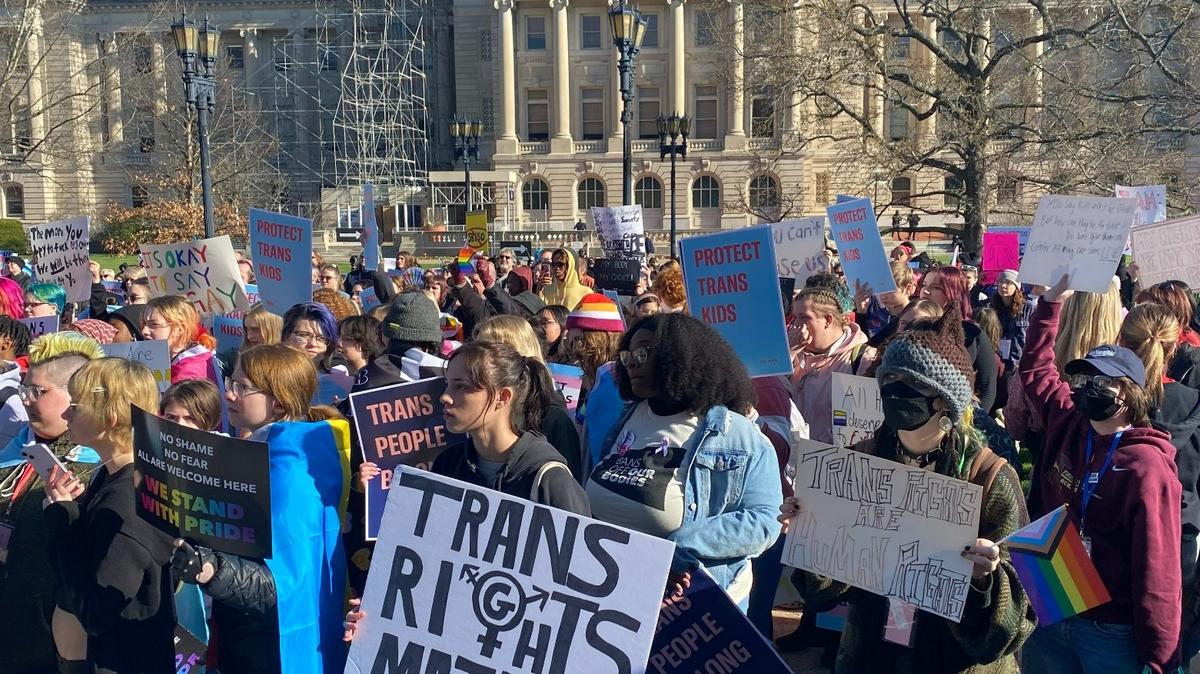
Senate Bill 150 has been one of the most controversial pieces of legislation in recent Kentucky history and was a key example of the culture wars that played out in the General Assembly this session. Hundreds of protesters went to the Capitol to denounce the Republican-dominated Kentucky General Assembly vote to override Democratic Gov. Andy Beshear’s veto of Senate Bill 150 in March.
In the House, the Kentucky State Police forcibly removed several protesters in the gallery and arrested 19 on charges of third-degree criminal trespassing.
Under the bill sponsored by Sen. Max Wise, R-Campbellsville, districts must have a policy “to respect parental rights by ensuring that” kids in grade five and below do not receive any instruction through curriculum or programs on human sexuality or sexually transmitted diseases.
Any child enrolled in the district, regardless of grade level, can’t receive any instruction or presentation that has a goal or purpose of students studying or exploring gender identity, gender expression or sexual orientation.
Districts must notify parents of health services regarding human sexuality and of any well-being questionnaire offered to students.
Jessamine County Superintendent Matt Moore said his district is still working out the details but does not anticipate many changes will be necessary.
“Our restroom practices were similar to the bill,” Moore said. “And we have always informed parents when students have made these types of requests.”
“We will have to make adjustments to the new requirements for pronouns,” Moore said, but he doesn’t yet know what those are.
Fayette County Public Schools said that, as is its usual practice after new legislation is passed, officials are awaiting specific guidance from the Kentucky Department of Education and the Kentucky School Boards Association.
“Once those recommendations are received, we will review our current policies and practices, and bring any necessary amendments to the Fayette County Board of Education for their review and action,” district spokeswoman Lisa Deffendall said.
Fayette school board chair Tyler Murphy has called the final passage of SB 150 “incredibly disheartening” and said the Fayette district team actively pushed against it.
“Our message to our students, staff and families tonight is clear: we stand with our trans neighbors. And we remain unwavering in our commitment to ensuring every child learns in a safe, supportive school community where they know they belong and are valued and loved,” Murphy said in a social media post after the bill was passed.
Kentucky Commissioner of Education Jason Glass strongly opposed the bill and said the Kentucky Department of Education will be holding a summit in support of LGBTQIA+ people and youth in the fall.
Some lawmakers openly criticized earlier guidance the agency produced regarding use of student’s preferred names.
The earlier guidance, which was a recommendation and not a requirement, said it is considered best practice to recognize and use a student’s preferred name and pronouns when these preferences are requested.
If a student voluntarily discloses their sexual orientation or gender identity to an educator with the assumption that this information is to be kept private, it is best practice for the educator to maintain that confidence and keep the information confidential, the document recommends.
Lawsuit will be filed
Angela Cooper, a spokesperson for ACLU-Kentucky, told the Herald-Leader this week that her group plans to file a lawsuit against SB 150.
“We are also encouraging any families who run into issues at school or the doctor’s office to reach out to us so we can involve them in the lawsuit,” Cooper said.
Kennedy, of the Kentucky School Boards Association, said the first three sections of SB 150 are the provisions relating to public schools which carry an emergency clause that make them effective immediately.
Some of the provisions require school boards to adopt policies with specific public comment required in open meetings. That will take time, Kennedy said.
Some of those provisions will occur at the beginning of a school year which also means they won’t be carried out until August.
“We can expect to see the policies begin to have readings and public comment over the course of May and June, ahead of the 2023-2024 school year,” said Kennedy.
Jim Flynn, executive director of the Kentucky Association of School Superintendents, said school districts “have been successfully managing these issues for decades in a manner that respects the interests of everyone involved. “
“The education requirements of SB 150 are consistent with the practices of most districts in these sensitive matters and we don’t anticipate significant challenges in the vast majority of schools,” Flynn said. “I think schools will navigate the gender pronoun issue in a respectful manner under the guidelines required by law. “