
Store-bought sprays not ridding your Kentucky home of cockroaches? This might be why
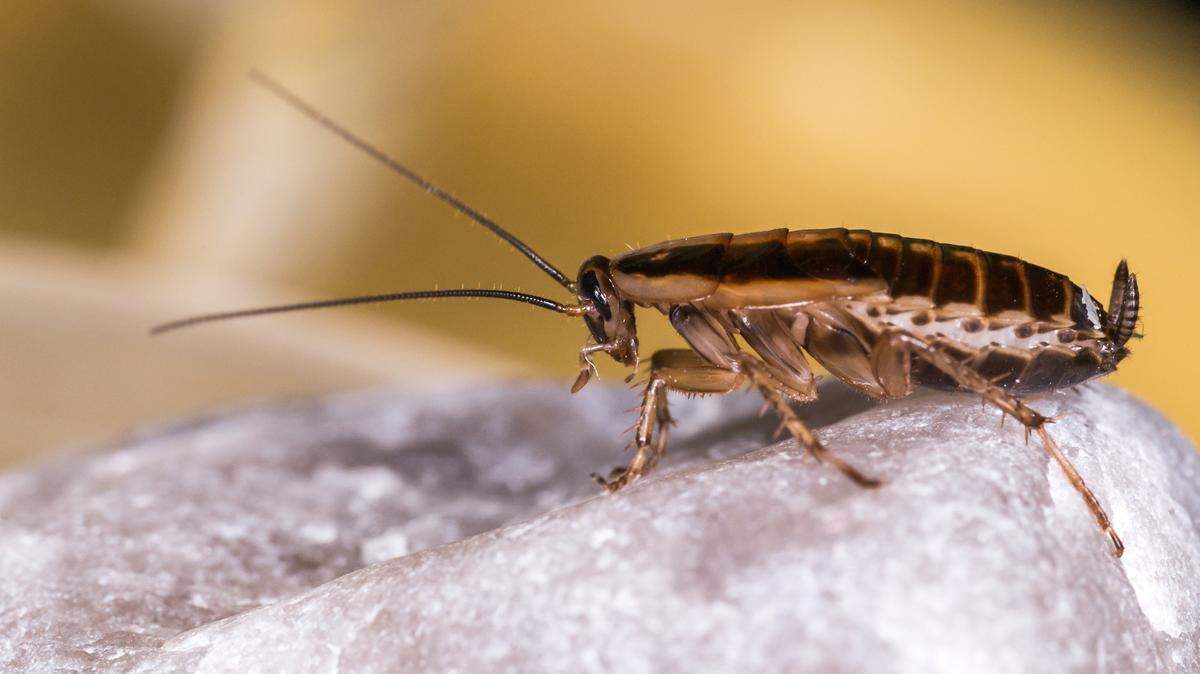
Browse the pest control aisle of any grocery store, and you’re likely to find liquid or spray products that promise a wallet-friendly way to eliminate your cockroach problem.
These pyrethroid products, typically used to treat surfaces around your home that roaches are most likely to come into contact with, all share one thing in common: They add “little to no value to cockroach control.”
That’s the main finding of a recent study conducted by insect scientists at the University of Kentucky and Auburn University.
More to the point, the researchers found some of these products require up to five days of continuous exposure on nonporous surfaces to kill a garden variety German cockroach, the type you’re most likely to encounter indoors.
“For cockroach control, essentially anything that comes in a can or a bottle that you’re spraying is probably not going to work,” said Zach DeVries, an assistant professor of urban entomology at UK and the study’s senior author. DeVries spoke to the Herald-Leader in a phone interview Monday.
While these products aren’t all that expensive, if you’re buying them repeatedly, research shows you’re likely throwing money away for little to no benefit. Apart from wasting your time and money, an unchecked roach infestation poses real consequences for your family’s health.
“Cockroaches are effective at transmitting a number of different pathogens…They are a major source of indoor allergens, and that’s particularly true for disadvantaged communities,” where long-term exposure can lead to the development of asthma, DeVries said.
Here’s what to know about the study’s findings and which products you’re better off using to solve your roach infestation for good.
DIY spray products aren’t helpful for cockroach infestations
First, to understand why these products aren’t helpful, you have to understand humans have played a significant role in creating the problem in the first place.
These pyrethroid spray products are made up of synthetic chemical insecticides that are derived from naturally occurring pyrethrins found in chrysanthemum flowers. Chrysanthemums naturally synthesize these very potent insecticides for self-defense to kill or repel a wide variety of insects. According to DeVries, this includes some cockroach varieties, but most notably, not the German cockroach, which is the most common type on the planet.
It would be very difficult for the average person to find a population of German cockroaches that is uniquely susceptible to pyrethroid products, and DeVries has tried. In the last eight years, the researcher has helped collect live German cockroaches from 20 to 30 sites.
“We’ve screened almost all of them, and not a single one of them is what we would call susceptible to pyrethroids,” DeVries said.
To understand why, think of how the pest lives. Unlike other varieties, which rough it outdoors, the German cockroach has adapted to live indoors alongside humans, feeding off readily available food sources. In this environment, they have no natural predators, except us, usually armed with pyrethroid sprays. As a result, the members of their kind who are susceptible to pyrethroids die off and don’t get the opportunity to pass on their genes to the next generation. The only ones who do are those who can shrug off pyrethroids.
This type of environment naturally selects for resistance to pyrethroids, and humans have in a sense encouraged it to play out for decades. What emerges from that process is a tough, unwanted roommate you can’t easily get rid of.
This stands in sharp contrast to the types of laboratory cockroaches manufacturers of pyrethroids test their products on.
Laboratory cockroaches, raised in a strictly controlled settings, are denied the benefit of adaptation and as a result become more susceptible to the pyrethroids tested on them. They’re pushovers, so to speak, and generally aren’t representative of the German cockroach you’d normally encounter in your home.
Technically speaking, the manufacturers of these pyrethroid products are not breaking any rules because the regulatory agency that governs them, in this case the U.S. Environmental Protection Agency, doesn’t require manufacturers to test their pyrethroid spray products on more resistant roaches, DeVries pointed out.
As a result, the study DeVries and other researchers conducted found while most products performed well when applied directly, they were significantly less effective when applied to surfaces that roaches had minimal exposure to (in the study’s case, 30 minutes).
“In continuous exposure assays on a nonporous surface, products took at least 24 (hours) to cause 100% mortality in a field population, with some products taking up to 5 (days) to achieve 100% mortality,” the study’s abstract states.
Which products are most effective in dealing with roaches?
According to DeVries, you would be best off by calling a qualified professional.
Other than that, products that use bait to lure and then poison roaches are much more effective than residual sprays. That said, baits themselves are not a perfect solution and are often more expensive than spray products, DeVries said.
Do you have a question about Kentucky critters for our service journalism team? We’d like to hear from you. Fill out our Know Your Kentucky form or email ask@herald-leader.com.
This story was originally published August 22, 2024 at 7:00 AM.