
What do Trump’s executive orders mean for Kentucky colleges? Here’s what we know so far
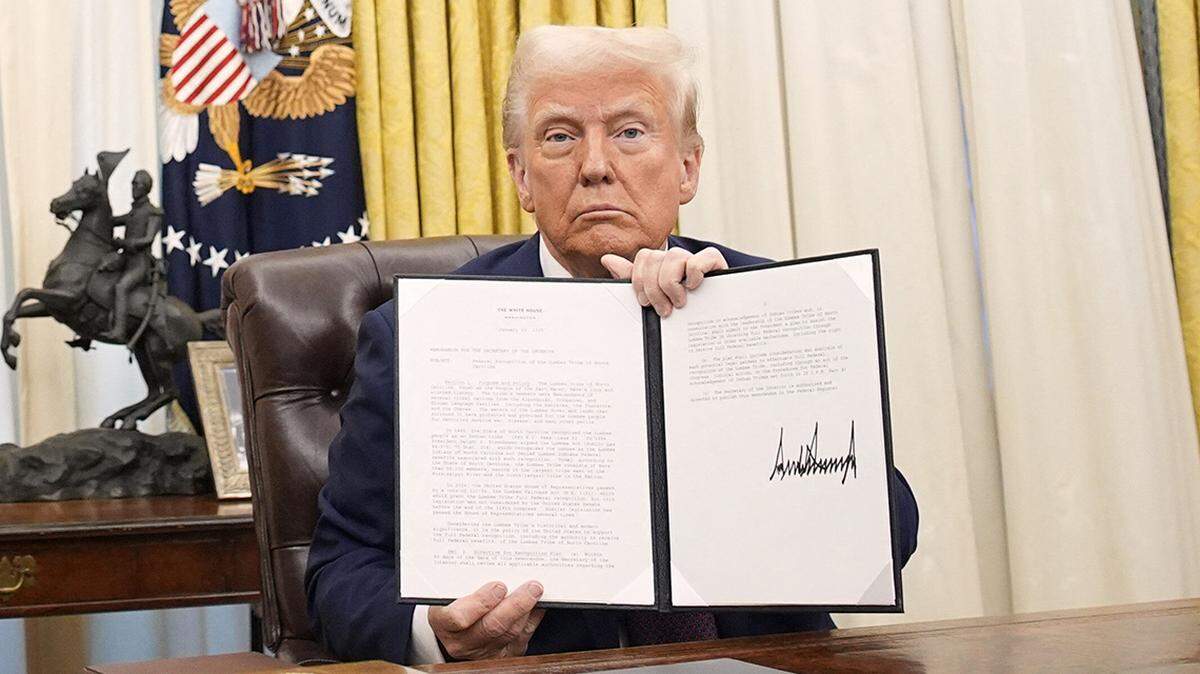
President Donald Trump has issued a bevy of executive orders in his first nine days in office, including several that could affect higher education in Kentucky.
It’s not yet known exactly how these orders would go into effect, or their long-term impacts, at least two could affect colleges: An order to pause and investigate federal spending, and an order aimed at dismantling diversity, equity and inclusion efforts.
The pause on federal spending, which includes trillions of dollars in federal grants and loans, was signed Monday, but a federal judge halted the order just minutes before it was to go into effect Tuesday. It’s been delayed until at least Feb. 3.
A group of state attorneys general had announced plans to file a lawsuit earlier Tuesday, blocking the funding freeze.
The U.S. Department of Education said in a statement that the freeze on federal spending would not apply to federal student loans or Pell grants, the New York Times reported. It also does not apply to Medicare or Medicaid, which would have affected institutions like UK HealthCare.
The other order, related to diversity, equity and inclusion — also known as DEI — directs federal agencies to initiate civil rights compliance investigations of various organizations, including higher education institutions with endowments greater than $1 billion.
The order argues that DEI efforts violate civil rights laws. The directive was included in a section about the private sector, although it did not specify that only private colleges would be under investigation.
UK monitoring for any changes
In a statement on Tuesday evening, University of Kentucky President Eli Capilouto said the university is monitoring orders and updates as they are available, with a team on campus analyzing the potential impacts on UK.
“Our government relations, legal and research teams are evaluating these issues, even as we have worked intently to fully comply with recent court decisions in these areas around college admissions and, for example, with federal policy actions regarding hiring practices,” Capilouto said. “As we have more clarity around some of these specific issues, we will communicate with the community or with those directly impacted.”
The university has launched a website to post updates on executive orders and other federal changes.
Questions or concerns about the impact of orders can be sent to the Office of the General Counsel, or students can reach out to the Office for Student Success, Capilouto said in a statement last week.
“The potential for such significant changes brings uncertainty — and, understandably, anxiety,” he said. “As an institution, and as a community that cares, we will work quickly and compassionately to understand the changes, if and how they impact us and how we intend to move forward in accordance with the law and in support of our mission and values as Kentucky’s university.”
The university declined to make additional comments about the impact of the executive orders Tuesday morning. The Council on Postsecondary Education, which oversees state universities and the Kentucky Community and Technical College System, also said it was unable to comment on the impact.
Mark Becker, the president of the Association of Public and Land-Grant Universities, issued a statement calling the pause on federal grants from the Office of Management and Budget “unnecessary and damaging.”
“It will have far-reaching impacts in every corner of the country and hamper American innovation at a moment when it’s being fiercely challenged on a global stage,” Becker said. “(The White House’s) action has unnecessarily injected an enormous amount of confusion and uncertainty across the nation. We urge the Trump administration to reverse this sweeping order.”
While it’s not yet clear how these orders will play out, here’s how they could affect higher education in Kentucky.
Pause on federal grants and spending
Higher education institutions receive federal grants and funding from a variety of sources. At the University of Kentucky, federal agencies awarded UK $264 million for fiscal year 2024, amounting to 54% of UK’s total awards, according to the university website.
The NIH and National Science Foundation are two major grant issuers for universities. At UK, NIH grants totaled $163 million and science foundation grants totaled nearly $16 million. Examples of federal funding at UK include $2.7 million to the Markey Cancer Center from the National Cancer Institute for research on childhood cancer, which falls under the NIH.
“Without question, research is vital in our mission to serve Kentucky,” Capilouto said in a news release about research awards last July.
DEI in Kentucky
While the latest orders targeting DEI are coming from the national government, DEI in Kentucky also came under fire during last year’s legislative session.
Kentucky lawmakers failed to pass bills that would have eradicated DEI programs and offerings in 2024, but later in the year, two universities made moves to dismantle their DEI offices.
In August, months after the bills failed to pass, UK dissolved its Office of Institutional Diversity. Capilouto said he received feedback, including from legislators who expressed concerns about DEI, and said he expected expect similar bills to be filed this legislative session.
Along with removing the office, UK removed mandatory diversity training throughout the university and eliminated diversity statements that some employees signed before joining the university.
The following week, Northern Kentucky University announced it would dissolve its Office of Inclusive Excellence following the resignation of the university’s chief diversity officer. NKU President Cady Short-Thompson referenced similar concerns as Capilouto in her announcement of the change, saying the legislative priorities required the university to change.
Since 2023, 86 bills targeting DEI have been introduced in 14 states, according to the Chronicle of Higher Education, which tracks such legislation.
This story was originally published January 28, 2025 at 5:31 PM.