
Kentucky legislators don’t plan to bail out FCPS during budget year in 2026
As Kentucky’s legislators prepare to make the state’s next budget, one thing will likely be missing: money allocated to bail out the commonwealth’s two largest, financially struggling school districts.
The legislature will still fund Jefferson County and Fayette County Public Schools in Louisville and Lexington, but additional money to pull both school districts out of a deficit from their alleged financial mismanagement won’t materialize, Republican leaders said Nov. 10.
Kentucky House Speaker David Osborne, R-Prospect, and Senate President Pro Tempore David Givens, R-Greensburg, along with two dozen other legislators addressed the state’s business community Monday at the Kentucky Chamber of Commerce’s legislative preview conference.
During the one-day meeting in Lexington, members of leadership from both chambers said there likely won’t be extra money to cover for losses and shortfalls already reported by the school districts.
Dueling audits of the Lexington school district’s finances are ongoing amid intense scrutiny over spending and budgetary problems resulting in a $16 million budget shortfall.
The district approved an $827.5 million budget for the fiscal year that began July 1, but its contingency fund has dwindled, and the district previously said it was facing a since-resolved budget deficit of several million dollars.
In Louisville, the school district’s superintendent predicted next year’s budget would require millions more dollars than projected.
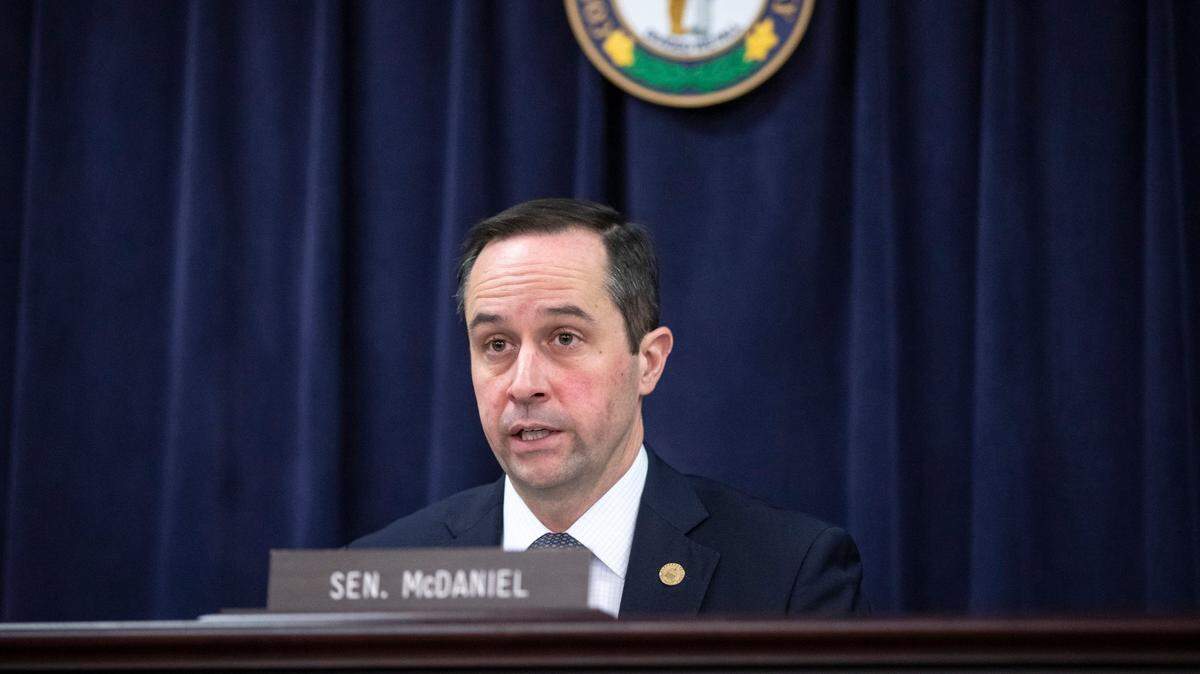
Sen. Chris McDaniel, R-Ryland Heights, who chairs the Senate Appropriations and Revenue Committee, said Tuesday there’s no reason to think the legislature will cover for the school districts.
The Kenton County senator called for the resignation of Fayette County Superintendent Demetrus Liggins and Board Chair Tyler Murphy in a September open letter to school district leaders. His tone in the letter was the same Tuesday in answering what the legislature plans to do about public education.
“Fayette County Public Schools receives roughly $274 million each year in state support,” McDaniel said in the open letter. “With that level of investment comes a duty to be open, careful, and accountable.
“Instead, the public has seen lavish travel spending, misleading budget numbers, and even an unlawful tax-increase attempt,” he said. “Taxpayers, parents, and teachers deserve better.”
Democratic lawmakers who represent Fayette County joined their Republican colleagues also this summer in August suggesting the school board should not impose the tax increase it hoped to pass to start to cover for its shortfall.
“Fayette County Schools is facing more than just a financial crisis; it’s facing a crisis of trust,” said Rep. Adam Moore, D-Lexington, at the time. “Public schools are a cornerstone of this community, and FCPS leadership has a clear duty to follow the direction of the Budget Solutions Work Group whose members are deeply invested in our education system and our city.”
Rather than pumping more money into public education, lawmakers said Tuesday the plan is for the state’s next budget to stay the course by continuing to get income tax to zero, incentivizing programs that meet a changing workforce demand while adapting to changes brought on by federal policy.
On the policy side of funding public education, Osborne said until there are reforms, there will be no more funding.
The largest part of education funding is calculated through the Support Education Excellence in Kentucky formula, known as SEEK.
It looks to create a base guarantee for every student based on a school district’s attendance rates, transportation costs, number of students on free and reduced lunch, local property taxes and other factors.
The Kentucky General Assembly determines the per-pupil funding and the Kentucky Department of Education and the Kentucky Office of the State Budget Director calculate other allocations for schools.
The Kentucky Supreme Court heard oral arguments in September about whether the state’s charter school funding law passed in 2022 violates the state’s constitution.
Charter schools — publicly-funded, tuition-free schools that operate independent of a traditional school district — have been legal in Kentucky since 2017, but none have opened because of legal challenges.
In 2024, voters overwhelmingly rejected Amendment 2, which would have changed the Kentucky Constitution to enable the General Assembly to provide state money to students outside the public school system.
.JPG)