
Deficiency, weakness, misstatement were identified in FCPS audit. What it means.
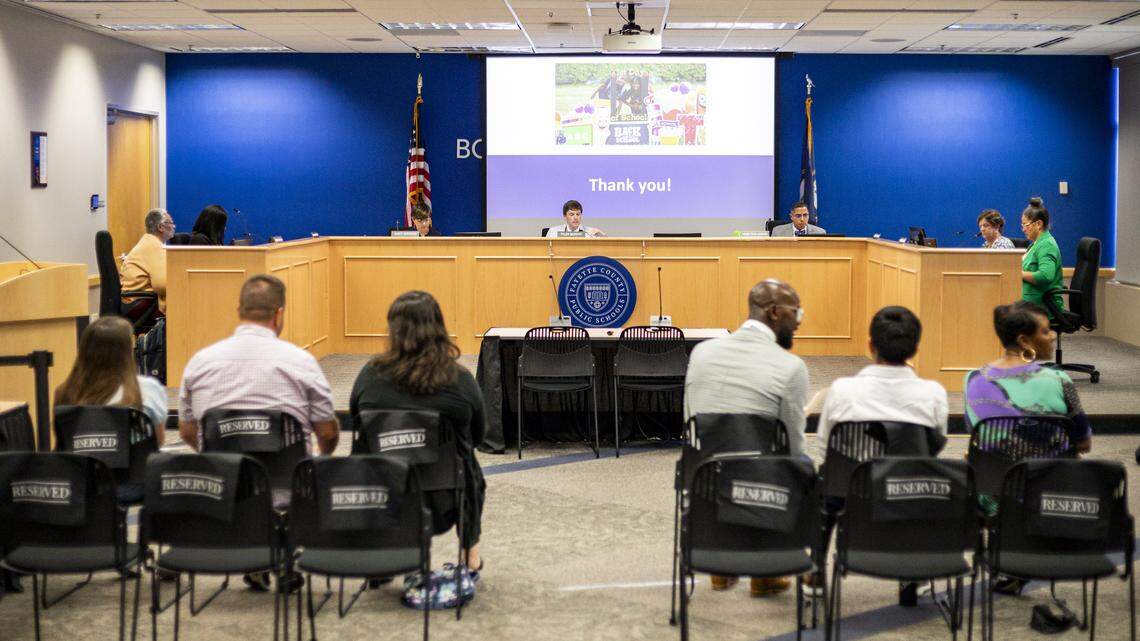
A former Kentucky school financial investigator says Fayette County’s school board was presented with information about Fayette County Public Schools’ finances in 2024-25 “that was misstated to the degree that economic decisions should have been altered.”
Calvin D. Cranfill is a certified public accountant in Lexington and was a former financial investigator of Kentucky school districts for the Legislative Research Commission. The Herald-Leader asked Cranfill to review FCPS’ 2024-25 final annual audit, for the year ending June 30, 2025.
It is the district’s most recent annual audit, and was done by accounting firm LBMC.
Due to budget issues revealed last year, including a $16 million budget shortfall, FCPS has been under heightened financial scrutiny, with multiple investigations and an examination from Kentucky Auditor Allison Ball taking place. However, this annual audit is standard for school districts in Kentucky and is separate from special examinations.
Cranfill said the district’s draft budget for the 2024-25 General Fund indicated there would be a shortfall of $2.6 million between revenue and expenses, and the final working budget projected a shortfall of $13.1 million. But the actual deficit between revenue and expenses for the General Fund, based on the audit, was much larger: $38.9 million. The General Fund is the main operating fund for the district.
Cranfill told the Herald-Leader that FCPS had “two consecutive years of material erosion,” and with the shortfall for the fiscal year, the district had about $28.3 million remaining in its General Fund as of June 30.
“As you can see, if they incur a similar loss in 2025-26, they will have a negative fund balance as of June 30, 2026,” Cranfill said.
LBMC’s audit showed that FCPS had a “Material Weakness” and a “Significant Deficiency” in the fiscal year, which are troubling disclosures, Cranfill said.
The final audit report said the material weakness stemmed from FCPS not using policies and procedures to ensure proper recording and review of accounting for bond issuances and related transactions. Liabilities associated with two out of three bonds issued during the fiscal year weren’t properly recorded, which caused the material misstatement, misrepresenting how much money was in one of FCPS’ funds and causing inaccuracies on FCPS’ district-wide financial statements, Cranfill said.
“From the standpoint of the (school board members) and the public, this means that internally produced financial statements for their review and approval as well as the budgeting process for 2025-26 was based upon materially misleading districtwide financial statements,” he said.
Auditors also found the significant deficiency in the district’s Building Fund Allocation, which is used for the school district’s facilities, Cranfill said.
The building fund should have had $44.2 million allocated to it for the fiscal year, but wound up with $64.25 million allocated instead, according to the report.
The report explained that the discrepancy was the result of putting a nickel tax that started in 2007 into the wrong fund: the money was meant to go into FCPS’ General Fund, but be used for buildings. FCPS put the money into the Building Fund.
In a December 2025 document explaining issues, FCPS officials said the problems were “technical.”
“(The money) was in the ‘Building Fund’; auditors say it belongs in the ‘General Fund,’” FCPS said. “The money still goes to buildings; the ‘bucket’ just changed.”
The district also said the issues with the bonds was a “clerical” error and the recording was off by 30 days. That issue was fixed and staff responsible for that work were retrained, FCPS said.
Despite these technical findings, the district received a “clean, unmodified opinion, which is the highest level of assurance possible,” FCPS said.
“Our books are fair and accurate.”
Cranfill said FCPS downplayed the critical parts of the audit.
“In their response to these comments, the district personnel attempt to normalize these auditor comments inferring that they are terms” used in the profession and “that everyone gets these types of comments,” Cranfill said.
“Not everyone gets these types of comments, only those who have Material Weaknesses or Significant Deficiencies,” he said.
Cranfill said the misstatement for the 2024-25 fiscal year was significant enough that “economic decisions should have been altered.”
For example, he said, different decisions might have been made on salaries if the board of education had the full information.
LBMC’s audit report said the district’s financial statements “fairly” presented the respective financial position of the district as of June 30, 2025.
District officials have said they are fixing the issues, including establishing a financial tracking and reporting mechanism within the General Fund.
The district’s financial problems began to be revealed in May 2025, including a dwindling contingency fund used to make up for shortfalls. Superintendent Demetrus Liggins has said recently that the district’s contingency fund is back to being above state requirements.
More recently, district spokesperson Miranda Scully said, “I want it to be clear that we have been fully transparent regarding this report and will continue to be with all future reviews. Having previously acknowledged the findings, we have already addressed several key areas from the audit and remain dedicated to strengthening our internal processes.
“Our focus is moving forward to meet the current and future needs of our students, staff, families and our district overall.”
Scully also said the material weakness was taken seriously, but said the issue did not affect decision-making by the district’s administration or the school board.
Suzanne M. Reed, a spokesperson for audit firm LBMC, when asked by the Herald-Leader about the final audit and Cranfill’s comments, said the firm adheres strictly to a code of professional conduct and applicable independence and confidentiality standards, “which preclude us from commenting on specific audits or client relationships.”