
Bedbug U: How to avoid the blood-sucking critters at college
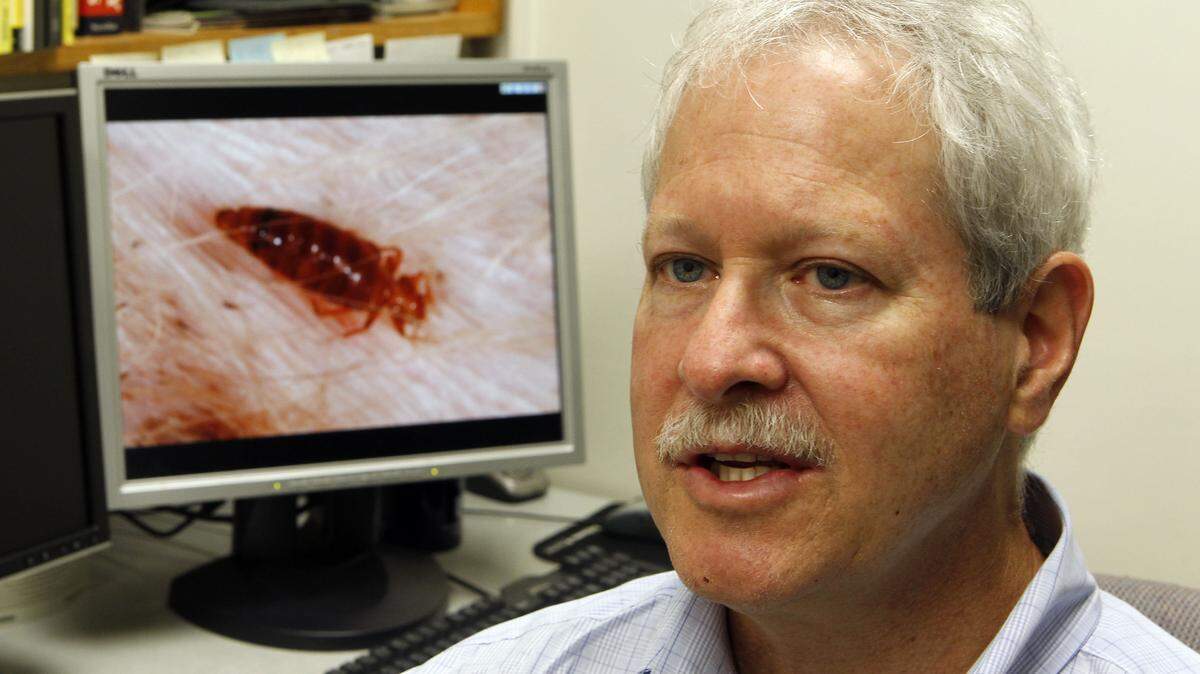
A word of caution for the tens of thousands of students who will lug their belongings back to the University of Kentucky and other state schools this weekend: beware of blood-sucking bedbugs.
Michael Potter, professor of urban horticulture and medical entomology at UK, is among the bedbug experts who on Wednesday released a study saying that a bedbug resurgence continues to gain steam from coast to coast.
The report — titled The 2011 Bugs Without Borders Survey — said college residence halls experienced explosive growth in bedbug eradication treatments in the last year.
Three recent infestations in Lexington — the Lexington Public Library on Main Street and two at the University of Kentucky (the student center and the William T. Young Library) — have put the spotlight on the apple seed-size critters just as students return to campus.
"What we're seeing is this ooze of bedbugs" into places where they have not been before, Potter said. "They're amazing hitchhikers."
Bedbugs have come fast and furious to Lexington, according to records at the county health department, which received 502 reports of bedbugs from May 2010 to May 2011. The calls came from elementary and middle schools, apartment complexes, hotels both modest and upscale, stores, shelters and individual homes. In 2004, the health department had no recorded bedbug complaints.
One reason bedbugs have had a fine ride in recent years is that people have grown wary of saturating their dwellings with possibly carcinogenic chemicals, and few insect eradication firms offer the most surefire method of killing bedbugs, which is heat.
Only a handful of companies in the Kentucky region offer the elaborate heat method that can kill bedbugs and their progeny within an extended area such as a dorm room.
Potter's study emphasized that when treating bedbugs, residents should avoid do-it-yourself measures that are ineffective and dangerous, including improper use of "bug bombs" and foggers, propane heaters and open flame, and the use of chemicals such as bleach, kerosene, alcohol, gasoline and diesel fuel.
Taking action
Kentucky's universities are taking a variety of actions to deter the oval-shaped bugs, which Potter's study said "continue to be the most difficult pest to treat," far ahead of insects such as ants, cockroaches and termites.
UK maintains an on-call relationship with an exterminator for bedbugs and other pests.
At Northern Kentucky University, student affairs staffers are trained to be bedbug "first responders" who wield heat-treatment equipment to bake bedbugs.
Pete Trentacoste, the interim vice president for student affairs at NKU, urges students to inspect mattresses for signs of bedbug activity, starting with the seams, and look in particular for the black dot patterns that indicate bedbug feces.
Even a hole, rip or tear in a mattress can be an opening for bedbugs, he said.
"No one can guarantee a space that will be bedbug-free," Trentacoste said. "What we guarantee is that we'll take care of it start to finish, and we're pretty good at it."
In Richmond, Eastern Kentucky University is putting faith in 4,000 new antibacterial mattresses to stop the tiny menaces.
"I don't know if it is bedbug-proof, but it is bedbug-resistant," Kenna Middleton, the school's residence hall director, said of the new mattresses.
While dorm rooms are a major concern for universities, they aren't the only place on campus to watch for bedbugs.
The bugs like beds — immobile humans make an inviting target for the usually painless bites — but they can appear anywhere there is a soft surface and a few places where there isn't.
At UK and in the public library, they were nestled into soft surfaces, with no beds anywhere nearby. Also, Potter said, bedbugs often are found in bed headboards.
Headed your way?
Amelia Witt, a junior at the University of Kentucky who used to live in Blazer Hall, has heard horror stories from students who lived in other residence halls.
"I never had any problems," she said, but after hearing about recent bedbug infestations on UK's campus she described herself as "pretty concerned."
Eli Edwards, a UK student from Harrodsburg, said he "felt secure" for the first two years because dorm mattresses had special fabric enclosures that helped protect sleepers from bedbugs.
But this year, for the first time, he is living in an off-campus apartment.
He hasn't yet bought the anti-bedbug mattress cover, even though his grandmother advised him to do so. He's worried about expenses, and bedbug covers can cost more than $40 per mattress.
Sean Allen, a UK public health major who discovered bedbugs in the student center lounge, said he finds bedbugs fascinating. They're nothing to be afraid of, he said.
"Bedbugs are becoming more common," Allen said. "However, parents and students should not be fearful of bedbugs on campus."
This story was originally published August 18, 2011 at 12:00 AM with the headline "Bedbug U: How to avoid the blood-sucking critters at college."