
How was Stonehenge constructed? An ancient tooth offers ‘tantalizing’ clues
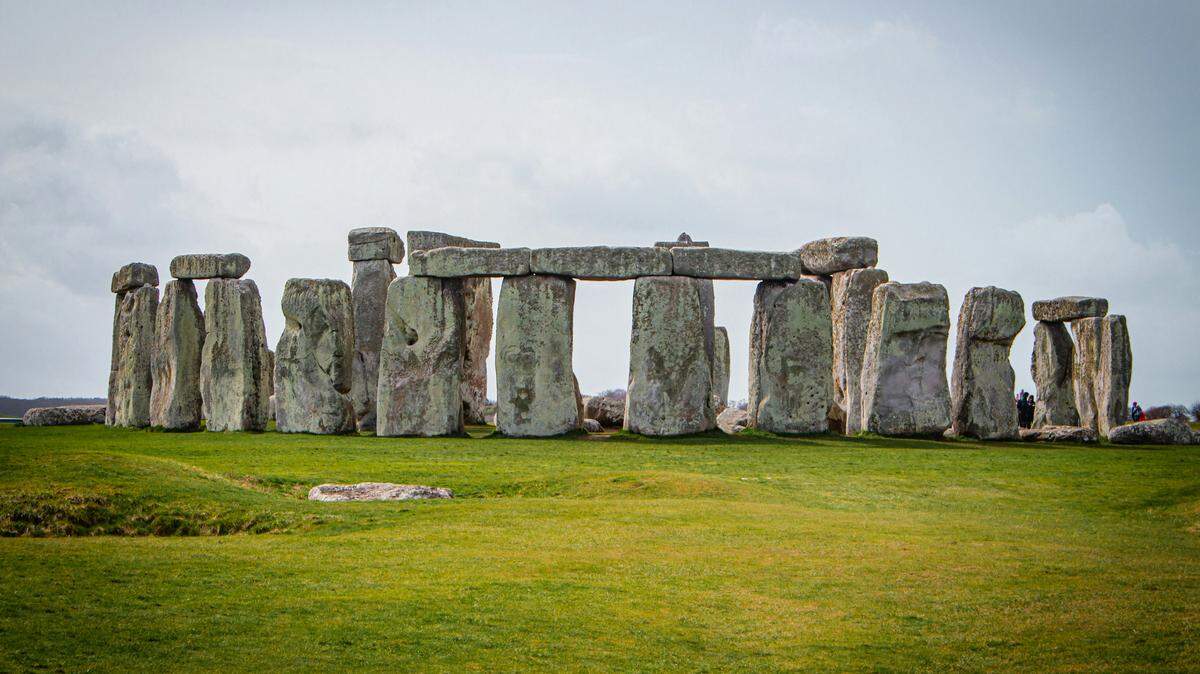
The mystery of how Stonehenge’s bluestones were transported 140 miles from Wales to England has captivated archaeologists for generations. Some have theorized that the slabs — which weigh between one and three tons — were carried by Ice Age glaciers. Others, that they were floated on rafts.
But now, new research points to a fresh theory: Animals played a key role in moving the giant rocks.
By analyzing a cow jawbone discovered at the Neolithic site, archaeologists discovered that the animal likely originated from Wales, according to a study published in August in the Journal of Archaeological Science.
“This is yet more fascinating evidence for Stonehenge’s link with southwest Wales, where its bluestones come from,” Michael Parker Pearson, a study author, said in a University College London (UCL) news release. “It raises the tantalising possibility that cattle helped to haul the stones.”
Ancient tooth
In 1924, the jawbone was found buried near the south entrance of Stonehenge — which is situated in Wiltshire, about a 90-mile drive southwest from London.
Now, a century later, archaeologists conducted an isotope analysis on one tooth, the third molar, in the hopes of shedding light on the creature’s life.
Their research indicated the cow lived sometime between 2995 and 2900 BC, around the time Stonehenge was constructed.
Additionally, lead isotopes embedded in the tooth revealed “composition spikes during the late winter to spring, pointing to a lead source that was older than the lead in the rest of the tooth,” according to the study.
This suggests the cow was likely born in an area distinguished by older Palaeozoic stones.
One specific location fits this description: Pembrokeshire, a county in Wales, where the bluestones originated (the other, larger slabs at Stonehenge are known as sarsen stones, which were likely quarried in England).
“We’ve known for some time that around 80 bluestones were brought from Wales when Stonehenge’s first stage was built in 2990-2920 BC, and that some of the people buried at Stonehenge in that earliest phase had, like the cow, strontium isotope values consistent with coming from Wales,” Parker Pearson told McClatchy News in an email.
“It was great to get this additional connection with the source of the bluestones and reinforcing the evidence that Stonehenge’s origins were in Wales.”
Cow power
If cows were indeed enlisted to transport the bluestones to England, how would it have worked?
For one thing, wheels certainly were not used.
“Although people in Europe and Asia were using the wheel at that time, the people of Britain inexplicably avoided contact across the English Channel with their European neighbours between 3400 and 2500 BC and so would have had to drag or haul the stones, having no knowledge of the wheel,” Parker Pearson said in the email.
The most efficient way to transport the stones — based on what is known about other megalith-constructing societies — would be to hitch cows to a sled.
“The best way to do this is on a sled with timbers used not as rollers (which would jam together) but laid like wooden rails in the direction of movement for the sled to slide along,” Parker Pearson said.
Previous research from UCL appears to support this new theory. In 2018, university researchers published a study revealing cattle were used to haul goods in Europe as early as 6,000 BC — two millennia earlier than once thought.
In addition to Parker Pearson, the study authors were Jane Evans, Richard Madgwick, Vanessa Pashley, Doris Wagner, Kotryna Savickaite and Michael Buckley.
This story was originally published August 28, 2025 at 1:43 PM with the headline "How was Stonehenge constructed? An ancient tooth offers ‘tantalizing’ clues."