
Family judges decide divorce, custody and abuse cases. Meet four Lexington candidates.

Fayette County voters will start the process Tuesday of choosing a new family court judge from among four candidates.
Incumbent Judge Libby Messer was appointed by Gov. Matt Bevin in January to fill a vacancy left by Tim Philpot's retirement after 14 years on the bench. Messer now wants to finish the term that ends in 2022. Her challengers are Lexington family law attorneys Eileen O'Brien, Gregory Napier and Nam Nguyen.
The two top vote-winners will proceed to the Nov. 6 general election.
In Kentucky, family court is a division of circuit circuit that hears cases involving families and children, including divorce, adoption, child support, child visitation, paternity, domestic violence, child abuse and neglect, and juvenile offenses. Some of its business is conducted behind closed doors, unlike other civil and criminal cases that are open to the public.
Fayette County's four family court judges this year will earn $127,733.
The nonpartisan candidates make a diverse group.
Messer and Nguyen were born in 1981, the same year O'Brien graduated from the University of Kentucky College of Law and began practicing at the large firm today known as Stoll Keenon Ogden. Napier cites the late U.S. Supreme Court Justice Antonin Scalia, a conservative icon, as an important legal influence, while Nguyen proudly notes that he represented same-sex couples in family law cases even before the Supreme Court legalized gay marriage in 2015.
Libby Messer

Before Bevin appointed her in January, Messer, 36, was the lead prosecutor in the juvenile division under Fayette County Attorney Larry Roberts. She had handled other sorts of cases for the county attorney, too, including child abuse and neglect. In an interview, Messer stressed that she "was not a divorce attorney," which is, she said, frequently the background among those who seek a family court judgeship.
As a UK law student in the 2000s, Messer did a summer internship clerking for then-Fayette Family Court Judge Kimberly Bunnell. She said the experience changed her career path. She knew even then that she wanted to be a family court judge. So she began taking the law courses, and, later, professional assignments that she believed would give her the necessary insights. The county attorney's office allowed her to work closely with troubled youths, she said.
"My whole career has led to this," Messer said.
In complicated cases involving child abuse or neglect, "I think the best possible outcome is finding a safe and permanent place for the child, where they're not going to come right back into the system. Whether that's back with their parents or that's with an adoptive home or that's in a safe, long-term family placement or a safe, long-term fictive kin placement," Messer said. "For me, at the end of the day, my goal is, is this child safe? Is this child stable?"
Gregory Napier

Napier, 52, took a roundabout path to a law career. His earlier jobs included drug rehabilitation counselor at Comprehensive Care Center and child protection worker for the Kentucky Cabinet for Health and Family Services.
"It was a difficult environment to work in with the cabinet," Napier said. "The difficulty didn't really come with the clients. The difficulty came from the demands of the bureaucracy and the requirements that seemed to keep us from being able to deliver services to the clients. I decided I wanted to do something different."
Napier's child protection work frequently required him to testify in court about child abuse and neglect investigations. He said "the challenges of law, the logic required, all of that was very appealing to me." So with his 40th birthday looming, he went to law school, graduating in 2006.
Napier said he encourages voters to consider not just his 12 years practicing family law but also the social service that preceded it and his personal life, working with his wife to raise their three daughters. That's what he would bring to the bench, he said.
Laws in family court are deliberately more ambiguous than in other parts of the justice system because there typically are not winners and losers in the usual sense, he said. That places a larger burden on the judges to exercise their own discretion, he said.
"To that end, experience is key. The experience of a family court judge is like a storehouse that they can call upon in all the different circumstances that they're going to be dealing with. And the bigger the storehouse is, the more knowledge and experience that's in that storehouse, the more informed that judge's decisions are going to be," Napier said.
Nam Nguyen

Nguyen's father was a helicopter pilot in the South Vietnam Air Force who came to the United States in 1975 as the Vietnam War ended. He eventually settled in Lexington, where Nguyen grew up and was educated. Nguyen has practiced family law in a small firm since graduating from law school in 2010.
Nguyen, 36, said the empathy he offers his clients as a lawyer would serve the public equally well as a family court judge.
"Being the point of contact for my clients, I'm right there with them," Nguyen said. "I'm experiencing what they're going through. I know how to craft solutions for families when they're going through divorce cases. Even when it's not especially contentious, it's a stressful time in anybody's life. I tell people when they walk through the door, 'You're meeting me at probably one of the worst points of your life.' I'm there to help people through that."
Nguyen said he also would promote tolerance on the bench. Philpot, the judge who previously held the seat at stake, made critical comments outside the courtroom about gays and lesbians. That made some people uncomfortable about coming to Fayette Family Court because they feared a judge's personal prejudice would harm them, Nguyen said.
"A lot of people are afraid — well, let me say, they don't necessarily think they'll be treated fairly if they come to court," he said. "That's a nuance I don't necessarily think some people really grasp, that a lot people are wary of coming into court because of the comments that some candidates and some judges make. Everybody that walks into a courtroom regardless of their race, gender, ethnicity, nationality, religion, personal background, should be confident that they will be treated fairly."
Eileen O'Brien
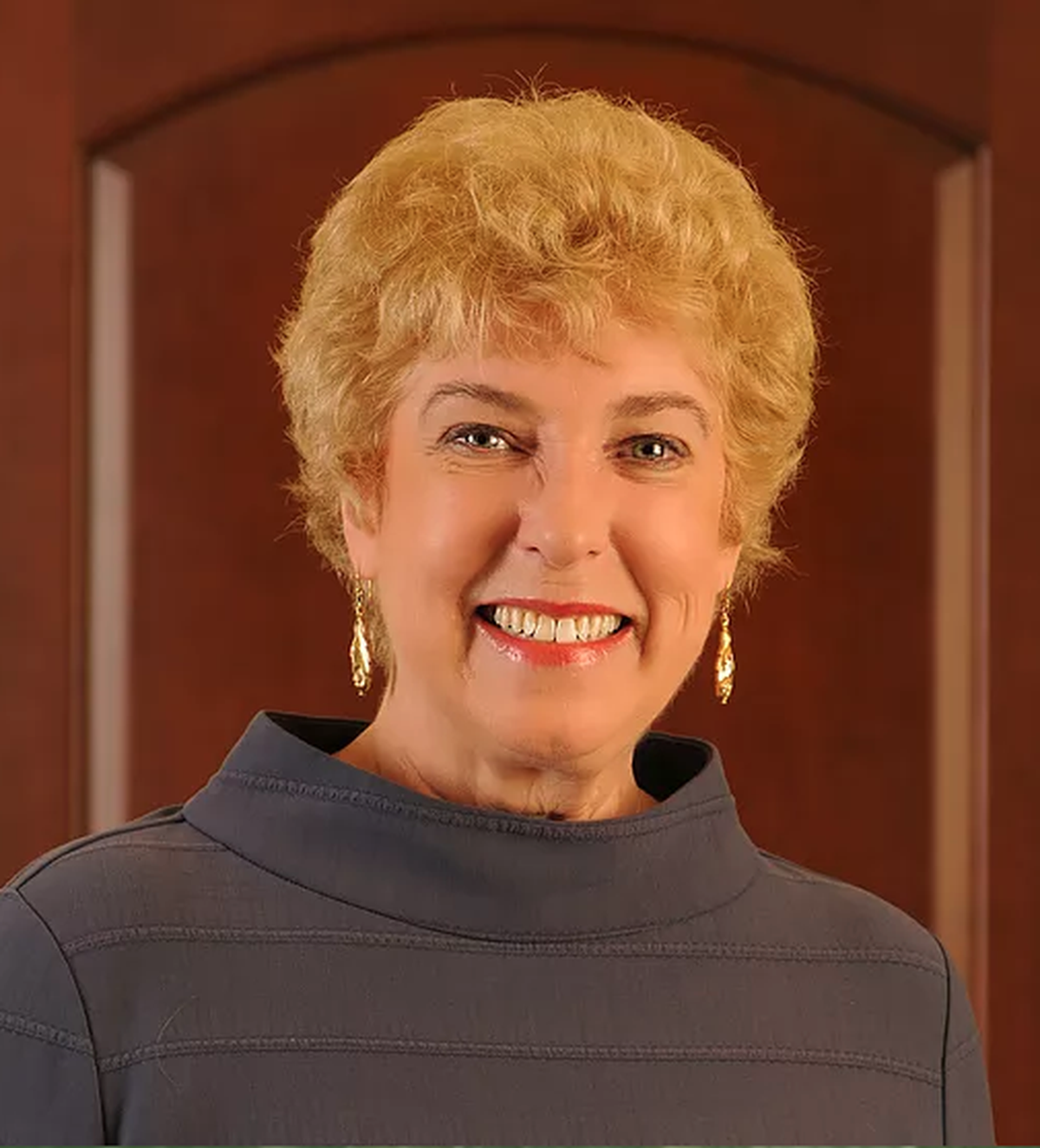
O'Brien, 63, has practiced law for nearly four decades. She also has served for many years on the nonprofit leadership boards of the Chrysalis House, helping young mothers to overcome drug addiction, and the Carnegie Center for Literacy, which provides tutoring services. O'Brien says her volunteer work has taught her as much as her legal career about helping people.
For O'Brien, a judgeship would be the culmination of a well-rounded career.
"This is going to sound a little opportunistic, but with Judge Philpot's retirement, this is something I always felt you needed to build up the right to seek. I think you need to have substantial experience and connections within supportive organizations for families and children. And I felt that I had now gotten to the point where I was comfortable saying, 'I think I've earned this,'" O'Brien said.
When Kentucky voters established family courts by constitutional amendment in 2002, the courts were supposed to provide social workers and staff attorneys who could assist the families passing through, O'Brien said. Unfortunately, that's not how it turned out, she said.
"The system is overburdened and underfunded," she said. But judges with extensive relationships like hers in the community could call on mental health specialists and others to solicit their help for families in crisis, she added.
This story was originally published May 18, 2018 at 12:24 PM with the headline "Family judges decide divorce, custody and abuse cases. Meet four Lexington candidates.."