
Lexington council adds money for pools, voting machines and a shelter. Who got cut?
The Lexington council voted Tuesday to make several changes to Mayor Linda Gorton’s proposed city budget, including providing money for new voting machines, eliminating proposed cuts to pools and parks, giving city employees a one-time $500 bonus and allocating $850,000 to fund the city’s largest shelter for men.
In total, the Lexington-Fayette Urban County Council added more than $1 million to Gorton’s proposed $379 million general fund budget for the fiscal year that begins July 1.
The decisions were made Tuesday during a nearly six-hour council budget meeting. The money to fund those programs came from savings in other areas, including deep cuts to the Explorium children’s museum and the Downtown Lexington Partnership, and tapping unspent funds from other city accounts.
The council is expected to finalize those decisions June 4. A final vote on the budget will be in June. The council has until June 30 to make changes to Gorton’s proposed budget.
Tyler Scott, Gorton’s chief of staff, declined to say whether Gorton would veto any of the council’s changes.
“The council’s work on the budget is continuing, and we want to respect their process,” Scott said. “After they finish we will review all of their changes and decide whether any vetoes are needed.”
Gorton’s proposed budget was lean compared to prior years, reflecting slow revenue growth and climbing expenses. It included a 15 percent cut in some spending areas, no raises for most city employees and closure of the Picadome pool.
The council voted to add $340,000 to the city parks budget. Of that total, $90,000 will restore city pool operating hours that Gorton proposed cutting and fund four swim teams that had been axed. Picadome pool will not be reopened. Another $125,000 will restore funding for police patrols in parks. Also restored was $124,000 to allow parks employees to mow four times a month.
The council also agreed to allocate $637,769 for a one-time, $500 supplemental payment in lieu of a raise to all city employees who aren’t covered by bargaining agreements for police and fire. Police and fire raises are dictated by those agreements and vary depending on years of service and rank.
Money for the one-time payments will come from a more than $11.4 million fund set aside for increasing pension costs. The city thought it would need to tap $2 million of that fund for its pension bill to the state in the upcoming fiscal year, but officials said Tuesday that probably won’t be necessary. Any surplus funds from the current fiscal year will go back into that pension fund to offset the $637,769 the council used to give city employees a bonus payment.
The council also approved money for new voting machines.
Fayette County Clerk Don Blevins Jr. said the total cost to buy more than 150 new machines is $1.8 million. The county can use $965,000 in federal election funds, leaving $837,755.. Debt payments to borrow $837,755 would total $43,000 in the coming fiscal year. Many of the current eSlate machines are more than a decade old. The clunky wheel-style voting machines were partly to blame for long lines at many polling places in November.
The new system would use paper ballots. That means multiple voters can fill out ballots at the same time, making voting faster at every polling location, Blevins said. It also creates a paper trail, which the current system does not do.
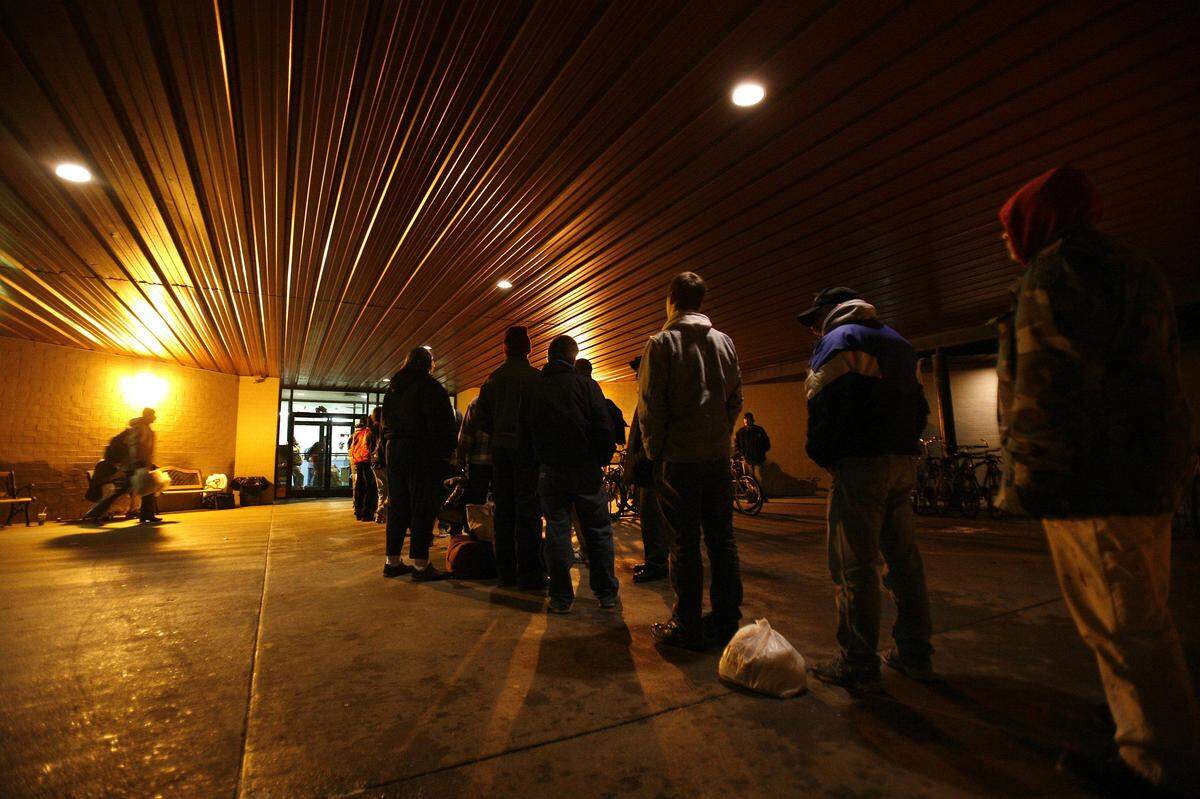
Much of Tuesday’s debate centered on funding for the Hope Center’s homeless shelter for men. The council ultimately approved the $850,000 allocation but some council members had reservations about how the Loudon Avenue nonprofit receives funding compared to other homeless shelters.
In the current fiscal year, the Hope Center received a direct allocation of $1 million. This year, Gorton’s administration asked the Hope Center to apply for shelter funding through the city’s extended social resource grants, a competitive process where social service agencies compete for a portion of a $3 million pot set aside for social service agency funding.
The Hope Center declined to apply through the grant program this year. Hope Center officials have previously said they thought the shelter would get a direct allocation again this year and that the shelter requires a consistent source of funding.
Since Gorton unveiled her budget on April 9, the city has found $850,000 to fund the shelter for a year, which would be a 15 percent cut from last year. Most partner agencies received a similar 15 percent cut.
Some council members questioned why the Hope Center, which has received funding through the grant program in prior years, should be treated differently than other homeless shelters.
Councilwoman Susan Lamb, who chaired the budget subcommittee that recommended funding the Hope Center, said the city was in a tough spot. The city owns the Hope Center shelter building, which the nonprofit has leased for 99 years, Lamb said.
Other shelters that receive funding through the extended social resource grants include the Salvation Army, which serves woman and children; Greenhouse17, a domestic violence shelter; and Arbor Youth Services, a shelter for kids and teens. The grant program requires those agencies to report outcomes.
Councilwoman Angela Evans said she was concerned the city was treating shelters differently, but saw no alternative to funding the Hope Center. On average, 200 men a night sleep at the shelter.
“This is a service,” Evans said. “It is a service that we have to provide.”
Councilwoman Amanda Bledsoe said the city’s other emergency shelters, which serve women and children, will receive $750,000, or $100,000 less that the Hope Center.
“I don’t like how we are treating women and children differently,” Bledsoe said. “ I support giving them funding but I do so with reservations.”
Councilman James Brown, though, said the Hope Center took the bulk of money set aside for nonprofit funding when it was part of the extended social resources grant process.
When it competed for funds in prior years, the Hope Center performed poorly compared to Salvation Army and Greenhouse 17, according to reports the agencies sent to the city as part of the grant process. The Herald-Leader obtained the reports through an Open Records Act request.
For the fiscal year that ended June 30, 2016, the Salvation Army reported serving 1,343 people. Of those, 65 percent either got a job or increased their income from July 1, 2015 to June 30, 2016. In addition, 28 percent left the shelter to permanent housing. That same year, Greenhouse17 served 239 people, of which 4.6 percent either got a job or increased their income and 83 percent exited to permanent housing.
The Hope Center served 3,346 people during that time period. Less than 1 percent either obtained a job or increased their income and only 2 percent exited to permanent housing.
The council also cut funding for two partner agencies during deliberations Tuesday.
The Downtown Lexington Partnership was cut by more than $161,000 from Gorton’s proposed budget of $308,950. The council funded the agency at $147,055. That’s roughly the amount it costs to run the agency’s economic development program. In addition to economic development, the partnership also oversees downtown events, such as Thursday Night Live.
The Explorium, the children’s museum in downtown Lexington, was cut even further under the council’s recommendation. It went from $191,250 in Gorton’s proposed budget to $150,000. Approximately 30 percent of its budget is city taxpayer dollars. In prior years, the council has asked the Explorium to up its private fundraising, increase its board membership and decrease its reliance on taxpayer support. Some council members said Tuesday they felt the Explorium had not done that.
Lee Ellen Martin, executive director of the Explorium, said the museum may have to lay off some staff, reduce hours or cut back on its community outreach. Martin said she hopes to step up private fundraising to offset the city cut, noting that 70 percent of Explorium income comes from ticket sales and other private support.
One way to support the Explorium, which was started in 1990, is to visit it this summer, she said.
“People can also vote with their feet,” Martin said.