Beshear restores voting rights to more than 140,000 Kentuckians with felony records
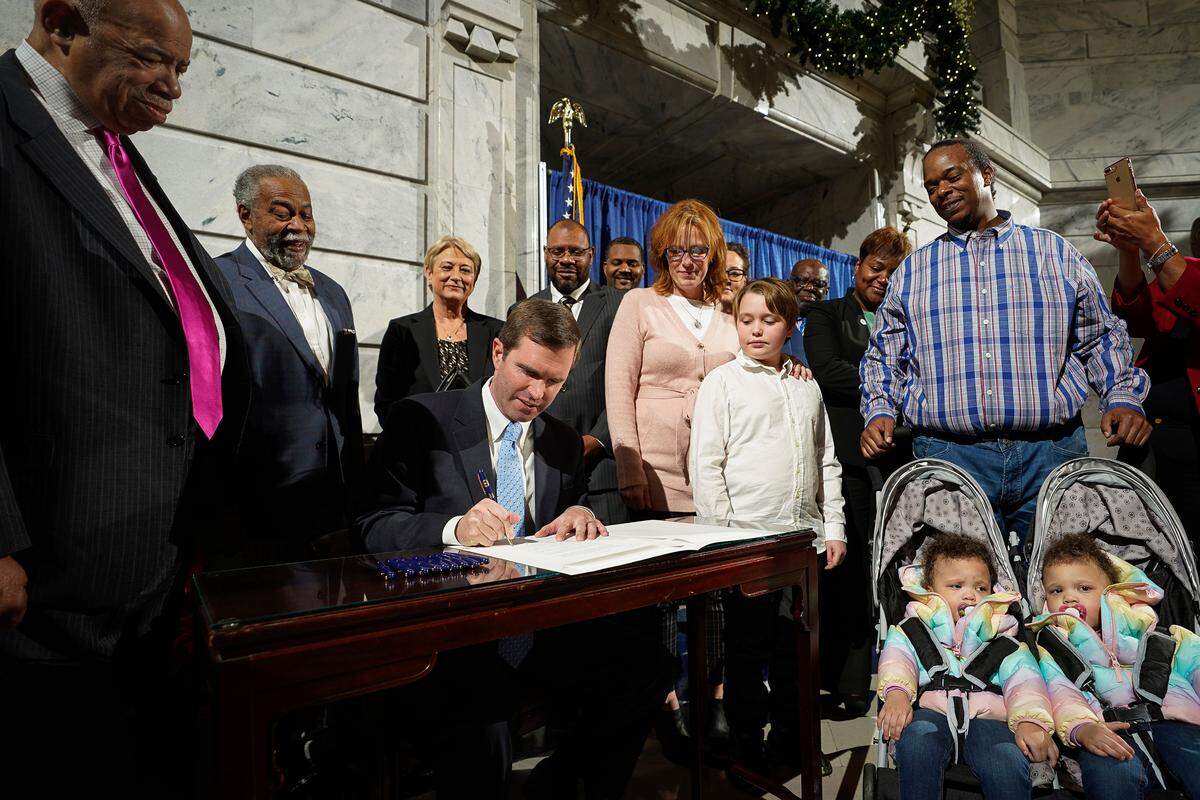
Gov. Andy Beshear signed an executive order Thursday that will restore voting rights to more than 140,000 non-violent felons who have served their sentence, saying he believes in the law and redemption.
Beshear, in his third day as Kentucky’s top elected official, also said he will support an amendment to the Kentucky Constitution to preserve his order, which can be withdrawn by future governors. That would require legislative approval and a vote by Kentuckians at the polls.
House Speaker David Osborne, R-Prospect, released a statement shortly after Beshear signed the order, saying he has “concerns about the use of an executive order to effectively amend our state constitution.”
“Regardless of which side you are on — and it is important to note that a version of this has already passed the House with support from members of both parties — ultimately only the Kentucky voter has the authority to amend our constitution,” he said.
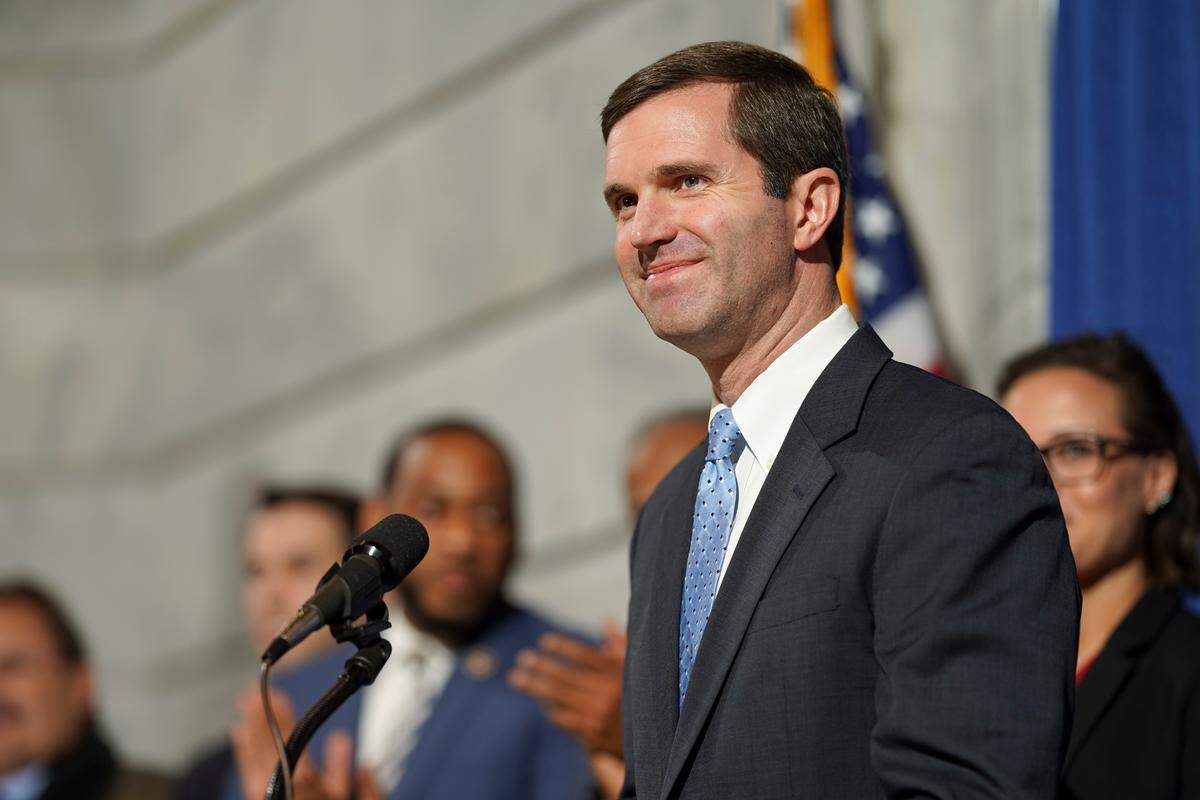
In a crowded Rotunda in the state Capitol, Beshear said he wants “to lift up all of our families and I believe we have a moral responsibility to protect and expand the right to vote.” He announced his order Tuesday in his inaugural address.
Beshear’s actions followed that of his father, former Gov. Steve Beshear, who issued a similar executive order shortly before leaving office in late 2015 that was supposed to restore the right to vote and hold public office to more than 100,000 felons who had completed their sentences and paid all of their court-ordered restitution.
But just days after he succeeded Steve Beshear in December 2015, Republican Matt Bevin suspended the order.
Under Bevin, those seeking restoration of civil rights had to individually apply to the governor and request that their rights be restored.
Under Beshear’s order, those who qualify will have their rights restored automatically and, if needed, may request verification from the Department of Corrections.
Beshear stressed that finalizing details about the implementation process is “ongoing and updates will be provided” as quickly as possible.
Specific crimes excluded from the new order include violent offenses, such as all rapes and sexual abuses, homicide, fetal homicide, first- and second-degree assault, assault under extreme emotional disturbance. Also excluded are those convicted of treason and bribery in an election.
Beshear has asked Justice and Public Safety Secretary Mary Noble to work on assisting those who qualify to get their voting rights restored.
His order also restores the right to hold public office to those who have completed their sentences and have met certain criteria in the order, including satisfying terms of their probation, parole or service of sentence.
The order does not require eligible Kentuckians to pay fees or fines to be eligible to restore their voting rights but does not relieve them of obligations to pay court-ordered restitution or fines.
Kentucky and Iowa were the only states in the nation that imposed a lifetime ban on voting for all people with felony convictions.
Beshear said it was wrong that Kentucky has the third-highest voter disenfranchisement rate in the country. Nearly one in 10 Kentuckians, including nearly one in four black people, could not vote.
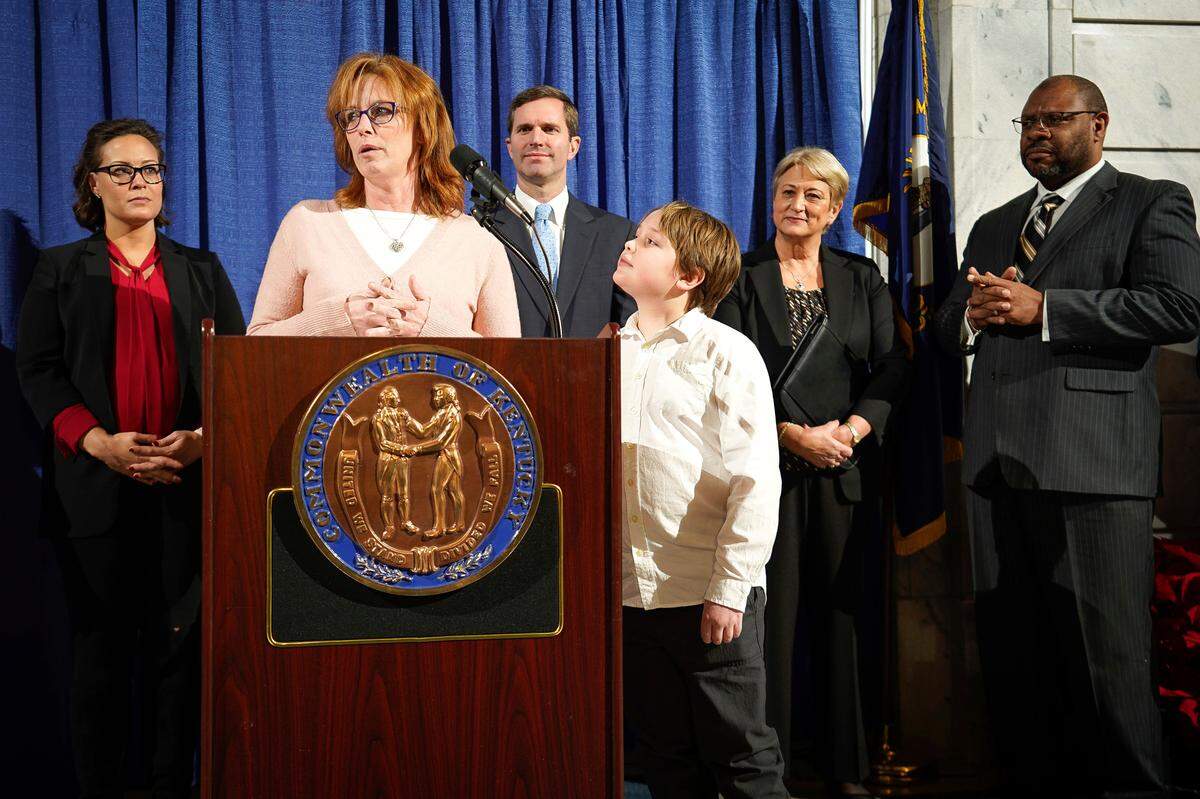
Several supporters at the Capitol news conference spoke before Beshear signed the order.
“It is fundamental to our democracy for returning citizens to regain their right to vote,” said Rev. L. Clark Williams, chairman of The People’s Campaign Community Network.
Kentucky NAACP President Raoul Cunningham said Beshear took “a bold step” with his order and that supporters of the order now “have to make sure people affected by it go out and vote” and work for a constitutional amendment.
“With the powerful sweep of the pen, Gov. Beshear restores the dignity of over 140,0000 people,” said Rev. David Snardon, head pastor at Joshau Tabernacle Church in Louisville.
Two Democratic state lawmakers from Lexington — Sen. Reggie Thomas and Rep. George Brown — recalled the years former state Rep. Jesse Crenshaw of Lexington worked on the issue.
Two people directly affected by the order also spoke at the news conference.
Rynn Young of Louisivlle said he was 18 when he was convicted of drug possession and has not had a chance to vote in 21 years.
With his twin 21-month-old daughters with him, an excited Young said, “Inside, I’m doing cartwheels.”
Amanda Bourland of Louisville said she lost her right to vote at 18 for drug and other offenses. Almost 45, she is now a coach and retention specialist at the Center for Employment Opportunities in Louisville.
“Now my voice matters,” she said.