
Judge halts new COVID-19 law that changed Kentucky’s reopening rules
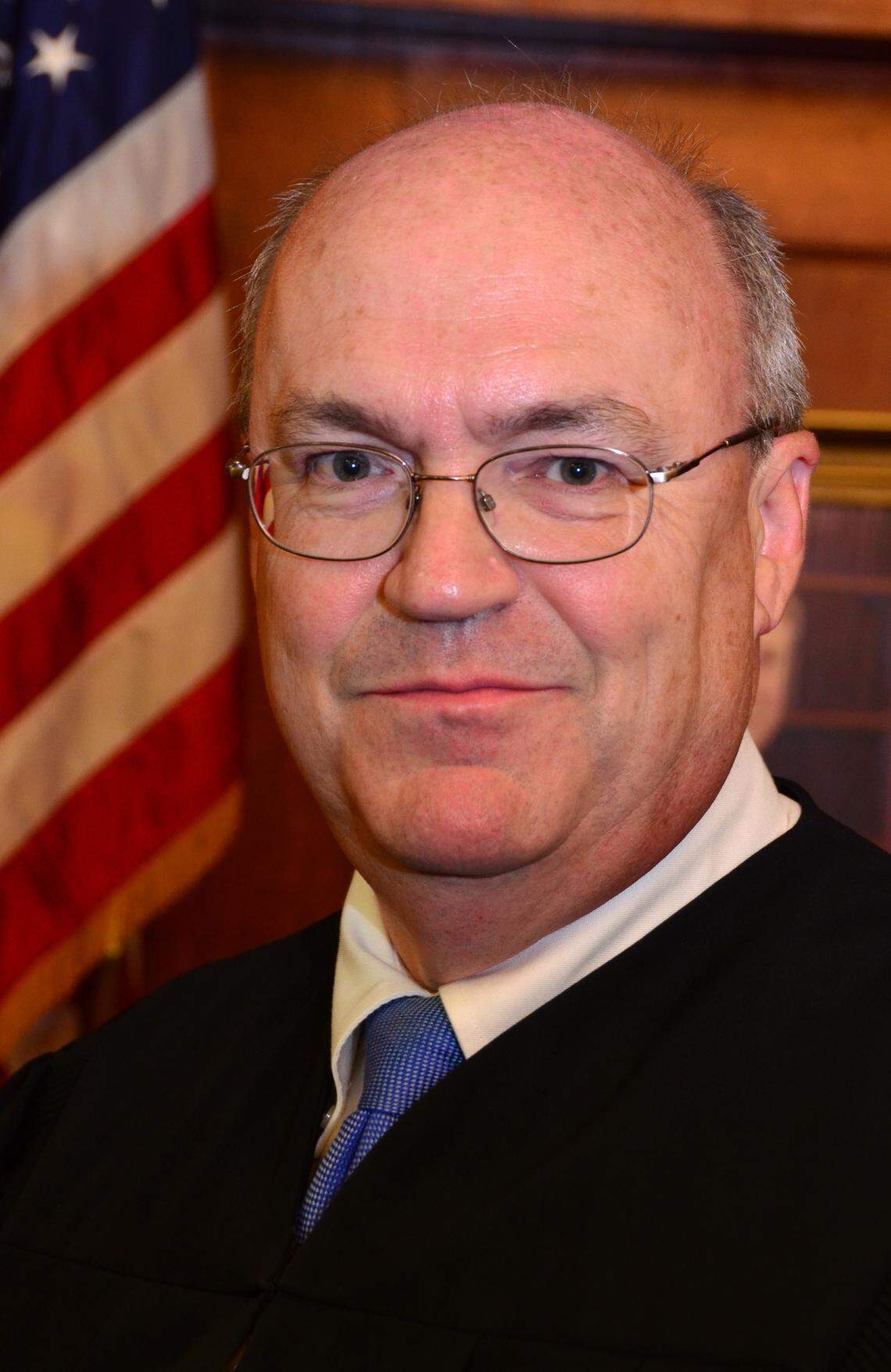
Franklin Circuit Judge Phillip Shepherd temporarily halted a new law late Wednesday that allows businesses, schools, nonprofits and churches to stay open if they meet COVID-19 guidelines set by either the federal Centers for Disease Control and Prevention or Kentucky’s executive branch, whichever is least restrictive.
In a nine-page ruling issued several hours after a hearing on a lawsuit filed late Tuesday by Gov. Andy Beshear, Shepherd said House Bill 1 is restrained, pending a ruling on the merits of Beshear’s motion for a temporary injunction.
The lawsuit challenged three laws the General Assembly approved Tuesday over Beshear’s vetoes, but the restraining order only deals with HB 1. All three bills contained emergency clauses and thus immediately became law.
Shepherd said the restraining order will remain in effect for 30 days unless extended by a court order after a full briefing and a hearing. He directed the parties in the case to meet and confer to attempt to resolve the legal disputes in Beshear’s lawsuit.
Shepherd said he is concerned that HB 1 “could create chaos and and undermine any effective enforcement of public health standards to prevent the spread of this deadly disease during this pandemic.”
He said it could lead to “hundreds, or even thousands, of individual operating plans” with no meaningful oversight or review.
At a news conference earlier, Beshear said there are 174 CDC guidance documents that each business would need to consult. “I guess every business would have to look through all 174 of these, which multiple ones would have to apply to them and try to figure out what they do or have to do,” he said at his regular news conference to update the coronavirus situation in the state.
“We can’t defeat a virus with this,” he said, holding up a large stack of CDC documents. He said the state needs “clear, consistent rules” and noted that the Kentucky Supreme Court last year said his COVID-19 restrictions were legal.
The judge reserved ruling on the governor’s motion for injunctive relief on other issues in the lawsuit, pending full briefing and a hearing.
In an email Wednesday night, Beshear said, “I have taken difficult but necessary steps to stop the spread of COVID and save lives in Kentucky. Today, the Franklin Circuit Court’s order stated that House Bill 1 would ‘create chaos and undermine any effective enforcement of public health standards to prevent the spread of this deadly disease during this pandemic.’ I don’t use emergency powers because I want to. I use them because it is my duty to preserve the lives of Kentuckians.”a
Shepherd said a hearing will be held Feb. 18 on any motion to dissolve the restraining order and Beshear’s request for a temporary injunction on all the bills.
Earlier Wednesday, Shepherd held a hearing that ran nearly an hour on Beshear’s lawsuit.
He also said the governor, House Speaker David Osborne and Senate President Robert Stivers should “engage in good-faith discussions” to make sure public health is not harmed.
The Democratic governor claims in his lawsuit against the two Republican legislative leaders that the laws are unconstitutional and hurt his ability to protect all Kentuckians from COVID-19 and other emergencies. So far, the coronavirus pandemic has led to more than 3,800 deaths in Kentucky.
Beshear’s general counsel, Amy Cubbage, said at Wednesday’s hearing that the judge should grant an immediate injunction to stop the laws from taking effect. Victor Maddox, representing Attorney General Daniel Cameron, said no harm would be done by allowing the laws to proceed.
He noted that the consequences of Senate Bill 1 do not take effect for 30 days. It would limit the governor’s emergency orders, such as one that requires Kentuckians to wear a face covering in public, to 30 days unless the legislature extends them. It also says the attorney general would have to sign off on the suspension of state law in an emergency, and it removes the ability of the governor and secretary of state to decide the manner in which an election is conducted during an emergency.
There was no discussion at Wednesday’s court hearing on Senate Bill 2, a companion bill to SB 1 that would give the legislature more power over administrative regulations issued during an emergency.
Eric Lycan, representing Osborne, and David Fleenor, representing Stivers, asserted immunity for the legislative leaders from the lawsuit, given their official positions.
Beshear’s lawsuit listed Health and Family Services Secretary Eric Friedlander as a plaintiff with him. In addition to Osborne and Stivers, other defendents included the Legislative Research Commission and Cameron, in his capacity as attorney general.
Wesley W. Duke represented Friedlander in Wednesday’s hearing and Greg Woosley represented the Legislative Research Commission.
This story was originally published February 3, 2021 at 11:37 AM.
