‘A toxic environment.’ KSU facing lawsuits alleging student sexual harassment, more.
Kentucky State University has been fighting a half-dozen lawsuits this year alleging various acts of misconduct by leaders of the small, historically Black college in the state’s capital. Among them is a claim that KSU fired a whistle-blower for calling attention to the sexual harassment of students by several school officials, all now departed.
In another suit, KSU paid $150,000 to settle a whistle-blower claim by a former official who said the college’s president, M. Christopher Brown II, “improperly interfered” with the award of a dining services contract to help a losing bidder. In a third, a hostile workplace complaint, an ex-official says the president described female school employees using crude language, including “kitchen bitch,” a claim the school denies in its court response.
During an interview with the Herald-Leader, Brown said he would not talk about any allegations made in lawsuits “past, present or future.” The school’s public affairs office did not reply to requests for a response to the allegations.
“Courts frown on legal discussions taking place outside of the judicial proceedings. Your questions concern matters of pending litigation,” William E. Johnson, one of KSU’s private attorneys, wrote to the Herald-Leader this week.
In the sexual harassment litigation, lawyers for KSU tried to prevent a jury from seeing evidence presented by Xavier Dillard, a KSU alumnus who helped run the college’s Student Support Services until he was fired in 2018.
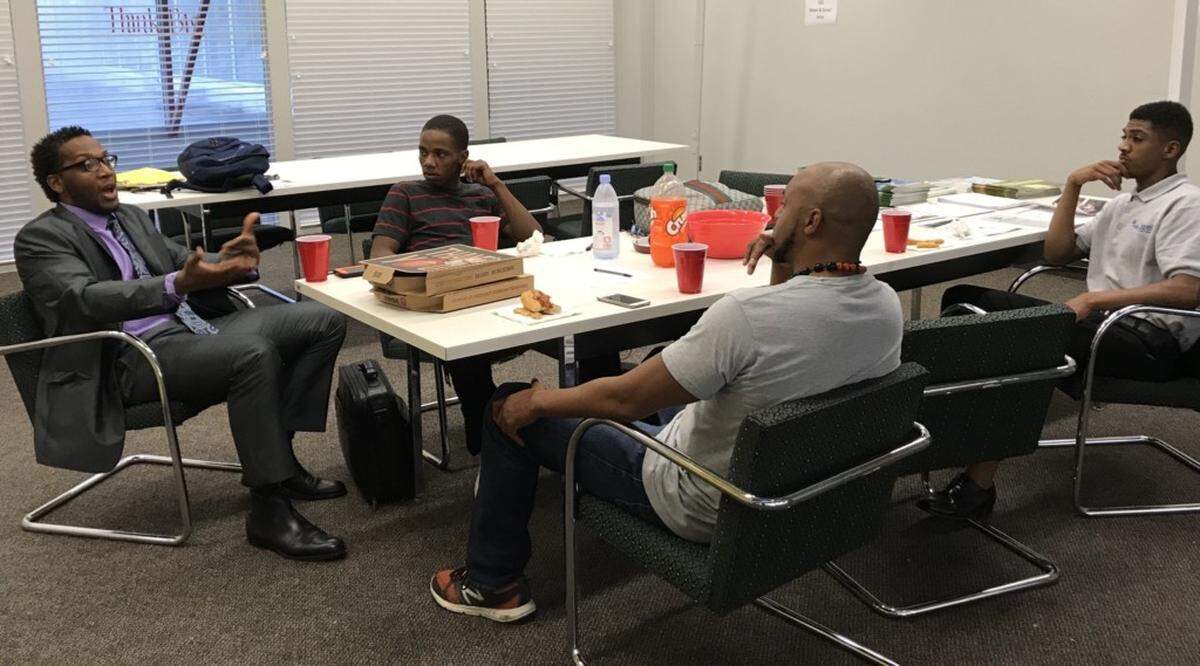
Dillard says he lost his job because he advocated for two students whose sexual harassment complaints were being swept under the rug by administrators. KSU says it fired Dillard for violating a federal law, the Family Educational Rights and Privacy Act, by including the students’ names in an email he sent about their harassment allegations.
Franklin Circuit Judge Phillip Shepherd ruled against KSU’s motion to dismiss the suit at a hearing May 10, clearing the way for a jury trial in coming months. The former student counselor has made a case strong enough to deserve a public airing, Shepherd told lawyers for both sides.
“I do think there is a tremendous question as to whether Kentucky State used a pretext in order to fire someone who was trying to bring to light a truly outrageous situation at the university,” Shepherd said.
“Was the university — in terminating Mr. Dillard — were they really trying to protect the privacy of students?” the judge asked. “Or were they trying to protect some administrators who engaged in what is alleged to be some really shocking, shocking and horrible course of conduct of preying on students for sexual favors in an absolutely horrible fashion? And frankly, I think it’s going to be up to the jury to decide.”
The Kentucky Supreme Court recently established, in a decision against the University of Kentucky, that colleges cannot simply cite FERPA as an excuse to block the release of all information about sexual harassment complaints filed by their students, Shepherd added.
“FERPA was not enacted to protect sexual predators and wrongdoers among faculty and staff. It was to protect the privacy of students,” the judge said.
Dillard told the Herald-Leader that he befriended the two students in 2017 and worried about their mental health after they were harassed by KSU officials in separate incidents.
Public records show the alleged harassers eventually left KSU, one by resignation and two by dismissal. But Dillard said the college dragged its feet on the complaints until it felt pressured to act, then lashed out at the people who applied the pressure.
“The response was basically a cover-up. They didn’t want to deal with it,” Dillard said. “The students were feeling distraught. They were feeling like they had nobody to talk to about this. I was trying to be there for them.”
KSU president says changes made
Speaking with the Herald-Leader last month in his campus office, Brown said KSU investigates sexual harassment complaints, assigning them to a designated “Title IX officer” — a reference to the federal civil rights law prohibiting sex discrimination in higher education.
“I can say we’ve got lots of training now. We have a fully functional Title IX office with legal authority and external authority so they are autonomous. Any complaint that comes in to them is managed outside of institutional chains. They operate freely,” Brown said.
KSU’s website identifies the college’s interim Title IX coordinator as attorney Hannah Satram-Hale.
New “partners” have been brought in by KSU to provide educational programs “reminding faculty, staff and students of their right to be comfortable and safe,” the president said.
KSU hired Brown in March 2017 following a contentious search process and a 7-to-3 vote in his favor by a divided Board of Regents.
Brown was president of Alcorn State University, an historically Black college in Mississippi, until he resigned in 2014 amid a state investigation into school purchasing practices. News stories by the Associated Press detailed roughly $89,000 in improvements made to the president’s residence without the legally required bids.
Documents also showed that a company associated with one of Brown’s aides collected $85,000 in production or consulting fees as part of the money that Alcorn State paid to stage campus events. And an auditor said the college spent more than $67,000 in bond money on projects not allowed in the lending agreement, according to the AP.
Under orders by the Kentucky legislature to improve its quality, Brown said KSU since his arrival has bettered its enrollment, retention and graduation rates. Accrediting organizations now recognize KSU that previously did not, he said.
As part of his reforms, Brown said, “there were administrators who were here, in the organizational structure, who are no longer here.”
“Great progress has been made,” he said. “Has this campus seen — over the last 10 years — has this campus seen dark days, with less than ideal administrators, mediocre to inadequate adherence to policy and compliance? Yeah, that’s probably been in our past.”
‘A sexually hostile environment’
The KSU students referenced in the litigation filed their sexual harassment complaints in 2017, as Brown was settling into his new job.
The male student is pursuing his own federal lawsuit against KSU and Brown under the pseudonym “John Doe,” alleging that he was denied the college experience for which he paid tuition and fees. A jury trial is scheduled for next January.
Doe said he was harassed in his junior year by KSU’s director of admissions, Justin Mathis, during a recruiting trip to Washington, D.C., in late September 2017. (As a member of the college’s Ambassador Team, Doe helped enlist new students at outreach events.) Mathis insisted he and Doe share a hotel room, where he made sexually unwelcome advances, and the sexual harassment continued back in Frankfort, Doe said in his suit.
“KSU became a sexually hostile environment where his perpetrator roamed free and could turn up at any moment,” Doe said in his suit.
Doe said he swiftly began complaining about Mathis to KSU on Oct. 1, 2017. But nobody seemed to investigate his complaint until five months later, on Feb. 27, 2018, when his upset mother called Brown’s office directly to demand that action be taken, he said. Distraught by the experience, Doe quit KSU and moved back home to Ohio.
Mathis resigned his job shortly after Doe’s mother contacted the president, on March 1, 2018, personnel records show. He later went to work in the admissions offices of colleges in Georgia. Mathis did not return calls and emails seeking comment for this story.
In its written response to Doe’s lawsuit, KSU denied wrongdoing.
“Defendants have no vicarious liability for any severe and pervasive harassment received by the plaintiff, which harassment is expressly denied, because it has promulgated an effective anti-harassment policy, exercised reasonable care to prevent and correct promptly any severe and pervasive harassing behavior, and the plaintiff unreasonably failed to take advantage of preventive opportunities provided,” lawyers for KSU wrote.
Investigated for harassment, fired for nepotism
The female student, a former KSU softball player named Miyache Ashworth, filed a complaint in April 2017 against father-and-son Oscar Downs Jr. and Oscar “Trey” Downs III, who previously were the women’s softball team’s coach and assistant coach.
Ashworth said softball players were subjected to sexually inappropriate touching and remarks about their bodies. Oscar Downs Jr. quizzed the women about their sexual orientation, she alleged. (In a 2019 deposition, Downs denied harassing anyone but acknowledged that he did keep track of the students’ sexual orientation. “There was six gay women on the team when the young lady got there, okay?” he testified about Ashworth’s arrival.)
“He relates it to a team morale issue and claims that he has had problems in the past with having homosexual individuals on the team causing a number of problems, and he doesn’t want that around,” Ashworth wrote in her complaint.
A month later, Ashworth went public with an Internet post under her full name to protest that KSU was not seriously pursuing her complaint.
In court documents, KSU said it placed Downs and his son on leave in September 2017 and conducted at least two investigations of Ashworth’s claims. The school said it concluded in May 2018 that there was insufficient evidence to make a finding on those claims.
However, KSU fired the coach and his son, anyway, citing alleged violations of the college’s nepotism policy.
The coach and his son responded by suing KSU for wrongful termination. They claimed they were fired not for nepotism but because of Ashworth’s sexual harassment complaint, which they disputed. (In his own deposition, Trey Downs said Ashworth was mad at the coaches for not giving her more playing time.) The Frankfort newspaper, The State Journal, reported on the student’s allegations in 2017 after she posted them on the Internet.
“We were told that was an embarrassment to the school,” Oscar Downs Jr. said in his deposition.
The Downs’ lawsuit was dismissed earlier this year, but they have indicated plans to appeal. Trey Downs later was hired as an assistant athletics director at Lincoln University, an historically Black college in Pennsylvania.
Email shared the students’ names
Xavier Dillard earned undergraduate and graduate degrees from KSU, played wide receiver on the football team and helped coach basketball for six seasons. By 2017, as assistant director of Student Support Services, it was his job to guide KSU’s roughly 2,300 students through the challenges of campus life. KSU reported a four-year graduation rate of only 9 percent that year, up from an even more meager 5 percent in 2016.
In his whistle-blower suit, Dillard said he befriended John Doe and Miyache Ashworth in his role as counselor, although he already knew Ashworth, a fellow native of East St. Louis, Ill. The students told Dillard that college officials were sexually harassing them, but nobody took their complaints seriously, he said.
“It’s a toxic environment,” Dillard told the Herald-Leader recently. “The students don’t feel like they have any help. It’s like there’s a dense cloud over there and there’s nobody who cares.”
Dillard said his initial attempts to report the sexual harassment to his superiors at KSU fell on deaf ears. Frustrated, at 1:31 a.m. on Oct. 22, 2018, he sent a mass email relaying the allegations not only to KSU administrators but also to then-Gov. Matt Bevin and several state and national news organizations, among others on a long recipient list.
KSU fired him later that same day for violating FERPA — the federal student privacy law — because he shared the students’ names and their allegations with “numerous unauthorized” people.
Dillard produced written authorization showing the students approved of his telling their stories, and in fact, Ashworth had gone public with her claims 17 months earlier. But KSU said this wasn’t Dillard’s call to make.
“K-State maintains that it fired Mr. Dillard for sending students’ private information all over cyberspace without permission,” said Josh Salsburey, a lawyer for KSU, at the Franklin Circuit Court hearing last month.
Dillard insists he lost his job for exposing KSU administrators to scrutiny, not the students.
“I was terminated because I blew the whistle,” Dillard said. “I want K-State to be a better place. Those students need somebody who cares about their well-being and not just have people try to take advantage of them because they’re younger.”
Other fired KSU officials file lawsuits
Other fired KSU officials who sued their ex-employer include:
▪ Holly J. Clark, who said she was fired as the college’s director of auxiliary services in 2018 in a fight over KSU’s award of its dining services contract. Clark said Brown favored one bidder, Sodexo, but another, Thompson Hospitality, consistently did best when several companies’ proposals were scored.
Finally, Brown ordered all the bids rejected and the award process restarted, said Clark, who led the purchasing committee in charge.
Clark told her supervisor that Brown had “improperly interfered” with the award process, she said. Also, as part of her job, Clark shared documents from the original award process with a lawyer for one of the companies, who had requested them under the Kentucky Open Records Act.
“This reply had the effect of exposing President Brown’s misconduct,” Clark said in her suit. She was fired without explanation a week later. Today, Sodexo provides dining services at KSU, according to the college’s website.
In a deposition, Brown denied favoring any of the bidders. He said he scrapped the original award process because he lacked faith in it.
“I did not trust the results,” Brown said. “One vendor had near-perfect scores on every index ... and all of the other vendors were, like, at the 50 percentile, if I recall.”
Court records show the original award process gave Thompson Hospitality scores of 94 in the first scoring and 92 in the second, with Sodexo following with scores of 78 and 85.
On April 6, KSU agreed to pay $150,000 to settle Clark’s whistle-blower suit.
▪ Damien Hodge, who said he was wrongfully fired in 2019 as executive director of KSU’s Office of Building, Recruitment, Enrollment and Discovery Services. Hodge alleged a list of unprofessional conduct by other KSU officials, including legal problems, and “a pattern of hostility in the working environment.”
“For example, the president of KSU would refer to white females as ‘kitchen bitch’ and discuss the way other females looked, using terms such as ratchet, ugly and dirty,” Hodge said in his suit.
In court documents, KSU denied the allegations about the president’s comments on women and submitted complaints about Hodge’s own behavior from KSU colleagues who said he was rude and abusive toward them. Hodge’s lawsuit, filed in 2019, is still in the discovery process where evidence is gathered by both sides.
▪ Geraldine Q. Young, an associate professor of nursing who said KSU placed her on leave in 2019 and later fired her after she expressed ethical concerns to her bosses about how the school misspent federal funds and admitted unqualified students into a graduate nursing program that she directed, in order “to increase the numbers.”
“I didn’t want to misuse — I didn’t want to be caught up in the middle of misusing government funding,” Young said in a deposition filed in her whistle-blower claim. “I was afraid of going to jail.”
In a May 28 motion for summary judgment against Young, lawyers for KSU said her claims of wrongdoing in the school’s graduate nursing program are “inadmissible hearsay,” unsupported by evidence. KSU placed Young on leave in August 2019 because she was refusing to admit students to the program, and it later ended her employment because she subsequently took a job with Frontier Nursing University, attorney Jessica Stigall wrote.
“The record is clear, Dr. Young was separated from the university because she obtained full-time employment with a direct competitor of the university,” Stigall wrote.
Young’s suit, filed in 2020, has been in the discovery process and now awaits her response to KSU’s motion for summary judgment.
This story was originally published June 11, 2021 at 9:45 AM.