Appeals court: Judge should’ve let KY man withdraw guilty plea after seeing evidence
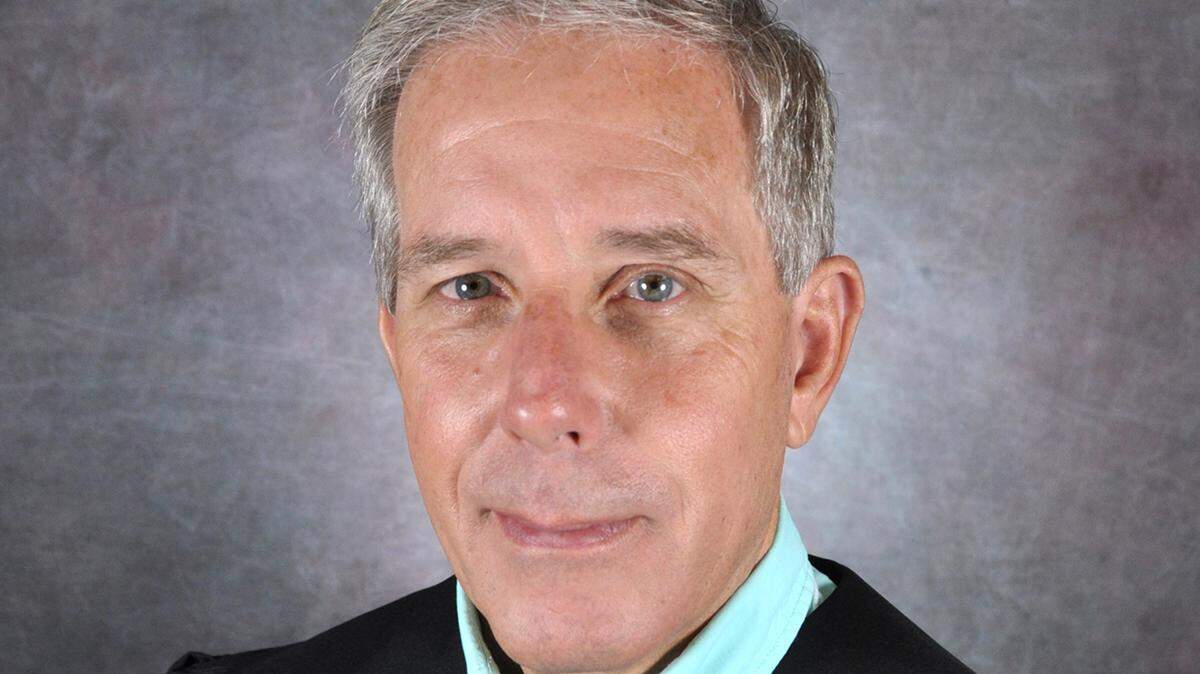
A Kentucky judge with a history of errors involving defendants’ right to fair trial was told Friday to take a second shot at a driving under the influence case where a Middlesboro man said he never saw a key piece of evidence that might have exonerated him.
Bell Circuit Court Judge Robert Costanzo erred by imposing a final judgment and jail sentence last year after James Keith Burchfield, 43, asked to withdraw his guilty plea, the Kentucky Court of Appeals ruled.
In 2019, the Court of Appeals chided the same judge for ordering a poor, mentally ill man to serve as his own defense lawyer during a jury trial, over the defendant’s loud protests. The jury convicted that man on a firearms charge after just 20 minutes of deliberation and sentenced him to 10 years in prison.
Defendants have a right to counsel, the appeals court reminded Costanzo in their order reversing his decision and returning that case to him. That was actually the second time in 2019 the Court of Appeals reversed Costanzo for a case involving criminal defendants representing themselves in his courtroom, despite not being lawyers.
In the case decided Friday, Middlesboro police charged Burchfield in 2017 with failure to signal, DUI, fleeing or evading police, possession of a controlled substance and persistent felony offender.
Days after Burchfield pleaded guilty, he protested from his jail cell that he just learned that a blood test performed by law enforcement after his arrest “came back negative” for proof of intoxication, according to the appellate court decision.
Nobody had told him about the test results, including his public defender, Burchfield said. Had he known, he would not have pleaded guilty, he said. Burchfield said he is trying to get a commercial driver’s license so he can work as a truck driver, which a DUI conviction will make impossible.
Too late, you’ve already signed the plea deal, Costanzo told Burchfield at a final sentencing hearing on March 31, 2020.
“But I wasn’t impaired, and you didn’t tell me that,” Burchfield protested to the judge. “I mean, my lawyer should’a brought it to my attention then, and then I wouldn’t — we wouldn’t — I wouldn’t be in this situation right now if my lawyer would’a brought it to my attention.”
“You voluntarily signed this agreement on the commonwealth’s offer on a plea of guilty,” Costanzo told him. “And I went through the questions to make sure, the court wanted to make sure that you understood what was going on.”
“I’m just asking, your honor, please, please work with me and allow me to withdraw my plea at this time so I can proceed forward and try to seek another lawyer to, to better represent me,” Burchfield said.
Instead, Costanzo sentenced Burchfield to six months in jail and five months on probation. Burchfield appealed.
On Friday, the Court of Appeals ordered Costanzo to vacate his final judgment in the case and reconsider Burchfield’s motion to withdraw his guilty plea.
The appeals court expressed concerns with the way Burchfield’s plea was processed, such as the fact that he was lined up before the bench that day with a small crowd of other unrelated defendants who were pleading guilty in their own cases.
“We are keenly aware of the volume of criminal cases handled by district and circuit courts across the commonwealth every day but urge the exercise of care to ensure due process is satisfied — especially when tedium and familiarity may set in,” the appeals court wrote.
It’s not clear when prosecutors produced the blood test results or to whom, the appeals court added, but Burchfield clearly had the right to see them before he decided whether to plead guilty or stand trial.
Once Burchfield objected and asked to withdraw his plea, the court should have taken that seriously, the appeals court said. But Burchfield’s lawyer never filed a written motion to withdraw the guilty plea, as he should have, and the court never held a hearing to examine the matter, the appeals court said.
Speaking by telephone on Friday, Costanzo said he is comfortable with his actions last year.
“I went through all of the colloquy with him about how he was making this guilty plea freely and voluntarily,” Costanzo said.
Asked if Burchfield should have been told about his blood test results before he accepted a guilty plea, Costanzo said, “In general terms, I would agree with you. That would be something important I’d want to know. ... But I try to stay away from overhearing any of the conversations between defendants and their attorneys, so I don’t know what they’re told.”
Burchfield’s lawyer for his appeal, Steven Buck of the Kentucky Department of Public Advocacy in Frankfort, praised Friday’s decision.
“We’re happy. This is the appropriate remedy,” Buck said. “This whole opinion is about protecting the process around making the plea decision.”
In another decision, in May, the Court of Appeals sent back a different case to Costanzo for similar reasons. In that instance, Steven L. Turner said his lawyer failed to explain that his prison sentences would run consecutively, one after the other, and not concurrently, and had he known that he would not have pleaded guilty. Costanzo denied Turner’s request for an ineffective counsel hearing, but the appeals court ordered him to hold a hearing.
This story was originally published August 20, 2021 at 4:24 PM.