Kentucky special session on COVID-19 starts with many lawmakers not wearing masks
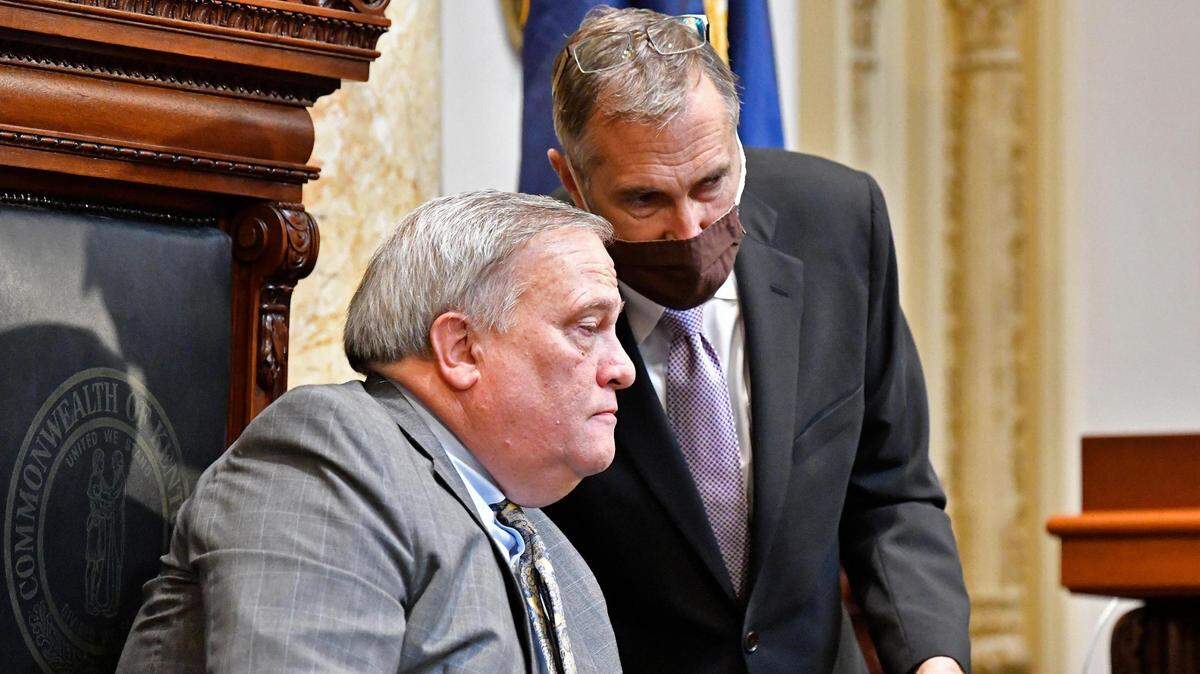
With most members not wearing masks, a special session of the Kentucky General Assembly started Tuesday morning to deal with the state’s surging COVID-19 pandemic.
Lawmakers acted quickly on Democratic Gov. Andy Beshear’s call to extend the COVID-19 state of emergency that has been in place in Kentucky since March 2020 and more time for a state of emergency to deal with August flooding in Nicholas County. House Joint Resolution 1, which extends the states of emergency and many of the governor’s emergency orders, was expected to clear the legislature before the end of the day.
House Speaker David Osborne, R-Prospect, gaveled his chamber into session at 10:13 a.m. and 94 of the 100 members responded to the roll call and heard the proclamation of the special session. Thirty-four members of the 38-member Senate convened at 12:16 p.m. with most members going without a mask. The two physicians in the Senate — Ralph Alvarado, R-Winchester, and Karen Berg, D-Louisville — wore masks.
Lawmakers returned to the state Capitol in Frankfort at the call of Beshear, who has presented them with an agenda to fight the coronavirus pandemic that has claimed more than 7,900 lives in Kentucky.
The Democratic governor made the session call Saturday, two weeks after the Kentucky Supreme Court said his emergency orders dealing with the pandemic needed approval by the Republican-led legislature.
Many Republican legislators have complained that Beshear’s orders were draconian and that he did not consult them when making his decisions.
Beshear’s agenda for the session includes extending the state of emergency he called in March 2020 until Jan. 15, when lawmakers will be in their regular annual session. The state of emergency is set to expire at midnight Friday.
Other COVID-19 items Beshear put on the agenda are renewing several agency and executive orders aimed at limiting the virus, requesting the ability to implement masking mandates for indoor settings, appropriating $69.2 million from the federal American Rescue Plan, and giving schools more flexibility in scheduling non-traditional instruction days.
The agenda also calls for extending by 30 to 45 days a state of emergency for the Aug. 3 flooding in Nicholas County and providing the Cabinet for Economic Development more flexibility in providing incentives with investment projects over $2 billion. He said the state has five possible projects of this size that the change could affect, particularly at a Glendale site off I-65.
The legislature cannot add subjects to the agenda.
Both chambers acted Tuesday on House Joint Resolution 1, which dealt with the state of emergencies for COVID-19 and the Nicholas County flooding.
The House, on a 92-3 vote, approved the resolution. The Senate later gave it final approval on a 32-4 vote.
Sen. Alvarado voted for the bill despite stressing his concern that the measure would allow nurse practitioners to write more prescriptions for controlled substances.
Earlier in the day, the House State Government Committee approved the resolution.
Its sponsor, Speaker Osborne, told the committee that the measure includes an extension of several other emergency orders, such as flexibility in the licensure of health care professionals and a provision to fight price gouging during the pandemic.
The only committee member to vote against the resolution, was Rep. Savannah Maddox, R-Grant County. She has been mentioned as a possible candidate for governor in 2023.
Later in the day, the Senate State and Local Government Committee approved an identical measure — Senate Resolution 1, sponsored by Senate President Pro Tem David Givens, R-Greensburg. Sen. Adrienne Southworth, R-Lawrenceburg, voted against it.
The Senate committee also approved Senate Bill 4, which would prohibit legislators from getting paid during future special sessions while waiting for the governor to consider vetoes. Southworth was the sole legislator to vote against it. Sen. Mike Nemes, R-Shepherdsville, did not vote, saying he did not think the bill fell within the governor’s call for this special session.
Only a governor can call the legislature into a special session and set its agenda. Lawmakers determine how long a special session lasts.
Senate Majority Floor Leader Damon Thayer said the Senate and House plan to take up identical bills and resolutions at the same time this week. This would allow the chambers to compensate for the required parliamentary procedure of three public readings on legislation, enabling lawmakers to possibly end the session Thursday or Friday.
The special session will cost taxpayers about $68,000 a day.
The Senate is to resume its work at 9 a.m. Wednesday and the House is to convene at 10 a.m. Wednesday.
This story was originally published September 7, 2021 at 10:55 AM.