‘All politics is national’: How Kentucky’s congressional districts have slid off the map
READ MORE
Off the map
Partisan districts are not unique to Kentucky. It’s the trend almost everywhere, designed by state lawmakers to preserve their respective party’s federal lawmakers.
Expand All
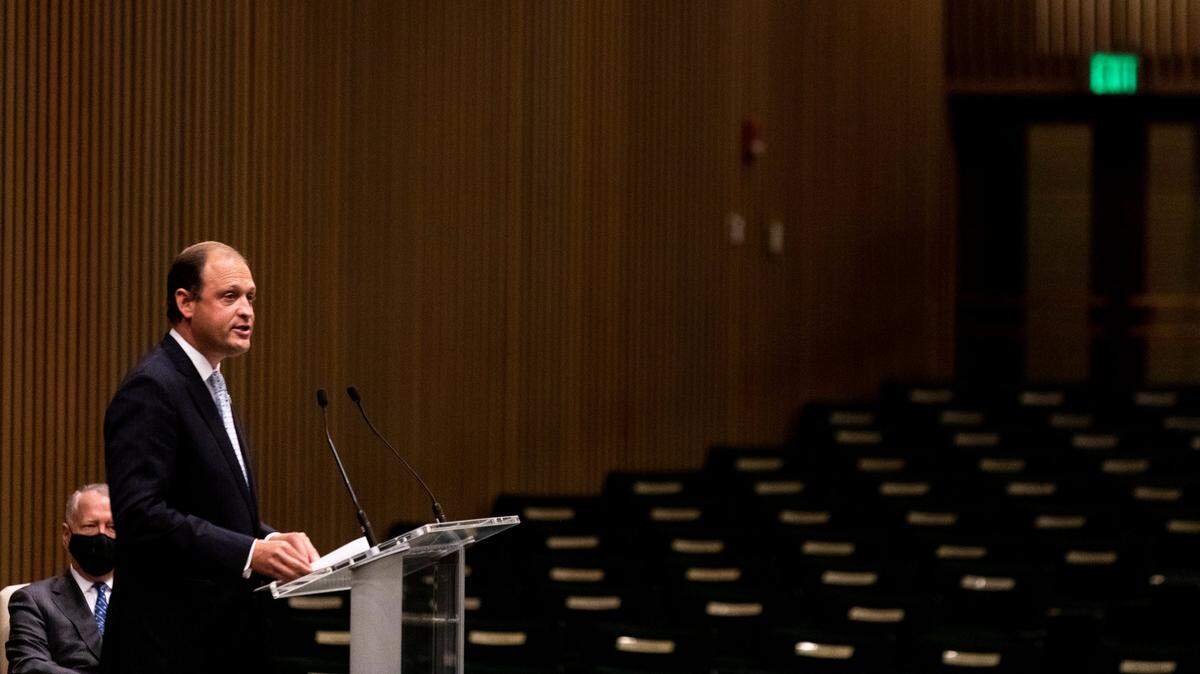
‘All politics is national’: How Kentucky’s congressional districts have slid off the map
.png)
Interactive graphics: Explore why Kentucky’s congressional races are less competitive
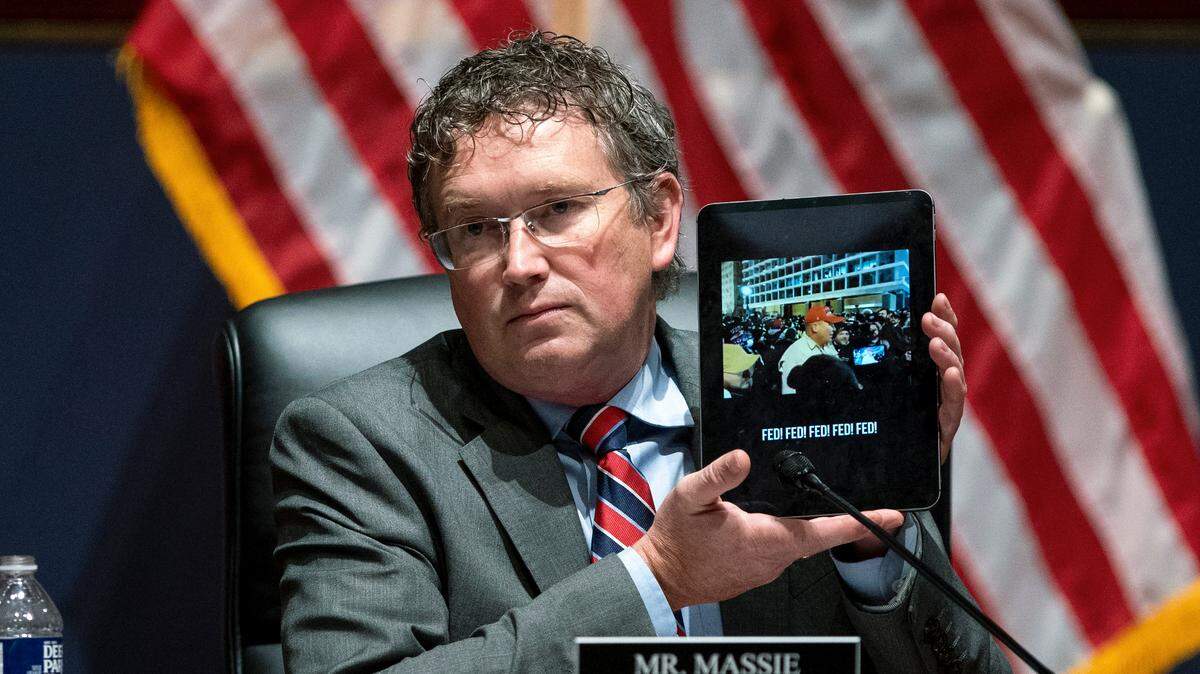
Rep. Massie, congressional contrarian, faces primary challenge ‘to the Trump of me’
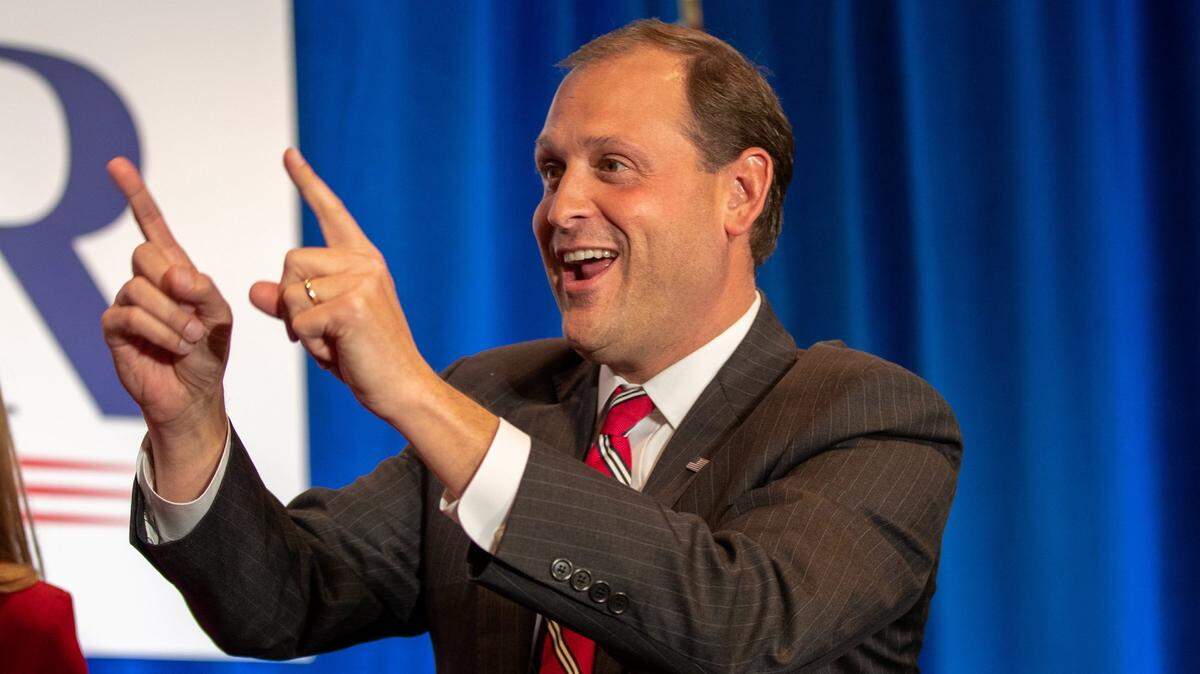
No new challengers for Barr at deadline. Who else filed to run in 2022?
Four years ago, Andy Barr had a real race on his hands.
An outside Republican group poured more than $3.5 million into Lexington’s 6th Congressional District to counter the nationally recruited Amy McGrath’s $8 million warchest.
Barr survived the rough and expensive environment, but only by 3 percentage points.
Now his former battleground seat in the heart of Kentucky’s commonwealth looks downright hospitable, if not sleepy.
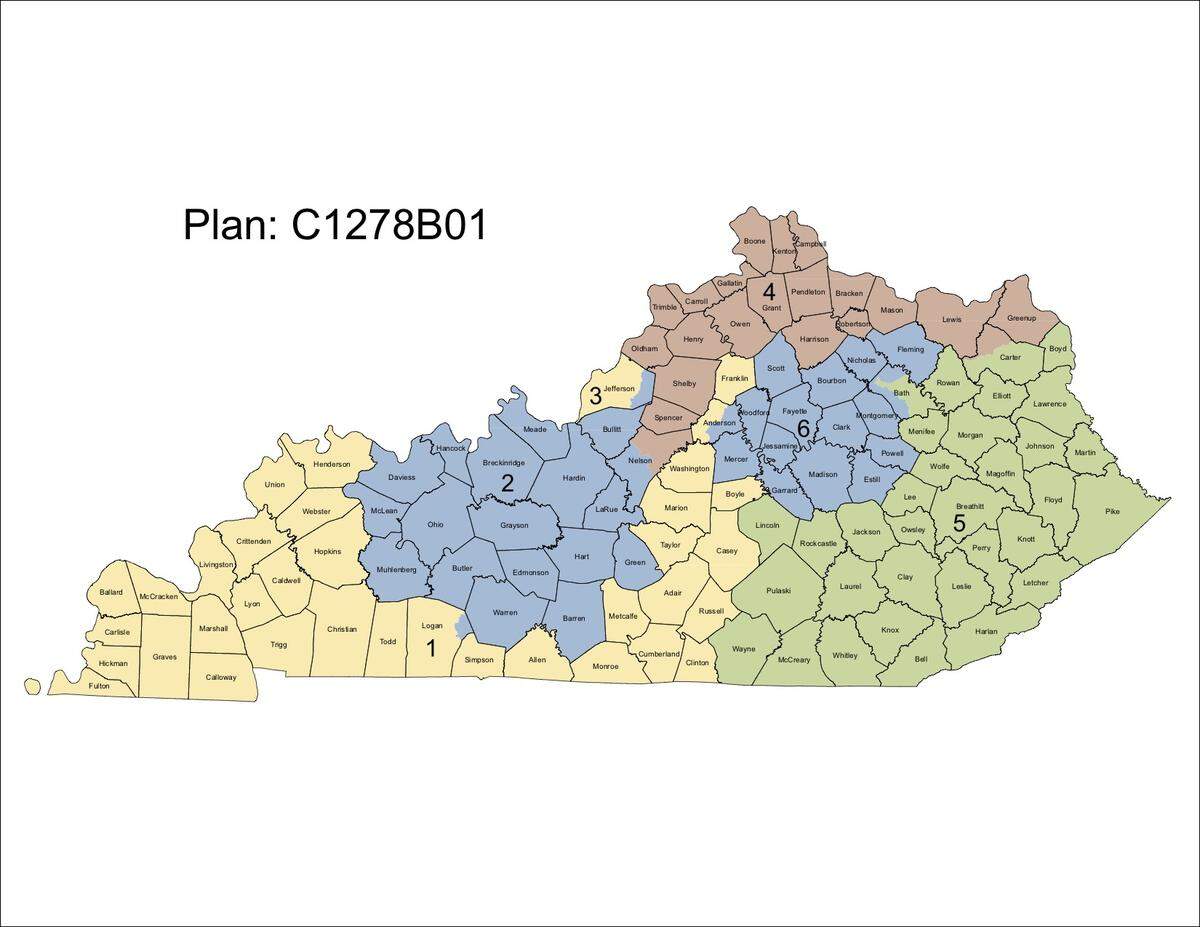
There’s hardly a sign the Republican congressman will face any real competition for a sixth term later this year – or for additional terms into the foreseeable future. This appears true in each of the commonwealth’s six congressional districts, especially after the legislature approved a slightly adjusted map that solidifies the state’s five Republican seats around the single Democratic-controlled seat in Louisville.
Kentucky’s congressional districts – much like a majority across the nation – are becoming more partisan and less competitive, leading to ho-hum campaigns, swaths of disillusioned voters and anticlimactic election nights.
It’s the product of a handful of converging factors over many years, but one supersedes them all: The nationalization of our politics.
“All politics is national now, and it’s very simple. Everybody gets the same sort of news nationally and they don’t get nearly as much local news as they get national and international news. That’s been a big change,” said Ben Chandler, the last Democrat to hold Lexington’s congressional seat until Barr defeated him in 2012. “Because of the stances the national Democratic Party takes, it’s easy for the state Republican Party to brand all of the Democrats in the state with that national brand, which is very definitely an unpopular brand statewide and in most of the districts.”
No district in the state has a partisan breakdown that falls within single digits. Barr’s seat is now R+13, according to the analysis of FiveThirtyEight, meaning its make-up is 13% in favor of Republicans. In 2020, he carried it by 16%.
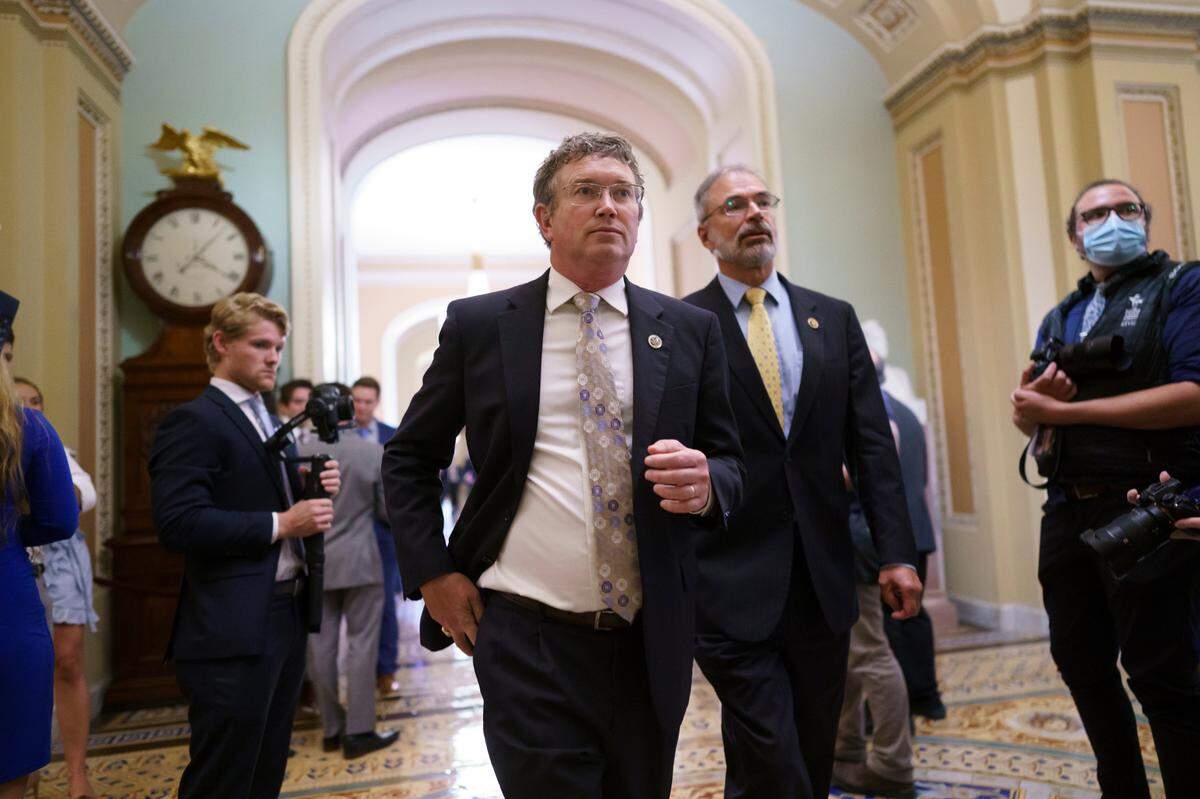
Rep. James Comer’s 1st District, which now includes Frankfort, is rated R+43, requiring Democrats to perform close to a miracle to orchestrate a flip there. Rep. Thomas Massie, a fireball of controversy for his unapologetic libertarian ideology, enjoys a R+34 partisan edge in northern Kentucky’s 4th District, which abuts Cincinnati.
At the same time, state Republicans largely left alone retiring Democratic Rep. John Yarmuth’s 3rd District in Louisville. It’s now rated D+20, likely insulating it against even the harshest of red waves.
These double-digit partisan districts are not unique to Kentucky. It’s the trend almost everywhere, designed by state lawmakers to preserve their respective party’s federal lawmakers.
A New York Times analysis found that nearly 90% of the next U.S. House could be occupied by members who face nearly zero threat of losing a general election. Inside Elections, another outlet that provides nonpartisan analysis of House races, deems only 15 races as true toss-ups in the 2022 cycle.
And while gerrymandering is a factor that receives an abundance of attention, experts say that the grand political realignment of working class rural voters abandoning the Democratic Party is a much more salient cause, particularly throughout Appalachia and into the south.
Lexington’s 6th Congressional District used to fall in the competitive category when Chandler held the seat for four terms. But Chandler, now the CEO of The Foundation for a Healthy Kentucky, says he had to practice the “politics of confusion” in order to survive in a place where most identified as conservative.
“I had to confuse my constituents so they couldn’t tell whether I was a liberal or a conservative or a moderate,” he said, noting that endeavor became more difficult as data showed him that an increasing amount of his constituents were primarily depending on conservative media outlets like Fox News, which blared narratives that tarred his entire party with the same broad brush. “When that’s the case and you’re a Democrat, you clearly are looking at a hell of an uphill battle.”
Earning attention on mundane issues around consensus-building and government efficiency proved futile. More frequently, media of all stripes increasingly seek representatives’ reactions to the latest national controversy, rather than probe their proposed legislation or committee work.
“The nuts and bolts of actually having a government that works consistently and properly and efficiently, is of very little interest to the voter anymore,” Chandler said. “You can talk about them, but nobody will pay any attention. And nobody will cast their vote based on you being interested in good government.”
After fighting off Barr’s initial challenge in the Republican wave year of 2010 by two-tenths a percentage point, Chandler lost the seat by 4% two years later.
Chandler now says the political environment would have to change drastically for Democrats to have a shot at recapturing his old seat.
“You’d have to see the Republican Party lose a lot of ground generally nationally. If things stay as they are now, it’s going to be a huge uphill climb,” he said.
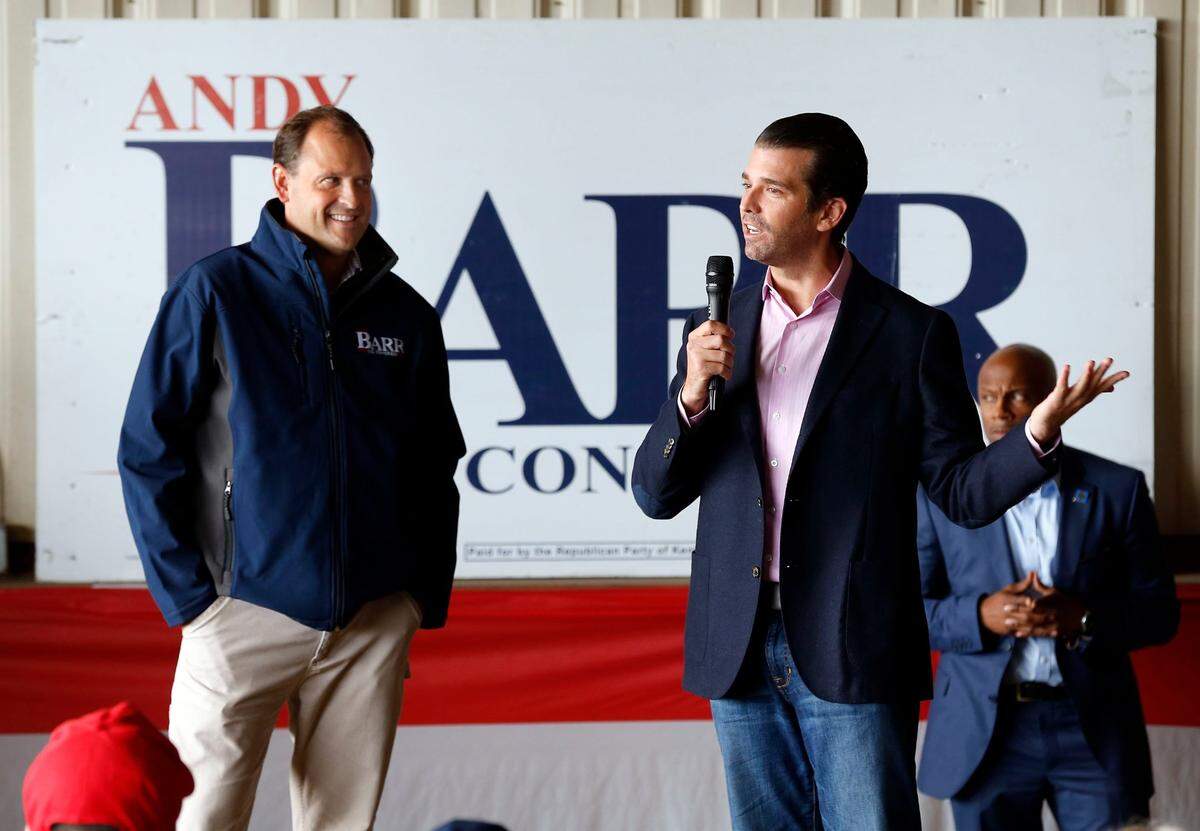
Barr’s longshot opponents
Two Democrats are vying for the opportunity to replace Barr this year. Chris Preece is a high school chemistry teacher who decided to run after the Jan. 6 attack on the U.S. Capitol. Geoff Young, a retired state government employee, is a perpetual candidate who has lost the congressional primary in each of his previous three attempts.
Preece would advocate for more education funding at all levels and supports paid family leave. He also believes Barr didn’t go far enough in rebuking the perpetrators responsible for the Jan. 6 raid.
“He just tries to sweep it under the rug and move on,” Preece said.
Young is focusing his unconventional bid almost entirely on foreign policy, warning that the economic sanctions leveled against Russia will only come back to bite the U.S. He blames Barr, a member of the House Foreign Affairs Committee, for being a longtime cheerleader of sanctions that he believes are juicing inflation.
“I think they’re going to sanction us back and hit us so hard that our entire financial system and quickly after that, our entire economy, is going to collapse. It may be decades before America recovers from that,” Young said. “Barr is more to blame perhaps than any other congressman for the coming Depression that is going to hit the United States and Kentucky.”
Barr’s campaign and office did not respond to multiple requests for comment.
Primary voters will determine who Barr’s general election opponent is on May 17, but the race is not on national Democrats’ radar and neither Preece nor Young have amassed the resources that would signal a serious campaign. Preece said he’s raised about $25,000 thus far; Young loaned his campaign $32,000 last year but reported just $80 in contributions on his year-end report.
Barr had $1.9 million to end the year.
“We are always working on ways to bridge the urban-rural divide and no place is that more important than a district like the 6th,” said Josh Mers, chairman of Fayette County Democrats. “We will continue to foster consistent growth in Democratic Party registrations in Fayette County and work actively across the 6th to talk about the issues.”
But Preece, who expressed confidence about winning the primary, acknowledged it would be difficult to oust the five-term incumbent come November.
“I think it’s going to take some creativity and grassroots support and doing things in unconventional ways that other campaigns previously haven’t done,” he said.
Scott Jennings, a well-known and well-wired Republican operative, said the reason the seat isn’t competitive anymore is because Kentucky Democrats won’t nominate a Chandler-like moderate.
That Democratic U.S. Senate candidate Charles Booker is running to the left of Amy McGrath after her own 20-point crushing defeat in 2020 underscores the nationalization of Kentucky politics. As a blue-blooded progressive, Booker could be a Democratic candidate in many battleground states and still face a difficult race, let alone right-leaning Kentucky.
“They nominate Charles Bookers and Amy McGraths. It wouldn’t matter if you drew that district 5 points better,” Jennings said of the 6th Congressional District. “It would take a Democrat who isn’t completely totally beholden to the progressive left. You’d have to be non-orthodox on abortion, guns, education, some economic issues…If you popped yourself out of the ditch and said, ‘I’m a pro-gun Democrat’, you’d immediately get a primary and parts of the party would swarm you.”
‘Completely given up’
If the Barr race looks daunting for Democrats, the state’s 1st Congressional District, which runs to the west of Lexington and then snakes 125 miles south to the Tennessee border before jutting west 225 miles to Paducah, seems unfathomable.
Redistricting actually shaded Rep. James Comer’s seat a bit bluer by adding Frankfort to his turf. But it remains an overwhelmingly rural district that hasn’t been held by a Democrat since 1995.
Comer won his 2020 race by 50 percentage points and by 38 points in 2018, meaning he has plenty of breathing room and little to sweat.
Despite these seemingly insurmountable odds, Jimmy Ausbrooks, an openly gay mental health therapist who earned less than 1% of the vote in the 2020 Democratic U.S. Senate primary, has suited up for another race.
“He has swept the floor with his opponents,” Ausbrooks conceded. But he said someone had to challenge the three-term Comer, if only to give marginalized voters a choice. “He’s anti-gay and that’s a big one,” Ausbrooks said of Comer. “I believe if you’re going to represent the district, you need to represent the entire district.”
“So many people have just completely given up that their voice makes a difference. A majority of them don’t even go vote,” he noted.
If elected, Ausbrooks said he would push for electric vehicles and support government-imposed controls on gas prices in order to alleviate the economic pressure his neighbors are feeling due to inflation. But he still presented himself as a moderate Democrat who embraced fiscal responsibility.
“Once I walk into the Capitol, I’ve got to check my party label at the door,” he said.
But Ausbrooks likely doesn’t have the resources to hit enough doors in the sprawling 1st Congressional District, which covers more than 30 counties. He said he’s only raised a little under $4,000 while continuing to work a full-time job at a private practice. Comer had a half a million banked to end 2021.
A spokesman for Comer, Matt Smith, responded that despite the 1st Congressional District having more registered Democrats than Republicans, the congressman has consistently racked up large margins, “due to his record of accomplishment and shared values with his constituents.”
“Even as the district becomes bluer with redistricting, we expect Congressman Comer to continue to receive strong support,” Smith said.
More broadly, Ausbrooks and other Democrats in Kentucky said party leaders at all levels weren’t doing enough to tend to far-flung rural areas that have long fallen out of the competitive class.
It’s understandable why.
Democrats, nationally, are struggling even to retain the suburban gains they made in 2018 and 2020, where the demographics of younger, more diverse and highly educated voters are more inclined to their message.
Washington Democrats are more consumed with protecting candidates in places like Richmond, Virginia, Winston-Salem, North Carolina and Allentown, Pennsylvania before they even consider Lexington and Bowling Green.
But Mike Haines, a former chairman of the Owen County Democratic Party, said a similar critique can be leveled at party officials within the state.
“Outside the urban parts of these districts, their contact with us is very small,” said Haines. “The party apparatus doesn’t communicate with the non-urban parts of the district very well…There’s not a strategy to match up a candidate that would reflect the district.”
“As far as my party goes, we aren’t doing enough to bring attention and awareness,” added Ausbrooks.
The one Democrat with a big enough megaphone who could amplify the party’s message is Gov. Andy Beshear, the titular leader of the party. But Beshear has remained laser-like focused on managing a stream of in-state disasters and largely eschewed federal politics altogether.
Privately, some Democrats hope Beshear can bring new voters into their fold when he runs for re-election in 2023.
Jack Dulworth, a Democratic National Committee member from Kentucky, said it’s clear that Beshear should be the model for Democrats up-and-down the ballot.
“We have to be thoughtful about the candidates we do nominate and it has to come to the wing of the moderates,” Dulworth said. “Kentucky Democrats have always been moderate.”
Targeting Massie
The one congressional challenger that Democrats think most fits the Beshear mold is Matt Lehman, a healthcare consultant who was formerly the CEO of a cell and gene therapy company.
Lehman is running against Massie on the premise that the suburbs of Cincinnati and Louisville would rather have a productive legislator than an libertarian whose default position is “no.”
“We have sort of a nihilist, anarchist almost representing us versus somebody who’s actually going to be a constructive representative in Congress,” Lehman said.
Lehman said he would focus his attention on the opioid crisis, infrastructure and health care delivery, steering clear of more bitterly divisive issues that consume Washington.
“Lehman offers the people in our district a level-headed alternative to the man who aligns himself with Lauren Boebert and Marjorie Taylor Greene,” said Kendal Butler, the Democratic chair of Harrison County. “Matt’s campaign is anchored in respect and responsibility.”
Lehman’s strategy is centered around boosting voter registration and attempting to juice turnout among more moderate, business-friendly Republicans who are exhausted by Massie’s antics.
“Cincinnati, 20 years ago, was all Republican and now it’s effectively all Democrat...I think these are the kind of districts that the Democratic Party nationally really do need to concentrate on. These are moderate, suburban districts in major metropolitan areas.”
But Massie correctly notes that his district isn’t being targeted by national Democrats, especially in a year that looks to be punishing for the party in power. And voters in his district have looked past Massie’s perceived eccentric profile before.
He won his 2020 general election by 34%. In 2018, a favorable year for Democrats, Massie’s margin was still 28%.
“They’re on defense and even if they were on offense, they wouldn’t go after something that’s R+18 or R+20 whatever the district is,” Massie said. “He’s in the wrong party for our congressional district. Two-thirds of our constituents are not going to vote for somebody to go to Washington, DC and vote for Nancy Pelosi to be speaker.”
Massie added, “The Democrat, regardless of who he is, is not going to get more than 40%. Whoever it is will probably get 32% this year.”
This story was originally published March 31, 2022 at 10:03 AM.