As KY lawmakers prepare for break, they approve charter school funding and other bills
.jpg "FRANKFORT, March 21, -- Rep. Jason Nemes, R-Louisville, confers with Sen. Gerald A. Neal, D-Louisville, outside of the House chamber.")
As they prepared for a two-week break before concluding the 2022 legislative session, Kentucky lawmakers approved a flurry of bills, including a controversial plan to fund charter schools that Gov. Andy Beshear already has pledged to veto.
The Senate voted 22-to-14 Tuesday to give final passage to House Bill 9, creating a public funding mechanism for charter schools in Kentucky.
Charter schools — both nonprofit and for-profit, under the bill — could collect per-pupil funding from local school districts while operating under independent management contracts with those districts. They would be managed under fewer regulations than most district-run schools.
Supporters say some Kentucky parents want better educational opportunities for their children than existing public schools offer. Not everyone can afford private school tuition, so a charter school can be an alternative, they said.
“I’ve heard from many educators and educational leaders around the commonwealth who say, ‘I’m not scared of charter schools. I’m gonna raise my game. I’m competitive, and if they come, it’s only going to make me work harder in my district to perform at an even higher level,’” said Senate Education Chairman Max Wise, R-Campbellsville.
Opponents say charter schools will drain money and select the students they want from public school districts, in many cases with an unhealthy profit motive and little accountability to their communities.
“Unfortunately, the way this is written, the rules aren’t the same for all parties,” said Sen. David Yates, D-Louisville. “It’s not a level game. I hope we can raise those standards all the way up. But as it’s written, our public schools are held to a different standard.”
Beshear expressed his opposition to the bill earlier in March.
“I oppose charter schools,” Beshear told reporters. “I’ll veto any charter school bill. I believe that the bill is unconstitutional in its current form.”
Ordinarily, the Republican super-majorities in the General Assembly easily override the Democratic governor’s vetoes. However, the House passed HB 9 by an unusually narrow margin — 51-to-46 — so the bill’s supporters can’t afford to lose many votes in that chamber if they want to succeed with a veto override.
Also moving through the General Assembly on Tuesday and Wednesday:
Public benefits
House Bill 7 would add new restrictions to Kentucky’s public benefits programs, chiefly food stamps and Medicaid.
Scaled back by its Republican sponsors, the current version of HB 7 would toughen penalties for benefits fraud and instruct the Cabinet for Health and Families Services to create a “community engagement” program for able-bodied Medicaid recipients without dependents.
The bill would impose time limits on food stamps benefits for able-bodied Kentucky adults without dependents, capping them at three months of benefits during a 36-month period of joblessness. The state could waive that cap for certain economic hardships, such as counties with unemployment rates above at 10 percent or higher.
And it blocks the state Medicaid program from using the shortcut of “presumptive eligibility” to more easily enroll Kentuckians in sudden need of health insurance because they’ve lost their jobs, unless required to by federal law. Kentucky hospitals could use presumptive eligibility for patients they are treating, although the patients would need to formally apply for Medicaid coverage later.
The Senate passed the bill Wednesday.
Advocates for the poor said they are grateful that compromises were reached on the bill, but they still have concerns. One estimate this week, by the Kentucky Center for Economic Policy, said tens of thousands of people could lose food and medical assistance because of the bill.
Kentucky Youth Advocates issued a statement Wednesday asking which Medicaid recipients will be expected to engage in work or school to keep their health coverage. Will it include pregnant women and former foster youths, the group asked.
KSU gets its bailout
The House gave final passage to House Bill 250, which provides Kentucky State University with $38 million to help address well-documented financial issues.
The state’s lone publicly funded historically Black college will get more than its initially requested $23 million, but it comes with some strings attached: stricter oversight from both the state legislature and the Council on Postsecondary Education, a year-long pause on its search for a new permanent president, and more. Under the bill, the school’s Board of Regents is granted the ability to terminate anyone at the school.
Staunch advocates for the school, alums Rep. Derrick Graham, D-Frankfort, and Sen. Gerald Neal, D-Louisville, voted for the measure, though both mentioned more funding for the nursing school at KSU as a priority they wish was addressed this session.
Fentanyl penalties
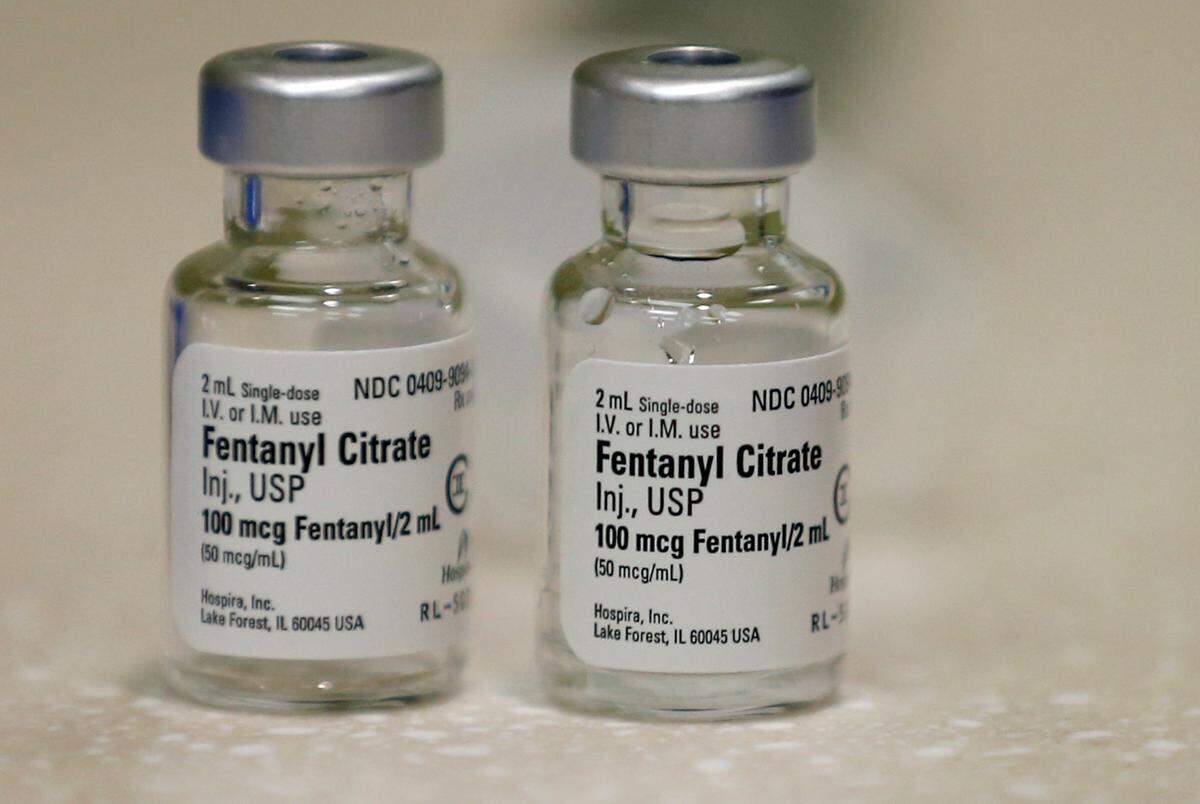
House Bill 215 increases the penalties for importing or trafficking carfentanil, fentanyl, or fentanyl derivatives.
Fentanyl is a synthetic opioid far more powerful than morphine that contributes to the nation’s tens of thousands of overdose deaths annually. HB 215 would require defendants to serve at least 85% of their sentences rather than the current 50%, and it would eliminate their eligibility for pretrial diversion programs.
The state Department of Corrections says it currently has 214 inmates serving time for trafficking or aggravated trafficking of fentanyl, carfentanil or fentanyl derivatives.
The Senate approved the bill Tuesday.
Catalytic converters
Senate Bill 114 would require scrap metal dealers to get copies of personal identification and proof of ownership before purchasing catalytic converters taken from automobiles. Violations would be a Class B misdemeanor.
Catalytic converters, part of a vehicle’s exhaust system, contain valuable metals and often are targeted by thieves. Last year in Jeffersontown, police nabbed one theft ring involving six people who had stolen hundreds of catalytic converters worth more than $100,000.
The Senate gave final passage to SB 114 on Tuesday, concurring with minor changes made in the House.
Parimutuel wagering
House Bill 607 sets a 1.5% tax rate across the board on all parimutuel horse wagers.
That raises the rate on advance deposit wagering, which lets people bet on racing online, while leveling the rate across all other wagering platforms. It also eliminates “breakage,” meaning that bettors will now get their winnings to the penny, as opposed to twenty-cent increments.

The bill has received bipartisan push-back for not increasing the tax rate on historical horse racing, a slots-like game that bases winnings on the results of previously run horse races.
The latest version of the bill, which came out of a Senate committee on Tuesday, added language that allows local governments to levy occupational taxes on racetrack extensions and delays tax revenue going to the state General Fund from wagering on live races. The Senate and House passed the bill on Tuesday, sending it to the governor.
Transportation budget and highway plan
Both major bills to do with the state’s transportation system – the transportation budget and the biennial highway construction plan – were granted final passage in the Senate on Wednesday.
The document now includes significant funding for a Leestown Road intersection that some Lexington local government leaders say is much-needed. Initial estimates from Kentucky Transportation Cabinet officials show the project would cost $49 million.
The highway plan includes $855 million in the next two fiscal years towards the Brent Spence Bridge project, an integral traffic vein on Interstate 75 that connects Kenton County to Cincinnati. It also includes $53.5 million to assist in the continued redevelopment of the Mountain Parkway in Eastern Kentucky.
Judicial and legislative branch budgets
The judicial branch budget includes a $2,000 across-the-board raise for all non-elected employees as well as an 8% raise for all employees including judges.
The raise was not as generous as Kentucky Supreme Court Chief Justice John Minton Jr. requested. During a committee meeting, Minton lamented the state’s low pay for judges and called his branch “the third-world branch” But a Senate floor amendment included language indicating that the General Assembly intends to provide an increment in the following fiscal year after a compensation study is complete.
The first-year raise is, for non-elected staff, more lucrative than their counterparts in the Executive Branch, but what is intended for the second year is still unclear. Executive Branch employees will see an aggregate 12% raise.
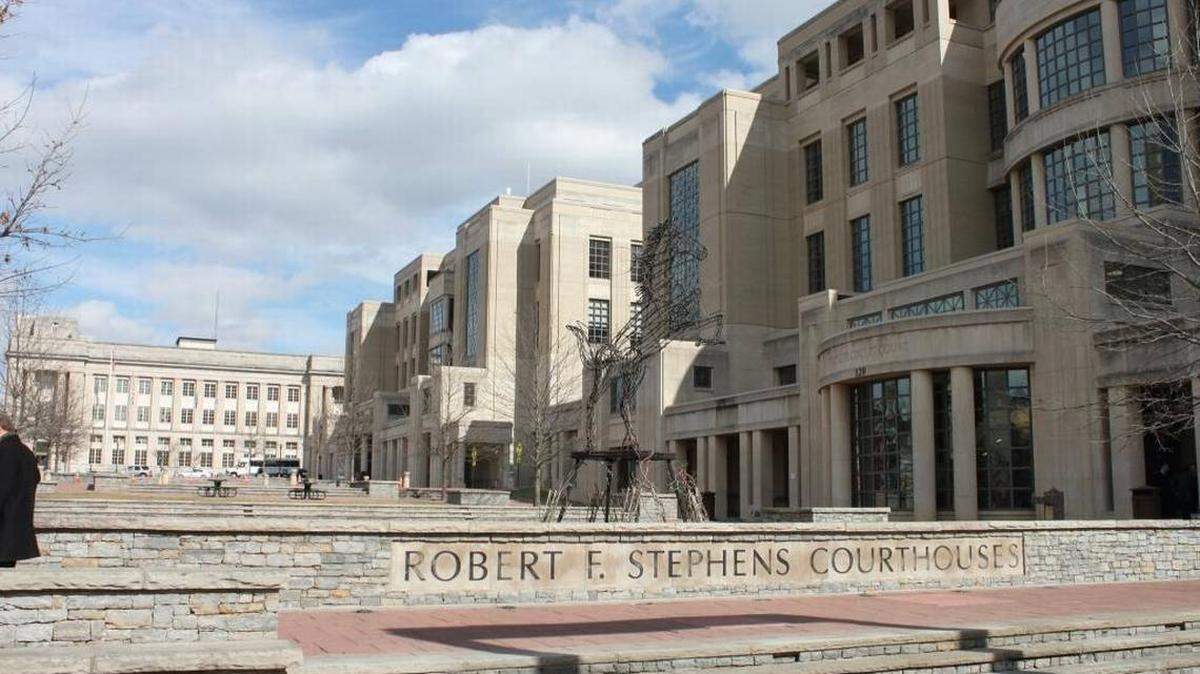
The legislative branch budget received final passage in the on Wednesday.
A provision including raises for legislators as well as legislative staffers drew some criticism from lawmakers, but most voted to pass the bill. Sen. Adrienne Southworth, R-Lawrenceburg, said it was “awkward” for lawmakers to give themselves pay raises alongside long-suffering state workers.
Industry regulations
House Bill 594 would require the state of Kentucky to consider the financial costs to private industry before enacting new regulations, without also considering possible public benefits, such as better consumer protection, community health or workplace safety.
The Senate approved HB 594 on Wednesday while rejecting a floor amendment that would have required state agencies to also consider public benefits as well as industry costs. The bill is similar to model legislation proposed by the pro-business American Legislative Exchange Council (ALEC).
Fewer campaign finance reports
House bill 740 will reduce the number of times that candidates for office in Kentucky have to report on who is donating to their campaigns. In non-election years, those seeking an office that isn’t statewide will only have to submit an annual campaign finance report to the Kentucky Registry of Election Finance (KREF). Current law dictates that all candidates submit quarterly campaign finance reports.
The head of KREF initially opposed the bill in committee. Proponents of the bill including sponsor Rep. Matthew Kock, R-Paris, say that it cuts down on onerous campaign finance reporting requirements, and that the same information on campaign donors will be reported but in an annual report instead of a quarterly one during non-election years. It easily passed both chambers, with mostly Democrats voting against it.
$300 million in ARPA funds for broadband
Not a single state legislator voted against allocating $300 million in American Rescue Plan Act funds for the deployment of broadband in Kentucky.
The funds are allocated all within the next fiscal year and will be administered by the Kentucky Infrastructure Authority (KIA).
This story was originally published March 30, 2022 at 10:46 AM.