Prohibition is still reality in some KY counties. This is how alcohol sale laws have changed
READ MORE
Prohibition is still a reality in some KY counties
Out of Kentucky’s 120 counties, only 10 are still legally dry, meaning they can’t sell alcohol within the county’s borders. Here’s a look at how that number has dwindled down -- and why some hope it never gets to zero.
Expand All
Prohibition is still reality in some KY counties. This is how alcohol sale laws have changed
Think you know a thing or two about alcohol in Kentucky? Take our quiz to test your knowledge
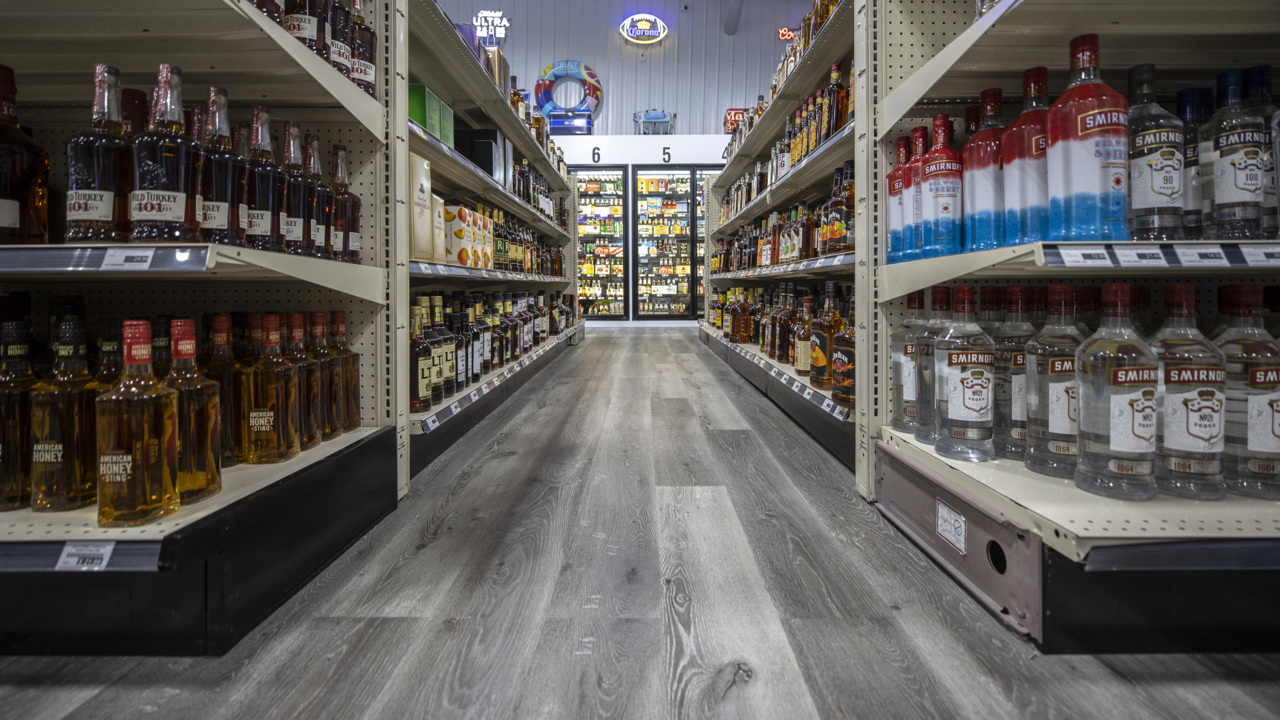
After voting to go wet, alcohol sales allowed in Wayne County. ‘It’s brought more businesses.’

‘Sin is sin’: Wayne County director of missions discusses church teachings on alcohol
People used to joke that in Kentucky, Bourbon County was dry, meaning it barred alcohol sales, but Christian County was wet.
It was an example of the tangle of laws and conflicting views on alcohol in Kentucky, as well as a reminder that even in the state synonymous with bourbon whiskey, dozens of counties had no legal alcohol sales.
For decades beginning in 1919, it was not legal to sell beer, wine, whiskey or other spirits across most of Kentucky. Even as recently as 2011, more than 40 of the 120 counties remained legally dry.
No more: Bourbon County has been wet for some time, and now so is most of the commonwealth.
Through decades of battles over alcohol in Kentucky the arguments have broken down along the same lines, pitting supporters who argue that legal sales will mean more jobs, tourism and tax revenue for local governments against opponents who oppose alcohol on religious grounds or are worried that legal sales in more places will mean more use and abuse of alcohol, including more drunken driving.
There are just 10 counties remaining with no form of legal alcohol sales, and residents in several of those are trying to get enough signatures on petitions to call for a vote in November on whether to allow sales, according to information from the state Department of Alcoholic Beverage Control and local officials.
The remaining all-dry counties are rural: Menifee, Elliott and Morgan, clustered together in northeast Kentucky; Leslie and Knott in Eastern Kentucky; Casey; Clinton, Monroe and Allen, all on the Tennessee line; and McLean in the western part of the state.
A few counties have limited alcohol sales, such as at a golf course or farm winery, and there are a number of wet cities in otherwise dry counties, but the time when many Kentucky residents had to drive an hour or more to legally buy a 12-pack of beer or a bottle of whiskey is gone.
“Now it’s just overwhelmingly wet,” said Tom Appleton, a retired Eastern Kentucky University history professor who researched alcohol prohibition as a political issue in the state.
The change was a long time coming.
A controversial product
Kentucky’s signature spirit may have picked up the name “bourbon” after the French royal family that aided the U.S. in the Revolutionary War, or maybe because it was shipped to New Orleans and sold on Bourbon Street.
However the name came about, the whiskey was a key product for Kentucky even before it became a state in 1792, allowing farmers and distillers to turn corn into something easier to ship and high in demand.
The state developed a reputation for good whiskey, and it remained a significant piece of the economy through the 1800s.
Production surged from 5.8 million gallons in 1871 to 30.3 million gallons in 1882, for instance, and in the 1890s, Kentucky produced more than a third of the distilled spirits made in the U.S., according to “A New History of Kentucky,” by professors Lowell H. Harrison and James C. Klotter.
But in the last half of the 1800s, alcohol also was becoming an increasingly controversial product in Kentucky and the nation, as drunkenness and other problems associated with alcohol motivated a fierce movement to outlaw it. That uprising found alliance with the growing push for women’s rights.
“The alcoholic husband and father were a mortal threat to the sanctity of the family and to the physical and economic security of dependents,” Steven A. Channing, then a professor at the University of Kentucky, wrote in a 1977 history of the state.
Kentucky native Carrie Nation, also called Carry Nation, became a symbol of the opposition to alcohol, winning national attention by chopping up saloons and barrels of liquor with a hatchet.
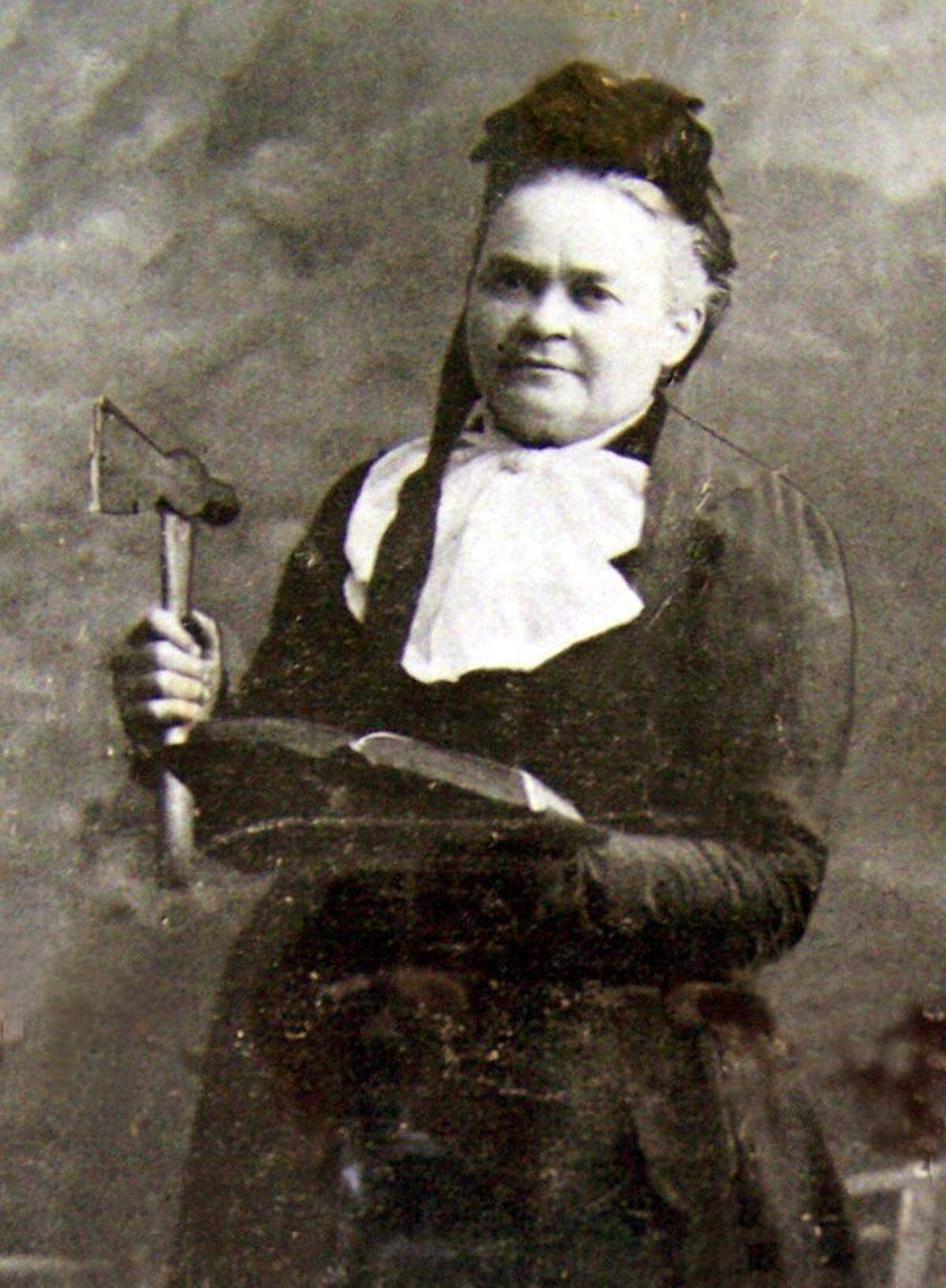
Nation, whose first marriage was to a former Civil War doctor who died of alcohol abuse, started what she called her “hatchetations” in Kansas in the mid-1890s, but she was born in Garrard County in 1846.
Support for alcohol or opposition to it became a political litmus test, in the same way that abortion has in more recent history, and the movement to outlaw liquor gained steam over decades, Appleton said.
“The preachers would lay all the problems of society on drinking,” he said.
The anti-liquor campaign culminated in a vote in Kentucky in November 1919 banning the sale and distribution of alcohol.
The home of bourbon went dry two months before the nationwide ban on alcohol, commonly called Prohibition, went into effect in January 1920 under the 18th Amendment to the Constitution.
‘We’ve always been wet’
Outlawing booze didn’t succeed across the U.S., however.
The vote in Kentucky to ban alcohol succeeded by only a narrow margin, showing the deep division over the issue. Prohibition was unpopular with many people, so while it receives some credit for reducing alcohol use and abuse, the law turned out to be more sieve than salve.
People made their own alcohol or bought it from illegal sellers, called bootleggers, or at illicit bars that usually weren’t hard to find.
Kentucky humorist Irvin S. Cobb wrote that in Kentucky, “a thirsty stranger may have to walk all of half of a block to find a place where he can get a drink.”
Moonshining flourished around the state; deadly gun battles were not uncommon between moonshiners and police in Eastern Kentucky and elsewhere, and stills in the area that is now Land Between the Lakes supplied speakeasies across the Midwest, according to Klotter’s 1996 book “Kentucky: Portrait in Paradox, 1900 — 1950.”
The ban on alcohol also decimated the distilling industry. Thousands of people lost their jobs, and of the 200 distillers in operation before Prohibition, only six hung on with licenses to make “medicinal” whiskey, according to the Kentucky Distillers’ Association.
Prohibition ended nationwide in December 1933 when enough states ratified the 21st Amendment to repeal the 18th.
In dozens of Kentucky counties, however, residents voted in the 1930s to stay dry, state records show.
While support for legal sales was higher in more urban areas of Kentucky, most of the state was rural. In many places, the dominant churches were conservative Protestant congregations such as Baptist, Church of Christ and Pentecostal which taught that drinking was a sin and worked hard to keep out legal liquor.
“There are but two sides in this question, the children of God and the children of the devil,” Nation had written at one point, and many people in rural Kentucky felt — and voted — the same way.
Still, the state wasn’t really dry despite the votes against legal liquor. People in dry counties drove to wet cities or counties to get booze, and bootlegging remained common.
Klotter, the state historian, told the Herald-Leader that when he was in college in the 1960s, he planned to give a talk on moonshine and went to the county judge’s office in dry Owsley County, where he grew up, to ask for help in finding a whiskey jug to use in his presentation.
“He promptly reached under his desk and produced an almost empty jug and said, ‘Take this,’“ Klotter said.
Bath County Judge-Executive Bobby C. Rogers said a 2020 vote there to make the county wet just legalized long-standing reality.
“We’ve always been wet. It’s just now being licensed,” Rogers said.
‘The first step’
Supporters of legal alcohol sales tried to chip away at prohibition for decades without much success.
In more than 30 votes during the 1970s on legalizing alcohol sales citywide or countywide, residents voted “no” in 23 elections and approved sales in only eight, according to records maintained by the Department of Alcoholic Beverage Control.
In the 1980s, wet supporters won nine votes to legalize alcohol sales in an entire city or county but lost 20 times, the records show.
The losses for legal liquor stretched into the 1990s. In 1999, for instance, there was just one vote on legalizing alcohol sales throughout a city (Harlan) and two throughout counties (Mercer and Lyon). All three failed.
A development in 2000 helped shift the dynamic, however.
State lawmakers approved a measure that year allowing votes on legalizing alcohol sales at some restaurants and at golf courses and farm wineries.
Before that, voters had to choose whether to allow the full range of alcohol sales. It was more than many could swallow, including people worried about liquor stores and bars changing the character of rural communities and small towns.
Allowing votes on more limited kinds of sales proved an easier sell.
In 2000, there were votes in four counties on allowing alcohol sales countywide, and all four failed. But on votes to legalize sales by the drink at restaurants that year, seven of 15 passed.
“That was the first step,” Casey County Clerk Casey Davis, a Baptist minister, said of the 2000 restaurant alcohol law.
The momentum continued from there as people got used to the idea of having legal sales in their communities, with voters in several cities and counties first approving restaurant sales before voting later to go fully wet.
The city of Williamsburg is an example of the evolution.
Measures to make the city fully wet failed by wide margins in 1973 and 1976, and voters also said no to restaurant sales in 2006. But in 2012, voters narrowly approved the restaurant sales, and then voted by a wide margin in 2016 to go fully wet.
Between January 2014 and mid-2016, new or expanded alcohol sales in cities, counties, precincts, golf courses, state parks and other venues won approval 42 times, while opponents turned back such sales in only nine elections, according to state records.
Legislators changed state law to allow votes on alcohol sales at smaller restaurants and dropped the requirement for a city to have at least 3,000 residents in order to hold a wet-dry vote.
In the most recent general election in Kentucky, November 2020, there were 14 questions on ballots across the state on whether to allow or expand alcohol sales in counties, cities and precincts. They all passed, according to the Department of Alcoholic Beverage Control.
“It just seems like the wets have won,” Appleton said.
‘It’s not as bad as some stuff’
There are a number of factors other than changes in laws behind the increase in legal alcohol sales.
They include economic concerns, efforts to boost tourism, generational shifts, people moving into rural Kentucky from places where alcohol has long been legal, changes in attitudes — including greater acceptance of alcohol among churchgoers — and even rising problems with other drugs such as methamphetamine and fentanyl.
There is still a great deal of addiction and other problems like fatal wrecks caused by alcohol, but rising overdose deaths from other drugs make it seem tame by comparison, said Gene Cole, a Baptist minister who heads the Kentucky League on Alcohol, Gambling Problems and Substance Use Disorder, which traces it roots to the Anti-Saloon League, incorporated in 1914, and opposes the spread of legal alcohol.
The perception of alcohol is that “it’s not as bad as some of the other stuff out there,” Cole said.
Cole still preaches abstinence from alcohol, but acknowledged some pastors don’t push against alcohol as passionately as they once did, and that many churchgoers no longer see alcohol as evil because of the influence of popular culture and other factors.
Appleton said there was a time when the Anti-Saloon League was as influential as the National Rifle Association or any political action committee, pouring pamphlets and money into efforts to defeat alcohol.
These days its successor doesn’t get involved in many wet-dry elections.
“We just don’t get the phone calls we used to,” Cole said.
Nick Catron, director of missions for the Wayne/Freedom Associations of Southern Baptist Churches, which covers Wayne and Clinton counties, said it hurt him to say it, but some churches have become complacent on the issue.
“As Baptists, predominantly we frown upon consumption of alcohol,” Catron said. “But again, it just seems as if so many people today don’t find any fault in it.”
That includes church members, he said.
Members of Baptist and other churches hold differing views on alcohol. Some believe drinking is wrong, but others believe excessive drinking, not alcohol itself, is the sin.
Catron said he and many other people also opposed the effort to legalize alcohol in Wayne County in 2020 on practical grounds, out of concern that it leads to addiction and other problems
“I don’t want to see anything that I see as being detrimental being widely available,” Catron said.
‘Just no significant difference’
For many people, the debate over alcohol is about economics, not religion.
Rogers, the Bath County judge-executive, was in the “yes” camp when residents approved legal alcohol sales in 2020, just three years after turning down a similar effort.
The county has seen numerous benefits from having legal alcohol sales, he said.
The money from a local tax on gross sales that cities and counties can enact is supposed to be used to administer and police alcohol sales.
In Bath County, that paid for a new vehicle for drunken-driving enforcement, Rogers said.
But having legal sales also means additional, unrestricted revenue from occupational and inventory taxes, as well as more money from property taxes on buildings with a higher valuation after being renovated to house liquor stores, Rogers said.
Police and alcohol administrators in some cities and counties that have legalized alcohol sales in recent years told the Herald-Leader they hadn’t seen a big increase in problems after going wet.
Wayne County Sheriff Tim Catron said being wet might even have reduced the problem of people driving to neighboring Pulaski County to buy alcohol and drinking on the way home, or drinking at a bar and heading home impaired.
“I haven’t seen a lot of change” in alcohol-related problems, Catron said, “which is a blessing.”
Monticello Police Chief Joey Hoover said there have been four or five cases of people being charged with selling alcohol to minors at businesses since the city went wet, but police haven’t seen significantly more alcohol-related problems.
“There’s just no significant difference,” Hoover said.
The biggest substance problem in town is crystal meth, he said.
Studies have reached varying conclusions on what impact an area being wet or dry has on alcohol-related crashes.
One from 1983 concluded that vehicle fatality rates were higher in states with county-level prohibition than in others, suggesting that drivers in dry counties “are compelled to drive to adjacent counties or states to drink and consequently have increased involvement in motor vehicle accidents.”
Another study from Kentucky in 2003 said crash data showed some evidence that people in dry counties were driving to wet counties to drink, “thus increasing impaired driving exposure,” but another study of Kentucky wrecks published in 1993 concluded that dry counties have a lower rate of alcohol-related fatalities and significantly lower rates of alcohol-related nonfatal and property accidents.
Drunken-driving arrests — which can vary based on factors such as targeted enforcement — went up sharply in some places in Kentucky after a vote to legalize alcohol sales, but later declined, according to statistics published by Kentucky State Police in the annual Crime in Kentucky report.
Statewide, the number of DUI arrests hit a high of 35,252 in 2007 but trended down in recent years even as more cities and counties approved legal alcohol sales, totaling 21,998 in 2019.
The 2020, with people driving less because of the coronavirus pandemic, DUI arrests totaled 18,883, according to state police.
‘They see that revenue’
Rogers, the Bath County judge-executive, said dry counties and cities are at a disadvantage in competing for economic development, and that money bleeds away from dry communities as residents travel to other cities to buy alcohol, because they also fill up with gas, get groceries and have a meal there, he said.
With legal sales in Bath County, residents no longer have to go to Morehead or Mount Sterling to buy alcohol, Rogers said.
“Our money’s staying at home now,” Rogers said. “It’s really ridiculous to be dry these days.”
In the first year of legal alcohol sales in Monticello, for instance, the city received a total of $125,000 from its 5% tax on sales, said city treasurer Greg Latham, indicating total gross sales of $2.5 million just at outlets in the city.
There are also outlets in the county, so it receives tax revenue as well.
Those sales would have gone to other communities, most notably Burnside in neighboring Pulaski County, before Wayne County went wet, local officials said.
The concern of not losing out to wet communities has been a factor in votes to legalize alcohol — a sort of domino effect in which votes to go wet up the pressure on nearby places to follow.
“They see that revenue,” Cumberland County Judge-Executive John A. Phelps Jr. said of dry counties near wet ones.
The county has seen economic benefits from being wet, and having legal sales brings more control than in the old days of bootlegging, Phelps said.
“At least now it’s regulated,” he said.
With the growth of wet places in Kentucky, “it seems that economic factors have overruled moral ones,” said Klotter, the state historian.
So will the day come when there are no more counties in Kentucky with no legal alcohol sales at all?
“If you look at the trend the most obvious answer is yes,” said Cole, the head of the anti-alcohol league. “But we hope and pray that does not happen.”
Kentucky has gone from wet to dry to wet again in its 230 years. Appleton said he doesn’t expect a return to dry.
“I don’t see the pendulum going back in the other direction,” he said.
This story was originally published July 7, 2022 at 6:00 AM.