Abortion in cases of rape, incest, fetal abnormalities would be legal in KY under new bill
A Kentucky Republican has filed a bill to add a handful of exceptions to the state’s laws banning and criminalizing abortion.
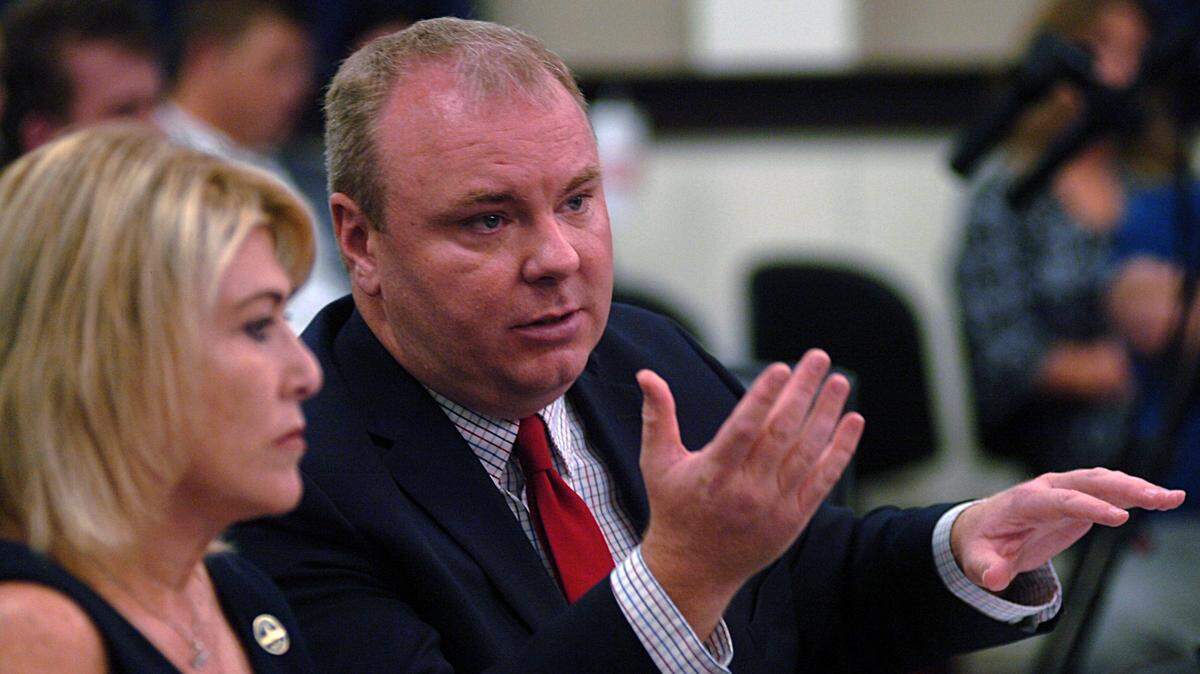
Rep. Jason Nemes, R-Louisville, filed House Bill 569 on Wednesday to add rape and incest exceptions to Kentucky’s abortion bans, as long as the “probable gestational age” of the fetus is less than 15 weeks. Nemes’ bill also includes exceptions that allow a physician to lawfully provide an abortion if there is “definitive evidence” that a fetus has an “abnormality that is incompatible with life outside the womb,” according to the bill language.
Nemes’ bill is the first move on the part of Republicans to modify any aspect of GOP-backed laws prohibiting abortion that first became enforceable eight months ago.
“It’s something that I believe in, (that) I think is the right thing to do. I think it’s what our citizens want us to do,” Nemes said Wednesday after the House adjourned for the day. “I won’t make any predictions on whether it’ll pass or not,” he added, but, “I think that’s what our people want to happen. Our people are pro-life, but they believe in exceptions.”
The commonwealth’s trigger law and fetal heartbeat law took immediate effect in June after the U.S. Supreme Court overturned federal abortion protections. Kentucky’s trigger law bans abortion outright, except in medical emergencies that immediately threaten a pregnant person’s life. Violating health care providers face a felony charge.
The fetal heartbeat law, or six-week ban, bans abortion after the start of fetal cardiac activity.
These proposed exceptions would be added to both laws, which currently only permit terminations in a medical emergency that immediately threatens a pregnant person’s life. As they stand, neither law currently includes exceptions for rape, incest, minors seeking terminations, or fetal anomalies.
Earlier this month, a Herald-Leader report detailed how Kentucky’s abortion bans’ narrow exceptions barred doctors from providing the standard level of care for treating nonviable pregnancies and, in turn, harmed patients.

The language in HB 569 allows health care providers to perform abortions if there is “reasonable belief the pregnancy is the result of rape or incest.” The physician would also be required to “certify” in writing that a patient requested the abortion because the pregnancy resulted from rape or incest.
“All facts and reasons supporting the certification shall be set forth by the physician in writing,” the bill reads.
Nemes’ proposal is the third abortion-related bill filed by Republicans so far this session, but it’s the one potentially most likely to gain traction. House Speaker David Osborne teased the filing of Nemes’ bill last week, saying, “we continue to have legitimate discussion on future (abortion) policy. We anticipate additional legislation will be filed in the coming days, including bills that will provide further exceptions.”
But on Wednesday, Osborne was more restrained, saying, “we haven’t discussed it at all at this point, so I can’t comment one way or another on it.”
Last week, Sen. Whitney Westerfield, R-Crofton, filed a bill to amend the Kentucky Constitution and make clear there’s no protected right to abortion. Westerfield’s bill comes roughly three months after voters rejected a near-identical proposal — Amendment 2 — on the November ballot.
A second bill that generated pointed opposition from fellow Republicans came from freshman Rep. Emily Callaway, R-Louisville, who has proposed allowing the state to charge and prosecute people who get unlawful abortions as committing murder. House leadership, Kentucky Right to Life, and Republican Attorney General Daniel Cameron all said the bill and its punitive measures were a step too far.
“While I strongly support prohibiting abortions in Kentucky, I just as strongly support helping pregnant women,” Cameron said. “Pregnant mothers deserve our help, support, and life-affirming options, not to face criminal charges.”
Democrats have filed two bills to restore abortion access statewide. Sen. Denise Harper Angel, D-Louisville, filed a bill earlier this month to add rape and incest exceptions to the laws banning abortion. On Wednesday, ahead of House Republicans filing their bill, Rep. Lindsey Burke, R-Lexington, introduced her bill with support from Planned Parenthood to broadly restore abortion access in the commonwealth. It proposes dismantling much of the trigger law, six-week ban and parts of an omnibus abortion bill passed into law last year that, in part, requires the state to track abortions provided in Kentucky.
Burke said her bill “essentially unwinds the clock, so abortion access in Kentucky is back to where it once was and where it should be, again.”
Burke’s bill isn’t likely to get any Republican support, as it proposes dismantling much of what the GOP-controlled General Assembly has built since 2015 with regard to abortion restrictions.
Nemes’ bill comes less than a week after the Kentucky Supreme Court declined to reinstate a lower court’s injunction blocking the trigger law and six-week ban from being enforced. The case challenging the constitutionality of both bans, brought by Kentucky’s two outpatient abortion providers, was kicked back down to a lower court where it will be judged on its merits.
Herald-Leader reporter Austin Horn contributed to this report.
This breaking story will be updated.
This story was originally published February 22, 2023 at 4:02 PM.