‘It’s just greed.’ KY counties say proposed bourbon tax break would cost them millions
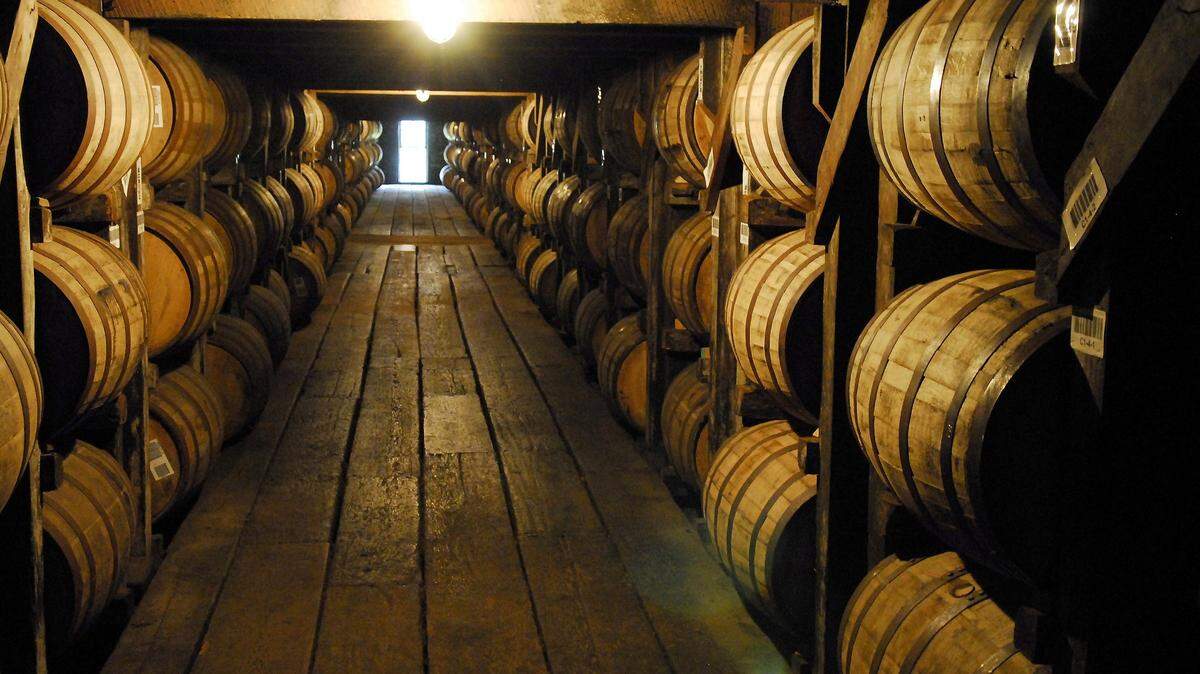
Kentucky counties that produce bourbon say a proposed tax break for the industry would decimate their budgets.
House Bill 5, filed by House Appropriations & Revenue Chair Jason Petrie, R-Elkton, and co-sponsored by the House Speaker proposes to phase out a state and local property tax on bourbon barrels starting in 2026 and completely eliminate it by 2039.
Last year, distilleries paid about $33 million in barrel taxes. But about a third of that has already been refunded under another tax break passed in 2014.
The rest goes to about 28 counties and some cities, which collectively receive more than $18.5 million annually in barrel tax revenue, which they stand to lose under the proposed legislation.
Nelson, Franklin, Bullitt, Jefferson, Anderson, Marion and Woodford counties will be impacted the most, according to revenue loss projections prepared last summer for lawmakers on the Bourbon Barrel Taxation Task Force.
Losing that, even a little bit at a time, will have a devastating impact, according to local officials, who pointed to record growth, including $2.1 billion in expansion plans announced in 2022 in Kentucky’s signature industry as proof the tax break isn’t needed.
“I think it’s just greed, flat out greed,” said Tim Hutchins, Nelson County Judge Executive. His county is home to Heaven Hill, Barton, Bardstown Bourbon Co., Willett and other distilleries and receives the most barrel tax revenue.
“Bourbon’s making record profits, and they want all the tax breaks. I don’t have no sympathy for them whatsoever, zero,” Hutchins said.
House Speaker David Osborne, R-Prospect, said this week that he believes the House will take “pretty quick action” on the bill.
Osborne framed the tax as a “job killer,” arguing that companies would start moving jobs to other states if the tax remains. He pointed to distilling giant Sazerac buying property in Southern Indiana as a source of concern.
“It’s a bad tax. It’s a job killer tax. Ultimately, while I understand that the counties have become reliant on it, the tax is going away whether we pass it or not,” Osborne said.
He also said that counties would have plenty of time to figure out how to make up for the tax given the bill’s approach to incrementally phase out the tax by 2039.
“This is a systematic elimination of it that even allows for growth over the next three years, and then phasing it out,” Osborne said.
Nelson County would lose $6.3 million, much of which goes for schools, the library and the county budget, while the city of Bardstown would lose nearly $2 million, according to an estimate produced for the Bourbon Barrel Tax Task Force last summer.
And because Nelson County has given its own tax break -- more than $1 billion in industrial revenue bonds to exempt barrel warehouses from property taxes -- the impact would be even greater, he said.
Hutchins said that his county would not be able to make up the difference even by increasing in property taxes to residents.
“The schools will get some back in SEEK funding but at the end of the day, if we want to keep providing services, people are going to have to make a decision,” Hutchins said. “Property taxes can only take a 4 percent increase a year by state law, so that leaves you upside down.”
Bullitt County Judge Executive Jerry Summers said his county, which is home to Jim Beam and Four Roses warehouses, will be “a huge economic blow.”
He estimated that one fire department, the one that services the barrel warehouses, will have to be eliminated because more than half of its revenue will be lost.
Whiskey rickhouses pose a major fire and environmental risks. A lightning strike to a Jim Beam warehouse in Woodford County in July 2019 took more than three days to put out and contain toxic runoff that caused a fish kill that stretched into the Ohio River.
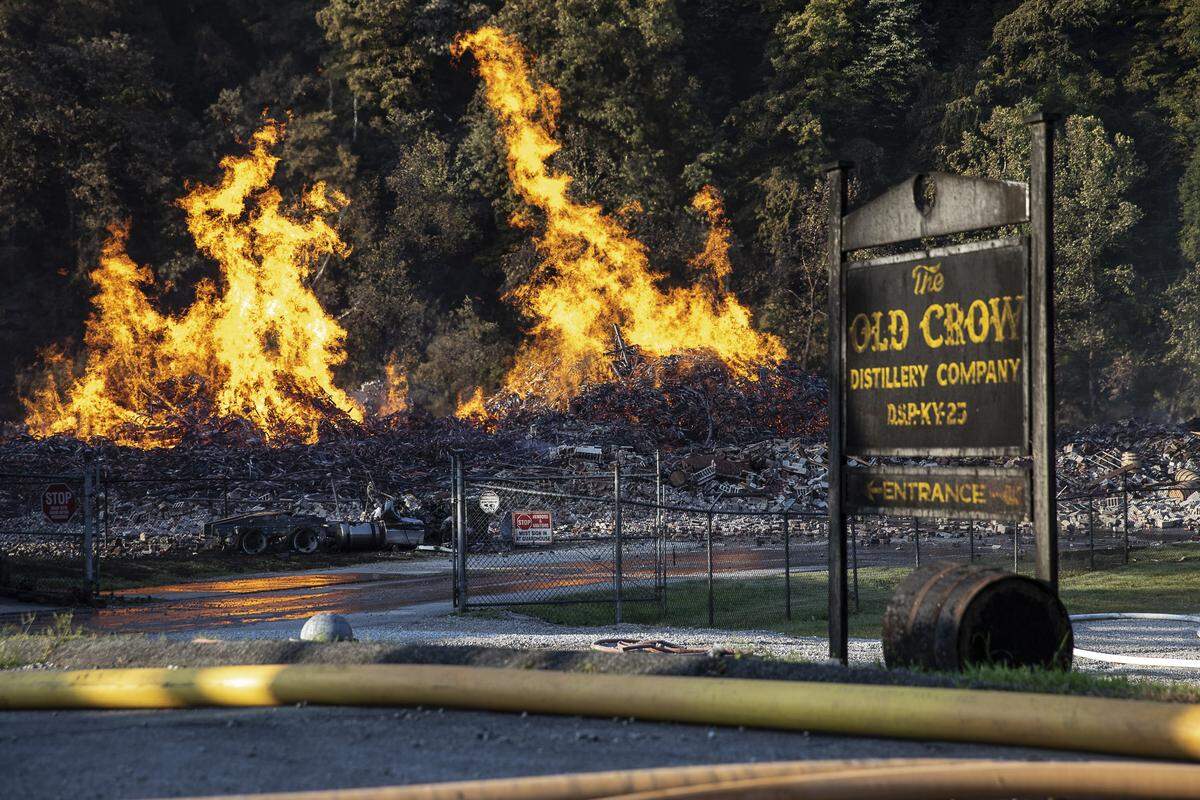
He said the county receives almost $3.75 million in barrel tax revenue, and an increase in state funding for schools won’t be able to make up their losses either.
“It’s a $2.5 million cut just to the schools,” Summers said.
“If the barrel tax goes away, we’ll have a big time net loss (on bourbon,)” said Summers, himself a former Beam Suntory executive.
He said that he sees no sign that the tax has a negative impact on bourbon’s growth in Kentucky.
“Since I’ve been in office in the last 4 1/2 years, Jim Beam has built 14 58,000-barrel warehouses and building another right now,” Summers said. Four Roses also has expanded its warehouse and bottling complex significantly.
In Franklin County, home to Buffalo Trace and other distilling operations, the bourbon barrel tax generates $3 million for county public schools.
Franklin County Schools Superintendent Mark Kopp told the Herald-Leader that his district brings in about $3 million a year out of a roughly $80 million budget from the tax – the equivalent of about 50 teachers.
Kopp also argued that the “job killer” line used in defense of the legislation is untrue.
“The proponents of this piece of legislation are calling it a ‘job killer’ that they’re having to bear this barrel tax. That’s 100% not true. Look at how booming the bourbon industry is… We’re basically shifting the burden from corporations already making millions and billions onto the taxpayers. Who suffers? School districts and local governments,” Kopp said.
The bourbon industry has been on a decade-long building boom, fueled in part by a 2014 tax break that the Kentucky Distillers’ Association lobbied for. That allowed the barrel tax, property taxes on aging whiskey in warehouses, to be rebated for capital improvements, including more warehouses and barrels.
But distillers say they have not been able to fully use that tax break. It’s been washed out by another broader tax break that eliminated much of their corporate taxes already.
HB5 would allow the distilleries to retain that rebate and continue to get state refunds for money spent to expand their businesses.
Pam Thomas, senior fellow at the Kentucky Center for Economic Policy in Berea, said in July it’s important to consider any proposed changes in the context of the overall tax footprint of the distilling industry. “With the significant reduction in corporate taxes paid by the distilleries, combined with the economic development incentives they receive, many of them do not pay enough in corporate taxes to fully use the barrel tax credit.”
Franklin County Judge-Executive Michael Mueller said that the bourbon barrel tax accounts for $700,000 of his county’s roughly $28 million budget.
“We’re pretty comfortable saying that the bourbon industry is well off. I don’t know why we’re incentivizing people that don’t need to be incentivized. I understand they are talking about leaving the schools money in there, and that’s great. But at the end of the day, $700,000 helps pay for full-time fire department, emergency management, all of that stuff” Mueller said.