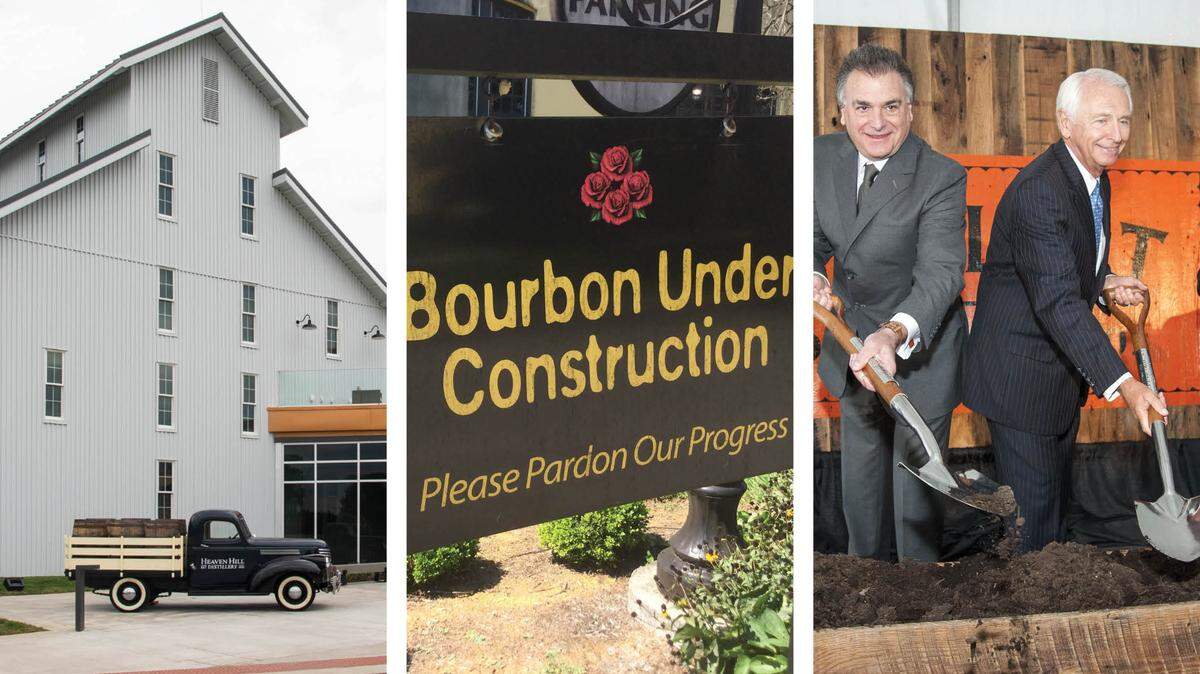
Tax credit ‘the fuse’ for Kentucky bourbon boom. Now distillers want more breaks.
READ MORE
Whiskey fungus
The booming $9 billion Kentucky bourbon industry has created a boom in something else: Whiskey fungus.
Neighbors of proposed bourbon rickhouses in at least three counties — Henry, Franklin and Anderson — have been fighting plans to build warehouse campuses that they fear will inundate their homes, cars, gardens, playgrounds and property with the black mold-like growth.
Expand All
Kentucky’s bourbon industry is enjoying a decade-long building boom. And tax revenue helped fuel it.
In 2014 the Kentucky Distillers’ Association lobbied for and got a long-sought tax break on the “barrel tax,” property taxes paid by distilleries on aging whiskey in warehouses. Beginning 2015, distillers could apply for a rebate for expenses for capital improvements including warehouses and barrels, and much more.
Kentucky Senate President Robert Stivers, R-Manchester, in July credited the tax break as “the fuse for this growth trajectory.”
In an apparently unprecedented move, the Senate president is co-chairing a task force this summer looking at the bourbon barrel tax, with an eye to crafting legislation that could provide an even bigger break. It’s something the distillers have sought for years, even after Gov. Steve Beshear, the state’s current governor’s father, signed a major barrel tax break into law in 2014.
Distillers say that tax break has been washed out by another, broader tax break and they are looking to Frankfort for a fix.
But counties that rely on the bourbon barrel taxes for schools, libraries, health departments, fire districts and county services are worried that eliminating the barrel taxes will undercut their budgets.
And that could change the way bourbon’s growth — with the accompanying risks of whiskey fungus, fire, environmental hazards and increased traffic on rural roads — is received.
‘Who’s going to fight the fires?’
Woodford County Judge-Executive James Kay, who as a Democrat in the state House supported the tax break, said his county, home to some of the world’s most expensive Thoroughbred horse farms, hasn’t had major issues with whiskey fungus despite having Woodford Reserve, Castle & Key and Jim Beam warehouses.
He thinks it’s because bourbon has largely been kept to its “historical and traditional areas” and away from most houses, mitigating the spread.
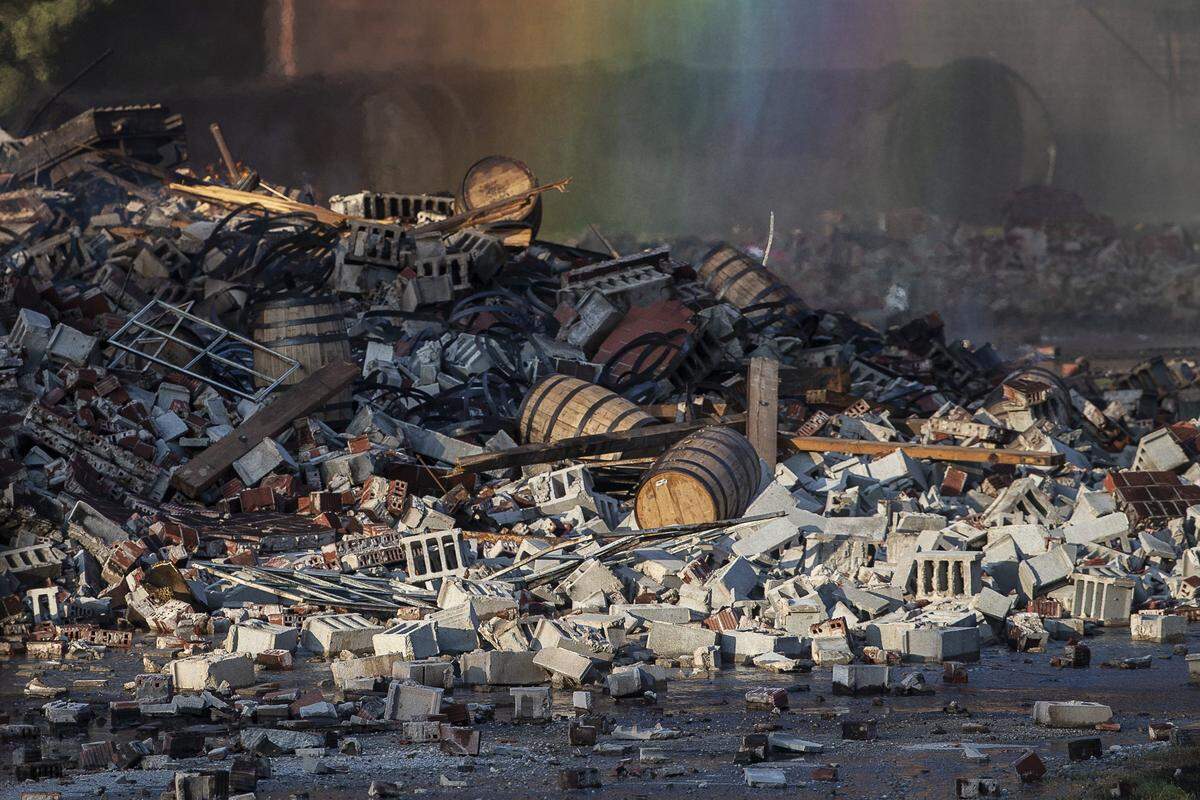
But the county has faced another kind of environmental impact: In July 2019, a lightning strike hit an older bourbon warehouse on the Old Crow campus along Glenn’s Creek, an important Central Kentucky watershed that is lined with distilleries. For more than three days, firefighters worked to control the fire as well as the alcohol runoff. Two adjacent warehouses were damaged but saved, he said. And they were able to limit the damage to the creek, although there was a fishkill that stretched to the Ohio River.
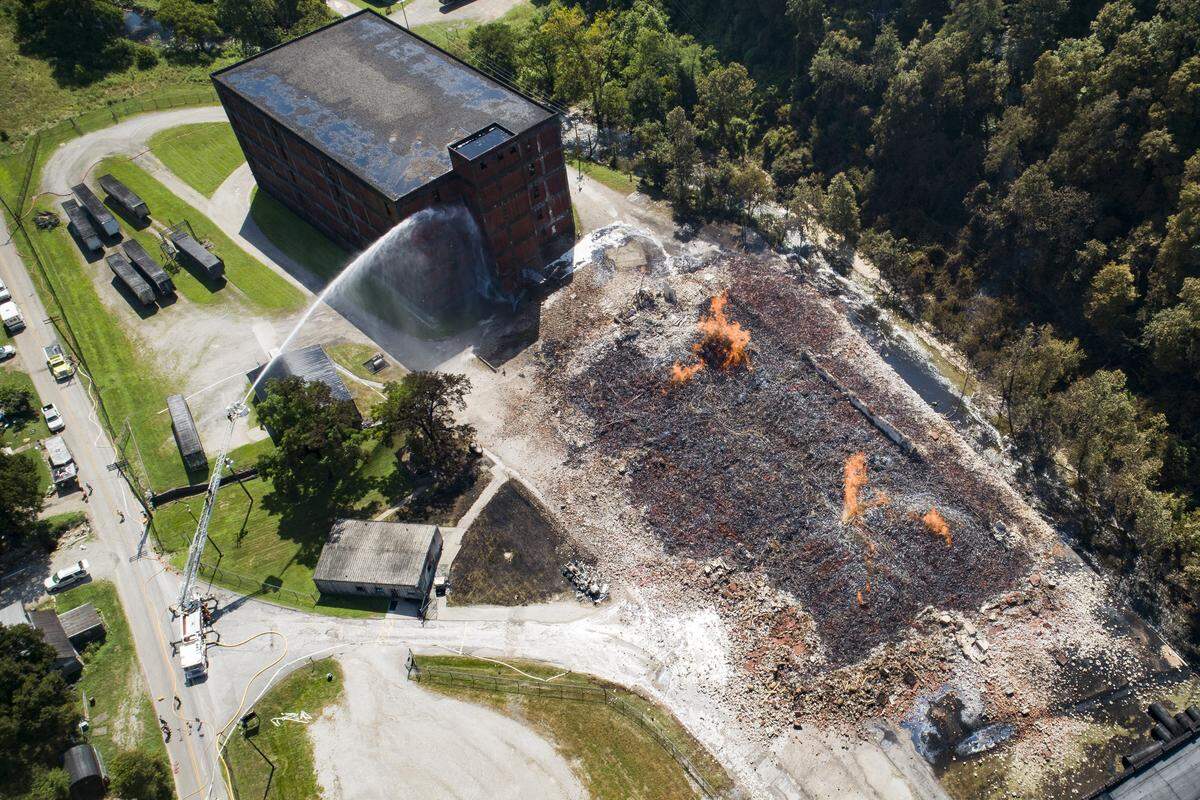
Kay pointed to the response from the county’s firefighters to the massive Jim Beam warehouse fire as an example of why the barrel tax revenue is important. According to data from the Kentucky Distillers Association, Woodford County’s fire district receives almost $112,000 annually from the bourbon barrel tax. Without that funding, he said, the county might have to cut firefighters.
“When we think about having barrels aging in Woodford County, our citizenry supports that. We believe in that identity, we want to be the home to that, we want to claim being a central county that produces best bourbon in the world,” Kay said.
“But when you’re talking about these impacts without the revenue, communities are going to have to take a much harder look. If you remove the revenue, it’s a much different calculation to a fire department that now has to protect an additional 10 or so warehouses. Who’s going to put out the fire?”
What is the bourbon barrel tax?
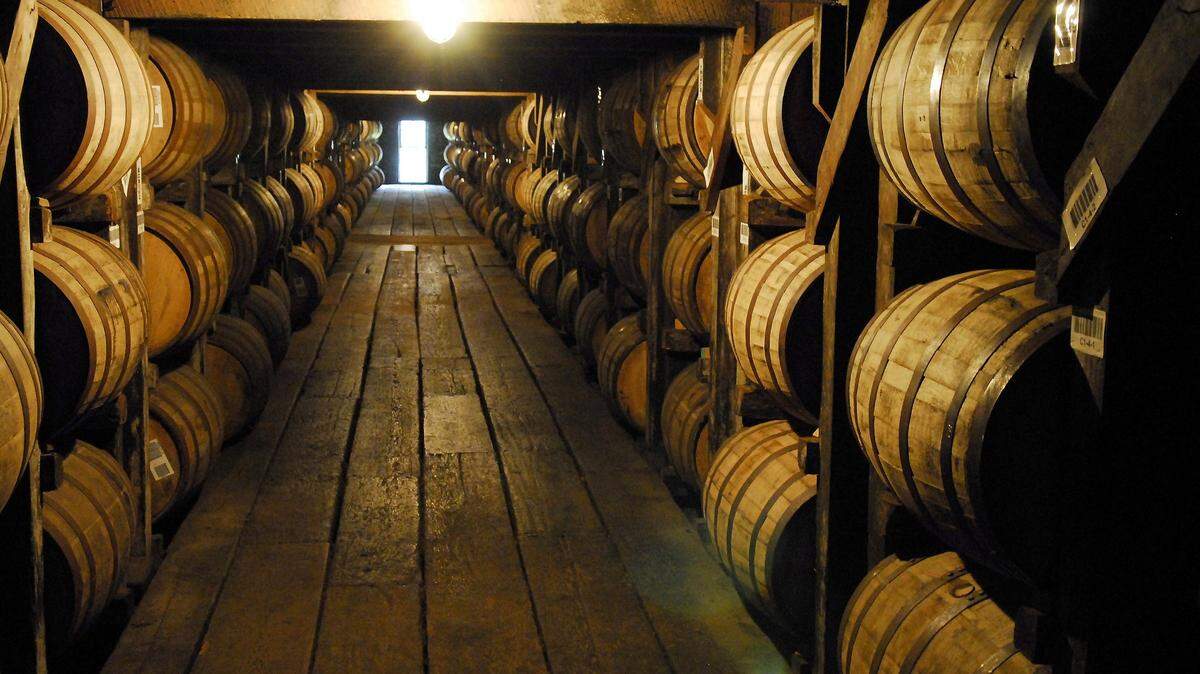
Kentucky distillers pay property tax on whiskey as it ages in warehouses. But a rebate passed eight years ago allowed them get money back to use for capital improvements.
“The 2014 legislation really was a turning point for the bourbon industry, the growth really exploded after that,” said State Sen. Jimmy Higdon, R-Lebanon, at a recent meeting of the bourbon barrel tax task force in Frankfort.
According to the Kentucky Department of Revenue, about $10.8 million as of fiscal year 2022 has been claimed from the millions paid in barrel taxes. When the credit was passed, the projected fiscal impact was estimated at about $14 million a year.
One tax break washed out another for distillers
But it hasn’t come near that number and here’s why: They can only use the credit to offset corporate income taxes. And since 2018, the distillers apparently have been paying less in corporate taxes. So much less they don’t pay enough to claim the other credits back.
Pam Thomas, senior fellow at the Kentucky Center for Economic Policy in Berea, said it’s important to consider any proposed changes in the context of the overall tax footprint of the distilling industry. In 2018 Kentucky made a big change in the way the state calculates corporate income taxes for all multistate businesses, she said.
“Those changes had a disproportionately positive impact on the amount paid by the distilleries because they no longer have to include property and payroll — which they have a lot of in Kentucky — in the calculation,” Thomas said. “With the significant reduction in corporate taxes paid by the distilleries, combined with the economic development incentives they receive, many of them do not pay enough in corporate taxes to fully use the barrel tax credit.”
And the tremendous growth has compounded what distillers see as the problem: Distillers built more warehouses, put up more whiskey and now are paying more in barrel taxes.
“The credit has not been allowed to work as originally planned as a solution to virtually eliminate this discriminatory tax,” said Eric Gregory, president of the Kentucky Distillers’ Association. “The tax credit was phased in over a five-year period at a time when distillers never dreamed of double-digit growth. Therefore, distillers were unable to fully realize the credit until 2020 for the 2019 tax year, even as bourbon production began skyrocketing to meet the global demand.”
Some distilleries are currently able to collect only 30 percent of their credit, according to the KDA.
The number of barrels of aging whiskey in Kentucky bourbon barrel warehouses has roughly doubled in the last six years, from almost 5.7 million in 2015 to 10.3 million in 2021. And the tax revenue has grown along with it.
According to the Kentucky Department of Revenue, in 2015 the assessed value of Kentucky’s aging barrels was $2.1 billion; by 2021, the assessed value rose to more than $4.4 billion.
Last year, distilleries paid about $33 million in barrel taxes.
What the bourbon industry says about the tax
This summer, the special interim task force, chaired by Stivers and Kentucky House Majority Whip Chad McCoy, R-Bardstown, is looking at the tax structure on Kentucky bourbon, especially the barrel tax, with an eye to recommending potential changes in the legislative session that begins in January.
At a June hearing, McCoy said the goal of the task force was to figure out how to help the bourbon industry without harming counties.
“I’m from Bardstown, and a lot of our distilleries right now are doing great,” McCoy said. “This industry is so important for tourism but if we don’t do something about it we will lose all of this.”
The KDA has lobbied for eliminating the barrel tax on aging spirits, which is unique to Kentucky. At the July task force hearing KDA representatives argued the tax provides an incentive for distillers to age or even distill bourbon in other states. They want the tax at least partially repealed or made refundable.
They said that the state’s share of the bourbon market could slip as new distilleries open in other states, pointing to numbers that show Kentucky now ranks 12th in overall number of distilleries.
Gregory of the KDA said the concern about losing out to other states “is real” although he conceded Kentucky still leads by volume.
Almost all of the distilleries in other states are much smaller and produce far less bourbon than Kentucky’s. In 2017, whiskey expert Chuck Cowdery ranked bourbon distilleries by capacity. Cowdery said the rankings remain unchanged.
Only three in other states (Jack Daniel’s in Tennessee, MGP in Indiana and George Dickel in Tennessee) make the top 15.
The rest of his top tier (which reads like a who’s who of bourbon) are all in Kentucky: Heaven Hill, Jim Beam (two plants), Buffalo Trace, Brown-Forman, Barton, Four Roses, Maker’s Mark, Wild Turkey, O.Z. Tyler, Bardstown Bourbon Co., Bulleit, Wilderness Trail, Lux Row, Michter’s, Angel’s Envy, Old Forester, Castle & Key, Willett, New Riff, Rabbit Hole and Fulton County.
Nelson Co. changes zoning requirements
According to figures presented at the tax task force meetings, 28 counties collectively receive more than $18.5 million annually in barrel tax revenue and some cities receive millions as well.
Franklin County, where Buffalo Trace is located, receives almost $2.4 million; Bullitt County receives more than $2.2 million; Jefferson County receives more than $2 million. Anderson County, where Wild Turkey is located, receives more than $1.1 million. Marion receives more than $1.4 million while Woodford County receives more than $1.2 million.
Nelson County, home to Heaven Hill, Jim Beam, Barton, Bardstown Bourbon Co., Four Roses warehouses, Willett and many others, receives the most at almost $6.3 million, plus more for the city of Bardstown.
Nelson County Judge-Executive Dean Watts said that concerns about whiskey fungus were consistently the biggest argument against any warehouses in his area for years.
“In my mind it’s like mold on steroids,” he said.
So Nelson County changed the zoning requirements to allow whiskey warehouses on property zoned agricultural as long as the property was 100 acres or more. If the agricultural property was zoned 50 acres or more, warehouses can get a conditional-use permit, he said. That pushed the warehouse development out of the urban areas and into more rural ones, where fewer homes are impacted, he said.
He said individual counties may feel pressure from distillers to get creative with zoning and tax breaks to attract jobs.
Nelson County did. He said that at least one distillery went from county to county asking what each could promise.
That’s why Nelson County made one other big change: They committed to industrial revenue bonds for the bourbon industry, which eliminated property taxes for 30 years, a huge boon for distillers.
Nelson County now has almost $1 billion in outstanding industrial bonds, he said, and distillers have made commitments to build 35 to 55 more bourbon warehouses in coming years. In exchange, they get the barrel tax revenue from hundreds of bourbon barrels.
He was watching the Frankfort hearings closely, even as he prepared to retire.
“So no property tax but we get the barrel tax. If we don’t get the ‘liquid’ tax, we felt like those contracts are broken,” he said. “Ever take an ice cream cone away from a baby? It doesn’t go too good.”
This story was originally published August 18, 2022 at 10:00 AM.