‘He would be a superstar.’ What the governor’s race means for Cameron’s national profile
READ MORE
Kentucky 2023 Governor Race
Expand All
.JPG)
The ‘party of Andy’ goes all in for re-election. Is this a last stand for KY Democrats?
.JPG)
For Cameron, a campaign for more than governor: Who will lead KY Republicans?
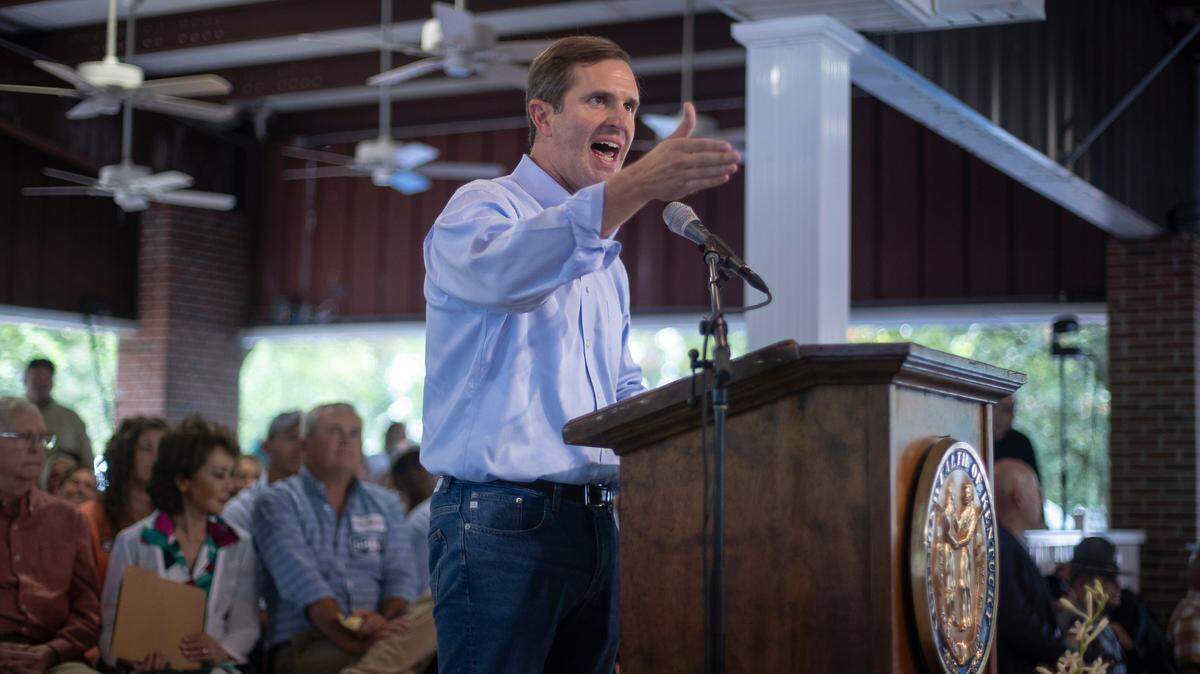
‘He can be vice president’: Could Andy Beshear be a model for national Democrats?
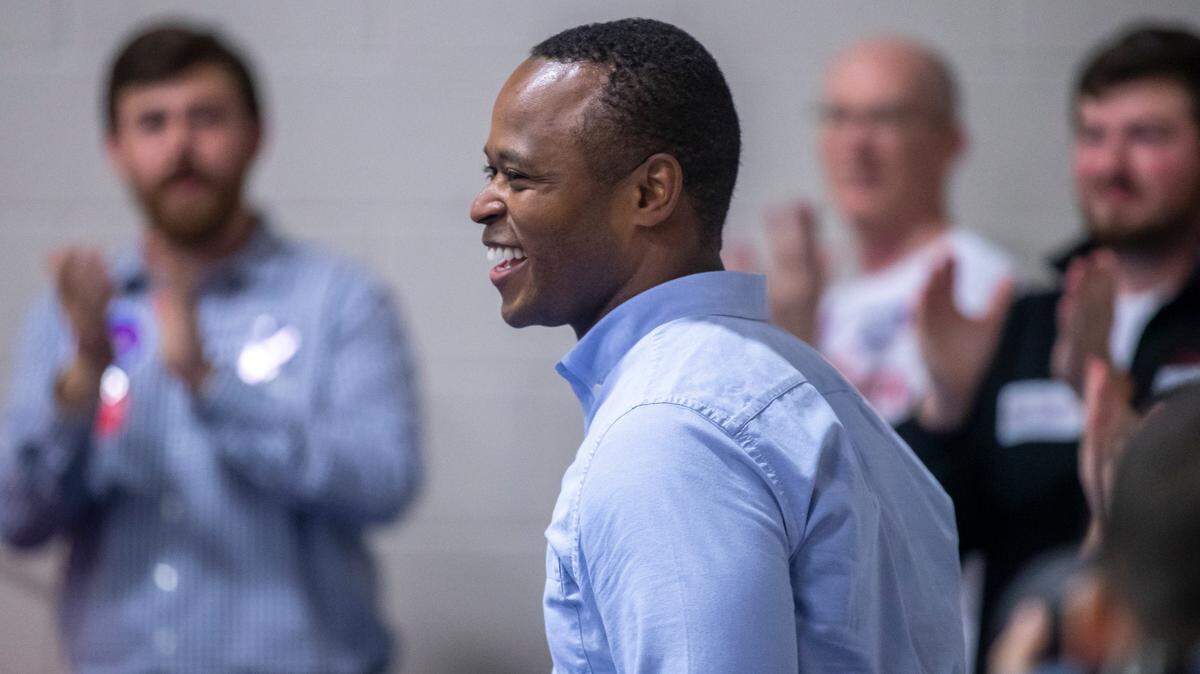
‘He would be a superstar.’ What the governor’s race means for Cameron’s national profile
Daniel Cameron’s path to national stardom was assumed to be inside the ornate marble-paneled hallways of the U.S. Senate.
He is, afterall, commonly tagged as Mitch McConnell’s protege, groomed by the leader in his Senate office and encouraged by him to run for attorney general at the tender age of 33.
When McConnell directed state lawmakers to pass a bill in 2021 making it easier for him to crown his own successor, some inside Frankfort dubbed it “the Daniel Cameron Election Bill.”
Cameron was supposed to be a United States senator.
It turns out that was mostly a media narrative, fueled by gossip around the timeline of McConnell’s eventual departure and the genuine excitement Cameron has generated as an avatar for Kentucky Republicans.
In choosing to pursue this campaign for governor, Cameron has selected a more arduous political pathway, given Gov. Andy Beshear’s popularity and how rare it is to defeat an incumbent governor anywhere. (Just one incumbent governor in the country fell in 2022, none lost in 2020.)
But at 37, Cameron is a man in a hurry – something that was apparent to those who worked with him early on.
“All of us understood when we hired Daniel that he would be in public life somehow, someway, someday,” said Tom Lee, a Nashville attorney who hired Cameron as a litigator out of the U.S. Senate. “He’s a very confident guy and that’s apparent by his political path so far.”
If Cameron defeats Beshear this November, he would become the first African-American Republican governor elected since Reconstruction, the nation’s youngest governor and an immediate national icon in a party starved for youth and diversity.
“He might be the keynote speaker at next year’s [Republican National] Convention. He would be a superstar,” said Trey Grayson, the former secretary of state. “He gives a lot of pride to Republicans.”
A hypothetical end to a Cameron first term would come in 2027, just as the 2028 presidential election cycle is getting underway and he’s pursuing his own re-election. It’s hard not to envision a Governor Cameron in the mix as a vice presidential contender, if he’s not already a presidential candidate himself.
Beating Beshear
But to get there he will have vanquished a well-liked incumbent who is part of a commonwealth family dynasty. Which means it’s imperative he makes the next two months more about his opponent and why Kentuckians should believe they’ve been hoodwinked by Beshear’s moderate, temperate sheen.
“This governor...has not been leading. He’s been following,” Cameron told McClatchy in an interview. “He’s now trying to take credit for the tax cuts that originally he did not back. He’s trying to take credit for all sorts of things.”
“I can say to you right now that in Kentucky, we’re not going to have any mask mandates. You will never hear Andy Beshear say that,” Cameron continued. “I’m going to work hard in my first budget to make sure that we can get down to a 0% income tax rate. Andy Beshear will never say that. That is the facts, that is the truth.”
Cameron has constructed his case against Beshear on three core issues: education (that students suffered learning loss during the COVID lockdowns), crime (that the governor’s early release of prisoners during COVID led to reoffenses) and values (that Beshear’s veto of a ban on transgender surgeries for minors places him out of touch with Kentuckians.)
But more than anything, Cameron is betting on simple political inertia: That the steady reddening of the commonwealth – Republicans now lead the voter registration tally for the first time in more than a century – will finally catch up to Beshear, who has essentially become a party of one for Democrats.
“Trump could win here even from his jail cell,” acknowledged Democratic consultant Jared Smith. “But the western Kentucky coalfields have been voting for Beshears for years. They were comfortable voting for Steve Beshear. They’re comfortable voting for Andy Beshear.”
Cameron is credited for the rare feat of earning the backing of both McConnell and Donald Trump, who endorsed him early in the primary. Cameron said he would welcome a campaign event with the former president this fall.
“I’d certainly appreciate him coming here,” Cameron said of Trump. “I recognize they are in the midst of a presidential primary. I’d appreciate President Trump, Governor [Glenn] Youngkin, Sarah Huckabee Sanders. I’d like them all to come to the state.”
Trump visited Kentucky to rally for Bevin on the eve of the 2019 gubernatorial election, but spent most of his speech ranting about the looming impeachment inquiry in Washington. When it was clear Bevin had lost, he disowned responsibility and said he “just about dragged” him over the finish line. Beshear’s campaign privately postulated Trump might have turned off some suburban voters in the final hours, but couldn’t be sure. But the 2019 rally is an enduring reminder of the multiple variables involving Trump’s footprint.
Race: A historic non-factor?
When he first teased a run for attorney general five years ago, Cameron said his identity was important to him and nodded that he fully appreciated what electing a Black man could mean for Kentucky.
By his 2020 RNC speech, he outlined a vastly different view, chastising Joe Biden for intimating that skin color should dictate a person’s politics. “The politics of identity…are not acceptable to me,” Cameron said.
Now, he says he doesn’t believe race is a factor in his candidacy as much as values and whether they match those of the commonwealth.
“My identity is a Christ-follower, a husband, a father,” he said.
But for a national Republican Party constantly under pressure to appeal to more minorities, Cameron’s race would be an obvious counter to display nationally, from cable news appearances to a State of the Union response.
“This is not a Herschel Walker candidacy,” said Adam Piper, the former executive director of the Republican Attorneys General Association, who recruited Cameron to run. “It’s really typecasting.”
The success of Cameron’s candidacy has taken on added weight over the last week given McConnell’s second health episode within as many months.
There’s speculation that if Cameron secured the governorship, McConnell would be more comfortable stepping down in the coming months, given that a trusted Republican ally would choose his replacement.
If Cameron loses, all bets are off how Beshear would proceed in such a scenario.
But most political observers agree that Cameron’s back-up plan is as clear as bluegrass on a summer lawn: A candidacy for U.S. Senate in 2026 or sooner.
“This is a freebie for him,” said Jim Hodges, the former Democratic governor of South Carolina. “It’s not a career killer if he loses.”
This story was originally published September 7, 2023 at 10:03 AM with the headline "‘He would be a superstar.’ What the governor’s race means for Cameron’s national profile."