KY juvenile facility kept officer despite signs of sexual misconduct. ‘Everybody knew.’
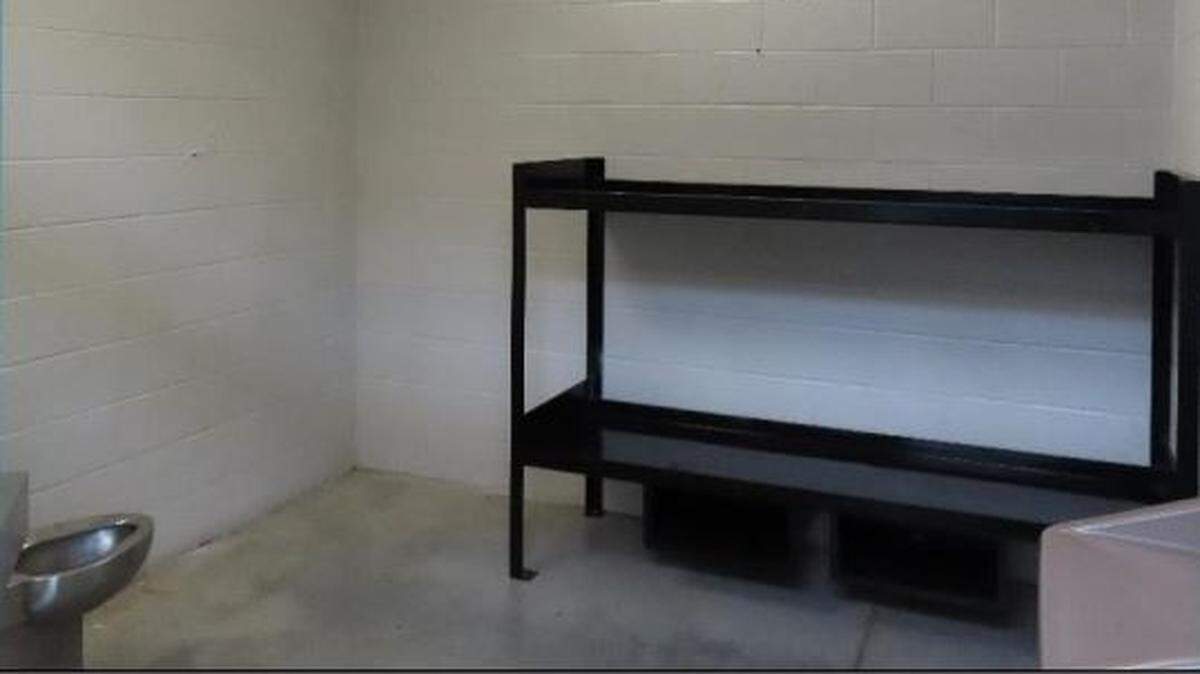
The Kentucky Department of Juvenile Justice fired a male correctional officer June 6 and notified Kentucky State Police after a review of security video footage suggested the officer kissed and had other inappropriate contact with one or more teenage girls inside the all-girls Campbell Regional Juvenile Detention Center in Newport.
The officer, Neil Moorman, told a state police detective that he kissed a girl at the facility on three occasions — twice in her room and once in a closet — and hugged her. Moorman said he also accepted her phone number, calling her home to check on her once she left the facility, according to an Aug. 21 report by the Justice and Public Safety Cabinet’s Internal Investigations Branch.
Only after Moorman was fired did the cabinet’s internal investigators substantiate several complaints about him. Among them, investigators said, he engaged in “any sexual activity” with a girl at the facility, and he violated rules by taking girls into a part of the facility — the laundry room — where there are no security cameras.
The 35-bed detention center held girls, age 11 to 18, awaiting the disposition of juvenile or criminal charges. Last winter, Gov. Andy Beshear ordered all girls in state juvenile custody to be housed at the Campbell County facility to keep them separate from boys following a girl’s rape at a juvenile detention center in Adair County.
Youths can be held in detention for weeks or months, depending on the circumstances of their case.
Moorman’s firing came a year after another male correctional officer resigned while under investigation at the Fayette Regional Juvenile Detention Center in Lexington for exchanging inappropriate texts with a girl held in custody there. Investigators said that officer asked for passwords to the girl’s social media accounts “so he could help her sell photographs and video of a sexual nature.”
In the more recent Campbell County case, Moorman has no public comment because investigations are continuing, his attorney, Bradley Fox of Covington, said Oct. 5.
Moorman has not been charged with a crime, Fox said. The state police post in Dry Ridge, which is handling the investigation, did not respond to calls last week and this week seeking comment.
Internal investigative reports obtained by the Herald-Leader show that the Department of Juvenile Justice did not act swiftly when presented with allegations about Moorman’s behavior.
Instead, the agency — long troubled by riots, assaults, abuse of youths and chronic under-staffing — allowed Moorman to continue working in the Campbell County juvenile detention center until May 31, despite weeks of warnings from his colleagues and safety concerns shared by several girls housed there.
A 15-year juvenile justice employee, Detention Alternatives Coordinator Traci Hudson, told investigators looking into Moorman after his firing that “she is aware there must be concrete evidence before action against an employee is taken. But she feels this situation went unaddressed too long.”
The warnings in Campbell County appeared to fall between the bureaucratic cracks.
As far as the Justice Cabinet can tell, nobody at the Campbell County facility reported their fears about Moorman to anyone higher than facility Superintendent Kraig McWhorter, said cabinet spokeswoman Morgan Hall.
McWhorter neither fired Moorman nor told anyone above him about the concerns, Hall added.
“The former superintendent did not report those verbal concerns to his supervisors or take further action. He was demoted to assistant superintendent on May 24, relieved of duty on July 5 and officially terminated Aug. 11,” Hall said.
Only after McWhorter was removed as superintendent did Department of Juvenile Justice higher-ups hear about Moorman, she said.
“With the superintendent’s position vacant, the assistant superintendent, upon returning from leave on May 31, notified the DJJ detention center division director of concerns about Mr. Moorman, and immediate action was taken,” she said. “Instructions were issued that Mr. Moorman was not allowed any contact with juveniles in DJJ custody.”
McWhorter’s official dismissal letter, issued by Juvenile Justice Commissioner Vicki Reed, did not mention Moorman.
The letter said McWhorter violated policy by releasing a girl from custody June 15 without asking the adult who collected her to present identification or fill out the necessary paperwork. And it said McWhorter came into work the previous day noticeably staggering and smelling of alcohol, not for the first time.
In a brief phone interview Monday, McWhorter said he forwarded all concerns that he was given about Moorman to his Department of Juvenile Justice supervisor, Division Director David Kazee. He referred further questions Monday to his attorney, Niroshan Wijesooriya of Cincinnati, who did not return calls seeking comment.
No records indicate that McWhorter reported anything about Moorman to Kazee, Hall said in response to the former superintendent’s explanation. McWhorter was demoted for poor performance and terminated for being intoxicated in the facility and having a juvenile forge a government document, she said.
Red flags quickly raised
Moorman began working at the Campbell County facility on April 16. His colleagues started to raise red flags about his behavior shortly thereafter.
According to internal investigative reports, facility employees said Moorman was known to be excessively “flirty” and “physical” with girls at the facility. He violated rules by taking girls with him into areas that had no security cameras, and he cultivated romantic relationships with one or more girls who lived in one of the housing units.
He violated still more rules by visiting the girls in that housing unit even after he repeatedly was ordered to stay away from the unit, employees said.
On May 7, several facility employees, including assistant superintendent Tera-Beth Sweetland, had a discussion about Moorman going alone into one of the girl’s rooms, where “kissing sounds” could be heard. The employees said they pulled video footage of the incident and immediately notified McWhorter, the superintendent.
Sweetland told investigators she was startled, upon returning from two weeks of medical leave May 31, to find Moorman still working at the facility. She had assumed he would be fired for misbehavior, she said. But McWhorter told her there was no evidence of wrongdoing by Moorman, she said.
“Sweetland confirmed most of the supervisory staff were aware of the allegations,” investigators wrote.
“Sweetland stated the normal procedure for a probationary employee disregarding a supervisor’s orders should be to dismiss the employee from employment,” investigators wrote.
However, “Sweetland stated the atmosphere for a long time was not to do so. She stated that since approximately 2021, the atmosphere at Campbell RJDC was flat disrespect for captains and supervisors, with no consequences.”
‘Everybody knew about it’
On May 21, several other facility employees warned Correctional Capt. Robin Pruitt to carefully watch Moorman if he went near the girls’ housing unit that was off-limits to him. Moorman entered the unit and interacted with the girls there anyway, ignoring her directives, Pruitt told investigators.
“If he could not be trusted to be with the females in Unit [redacted], then why is he working the floor?” Pruitt asked her colleagues, according to investigators. No answer was provided, she said.
At least six employees said they told their superiors or called the agency’s internal hotline with firsthand or secondhand reports about Moorman allegedly kissing or groping girls or looking into girls’ rooms after bedtime.
In his state police interview, Moorman denied groping any of the girls, according to internal investigators.
Some of the girls said Moorman would come to their doors and try to talk to them — smiling, calling himself “Big Daddy” and making them uneasy. Moorman did special favors for girls he liked best, they said.
“Everybody knew about it,” one girl at the facility told investigators June 6.
Another girl told investigators that Moorman kissed her and grabbed her buttocks.
“She went along with the relationship, but it made her feel strange, uncomfortable and scared,” investigators wrote.
Employees and youths speculated that Moorman was kept on the job despite his misbehavior because the facility was so poorly staffed that management did not believe it could spare anyone, not even him, investigators wrote.
Another fumble for DJJ
Beshear announced last December that the Campbell County facility would house all teenage girls in state custody, keeping them separate from teen-aged boys, following a girl’s rape that occurred during a riot at the juvenile detention center in Adair County.
“An essential step to protect these individuals,” Beshear called the reorganization at that time.
Beshear changed course in June, shortly after Moorman was fired. The governor said girls now would be sent to a Boyd County lockup because of a severe staff shortage in Campbell County. Boys held at the Boyd County facility were transferred to Breathitt County to make space.
Last month, Beshear told WLWT-TV in Cincinnati he hopes to reopen the Campbell County facility with boys who are charged with lesser offenses as soon as the Department of Juvenile Justice can hire and train enough staff to run the place safely.
But it appears from the way Moorman’s case was fumbled that the Department of Juvenile Justice still isn’t protecting youths, said state Senate Judiciary Chairman Whitney Westerfield, who has held a number of oversight hearings focused on problems inside the agency.
The General Assembly has called for Reed, Beshear’s appointed juvenile justice commissioner, to resign over her handling of problems at the detention centers, including staff and youth violence and chronic neglect, with youths locked in their cells for most of the day. It also authorized a $460,000 independent audit of the detention centers, with a report due to lawmakers this winter.
“Given the nature of the accusations and the fact multiple staff and supervisors reported the behavior, I find the delay between first hearing about the misconduct and (Moorman’s) termination unconscionable,” said Westerfield, R-Fruit Hill.
“Again, there seems to be a great disconnect between what’s happening on the front lines and the leadership at both the agency and cabinet levels.”
This story was originally published October 11, 2023 at 7:48 AM.