More than 25 Kentuckians were charged in Jan. 6 riot. Where cases stand amid Trump pardons.
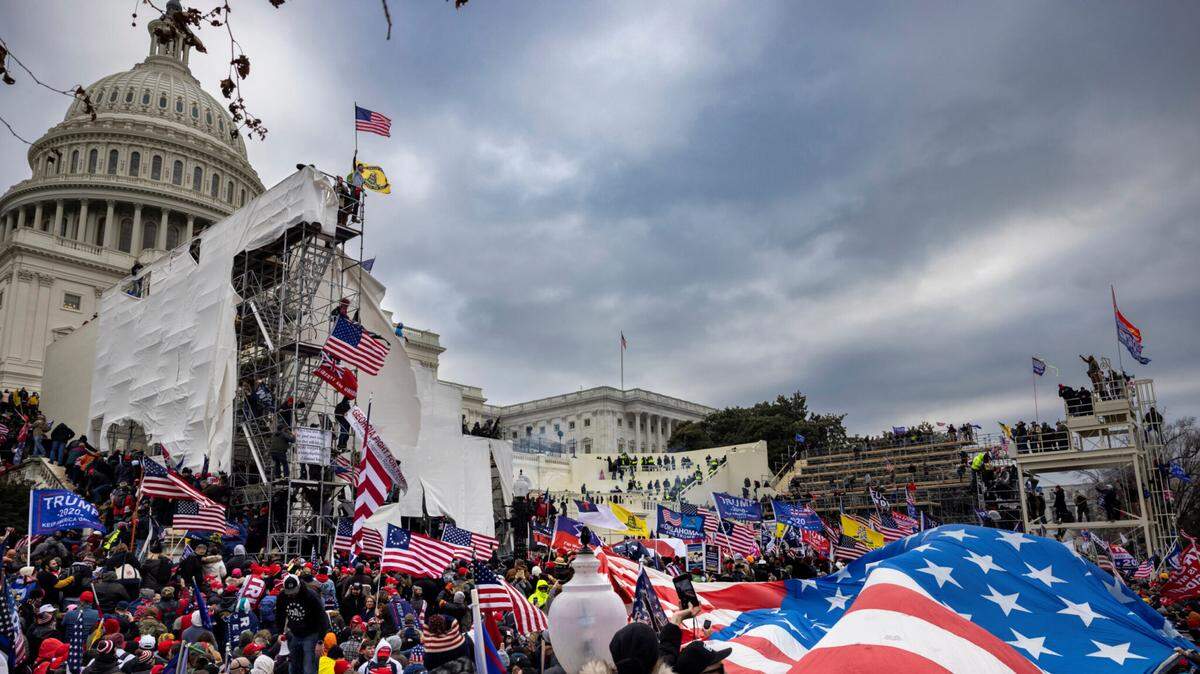
When Congress worked Jan. 6, 2021, to certify the vote making Joe Biden president, hundreds of angry supporters of Donald Trump pushed their way into the U.S. Capitol and tried to stop the certification.
More than 100 police officers were injured, and the crowd caused nearly $3 million in damage, according to federal authorities.
Among the crowd were many people from Kentucky.
Some attacked police, while others just took selfies and posted comments on social media. Ultimately, more than two dozen Kentuckians were charged with crimes.
But on Monday, as one of the first actions of his second term, Trump issued blanket pardons to those charged in the riot. In all, the pardons cover more than 1,500 defendants.
Trump said in a proclamation that the pardons ended “a grave national injustice that has been perpetrated upon the American people” and has said in interviews that he felt many of the defendants received excessive sentences.
“They’ve served years in jail,” Trump told reporters at the White House when asked why he pardoned violent offenders, according to NBC News. “They should not have served, and they’ve served years in jail. And murderers don’t even go to jail in this country.”
Opposition to the decision was swift, including from some Republicans.
“It’s a miscarriage of justice, a betrayal, a mockery, and a desecration of the men and women that risked their lives defending our democracy,” Aquilino A. Gonell, who retired from the U.S. Capitol Police because of injuries he received during the violence, told the New York Times.
Here’s the latest information about Kentuckians’ cases:
Robert Bauer
Bauer, of Cave City, was arrested in January 2021.
A criminal complaint said he and his cousin from Virginia, Edward Hemenway, went along with the crowd into the Capitol. Bauer chanted “Stop the Steal!” and took pictures, including photos of the two with their middle fingers raised.
Bauer told an FBI agent he went into the Capitol to “occupy the space,” while Hemenway said he went in out of “curiosity” and “stupidity.”
Bauer pleaded guilty in June 2021 to parading and picketing in a Capitol building and was sentenced to 45 days in jail and 60 hours of community service and ordered to pay $500 in restitution.
An official in Cave City notified the court in November 2021 that Bauer had done 60 hours of work for the city, completing his sentence.
Roger Kent Baugh
Baugh, of Louisville, traveled with a friend who had a gun to attend the “Stop the Steal” rally and helped others push against police officers who were trying to keep the mob from entering the Capitol, according to a criminal complaint.
He lied about his involvement when FBI agents interviewed him.
He pleaded guilty to civil disorder, and a judge sentenced him in January 2023 to 12 months and one day in jail and a restitution payment of $2,000.
He was no longer in federal custody as of October 2023, according to the Federal Bureau of Prisons.
Damon Michael Beckley
Beckley, of Cub Run in Hart County, was accused of going into a restricted area of the Capitol during the insurrection and recording videos that later helped authorities identify him.
In one, he said, “If we got to come back here and start a revolution and take all these traitors out, which is what we should have done, then we will.”
He was convicted of obstructing an official proceeding and interfering with law enforcement officers and sentenced in February 2024 to 18 months in jail and $2,000 in restitution.
The conviction was overturned on appeal, and the case was pending when Trump issued the blanket pardons Monday.
A judge dismissed the charges on Tuesday.
Eric Douglas Clark
A criminal complaint against Clark, of Louisville, said he went into a restricted area of the Capitol during the disturbance and took photos, and said in a text to someone else that it was “ridiculously easy to get in.”
A jury convicted Clark on four misdemeanor charges: entering a restricted area; disorderly conduct in a restricted area; disorderly conduct in the Capitol; and demonstrating in the Capitol.
A judge sentenced him in June 2024 to five months in prison, but he argued to delay his date to report. The judge ultimately ordered him to report to prison by Jan. 13, but the Federal Bureau of Prisons did not list him as an inmate Wednesday.
Benjamin Cole
Cole, of Louisville, traveled with members of what an FBI agent described as a militia-style group to Trump’s Jan. 6 rally. The group forced their way into the Capitol through a tunnel that provides access to “sensitive areas” and offices used by members of Congress, according to the court record.
The group traveled from Florida, but Cole was arrested in Louisville and lives in Kentucky, the court record indicates.
Cole pleaded guilty to disorderly conduct.
In October 2023 a judge sentenced him to four years of probation, with three months of that on home detention; 40 hours of community service; and restitution of $2,000 for damage caused to the Capitol during the insurrection.
Gracyn Courtright
Courtright, from West Virginia, was a University of Kentucky student when she went into a restricted area of the Capitol during the Jan. 6 disturbance and posted photos and videos to social media.
Surveillance video showed her near the Senate chamber at one point carrying a “Members Only” sign. She gave the sign to a police officer when he asked her for it and left the building after being inside for 24 minutes.
She was charged with four misdemeanors and pleaded guilty to one charge of entering a restricted area.
A judge sentenced her to January 2022 to 30 days in jail, 60 hours of community service and $500 restitution.
Dalton Crase
Crase, of Lexington, and a friend, Troy Dylan Williams, went into the Capitol during the confrontation and took photos and videos, but didn’t take part in pushing police and left after only a few minutes, according to a criminal complaint.
“Even though we didn’t participate in violence, I think it was dumb that we went in,” he told an FBI agent.
Crase pleaded guilty to demonstrating in the Capitol, a restricted area.
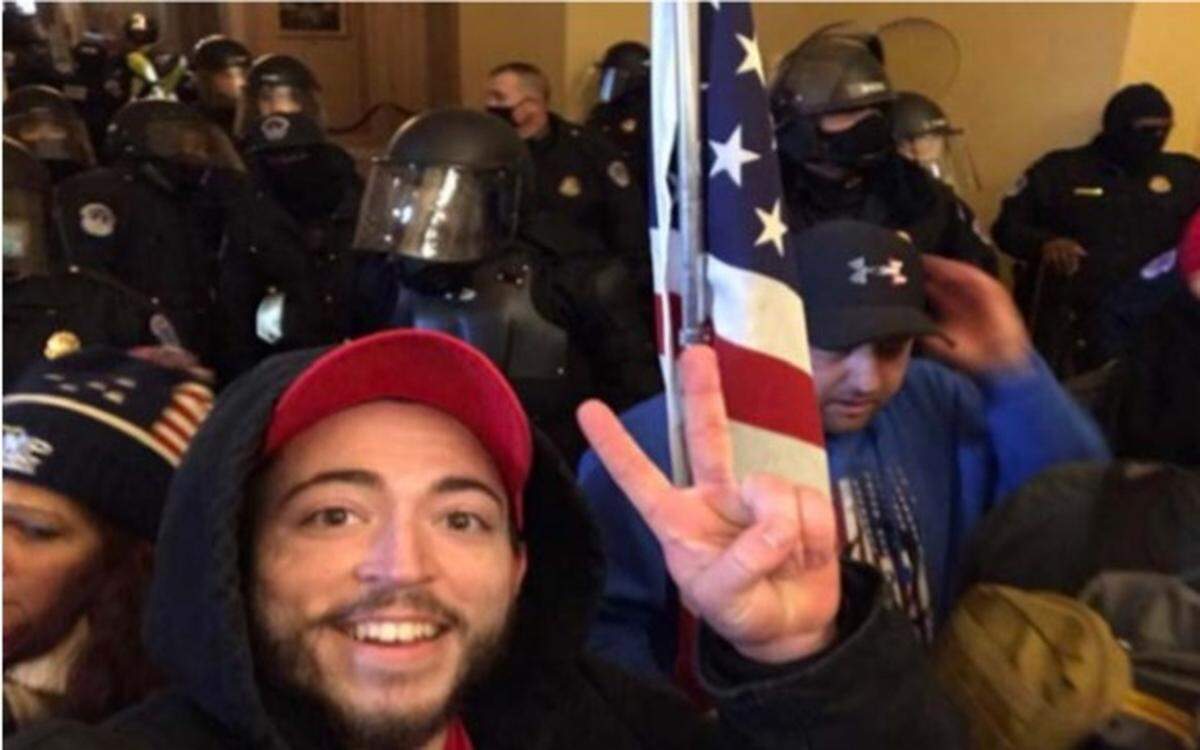
A judge sentenced him in January 2022 to 36 months of probation; 15 days of “intermittent confinement,” meaning he could serve on the weekends; 60 hours of community service; and restitution of $500.
Isreal Easterday
Easterday, of Bonnieville in Hart County, went into the Capitol carrying a Confederate flag and sprayed a chemical irritant into the eyes of two police officers, then helped pull other people into the building, according to federal authorities.
Easterday’s lawyer said in a memorandum that he grew up sheltered in an Amish community and hadn’t even planned on attending the Trump rally until an uncle invited him to go.
The lawyer said someone handed Easterday, then just 19, a can of pepper spray when he got inside the Capitol and that he sprayed it twice before wandering around for a few minutes and leaving.
However, the prosecutor said Easterday deliberately shot pepper spray into the eyes of one officer, causing him to collapse and experience severe pain and partial blindness for hours, then got another canister and did the same thing to a second officer.
Easterday wiped photos and posts from his Facebook page the next day to try to hide his guilt, the prosecutor said.
A jury convicted Easterday of assaulting officers, entering a restricted area with a dangerous weapon, physical violence with a weapon and civil disorder.
In April 2024, a judge sentenced him to spend 30 months in federal prison, perform 500 hours of community service and pay $2,000 restitution.
The Federal Bureau of Prisons said he was no longer in its custody as of Tuesday.
Andrew Grigsby
Grigbsy, who is from Eubank, north of Somerset, told the FBI that he had did not enter the Capitol building during the riot, but said he had found a can of bear spray and used it to spray people attacking police officers. He said he had not intentionally sprayed any officers.
However, an FBI agent said that while Grigsby was on a stairwell leading into the building, he sprayed officers trying to keep people out of the building, forcing the officers to retreat.
One officer said Grigbsy deliberately sprayed him, causing him extreme discomfort.
A grand jury indicted Grigbsy in August 2024 on charges that included entering a restricted area with a weapon, assaulting, resisting or impeding police, civil disorder and physical violence with a weapon in a restricted area.
He was arrested this month.
A federal prosecutor filed a motion Tuesday to dismiss the charges.
Luke Hoffman
An FBI agent said in a statement that video and photos showed Hoffman, of Dover in Mason County, struggling with a police officer for control of the officer’s baton; spraying a chemical irritant toward officers; and supporting other rioters who stood on his shoulders while they attacked police officers with objects including a flag pole.
In a post on social media, a woman identified as Hoffman’s wife said she was proud of him. “He stood up for America today!!” the post said in part.
Hoffman pleaded guilty to a charge of assaulting, resisting or impeding an officer.
In September, a judge sentenced him to 20 months in prison and ordered him to pay $2,000 in restitution.
He was no longer in federal custody as of Monday, according to the Federal Bureau of Prisons.
Joseph Howe
Howe, of Magnolia in LaRue County, traveled to Washington, D.C., with several other people, including Michael Sparks, the first person to “breach” the Capitol building the day of the insurrection, according to a statement from an FBI agent.
Security footage showed that Howe pushed a police officer trying to block the crowd from getting into the building, then went inside and kicked a door to the Senate wing.
He pleaded guilty to obstructing an official proceeding and assaulting, resisting or impeding a police officer..
In October 2023, a judge sentenced him to 50 months in prison and ordered him to pay $2,000 in restitution.
He had a motion pending to set aside his sentence, arguing it was longer than it should have been, when Trump issued the Jan. 6 pardons.
The Bureau of Prisons said he was released Monday.
Joseph Irwin
Federal authorities received a tip that one man seen in images taken at the Capitol during the riot was Irwin, a former sheriff’s officer in Hardin County, according to a statement from an FBI agent.
The agent said Irwin, armed with a piece of a wooden pole, was part of a mob that overran a police line and moved all the way to the floor of the U.S. Senate, where Irwin and a friend posed for photos.
Irwin banged his pole on the floor and yelled “THIS IS OURS RIGHT HERE! THIS IS OUR HOUSE! THIS IS WHAT THE COURT DO WHEN THE COURT TAKE IT! DON’T GIVE IT BACK TO THEM NOW!” according to the statement.
A judge convicted Irwin in May 2024 on several charges, including including obstructing an official proceeding, entering a restricted area with a weapon, and disorderly conduct in a restricted area with a weapon.
Irwin was scheduled to be sentenced Feb. 13. A prosecutor filed a motion to dismiss the case Tuesday.
Chad Barrett Jones
The FBI identified Barrett, of Mount Washington in Bullitt County, as a suspect after a witness submitted a tip saying Barrett was shown in video footage using a pole with a rolled-up Trump flag to try to break the glass on a door inside the Capitol building, according to a statement from an FBI agent.
Another witness said Jones told him he had broken the window, and he “called himself an idiot,” according to the statement.
Jones went to trial before a judge in July 2023 and was convicted of charges including civil disorder, destruction of property, obstructing an official proceeding, entering a restricted area with a weapon and engaging in physical violence with a weapon.
He has not been sentenced. In December, his attorneys filed a motion in support of a further delay in his sentence that referred to Trump’s pledge to pardon those charged in the Jan. 6 insurrection.
“Defendant Jones has instructed undersigned counsel to inform the Court that defendant Jones expects to be pardoned by President Trump,” the motion said.
Clayton Mullins
Mullins, of Mayfield, pleaded guilty in January 2024 to assaulting, resisting or impeding certain officers. During the Jan. 6 riot, he grabbed the leg of a Washington D.C. police officer, dragging him down a flight of stairs into a crowd of protesters. The officer was assaulted by the crowd, needing two stitches to close a cut on his head.
He was sentenced to 30 months in prison, with credit for time served while in custody – which amounted to seven days; 36 months probation; $32,165.65 in restitution; and a $49,764.00 fine.
The Bureau of Prisons said he was no longer in its custody as of Tuesday.
Michael Orangias
Orangias, of Louisville, pleaded guilty in August 2021 to parading, demonstrating or picketing in the Capitol. His plea deal dismissed three other charges, and he was sentenced to 36 months of probation, including 90 days of home detention.
Orangias was also ordered to pay $500 restitution.
Orangias broke into the Capitol, took photos and videos inside and left roughly five minutes later, according to the Department of Justice. Days after the riot, roofing company KCC International sent a tip to Louisville ATF saying one of their employees, Orangias, may have participated in the riot. Investigators found an episode of the “Wildly Uninteresting Podcast,” where Orangias told his story.
Kurt Peterson
Peterson was arrested June 2021 in his hometown of Hodgenville, in LaRue County. Over a year later he pleaded guilty to engaging in physical violence in a restricted building or grounds using or carrying a dangerous or deadly weapon, according to the Department of Justice. He was sentenced to 45 days in prison, followed by two months of home incarceration in November 2023.
Peterson approached the Capitol building carrying a pointed wooden stick, which he used to break a window. The cost to replace the window was estimated at $2,700, according to the Department of Justice.
Stephen Randolph
Randolph, of Harrodsburg, was convicted of civil disorder, assaulting an officer with a deadly or dangerous weapon and inflicting bodily injury. The Department of Justice said he was sentenced to 8 years in prison, 36 months of supervised release and ordered to pay $2,000 in restitution on Sept. 19, 2024.
Randolph was a part of a group of five men who first breached the Capitol building and led an attack on officers. A female officer was hit in the face in the process and thrown backward. She hit her head against a metal handrail and the steps, which caused her to lose consciousness and suffer a concussion.
All the men, including Randolph, stayed on the Capitol grounds for hours. Randolph climbed onto the Upper West Terrace and watched law enforcement fight rioters around the inaugural archway, also known as the Tunnel.
The Bureau of Prisons said Randolph was no longer in its custody as of Monday.
Jordan Revlett
Revlett was arrested in Owensboro just over two weeks after the attack after the FBI received a tip about his involvement.
Almost a year later, Revlett pleaded guilty to parading, demonstrating or picketing in a Capitol building and was sentenced to 14 days in jail, 12 months of probation, 80 hours of community service and ordered to pay $500 in restitution, according to the Justice Department.
Snapchat recordings from an account under Revlett’s name showed him walking up the steps and into the U.S. Capitol, as well as a selfie with the caption “Just so you guys know a capitol police officer opened the door from the inside to let us in.”
Barry Saturday
Saturday, a former city council candidate from Lexington, was charged in July 2023 with civil disorder, knowingly entering and remaining in a restricted building, disorderly and disruptive conduct within a restricted building, and disorderly conduct within the Capitol.
A criminal complaint in the case said that security video showed Saturday “pushing against the backs of other rioters and putting his head down to brace himself against other rioters, actively participating in the heave-ho against the line of police officers” at tunnel at the Capitol.
Saturday had pleaded not guilty to the charges and was scheduled to go to trial in April.
Peter Schwartz
Schwartz, of Uniontown, Pennsylvania, was sentenced to 14 years and two months in prison after being found guilty of nine felonies and two misdemeanors at a trial. At the time, Schwartz’ prison sentence was the longest handed down to a Capitol riot defendant, according to the Associated Press.
Schwartz was also ordered to pay a fine/restitution of $2,000, according to the Department of Justice.
A prosecutor said in a sentencing memo Schwartz was the first person to throw a folding chair at officers trying to keep the mob at bay, creating an opening that enabled “hundreds of rioters” to flood onto a terrace.
He then took cans of chemical spray the officers had left as they retreated and shot the spray at officers, according to the memo.
The prosecutor called Schwartz “one of the most and violent and aggressive participants” in the attack.
Schwartz was a convicted felon before Jan. 6 and had a history of assaulting police and women, according to the prosecutor.
That record figured into the relatively long sentence he received.
Schwartz considered his home to be in Owensboro, according to his attorneys.
The Bureau of Prisons said Schwartz was no longer in its custody as of Jan. 20.
Michael Sparks
Sparks, of Elizabethtown, was identified as the first person to breach the U.S. Capitol during the insurrection, according to the Department of Justice. He was found guilty of multiple felony and misdemeanor offenses by a federal jury and in August 2024 was sentenced to 53 months in prison, 36 months of supervised release and ordered to pay $2,000 in restitution.
The Department of Justice said Sparks chased a U.S. Capitol Police officer up a flight of stairs along with a group of men. The officer found backup and ordered the group to leave, but Sparks did not retreat.
When Sparks climbed into the building, it made others behind him bolder “and paving the way for countless rioters to stream inside,” a federal judge said in one order.
Sparks was arrested roughly two weeks after the riot when the FBI received tips turning him in, according to the Department of Justice.
The Bureau of Prison said Sparks was released Tuesday.
Shelly Stallings
Stallings, of Morganfield in Union County, pleaded guilty to civil disorder; assaulting, resisting or impeding officers using a dangerous weapon; entering and remaining in a restricted building or grounds with a deadly or dangerous weapon; disorderly and disruptive conduct in a restricted building; engaging in physical violence in a restricted building with a deadly weapon; disorderly conduct in the capitol grounds or building; and committing an act of physical violence in the Capitol grounds or buildings.
She was sentenced in April 2023 to two years in prison.
Stallings forced entry to the Capitol building and encouraged and assisted in acts of breaking windows and assaulting members of law enforcement, alongside her husband, Schwartz, according to court documents. During the riot, Stallings was handed a canister of pepper spray and “briefly” sprayed it at officers who were trying to protect the Capitol.
Stallings was no longer in federal custody as of Tuesday.
William Stover
Stover, of Elizabethtown, was sentenced to 6 months in prison and 36 months of supervised release after he pleaded guilty to felony charges related to the insurrection, according to the Department of Justice. He was also ordered to pay $2,000 in restitution.
Stover was identified on surveillance and police body camera footage at the Capitol pushing against a police line, according to the Department of Justice. He also “aided other rioters in fighting against police officers” near an entrance to the Capitol building.
Stover also received a U.S. Capitol Police riot shield and passed it to another person, who used the shield to attack police, according to the Department of Justice.
The Bureau of Prisons said Stover was released Tuesday.
Reva Vincent
Vincent, of Brownsville in Edmonson County, was arrested in Louisville in March 2022, according to the Department of Justice. One month later, she pleaded guilty to parading, demonstrating or picketing in a Capitol building and was sentenced to 24 months of probation.
Vincent filmed her entry into the Capitol building on her cell phone, according to the Department of Justice. While filming, Vincent made many statements, such as, “We own this Capitol” and, “They need to go.”
Vincent was also ordered to perform 60 hours of community service, and to pay $2,000 in legal fines and restitution.
Thomas Vinson
Vinson, of Morganfield in Union County, was one of the first 100 people to enter the Capitol, along with his wife Lori Vinson, according to a criminal complaint.
He was arrested on Feb. 23, 2021. He said he entered the Capitol with a “peaceful bunch of people there to express their views to Congress” and said he spent most of his time “chanting” and “talking.”
He pleaded guilty to one count of parading, demonstrating, or picketing in a Capitol. He was sentenced to five years probation and issued a $5,000 fine, $500 restitution and 120 hours of community service in October 2022.
He was granted an early end to his probation after serving 38 months. His wife’s motion for early termination was denied.
Lori Ann Vinson
Vinson was arrested in Owensboro and later pleaded guilty to parading, demonstrating or picketing in a Capitol building, according to the Department of Justice. She was sentenced to five years probation and issued a $5,000 fine, $500 restitution and 120 hours of community service in October 2022.
Vinson, along with her husband, Thomas Vinson, unlawfully entered the U.S. Capitol during the “Stop the Seal” rally. The Department of Justice said the Vinsons recorded video on their phone of them entering the Capitol building.
Vinson later told news outlets she thought her actions were justified and she would “do this all over again tomorrow,” according to the Department of Justice.
Troy Williams
Williams, of Lexington, and a friend, Dalton Crase, attended the “Stop the Steal Rally” in Washington, D.C. on Jan. 6 before entering the Capitol building.
Williams said he had no intentions of entering the Capitol until everyone went inside, describing it as a “herd mentality,” according to a criminal complaint.
As the pair went into the building, Williams told Crase, “If these people start fighting the cops and getting crazy, we’re leaving.”
They left shortly after, but later re-entered the building.
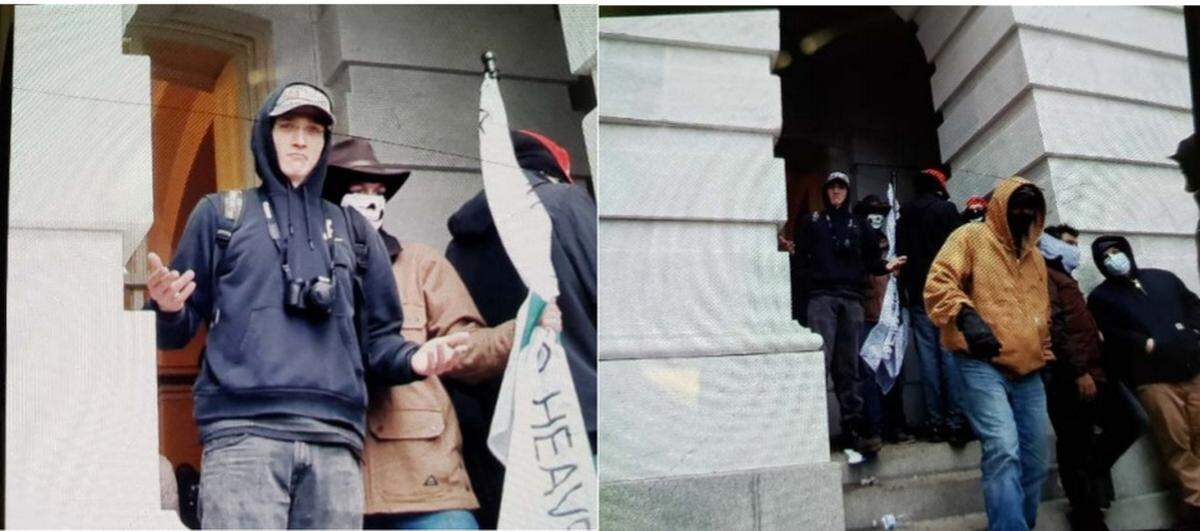
When asked by FBI agents if he thought he did something wrong, Williams said “to some degree” but that he “wasn’t doing anything wrong or inciteful.”
He pleaded guilty to one count of parading, demonstrating or picketing in a Capitol.
A judge sentenced him in January 2022 to 36 months of probation; 15 days of “intermittent confinement,” meaning he could serve on the weekends; 60 hours of community service; and restitution of $500.
Daniel Edwin Wilson
Wilson, who was arrested in Elizabethtown, was a member of an online group chat called “Coalition of the Unknown” on Telegram Messenger, an app that encrypts texts. Members of that group discussed the Jan. 6 riot for weeks prior.
“When tyranny becomes law, resistance becomes duty and good men must do bad things,” Wilson said in the group chat, according to a statement from an FBI agent.
He repeatedly denied entering the Capitol, but he was seen on multiple security cameras inside the building during the riot.
He also said he was ready to lay his life on the line, and asked other members their opinion on bringing guns to the riot. In an interview, he told the FBI he associates with local Kentucky militia groups but that he is “not a legitimate member.”
While executing a search warrant in June 2022, law enforcement found six firearms in Wilson’s home. He was prohibited from possessing firearms due to previous felony convictions. At least two of the firearms were loaded at the time of seizure, and another two did not have serial numbers.
In September 2024 he was sentenced to 60 months in prison, $2,000 restitution; 36 months probation for conspiracy to impede or injure officer; to be served concurrently with 60 months in prison; 36 months probation for one charge of possession of an unregistered firearm and one charge of firearm possession by a prohibited person.
His case was dismissed Tuesday.
This story was originally published January 22, 2025 at 5:00 AM.