‘Devastating for Kentucky.’ Federal funding pause sows chaos, confusion in the state
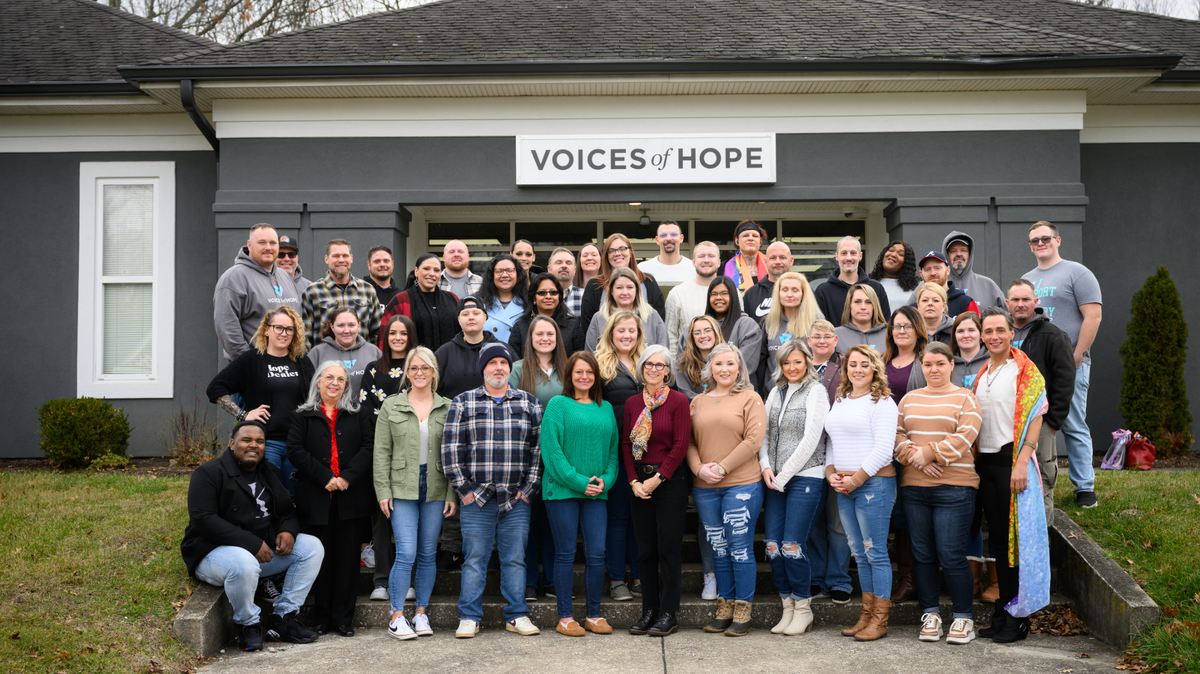
Voices of Hope is a small, but growing nonprofit on Lexington’s north side that helps people with substance use disorders find solutions.
Its 75 employees direct about 15,000 people a year to treatment centers, helps transition them out of jail, holds 12-step meetings, and lets them do laundry. The organization works all over Kentucky in a state that has been disproportionately affected by the opioid crisis.
It survives on about $2.5 million that trickles down from Kentucky’s nearly $50 million block grant from the U.S. Substance Abuse and Mental Health Services Administration. On Monday night, Voice of Hope Executive Director Shelley Elswick found out that funding, about half of her budget could be cut because of President Donald Trump was “pausing” all federal grants outside of Social Security and Medicare on Thursday, at 5 p.m. on Jan. 28.
Like countless others across Kentucky and the nation, she panicked.
“We’re doing such important work in the community,” she said.
“I woke up this morning feeling hopeless when I saw this in the news, but I’ve been uplifted by hope. Fear that has to be counterbalanced by hope — hope that this community is going to pull together and be out there supporting the nonprofits that are feeling fear today.”
Voices for Hope represents the tiniest sliver of federal grants. Think about this: According to the Office of the State Budget Director, 40 percent of Kentucky’s budget expenditures come from federal grant funding — about $22 billion — to help new mothers, childcare for low-income families, drug treatment programs, teacher training, college preparation programs and agriculture programs, and much, much more.
According to the Kentucky Center for Economic Policy, that includes $15 billion for Medicaid, $1.8 billion for K-12 education and $1.24 billion for higher ed.
So Trump’s announcement unleashed a wave of chaos and confusion about what it would mean, particularly in a state like ours that is so dependent on federal aid. Trump officials said spending needed to be investigated to see if it was in line with Trump’s priorities.
In part, this is a legal test by the Trump administration to see if it can gain more control over funding approved by Congress. On Tuesday morning, a coalition of attorneys general from New York, California, Illinois, New Jersey, Rhode Island and Massachusetts announced those states would file suit immediately to stop the order.
(Shortly before 5 p.m. Tuesday, a federal judge blocked Trump’s actions until Feb. 3.)
Those worries were echoed by Kentucky Gov. Andy Beshear on Tuesday.
“I have concerns about both the legality of the president attempting to stop or freeze laws explicitly passed by Congress, as well as the damage this action will cause to farmers, small-business owners and struggling families who are receiving important job training or health care services to improve the lives of their children,” Beshear said in a statement.
Democratic Congressman Morgan McGarvey of Louisville was more direct on X on Tuesday:
“This is 100% unconstitutional and will be devastating for millions of Americans, including here in Louisville,” he wrote. “I will do everything within my power to stop this.”
No other members of the Kentucky delegation had commented on social media about the pause as of Tuesday afternoon.
There are as many questions about all of this as there are dollars involved. Trump officials said direct payments to individuals would not be involved, but on Tuesday afternoon, there were reports that Medicaid portals were shut down. It’s unclear if financial aid for higher education would be affected. Will a counselor at the GEAR-UP program, which prepares low-income students for college, just get fired?
Or will we suddenly not have enough funding for the nearly 120,000 Kentucky mothers, infants and children enrolled in the Special Supplemental Nutrition Assistance Program for Women, Infants and Children (WIC), which provides financial help with select groceries, infant formula, breastfeeding supports and health services?
Take Head Start. Because Kentucky does not fund universal pre-K programs, more than 10,000 Kentucky preschoolers depend on these programs across the state, thanks to about $137 million in federal funding, according to 2023 data. Will those classrooms simply be closed?
Or take SNAP, the Supplemental Nutrition Assistance Program. According to the Kentucky Center for Economic Policy, as of November, 2024, SNAP benefits helped 586,513 Kentuckians, about 12.9 percent of the population. As of November, about $1.3 billion in SNAP benefits were spent here, helping both people and local businesses.
“Kentucky is a poor state, and we need these programs for healthcare food and basic needs,” said Jason Bailey, the group’s executive director.
“In the short run, it introduces chaos and fear for a lot organizations and people. In the long run, it would be devastating for Kentucky.”
This story was originally published January 28, 2025 at 1:24 PM.