Amid censorship, spending fights, bill would give more library control to KY politicians
As some Kentucky public libraries grapple with calls for censorship and fights over spending, the legislature is advancing a bill to give elected county judge-executives more authority to appoint library board members across most of the state.
The Senate State and Local Government Committee approved Senate Bill 71 on Wednesday and sent it to the full Senate for further action.
There was a “divisive” controversy last year when the Daviess County judge-executive filled open seats on the library board based on the nominees suggested to him, the bill’s sponsor, state Sen. Gary Boswell, R-Owensboro, told the Senate committee.
After an advocacy group called Citizens For Decency said it discovered more than 200 inappropriate books and challenged a gay pride event at the Daviess County Public Library, the fiscal court hearings to fill library board seats became emotional, tense events.
Boswell has supported conservative challenges to library materials, writing in a 2024 letter to the editor: “Just quit putting books with social agendas or that violate community standards out.”
He added: “Money was wasted and the (library) director is responsible.”
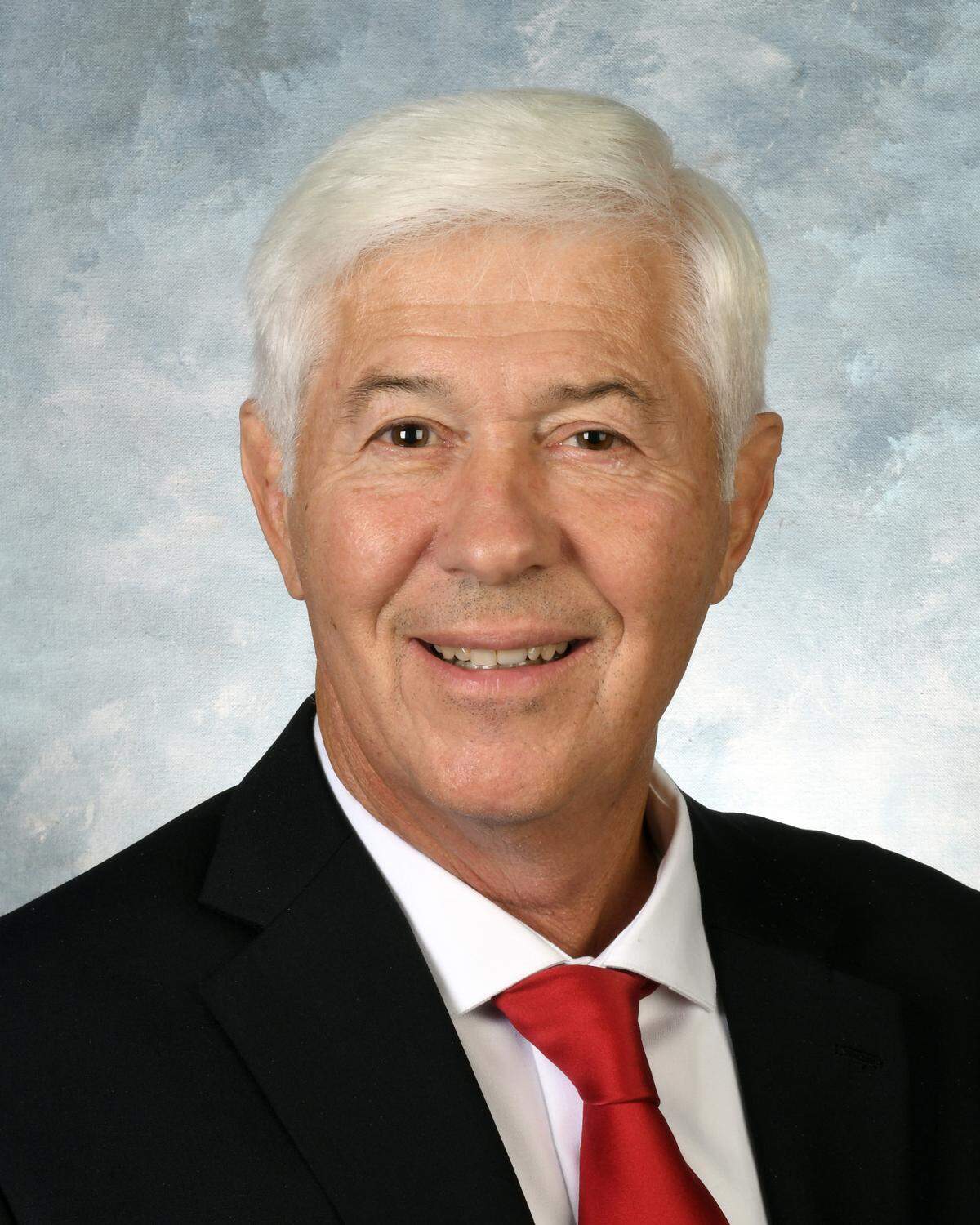
Critics say Boswell’s bill could inject partisan politics into libraries that were, until recently, self-governed and self-financed tax districts, with insulated governing boards essentially selecting their own members.
That model began to change three years ago.
The legislature created an alternative method in 2022 where county judge-executives, if they wanted, could pick library board members, relying in part on nominees recommended by the Kentucky Department of Libraries and Archives.
That statutory change was made after the Pike County Public Library angered Pike County courthouse leaders by refusing to surrender its downtown Pikeville building to the private University of Pikeville, which wanted it. As an independent body, the public library could not be forced at that time to obey the Pike County Fiscal Court.
Only 20 counties have switched to the alternative appointment method, said Jean Ruark, executive director of the Paul Sawyier Public Library in Frankfort and advocacy chairwoman for the Kentucky Public Library Association. Most county courthouse leaders in Kentucky have chosen to stay out of the local libraries’ affairs, Ruark said.
“They’ve got enough on their plates,” Ruark said.
In counties where judge-executives are taking an active role at the library, “there have been board members appointed who have an agenda of their own that doesn’t necessarily align with the best interest of the whole county,” she said.
Boswell’s bill would make the alternative appointment method the only method for most counties by declaring that judge-executives should choose library board members with the approval of their fiscal courts.
Boswell added language in a last-minute committee substitute to give the state Department of Libraries and Archives a continued role in the process, by suggesting an initial nominee for the judge-executive’s consideration.
But Boswell said that language would be removed in a Senate floor amendment.
A handful of Kentucky libraries — including Lexington’s and Louisville’s — are not organized as tax districts and therefore are not covered by the 2022 law or Boswell’s bill.
The Senate committee voted 7-to-3 to pass Boswell’s bill Wednesday.
Senators who supported it said libraries need more outside oversight.
State Sen. Scott Madon, R-Pineville, said he’s concerned that under the traditional model in Kentucky, public libraries collect property tax revenue and spend millions of dollars on construction projects without having any elected officials in charge whom local voters can hold accountable if they’re displeased.
“They’re a taxing district. In my area, they take the maximum amount they’re allowed every year, most of the time,” Madon told several library advocates sitting at the witness table. “It’s a little bit concerning to me that you all can tax but not have anybody you have to answer to for that.”

At the University of Kentucky, College of Communication and Information researcher Shannon Crawford-Barniskis is conducting a national study of the experiences of public library trustees.
On Wednesday, Crawford-Barniskis told the Herald-Leader that outside library board appointments can be complicated by political and ideological agendas as well as appointees who arrive with no relevant training, previous relationship with the library or understanding of the role a modern library serves.
“Unfortunately, the judge-executive doesn’t understand how libraries work, typically,” Crawford-Barniskis said. “A judge-executive may be selecting someone based on other criteria that’s not as helpful in moving the community forward.”
“One problem would be if you get someone who wants to defund the library, who does not understand what the library is doing ... If you get someone coming from the outside who says, ‘We don’t need these books anymore, we have the internet,’ they’re not going to do well in responding to the real needs of the community,” she said.
This story was originally published February 27, 2025 at 12:59 PM.