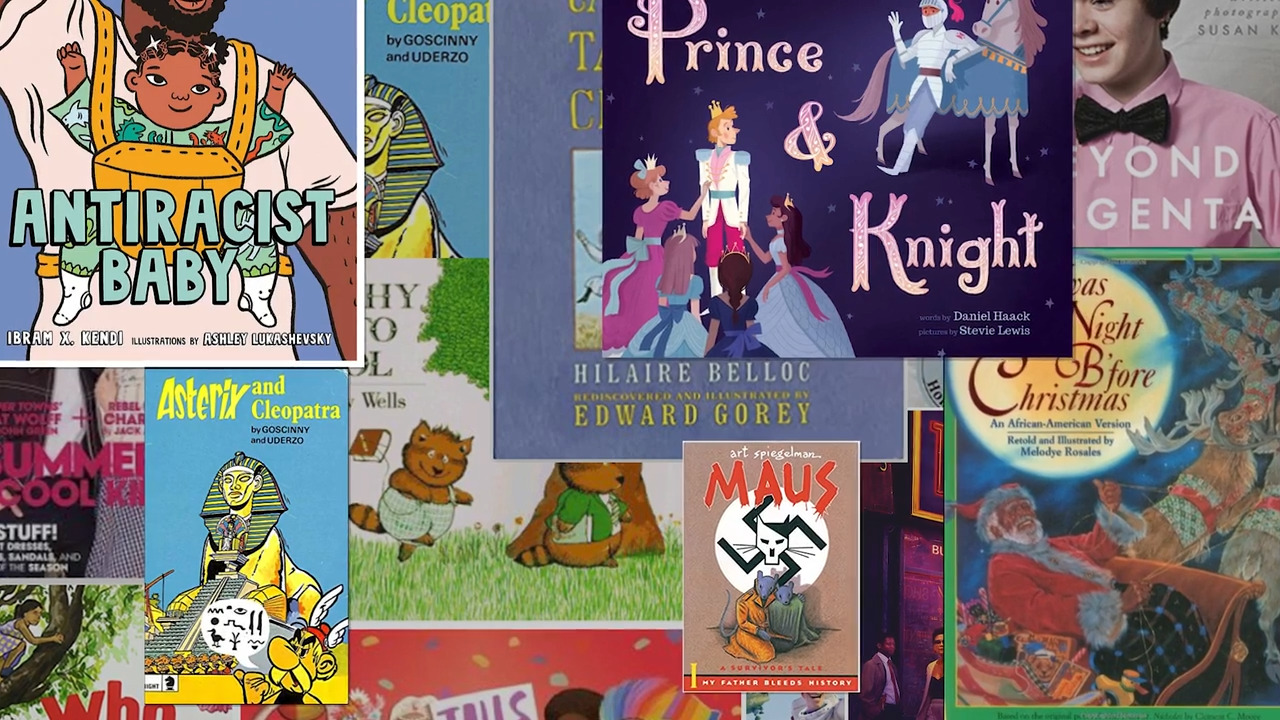
Pages and ‘pitchforks.’ KY libraries face increasing political pressure to ban books.
READ MORE
Pages and ‘pitchforks’
Over the last 3 years, the Kentucky Department for Libraries and Archives tracked 42 incidents of materials being challenged at 19 public library systems around the state. This is how libraries and politicians are responding.
Expand All
When the Kentucky General Assembly passed a law in April that lets county politicians take charge of public libraries starting next year, there were concerns that political pressure would lead to censorship of library materials in the future.
In fact, politicians already were turning up the heat.
Last December, state Rep. Thomas Huff, R-Shepherdsville, posted a warning on Facebook for his Bullitt County constituents: Beware of the book Gender Queer: A Memoir, by Maia Kobabe.
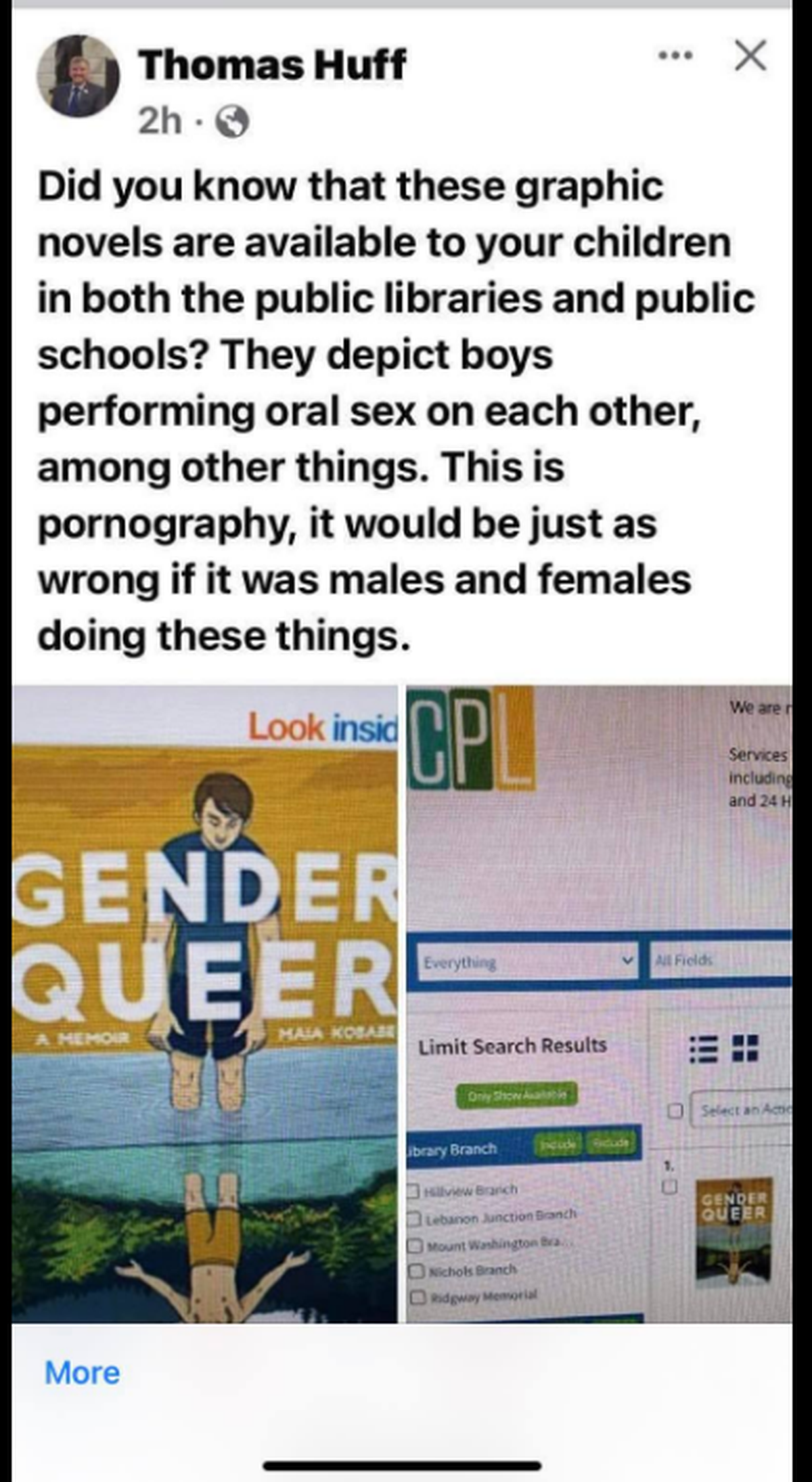
“Did you know that these graphic novels are available to your children in both the public libraries and public schools?” Huff wrote in his post.
“They depict boys performing oral sex on each other, among other things,” Huff wrote. “This is pornography, it would be just as wrong if it was males and females doing these things.”
Huff helpfully included a picture of Gender Queer’s cover. Next to that he posted a second picture, the listing for the book from the digital card catalog of the Bullitt County Public Library.
The community took notice.
“I was a little bit shocked, based on the content of it,” said Andrea Deacon, a Bullitt County mother of two high school students who saw Huff’s Facebook post.
“He posted some of the pictures that was in it. They were, in my opinion, basically X-rated. They were pictures of sexual acts, even if they were cartoon drawings,” Deacon said.
‘This book is corrupt’
The library, in a working-class Louisville suburb, immediately began to hear complaints about the award-winning graphic novel that last year topped the American Library Association’s list of most-challenged books. The book tells the cartoonist’s own life story about coming to terms with gender identity and sexual attraction.
Ominous remarks were made to library employees and board members about child pornography on the library’s shelves. People demanded the removal of Gender Queer and, soon, a half-dozen other books targeted online by conservative pressure groups as well as in follow-up Facebook posts from Huff.
“This book is corrupt,” wrote Phyllis Mitchell, a relative of a Bullitt County Fiscal Court magistrate, in her complaint about Gender Queer. “Maia Kobabe is trying to groom and indoctrinate the immature minds of children.”
Things went a step further one evening before Christmas when Bullitt County Sheriff Walt Sholar walked into the library branch in Shepherdsville and asked to see a copy of Gender Queer.
According to the library’s internal report on the incident, the sheriff told a library employee that he was “responding to a complaint from Representative Huff.”
Gender Queer already was checked out at that location, so the next available copy was reserved for him. Sholar left with a handful of business cards with the names and contact information of library senior managers.
Five months later, no criminal charges have been filed against library employees.
“My local representative said he was going to check with the local sheriff to see if it was child pornography,” said Deacon, one of those who filed a complaint with the library over Gender Queer. “But as I understand it, in the end, they decided they couldn’t do anything.”
The sheriff did not return calls to the Herald-Leader. His office told the newspaper that “he does not comment on investigations.” In response to an open records request, the sheriff’s office said it had no documents relevant to his library visit.
But just the fact that a police officer asked to see the contents of a library book had a chilling effect.
“I think it’s safe to say it was a little jarring to the staff,” said Joe Schweiss, the library’s director at the time.
The library’s board of trustees nervously reviewed its policies on the library’s material purchases and censorship, working with a lawyer and a professor of library science from the University of Kentucky. Board members worried about the library’s liability if anyone alleged harm because children were exposed to “inappropriate materials.”
“The people who brought up those concerns, it seemed like the sky was falling. And I was like, ‘OK, we don’t want anything that’s going to harm anybody, so let’s check this out,’” said Sherry Parker, chairwoman of the Bullitt County library board.
Time to leave, librarian says
In the end, Gender Queer and the other challenged books stayed on the shelves.
“It was very concerning when it was brought to our attention, yes, but we handled it the proper way,” Parker said. “There are steps that are outlined in our procedures, in all of our documents, on how we go about reviewing a book, no matter what that book is. And that’s what we did.”
Parker said she is a religious conservative, so she understands her neighbors’ unease with the materials they challenged. Bullitt County is a conservative community. But a public library can’t only reflect the views of certain people while ignoring others, she said.
“I mean, there are so many books out there that have content that people might not like,” she said. “But just because one person does not like it doesn’t mean that it’s not life-saving for someone else. You see what I’m saying? That’s what freedom of speech is.”
Around this same time, however, the General Assembly turned up its criticism of libraries and advanced Senate Bill 167 through the Capitol. The Lawrence County judge-executive referred to his local library as a “disaster” at a Senate committee hearing, while Republican lawmakers chided libraries for being “unaccountable” to the public.
This was only the latest in a series of legislative actions and lawsuits in recent years to target the state’s libraries.
Exasperated, Schweiss quit his job running the Bullitt County library and left Kentucky.
“I clearly didn’t feel like my future could be based there where I’d have to make such compromises. Were I a little younger and stronger, perhaps I could have stuck it out,” Schweiss said in a recent interview from his new home in Portland, Maine.
SB 167 allows county elected officials — judge-executives and fiscal courts — to change how libraries operate.
If they choose, county leaders will be able to assume sole authority to name library board members; veto library spending above $1 million, such as building expansions and new branches; and force libraries to share or give away their buildings to educational institutions, including private K-12 schools and colleges.
That last part is a nod to a turf battle in Eastern Kentucky, where the private University of Pikeville wants to take possession of a one-story building in downtown Pikeville that the Pike County Public Library occupies and has not been willing to surrender.
The state senator from Pikeville, Republican Phillip Wheeler, sponsored SB 167, following a public demand for the bill by Pike County’s Democratic judge-executive, Ray Jones.
Currently at most Kentucky libraries, the library boards recommend a choice of nominees for their seats to the county judge-executive after nominees’ qualifications have been vetted by the Kentucky Department for Libraries and Archives. So county politicians don’t get their own say in library appointments, policies or spending.
Financial control, nothing more?
Librarians are anxiously waiting to see what happens next in their counties.
“With every change there is the possibility that we may lose a step in basic intellectual rights, the right to read as outlined by the American Library Association’s Bill of Rights,” said Julie Maruskin, Clark County’s library director.
Supporters of SB 167 said they want county elected officials in charge because libraries collect property taxes and should answer to someone who is accountable to local voters.
At the Kentucky Association of Counties, which lobbied for the bill, chief executive Jim Henderson said the only concern he heard among his members was financial accountability. County judge-executives want to be able to select their own choices for any board that has taxing authority in their communities, Henderson said.
In a handful of counties, judge-executives believe their local libraries sit on excessive cash reserves or charge too much in taxes, Henderson said. But until now, library boards had autonomy, he said.
None of KACO’s members have expressed interest in censoring library materials, Henderson said.
“I understand that concern exists among some library directors,” Henderson said.
“I hope that those fears are unfounded, that that’s not really the purpose behind this bill,” Henderson said. “I guess like with any piece of legislation, there can be unintended consequences, and there could be be a situation where that becomes much more the issue. But that was not the focus of our support of the bill.”
The new law applies to more than 100 of Kentucky’s 120 counties, where libraries were created as largely self-governed, self-financed tax districts by citizen petitions. Libraries in Lexington and Louisville were established differently and are not affected.
In Bullitt County, Schweiss said he feared that without the firewall of independence around Kentucky libraries, future demands for censorship could find a friendlier audience among vote-conscious courthouse politicians. If a library board doesn’t agree to remove controversial books, those board members could be replaced, he said.
And revenue for libraries could be siphoned off if county leaders don’t place a priority on them, he said.
“It’s very clear, this law is not just about accountability, despite what the supporters said. It’s not just about funding. It’s about making sure that the elected officials’ norms are what’s represented, and nothing else,” Schweiss said.
“I think it’s going to be damaging to the state,” he said. “And I couldn’t bear to be there to see it happen.”
LGBTQ+ materials a frequent target
As Americans become more politically polarized and hostile to different views, school libraries and public libraries report an “unprecedented rise” in the number of challenges to books, movies, music and other materials in their collections, according to a report issued last month by the American Library Association.
The ALA tracked 729 library challenges nationally in 2021, involving more than 1,597 items.
In states including Texas, Idaho and Wyoming, prosecutors and lawmakers have threatened to bring criminal charges against librarians for allegedly exposing children to “obscene” materials. The mayor of Ridgeland, Miss., vowed this year to withhold the local library’s funding unless it purged LGBTQ+ books from its shelves.
Kentucky is not immune. Over the three most recent fiscal years available, the Kentucky Department for Libraries and Archives tracked 42 incidents of materials being challenged at 19 public library systems around the state.
Most often, Kentuckians challenge materials with references to gay, lesbian, binary or transgender people, particularly books written for children or teens who might have questions about their own sexuality.
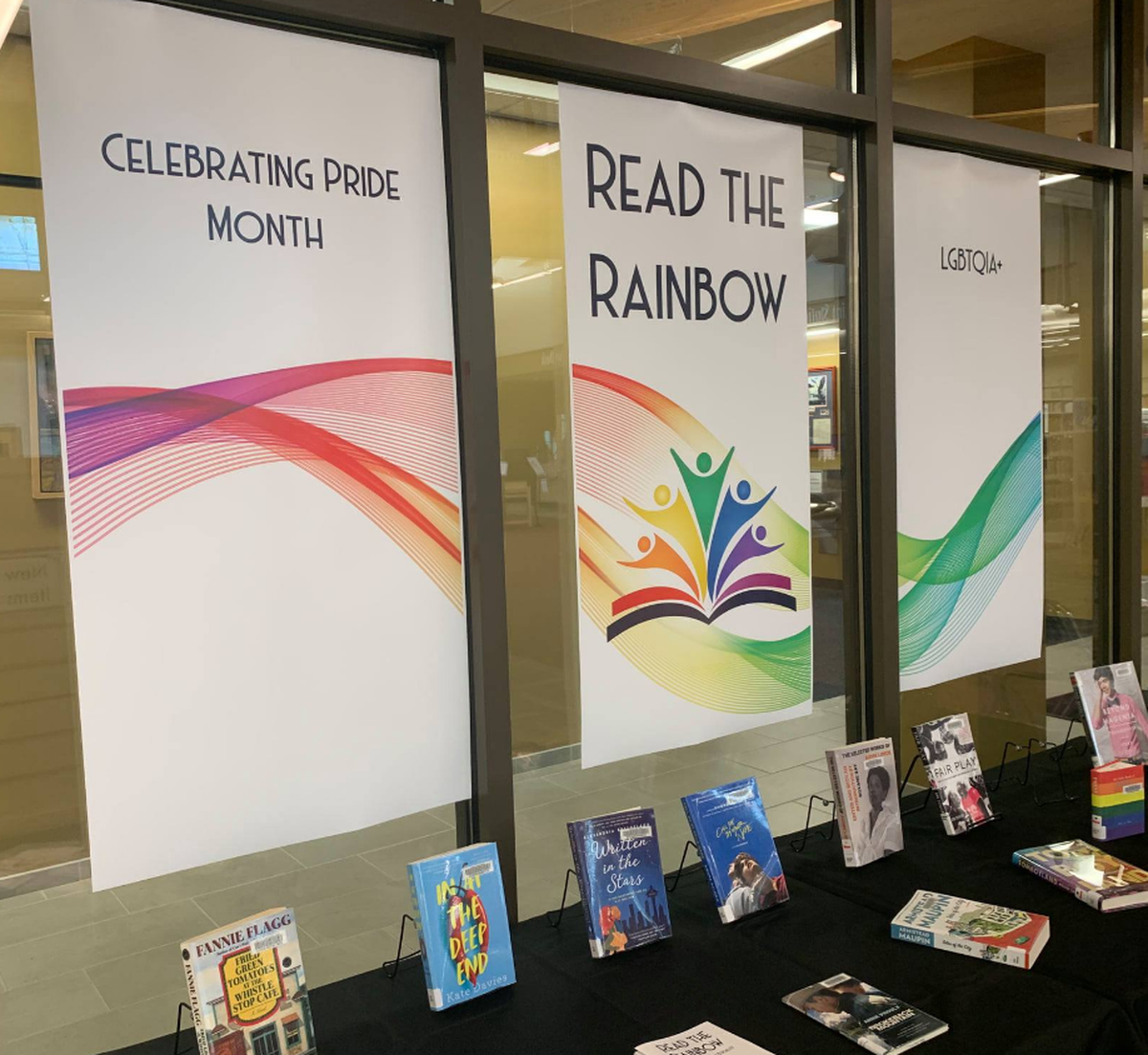
People in recent years have protested the prominent display of LGBTQ+ books at the Logan and Anderson county libraries. In Taylor County, residents complained to the fiscal court about the “moral decline” evidenced by a panel discussion on LGBTQ+ History Month. In response, defensive Taylor County officials explained they did not have the authority to appoint members of the library board.
“It feels like they’re trying to erase some of the people that live here with us,” said Oldham County library director Jessica Powell, who deals with similar antagonism toward LGBTQ+ materials in her collection.
Sex, violence and witchcraft
Kentuckians also complain about materials that contain profanity, sexual activity or nudity, even when it’s intended for adult patrons, such as in romance novels and R-rated movies.
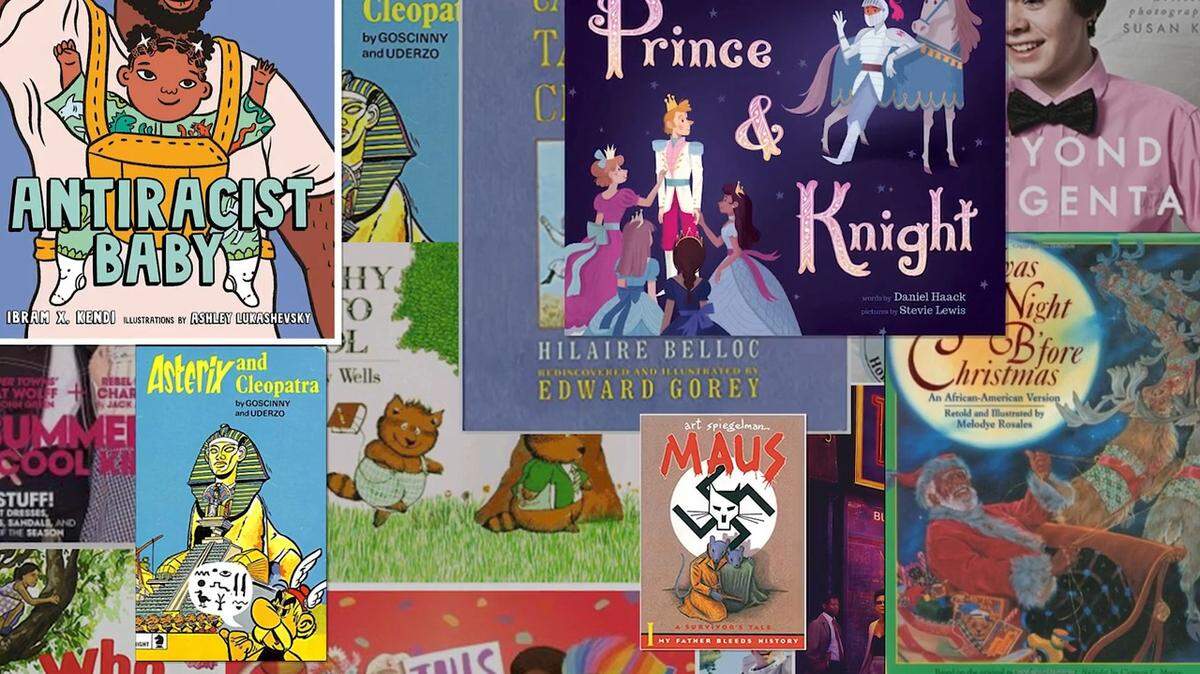
Sometimes children’s books include pictures that offend people, like Edward Gorey’s illustrations of a lion gobbling up the disobedient boy Jim in the 1907 classic Cautionary Tales For Children.
“There was this lesson that if you don’t do what you’re told, you’ll be eaten by a lion. I just thought it was a terrible book. Very graphic,” said Mary Ann Sandfoss of Fort Thomas, who wrote a complaint to the Campbell County Public Library.
In nearly every challenge tracked by the KDLA during this three-year period, the library chose to keep the materials. The one exception was the Graves County Public Library discarding a copy of ESPN The Magazine’s 2019 Body Issue after a patron objected to its photographs of nude athletes.
“There are photos of people wearing no clothing,” local resident Kacey Carrico wrote in her complaint to the library. “It could also lead to someone having immoral thoughts, which lead the way to immoral actions.”
However, the Graves County library stood behind two books that were challenged: an adult-section romance anthology called The Night Before Christmas (“scenes not fit for younger ages,” the challenger wrote) and a book with the self-explanatory title The Little Book of Witchcraft (“this book is acutely offensive to me as a Christian,” the challenger wrote).
Typically, when libraries receive a challenge to materials, library employees form a committee to review the item. The committee considers professional reviews, literary awards, their own judgment and other factors to decide if the item should stay in the collection.
J.C. Morgan, director of the Campbell County Public Library, said library patrons and parents should choose what books are appropriate for themselves and their children. It’s not the library’s job to censor a collection that is meant to serve a diverse community, Morgan said.
“We’re very adamant that we don’t want to be in the position of making decisions for other people,” Morgan said.
Librarians say they are willing to hear concerns.
One librarian moved a novel from the children’s section to the teen section because she agreed the language was a little racy. Another replaced an old book on dog training with a newer text after a professional dog trainer made the case to him that the techniques promoted in the old book were outdated.
But library staff nearly always keep challenged material on shelves, with the support of their library boards.
Will that continue after SB 167 takes effect next year?
“I can’t predict the future,” said Graves County library director Deana Gschwind.
“Right now, I think we have a good relationship with the judge-executive and the fiscal court,” Gschwind said. “But I can’t tell you who is going to be elected down the road.”
First Gender Queer, then Woke Baby
In Bullitt County, Republican Judge-Executive Jerry Summers did not respond to questions about his plans for the local library under SB 167.
Huff, the GOP lawmaker who posted online about books at the Bullitt County library, did not return calls to the Herald-Leader seeking comment. A used car dealer, Huff is serving his second term in the Kentucky House.
Bullitt County library officials expressed frustration that Huff would not meet with them or return their calls during the Gender Queer controversy he started last winter.
“He had talking points that he was using where it was obvious to me that he had never actually read the book (Gender Queer). He was just lifting these images from two or three pages that lots of organizations were sharing online so he could rile people up,” said Schweiss, the former library director.
Library records show that library employees followed Huff’s posts on Facebook as he targeted additional books, such as It’s Perfectly Normal: Changing Bodies, Growing Up, Sex and Sexual Health, so they could be prepared for the fallout. Dozens of local residents commented on Huff’s posts. Some then contacted the library.
As Huff proceeded, people seemed to communicate with each other digitally as they challenged different library books, many of them taken from lists circulated by pressure groups, Schweiss said.
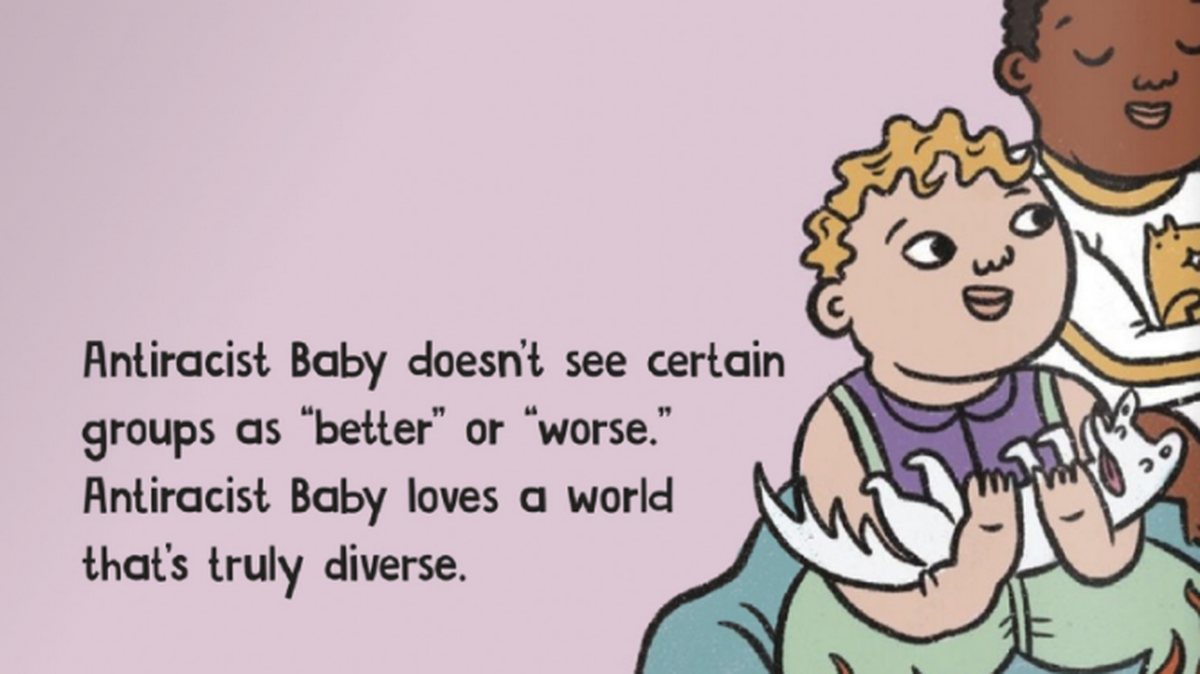
The challenged titles included Antiracist Baby, The Gender Quest Workbook, Our Skin, Rick and Woke Baby.
To cite one example: Woke Baby, a children’s board book, features a Black baby waking from a nap with text such as, “Woke Baby, up before sun smiles, eyes open.” On another page, the baby raises little fists, “fingers curled into a panther’s paw, pointing up up up, reaching for justice.”
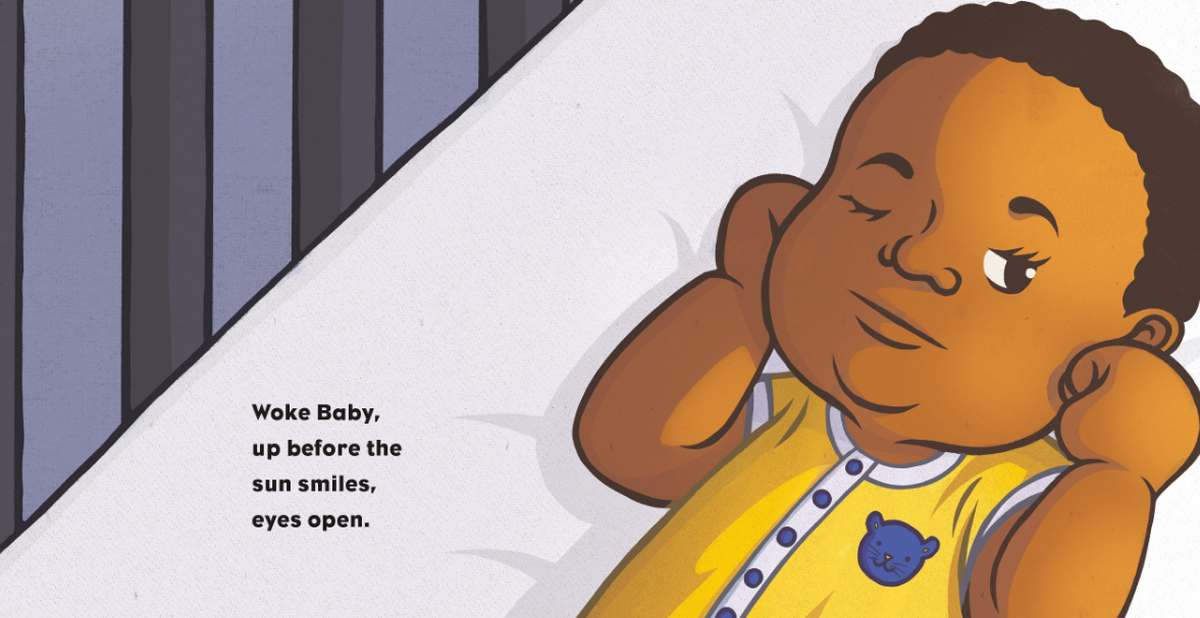
Woke Baby has been criticized on Fox News and other conservative media outlets and websites.
“This is an introduction to critical race theory,” a Bullitt County resident wrote in her complaint to the library about Woke Baby. “I abhor its push to overthrow our government, with references to Islamic terrorists and Black Panther terrorists.”
The book does not depict terrorists or governments being overthrown.
People emailing some of the complaints sent copies to Huff and other state lawmakers from the area and to the Kentucky chapter of a conservative advocacy group, No Left Turn in Education.
That group has publicly opposed library books about civil rights, police abuses and same-sex and transgender issues. One title it opposes is Gender Queer, which it included in a list of books that it sent to the U.S. Justice Department in January, requesting an investigation into “sexualizing children.”
However, Beanie Geoghegan, Kentucky chapter president for No Left Turn in Education, said her group focuses on the materials available to children in school libraries, not public libraries.
“If parents want to take their children to the public library in their community and let them check out books containing obscenity, that is their prerogative,” Geoghagen told the Herald-Leader.
Books quietly disappear from shelves
Mary Landrum, a children’s librarian at the Lexington Public Library, is chairwoman of the Intellectual Freedom Committee for the Kentucky Public Library Association.
In that role, Landrum trains librarians around the state to prepare for the inevitable challenge to their materials. Librarians should listen carefully to people’s concerns, she said, while defending the library’s role as a community institution that welcomes everyone.
At this moment, the culture war in Kentucky seems focused on schools, Landrum said. But the national trend is for libraries to become the next target, she said.
“I am bracing myself,” Landrum said. “We will not be surprised if efforts move from schools to public libraries. I don’t know, I don’t have empirical data, but I’m just following stories out of places like Mississippi, where there have been some interesting discussions about books in public libraries.”
SB 167 carries the potential to make things worse for Kentucky libraries, Landrum added.
“It’s still early days,” she said. “But I think once you introduce partisan politics into any process, people will see whatever is at hand as a potential tool for their agenda.”
“We have seen that in the statehouse with education bills recently,” she said. “I think if we have a politically appointed library board ... they may not approach the collection with the same set of values. They may think the collection needs to promote a particular viewpoint.”
Some Kentuckians aren’t waiting for SB 167 to begin purging books from the library.
In Oldham County, librarians in recent years have denied written challenges to LGBTQ+ books such as Two Boys Kissing and Beyond Magenta: Transgender Teens Speak Out.
Now, a number of those books are simply disappearing from the shelves. Call Me Max, a children’s book about a transgender boy, is a frequent target. So are books about Black history and the civil-rights movement.
Library officials suspect the thefts — where books are leaving the building or, in some cases, being hidden in the wrong location, where they won’t be found for months — are an organized effort to eliminate materials the library would not agree to remove.
“It’s taken a turn in this direction, which is really disheartening, because it’s hard to catch somebody doing that,” said Powell, Oldham County’s library director. “Somebody unilaterally decided that nobody else in the community should have access to these books.”
Every week, the Oldham County library checks its collection “for the hot list of books that people are complaining about to make sure they’re still there,” Powell said.
“Some titles we’ve repurchased three or four times now,” she said. “It’s an enormous waste of taxpayer dollars for us to have to keep re-buying things.”
‘Pitchforks’ gather on social media
As some states consider whether to allow criminal charges against librarians in certain cases, Powell said social media sites like Facebook and Nextdoor make it easier for people to circulate lists of books they might not even have read and to rally against libraries for offering them.
“For me, it feels like this movement is becoming much more personally targeted against the librarians themselves, against individual library systems,” Powell said.
“In the past, if people didn’t like a book, they talked to us about it. They didn’t go online and get all of their neighbors involved,” she said. “Now, it honestly feels more like pitchforks.”
Schweiss, Bullitt County’s former library director, said he’s awed whenever he thinks about the Kentuckians half a century ago who wanted libraries so badly that they signed petitions to willingly tax their own properties through independent, nonpartisan tax districts. Those petitions are how the independent library boards got started.
Even many of the poorest communities demanded to have a library because they valued books so much, he said.
“I’m at a loss as to how the energy behind that can be flipped so quickly to turn it into this thing where we’re all, you know, supposedly lax with public dollars and we need to be held to account,” Schweiss said.
“You work hard at your job, you do your best, but there are people in Frankfort who clearly don’t value what we do,” Schweiss said. “We’ve gone from being public servants to villains living off the public dime. It’s very strange how that all happened.”
This story was originally published May 19, 2022 at 10:07 AM.