USDA programs that paid KY farmers to provide food to schools, food banks cut. ‘Devastating’
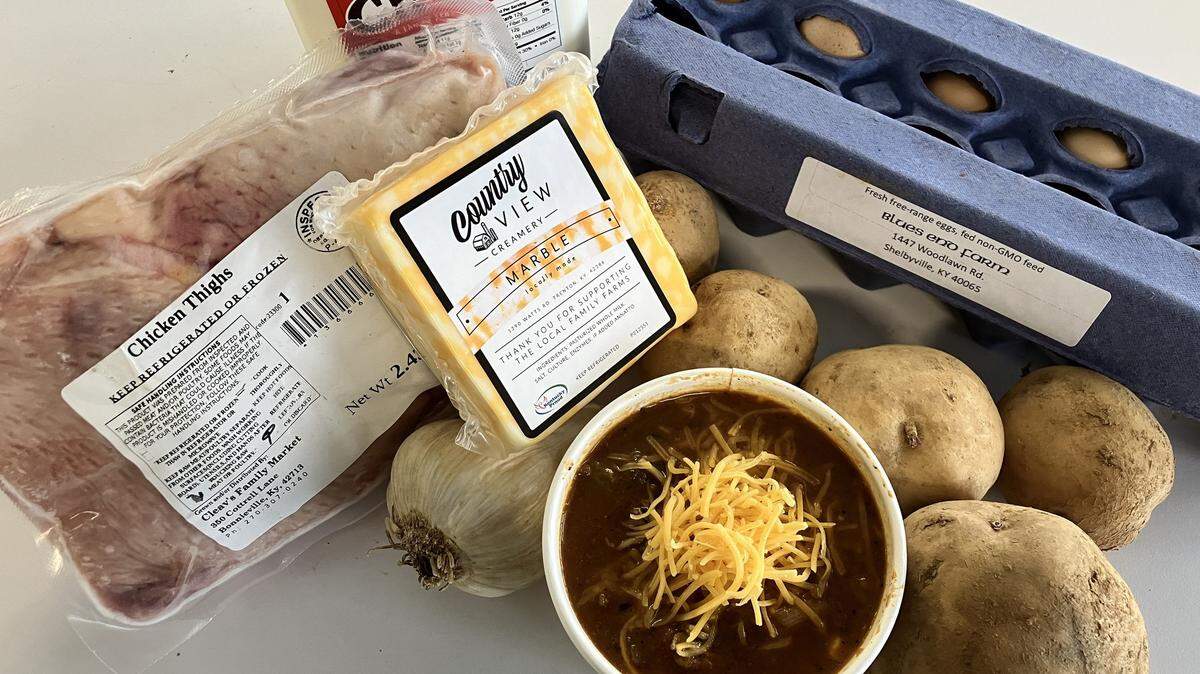
Henry County farmer Andre Faul has a 1,300-pound problem.
His farm, Faul Family Riverside Farm, has had a contract with Oldham County Schools to provide chicken and pork for school lunches.
But he and 130 Kentucky farmers who were paid through a federal program called Local Food for Schools were notified last week that the U.S. Department of Agriculture was nixing the grant, part of wider cost-cutting across the government by President Donald Trump and the Department of Government Efficiency.
How was he going to pay for the 1,300 pounds of chicken Oldham County had already ordered and he had already paid for and fed?
Thankfully, he was able to raise private funds to cover his costs, Faul said.
“I will drop it off next month,” Faul said.
But he will make no profit.
Faul and other smaller farmers also participated in another program through the U.S. Department of Agriculture — Local Food Purchase Assistance Program. That $11 million program helped buy cheese, poultry, pork, vegetables and fruit from local farmers to be served at food banks and to under-served populations. That program will be out of money come August.
The programs have helped small growers expand operations, hire more help and get more locally grown food to school kids and to the poor, advocates for the programs said.
In January, the USDA announced another round of grants for Local Food Purchase Assistance Program. Kentucky was to get an additional $5.8 million for the next three years.
But the USDA later told state officials it was rescinding that grant and was nixing the program, said Madison Pergrem, a spokeswoman for the Kentucky Department of Agriculture.
The Kentucky Department of Agriculture oversees and administers both USDA programs.
The Local Foods for Schools program grant of $3.2 million will be out of money by next month.
“The LFPA program has significantly supported Kentucky agriculture and delivered fresh, local products to our communities in need. KDA remains dedicated to these goals and to our state’s farmers,” Pergrem said. “We are optimistic that this and future administrations will prioritize similar initiatives. In the meantime, KDA will actively pursue and develop new opportunities to advance these efforts.”
A ‘game changer’ for small growers
Both Kentucky food programs were started to help local food production and expand markets for smaller growers.
During the coronavirus pandemic, supply chain hiccups and shutdowns led to shortages in grocery stores, exposing the weakness in America’s food supply.
Local, smaller growers were not able to enter that market to help meet demand. The two programs were a way to prop up and start local food economies, said Laurie White, the Kentucky Farm to School Network Coordinator.
“One farmer told me it was a game changer,” White said. “This is also money that was circulated in the local economy.”
To make profits, farmers need scale — or a customer who can buy a lot of product. That’s why schools and food banks and other feeding programs were ideal customers, White said.
Pergrem said as many as 130 farmers and 92 school districts participated in the Local Food for Schools program. It’s not known how many growers and farmers participated in the Local Food Purchase Assistance program.
School systems also benefited.
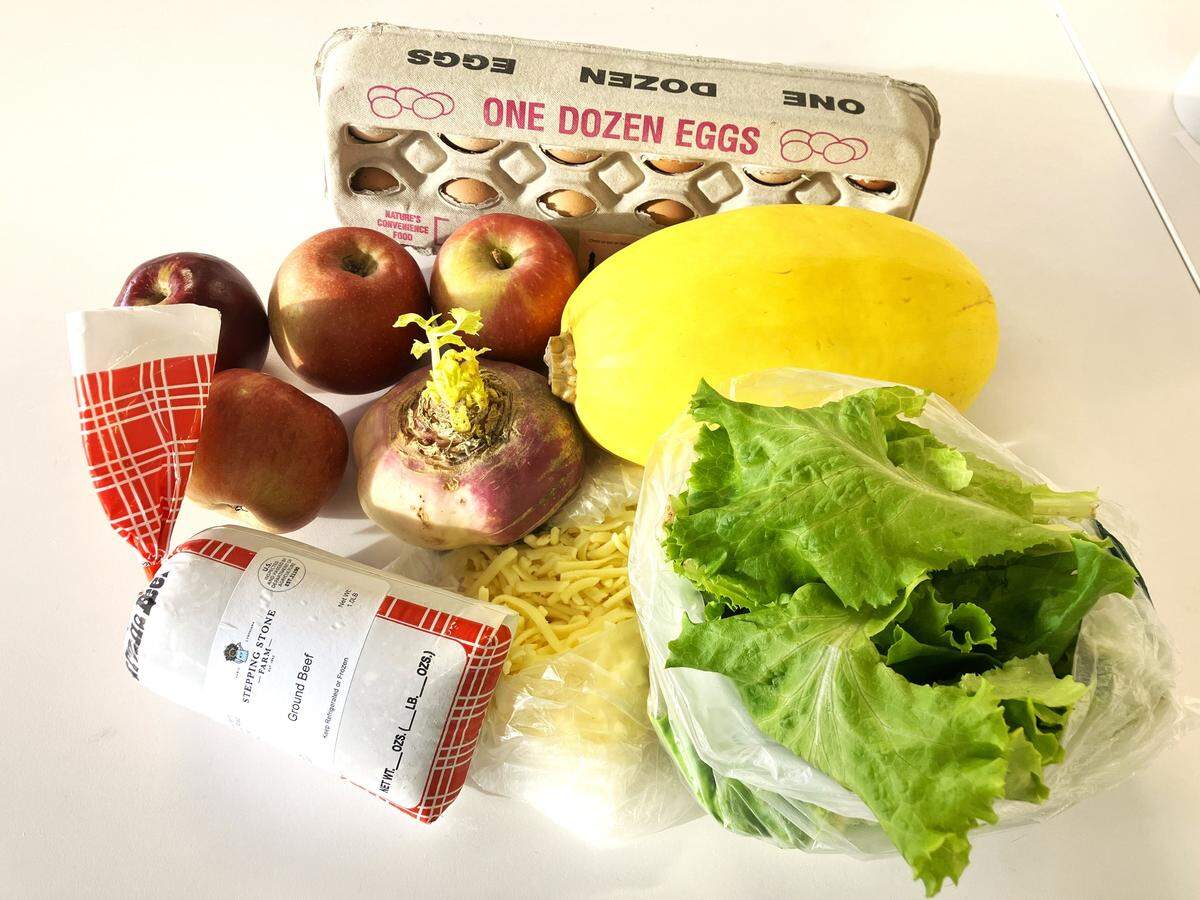
Carlina Loyd, director of school nutrition for Oldham County Schools, said the school system has spent $92,000 to purchase chicken, pork, turkey, beef, apples and microgreens from four local farms, including Faul Family Riverside Farm, since 2023.
Local products are more nutritious than processed food, she said.
“Local produce is fresher and retains more nutritional value along with improved texture and flavor,” Loyd said. “Local meats that are purchased are minimally processed and do not contain additives or preservatives.”
Loyd said Oldham County is trying to come up with funds to keep the local food program going.
Faul, the Oldham County farmer, received $50,000 from the program.
That may not sound like much, but profit margins are often minuscule on small farms. Cash flow is tight. Farmers have a lot of expenses, especially in the spring, but they aren’t paid until their product is harvested.
That money helped farmers maintain operations while also helping to grow those operations, many Kentucky farmers said.
“It made a huge difference,” Faul said.
Faul and others were told that a second round of Local Foods for Schools funding was going to be awarded. He set up the contract with Oldham County Schools in February for the chicken on the assumption that money was coming.
Brett Waford of Troubadour Farms in Henry County, another participant in the Local Foods for Schools program, said it was rewarding to know his products were feeding kids in his home county at schools he attended.
“We sold ground beef to all the schools in the Henry County Public School System,” Waford said. “Our sales increased and moved us to take steps to make our operation bigger.
“Honestly, it was the most rewarding thing I have experienced as a farmer. I went to the schools I am now providing beef for. Our students are eating nutritious beef from right here in Henry County.”
Producers scramble as other federal programs face cuts
FoodChain in Lexington has used about $300,000 through the Local Food Purchase Assistance program to buy Kentucky-produced products to serve needy residents through its free boxed grocery boxes and other feeding programs.
FoodChain also used some of that money to buy products to send to flood-damaged Eastern Kentucky counties.
“This has helped us increase what we are able to provide,” said Kristin Hughes, co-executive director of FoodChain.
With the federal cuts looming, Hughes said they “are looking to diversify our funding streams and look for grants that will cover these costs.”
Hughes said farmers from whom FoodChain buys are able to diversify what they grow, which makes farms more resilient, and invest in infrastructure like better refrigeration equipment.
And the cuts are coming when the need for food is increasing, Hughes said.
“We are handing out 600 meals a night,” Hughes said. “That’s way more than during the pandemic.”
The government-wide effort to curtail spending means cuts to other federal programs upon which smaller growers rely. In some cases funds had already been announced, but they’re now frozen.
Seedleaf, a Lexington nonprofit that has urban gardens and a farm, provided food to FoodChain and other feeding programs through the Local Food Purchase Assistance Program.
That money is gone.
In addition, four different grants Seedleaf expected to receive through various federal agriculture and small business programs have also been frozen, said Christine Smith, the director of Seedleaf.
Seedleaf had based its budget on getting most of those grants based on assurances that money was coming.
One of those grants is a reimbursement program. Smith and Seedleaf recently received authorization to move ahead and buy much-needed tools through that federal grant.
But by March 21, Seedleaf had been told that grant was frozen and no longer available, Smith said. Now, Seedleaf is on the hook for thousands of dollars that it thought would be covered through the grant program.
“It’s devastating,” Smith said.
Seedleaf is trying to raise private funds to cover cuts to those federal grants. But Smith is worried about Seedleaf’s future.
“We are a tiny nonprofit. We live close to the bone,” Smith said.