A timeline of trash company Rubicon: Rapid growth followed by a bruising fall
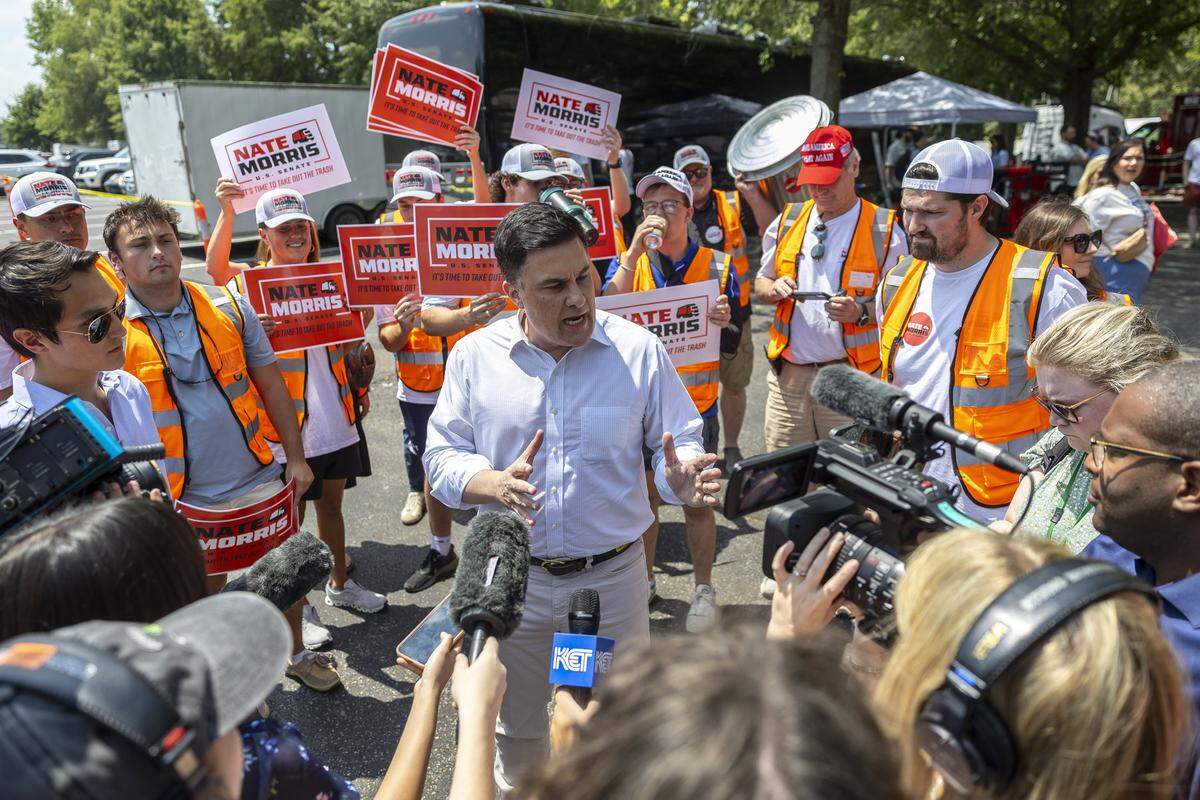
Nate Morris, a Republican, is running for the U.S. Senate from Kentucky to succeed Mitch McConnell. His campaign has spotlighted his experience as a business executive who helped found and run a waste-related company called Rubicon Technologies.
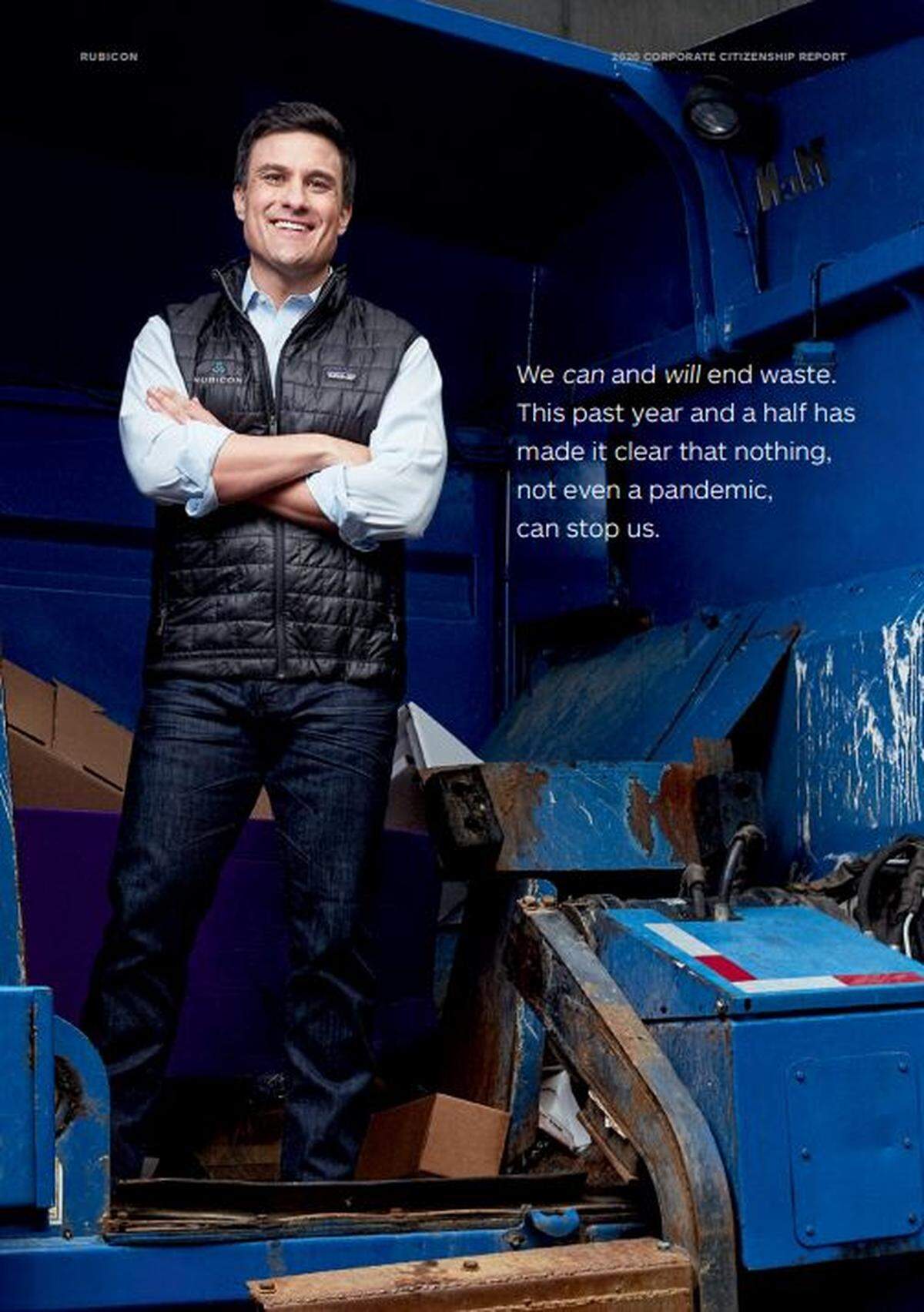
Morris calls himself a “trash man.” He features trash-related images in his campaign, including him riding on the back of a garbage truck in a bright orange vest and a supporter stuffing a cardboard image of McConnell in a garbage can.
“I borrowed 10 grand to start a business and created thousands of jobs, and I took it public, valued at $2 billion, as one of the biggest trash companies in America,” Morris says in an ad called “Garbage Day.” “So I know a little bit about garbage.”
Morris doesn’t have a record in elected office for voters to examine, unlike his GOP primary opponents, U.S. Rep. Andy Barr of Lexington and former state Attorney General Daniel Cameron. So the Herald-Leader has studied the history of Rubicon, Morris’ big career achievement, to see what it is and how it stacks up.
Rubicon is born
2008: Rubicon, a “digital marketplace” for waste and recycling, is an idea put together in Louisville by Marc Spiegel and Nate Morris, two friends from high school in their late 20s in 2008. Spiegel has the relevant waste background: His family has been in the garbage-hauling business for more than a century.
They will be seeded for about $1 million by venture capitalist Lane Moore of Atlanta.
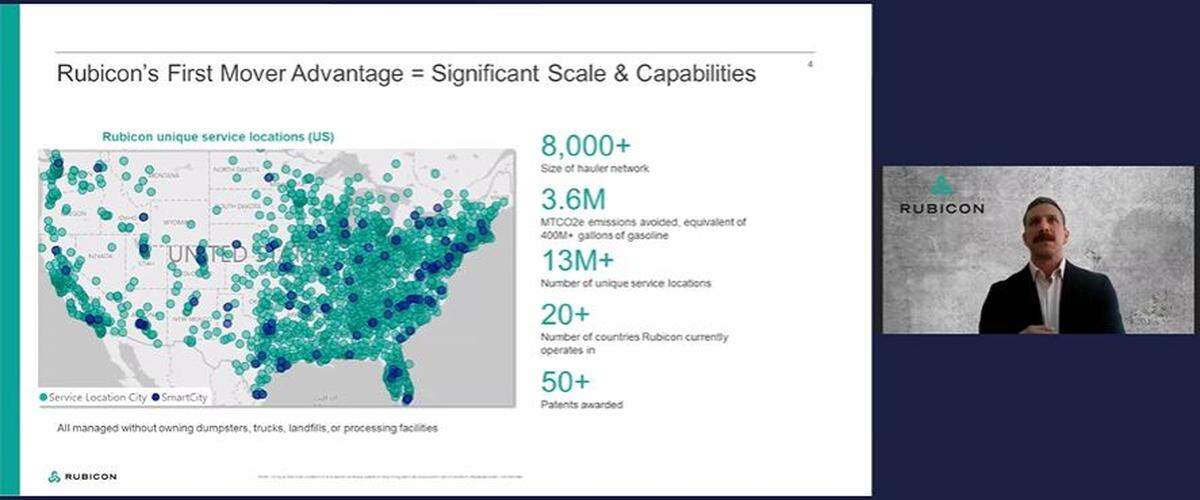
Rubicon won’t collect trash. It won’t own trucks or landfills. Instead, it will use its own software platform, nicknamed Caesar (Julius Caesar famously crossed the Rubicon River to bring his army into Italy; Morris is a history buff), to analyze how clients can reduce their waste with an emphasis on greater recycling.
The less you pay a disposal company to haul your garbage to the dump, the cheaper your overhead.
But Rubicon will say it’s about more than money. Many times over the coming years, Morris and others at the company will boast of helping clients on “zero-waste journeys” as they comply with Environmental, Social and Governance, or ESG, business models that consider sustainability and ethics to be as important as profit.
“Our goal is moving all of our material into something more sustainable than a landfill,” Morris explains in 2014.
Among the first to sign with Rubicon are pizza delivery chain Papa Johns in Louisville and Clay Ingels Co., a building materials supplier in Lexington. Later, the list will grow to include Walmart, Amazon, Starbucks and Chipotle and the cities of Atlanta, Phoenix, Denver and Miami, among many other clients.
Drawing on Morris’ GOP political connections — he’s a smooth talker who raised more than $50,000 for President George W. Bush’s 2004 reelection — Rubicon’s early backers and advisers include such Republicans as Jack Oliver, a top Bush fundraiser; Bush’s attorney general, John Ashcroft; and Missouri Gov. Matt Blunt.
August 2009: Rubicon Global LLC is incorporated in Prospect, Ky., by Spiegel and Morris. Spiegel is listed as president. Morris and Moore will take other executive titles. Months later, a related company, Rubicon Waste LLC, is incorporated in Atlanta by Moore, Morris and Spiegel.
Rubicon grows, gains backers
May 2012: Fast-growing Rubicon has largely settled in Atlanta, where Moore lives.
The company announces it’s been certified by the nonprofit B Lab as a B Corporation, a for-profit company that considers societal and environmental impacts in its decisions and, as such, is responsible to shareholders for meeting declared ethical goals instead of traditional profit targets.
September 2015: Movie star Leonardo DiCaprio, a prominent environmentalist, is among the latest investors in Rubicon, which recently raised $50 million in fresh capital, the company says in a news release. So is Henry Kravis, co-founder of KKR; Goldman Sachs; and tech entrepreneur Marc Benioff.
Soon, Rubicon will report a total of $95 million in funding.
David Plouffe, senior adviser to Democratic President Barack Obama, joins the company’s board of advisers.
April 2016: Rubicon announces an expansion that will create up to 300 new jobs in Atlanta, mostly in sales, but also in software development.
September 2017: Rubicon says it’s now valued at more than $1 billion following a $50 million investment by Mexican private equity fund Promecap. Much of the company’s future money will come from Mexico.
October 2017: After flattering coverage of the company in Vanity Fair, Wired and other news outlets, often mentioning celebrity DeCaprio’s stake, critical stories in Bloomberg and Fortune question whether Rubicon is overstating its revenue, growth and tech capabilities, based on a study of its own internal documents.
Those business publications also note that Rubicon is churning through key executives, suggesting unstable leadership. Three chief operating officers have left since 2014, according to Bloomberg.
Also, Rubicon claims three different sums for 2014 revenue — $3.4 million, $1.9 million and $2.16 million — in different data sets presented to potential investors, writes tech reporter Polina Marinova in a Fortune article titled Questions Swirl Around ‘Uber for Trash’ Startup Rubicon Global.
Rubicon seems more concerned with “optics” than “actual operations,” Marinova warns.
“Rubicon is not a small startup that will fizzle into obscurity when its tech falters or its employees get laid off,” Marinova writes. “This is a unicorn startup that has raised hundreds of millions of dollars and talked seriously about an IPO. It is a reminder that big ambitions, positive press and slick marketing are not enough to build a sustainable business.”
Rubicon goes public on NYSE
June 2021: Rubicon Technologies, as it’s now called, announces its moving its headquarters from Atlanta to handsomely renovated offices on the sixth floor of downtown Lexington’s new City Center building.
September 2021: Morris spends $2.5 million to buy a five-bedroom home on a 14-acre horse farm on Paris Pike just outside of Lexington, where he relocates his family.
August 2022: Rubicon Technologies goes public on the New York Stock Exchange.
Instead of the traditional initial public offering, where a company’s stock is sold to the public after exhaustive study of its finances by underwriting banks and federal regulators, Rubicon goes public though a special purpose acquisition company, or SPAC, a publicly traded shell company with which it merges. Using a SPAC is seen by some companies as a faster, easier way of going public, with less regulatory scrutiny.
Rubicon merges with Founder SPAC. Its top investors include New Zealand’s sovereign wealth fund; Palantir Technologies, founded by Peter Thiel, a libertarian tech billionaire and big donor to Republican President Donald Trump; and Mexican private investment fund Rodina Capital.
The newly public Rubicon reports for itself a pro forma enterprise value of $1.7 billion, assuming there are no redemptions by the SPAC shareholders who would want to pull their several hundred millions of dollars in investments right away. More on that risk in a moment.
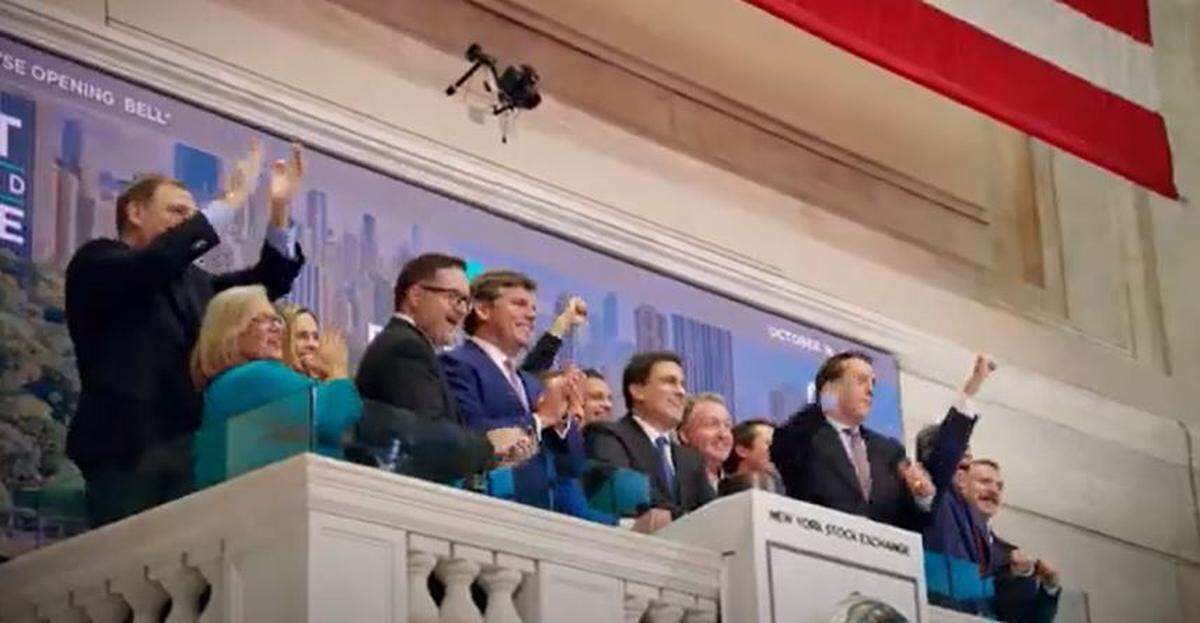
“This is a great day for Rubicon, a company I started right here in Kentucky with a $10,000 line of credit and maxed out credit cards,” Morris says in a prepared statement as the stock goes on the market.
But this won’t be a great day for Rubicon.
The company’s stock immediately drops from its opening price of $7.55 per share to $6 by the closing bell. It will steadily continue its plunge down to about $1 by mid-October, two months later.
Rubicon suffers a high redemption rate as early SPAC investors quickly cash out. Sometimes when investors view a valuation as inflated — in this case, $1.7 billion — they redeem their shares at the initial IPO price rather than risk holding stock in an overvalued, newly public company.
The redemptions leave less money for the company. This is devastating because the whole reason for Rubicon going public was to raise money.
“It was a difficult time ... there’s no buts about it. We came out and we had 99.7% redemptions. That left the business undercapitalized in the public markets,” Chris Spooner, executive vice president of finance for Rubicon, acknowledged in an interview the next year with OpenExchange.tv.
In subsequent months, the company had to cut about $50 million in costs, search for more capital and refinance its debts while aiming for a positive cash flow, Spooner said.
Shake-up at Rubicon
October 2022: There is a leadership shuffle as Morris steps down as Rubicon’s CEO after 12 years in that role.
Morris is replaced by Phil Rodoni, the chief technology officer. Kevin Schubert, the company’s recently hired chief development officer and head of investor relations, will become president of Rubicon.
For his departure compensation for 2022, the 42-year-old Morris collects a reported $40.95 million, according to Rubicon’s disclosure to the U.S. Securities and Exchange Commission. That includes his $810,000 salary and more than $40 million in bonuses, stock awards and other payments.
By comparison, Morris collected a reported $1 million in salary and bonuses as CEO in 2021.
Morris will remain at Rubicon through Feb. 10, 2023, as chairman of the board, a position he has held for six years, and as a strategic adviser. Morris leaves the board entirely June 8, 2023, the company tells the SEC.
November 2022: Rubicon announces it will cut $5.5 million in annual spending by laying off 55 employees, or about 11% of its workforce.
March 2023: Rubicon is notified by the New York Stock Exchange that it is not in compliance with exchange rules because the average closing price of its stock has been less than $1 for a consecutive 30-day period. If it doesn’t get in compliance, its stock could be “delisted,” or removed from the exchange.
September 2023: To comply with NYSE rules, Rubicon completes an eight-for-one reverse stock split, to hugely reduce the number of outstanding shares and make each remaining share more valuable. Share prices jump from 30 cents to $2.35 before slowly starting to fall again.
Ramkumar Raja Chidambaram, a financial analyst who specializes in tech, health care and energy, advises investors to steer clear of Rubicon in a Seeking Alpha article titled Rubicon Technologies: A Mixed Bag Of Opportunities And Red Flags.
“The company seems to be losing money across its operating activities, is not investing much for the future and is increasing its reliance on short-term borrowings,” Chidambaram wrote. “Overall, the financial data paints a picture of a company in a precarious situation with few, if any, promising signs for future stability or growth.”
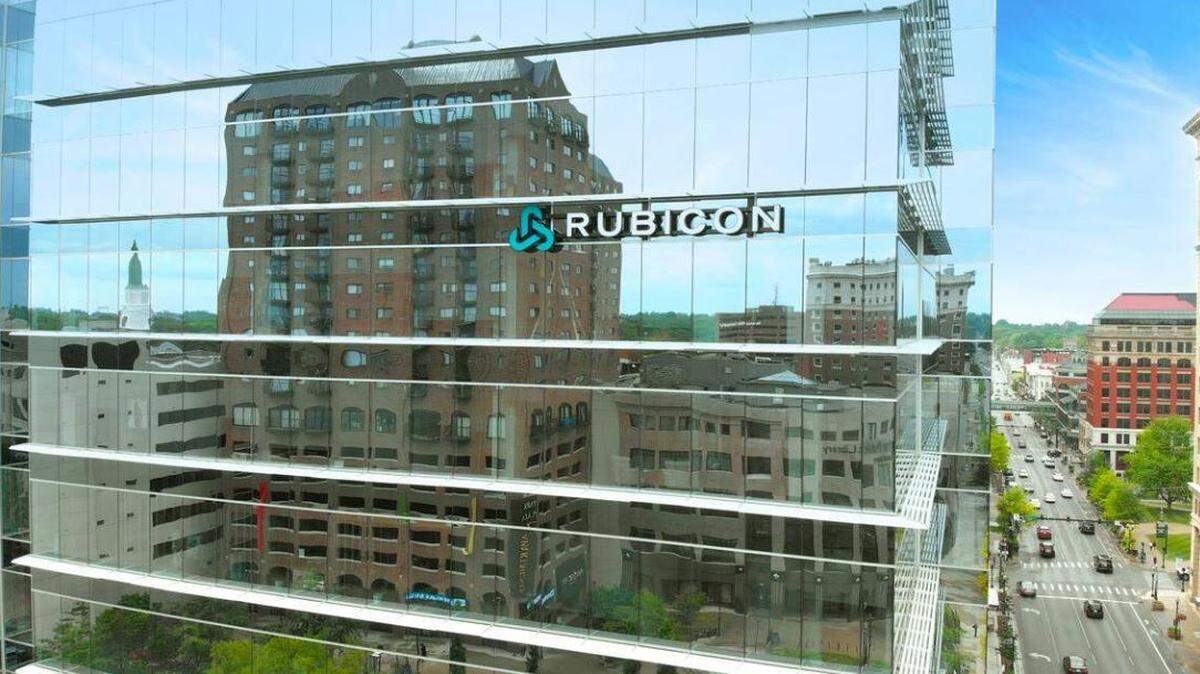
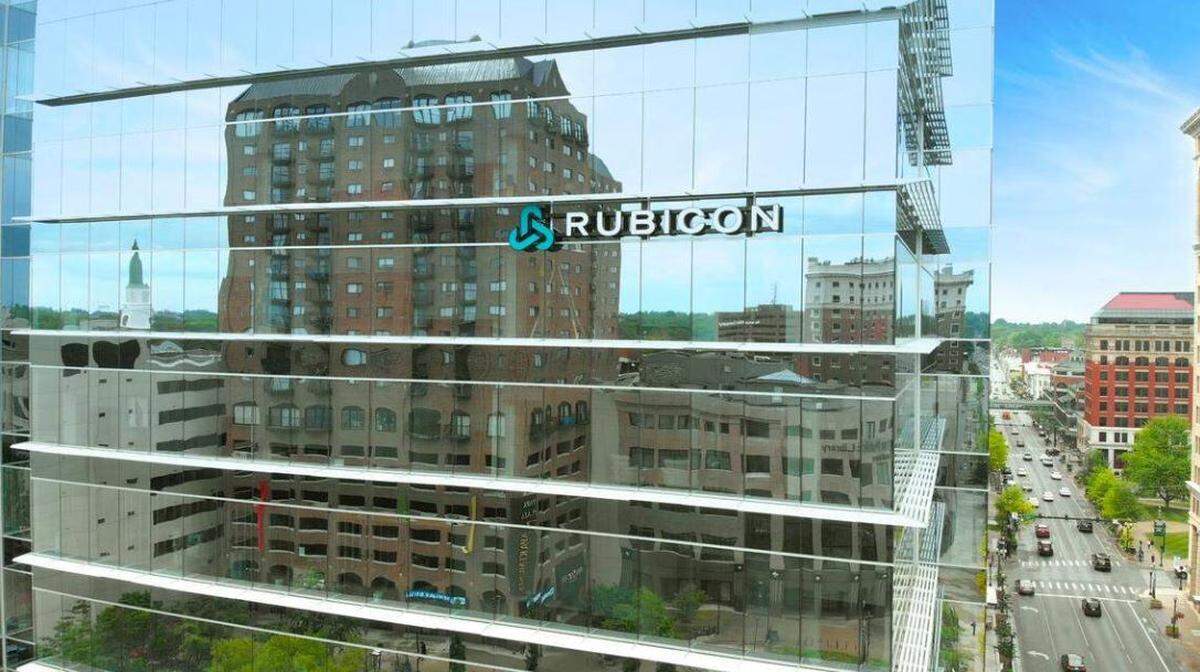
Around this time, Rubicon quietly packs up its Lexington headquarters and departs Kentucky. (Rubicon’s sign remains on the outside of the City Center building.) The company will maintain executive offices in Atlanta and New York, although much of its workforce will be remote.
February 2024: Rubicon confirms still more layoffs, this time “a reduction of less than 20 people designed to optimize our workforce,” a spokesman says.
March 2024: Rubicon reports its 2023 financial performance. The good news: Revenue is up 3% over 2022, to $697 million. However, the company is still losing money, not earning a profit.
“We have experienced net losses in each year since inception,” Rubicon acknowledges in its SEC filing, “including net losses of $77.6 million and $281.8 million for the fiscal years ended Dec. 31, 2023, and 2022, respectively, and we may incur net losses in the future. While we project net losses to continue in future periods, it is difficult for us to predict our future results of operations.”
Trying to put a positive spin on things, the company headlines its news release on the numbers: Rubicon makes significant progress toward profitability.
Jose Miguel Enrich, a Mexican investor based in Key Biscayne, Fla., who at this time owns 42.3% of Rubicon’s shares, proposes buying the company’s outstanding stock, valued at about $16 million, and taking the company private. Enrich is a managing director at Rodina Capital, one of Rubicon’s largest backers.
May 2024: On just one day, May 21, Rubicon’s stock value drops 24% as the company releases its earnings report for the first quarter of 2024.
The news is not good. Rubicon’s revenue for that period was $166 million, a decrease of $15 million, or 8.3%, compared to the first quarter of 2023. Adjusted EBITDA — that’s Earnings Before Interest, Taxes, Depreciation and Amortization, a standard metric to determine a company’s overall performance — was negative $11 million.
Rubicon announces the sale of its fleet technology business to Rodina Capital for a total value of $94.2 million.
As part of this deal, Rubicon issues new shares to Enrich, taking his stake in the company to 59.5%. Enrich holds large stakes in Rubicon through Rodina Capital and other entities, such as MBI Holdings, where he is the general partner.
Enrich and Andres Chico, who is co-founder and managing director of Rodina Capital, serve together on Rubicon’s six-member board, further linking Rubicon and Rodina. Earlier in his career, Chico worked at Mexican private equity fund Promecap, which also was an important Rubicon benefactor.
Rubicon’s uncertain future
June 2024: Making good on its threat, the NYSE delists Rubicon and suspends its share trading, saying the company fell below the standard that requires an average market capitalization of at least $15 million for 30 consecutive days.
Rubicon may continue to trade shares on the less prestigious “over-the-counter” market. But in online forums, investors who study the company’s performance debate whether it can be turned around.
“In the end, stock split or not, the issue is profitability,” one observer writes at a Yahoo Finance message board. “Having never made money, the private investors cashed out on the IPO (initial public offering), so we now have an unprofitable company borrowing to stay alive.”
The executive churn continues. Rubicon President Kevin Schubert resigns after less than two years. Chief Operating Officer Renaud de Viel Castel lost his job in the February layoffs.
July 2024: Rubicon announces that Phil Rodoni is stepping down as CEO for a “separation consideration” of $3.6 million. He will be replaced on an interim basis by Osman Ahmed, formerly the lead independent director on Rubicon’s board.
November 2024: Rubicon releases more grim news in its third quarter 2024 report to the SEC.
“We currently project that we will not have sufficient cash on hand or available liquidity under existing arrangements to meet our projected liquidity needs for the next 12 months,” the company says. “As a result, there is substantial doubt about our ability to continue as a going concern.”
December 2024: Rubicon goes back to Rodina Capital for more help, this time getting its debt refinanced and $20 million in capital from issuing preferred stock.
January 2025: Rubicon names a new CEO, Michael Dulin, who has been on the company’s board for two months and who previously led a plastics recycling company.
Rubicon files a notice of termination of registration with the SEC suggesting it could be going private by deregistering its securities and ceasing the financial reports required of publicly traded companies.
February 2025: Industry publication Waste Dive reports that a group of unhappy Rubicon investors from before the time it went public, represented by Michael Heller, the former chief administrative officer, say they’re owed more than $330 million. They say they were pledged this sum as compensation if Rubicon changed ownership.
With majority control of the company now held by Enrich, Rubicon effectively has changed ownership, the investors say.
An attorney for Rubicon denies their claim. The matter goes to arbitration.
June 2025: Morris declares himself a Republican candidate for the U.S. Senate from Kentucky, to succeed McConnell, who is retiring. He faces Barr and Cameron in the GOP primary.
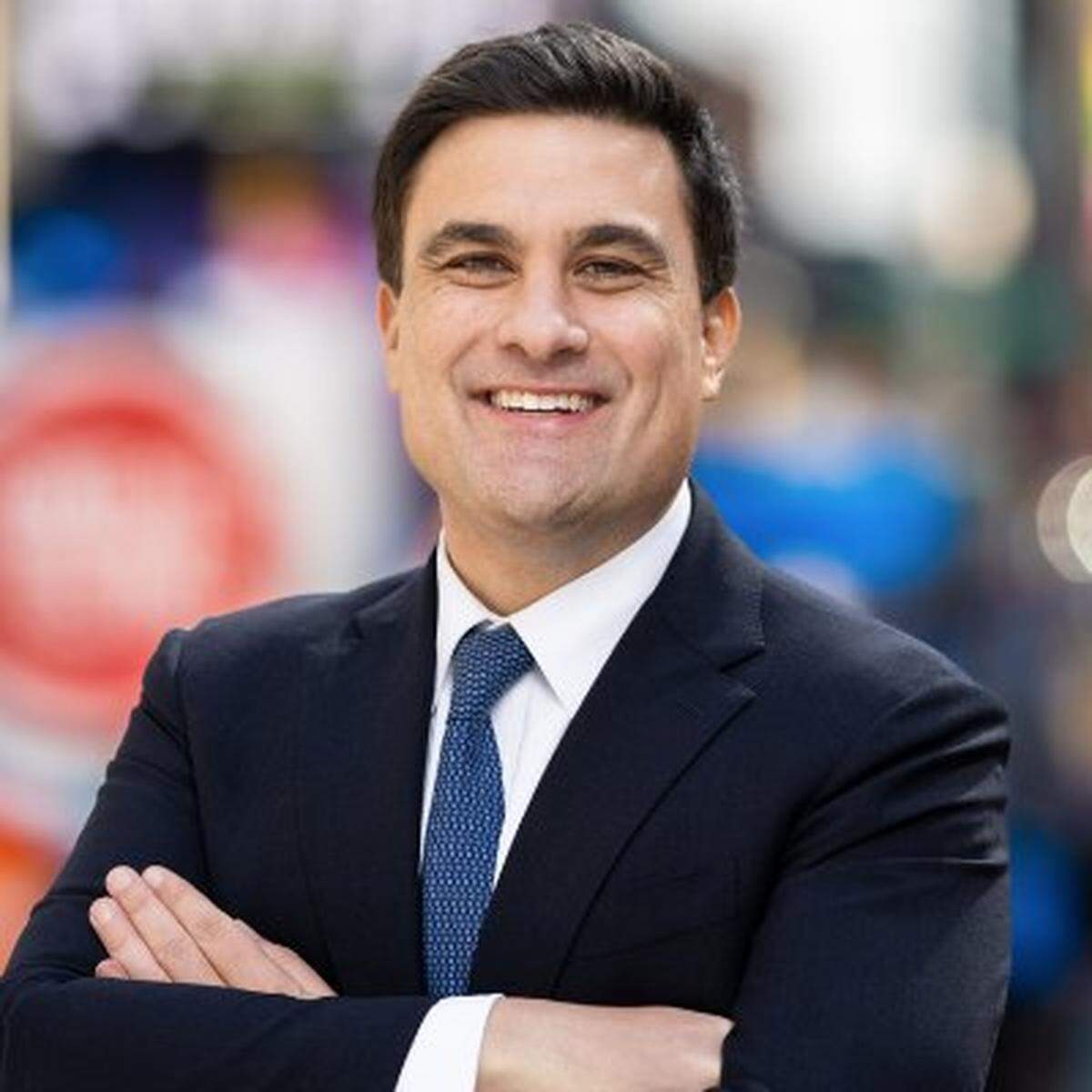
Having never run for elected office before, Morris’ campaign biography focuses on his business leadership at Rubicon. He describes himself as the company’s “founder” on his campaign website, not mentioning Spiegel, the other founder, or Moore, their initial investor, or any of the company’s financial struggles in recent years.
Driving the point home, Morris arrives at the Fancy Farm political picnic in August in a white garbage truck while his supporters yell, “Take out the trash!”
“My name is Nate Morris, and I’m a trash man,” he says, introducing himself to the boisterous Fancy Farm crowd.
“I’m an entrepreneur who built a trash company right here in Kentucky and took it public on the New York Stock Exchange.”
During the campaign, Morris fiercely attacks Barr and Cameron for being, in his view, too indebted to McConnell and not loyal enough to President Donald Trump.
His opponents eagerly return fire and seem to believe he’s vulnerable on Rubicon.
The Cameron campaign has repeatedly mocked Rubicon as a “penny stock” company, while the Barr campaign has accused Morris of taking a “golden parachute payout” while the business floundered.
“Kentuckians are seeing through Fake Nate Morris,” the Barr campaign said in a Sept. 8 news release.
“His image is underwater with Kentucky Republicans at 11-to-14 favorable-to-unfavorable despite millions poured in by the investors Nate swindled at Rubicon before he took a golden parachute payout and the company was delisted from the New York Stock Exchange in 2024,” the Barr campaign said.