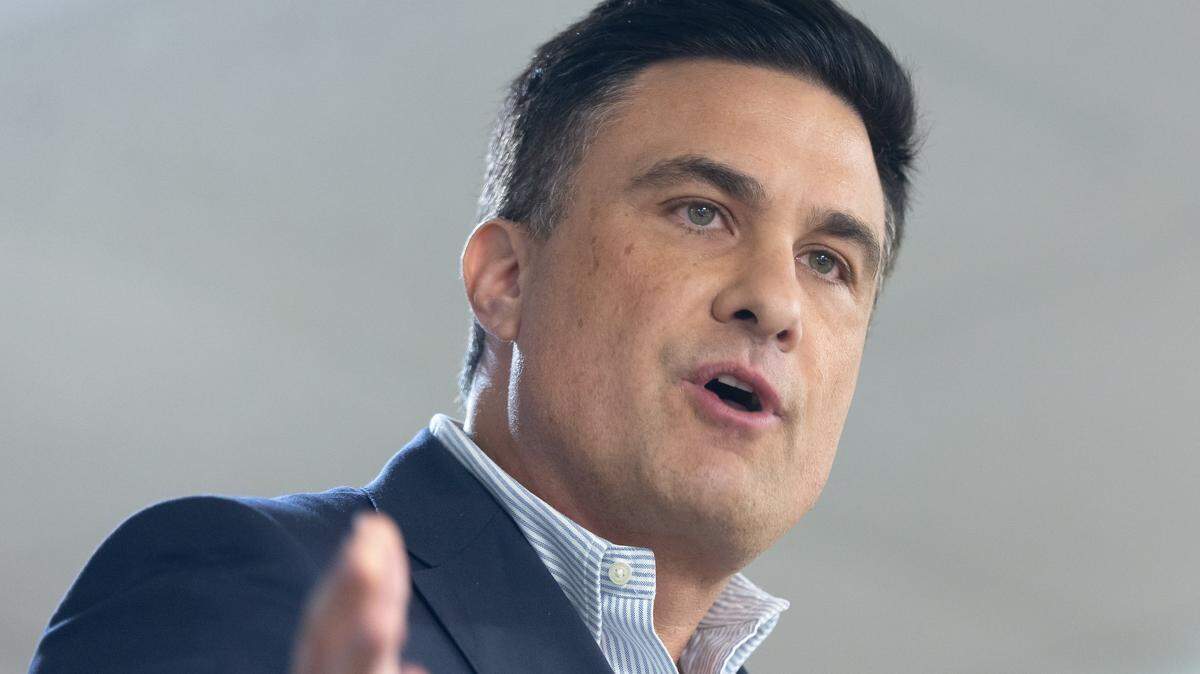
Senate candidate Nate Morris says his business, Rubicon, was a success. Was it?
AI-generated summary reviewed by our newsroom.
- Rubicon went public via SPAC in 2022 but was delisted in under two years.
- Co-founder and Senate candidate Nate Morris exited with $40.9M compensation.
- Rubicon shifted focus post-Morris from tech to some traditional waste services.
Nate Morris never ran for public office until this year, so he has little in the way of a political record to share with voters.
Instead, as a Republican candidate for Kentucky’s U.S. Senate seat up for grabs in 2026, Morris sells himself as a successful business executive, the founder of a high-tech “digital waste” company called Rubicon that paid off big for all involved.
“I’m not a career politician. I’m a business guy,” Morris explained to right-wing provocateur Steve Bannon in a recent online interview. “I built a business, took it public.”
The reality is a lot more complicated.
Starting in 2009, Morris — along with his partners — did indeed build a company called Rubicon Global, later Rubicon Technologies. Its software helped clients cut costs by analyzing and reducing their waste streams.
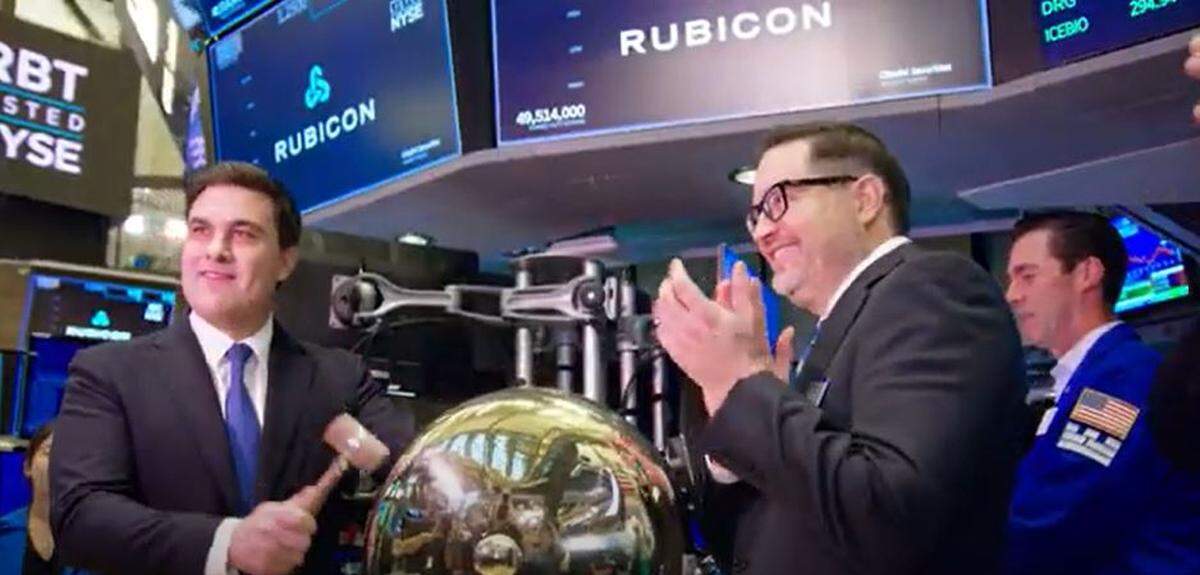
And Rubicon did start selling shares on the prestigious New York Stock Exchange in 2022.
But Rubicon never made a profit during all that time.
Its stock dropped as soon as the company went public. In less than two years, the New York Stock Exchange removed Rubicon because of its valuation losses. The company suffered through layoffs, churn in the executive suites and a frequent scramble for more capital and debt refinancing.
Today, an unhappy group of early Rubicon shareholders says the company is under the control of Mexican investors who bailed it out. They are demanding more than $330 million in compensation as a result. That claim is in arbitration. Their representative declined to be interviewed for this story.
Morris isn’t there anymore. He resigned on Oct. 13, 2022, as Rubicon’s chief executive officer two months after the company’s troubled initial public offering, although he stayed on the board of directors through the next year.
He exited with a compensation package worth $40.9 million and sold all his stock in the company.
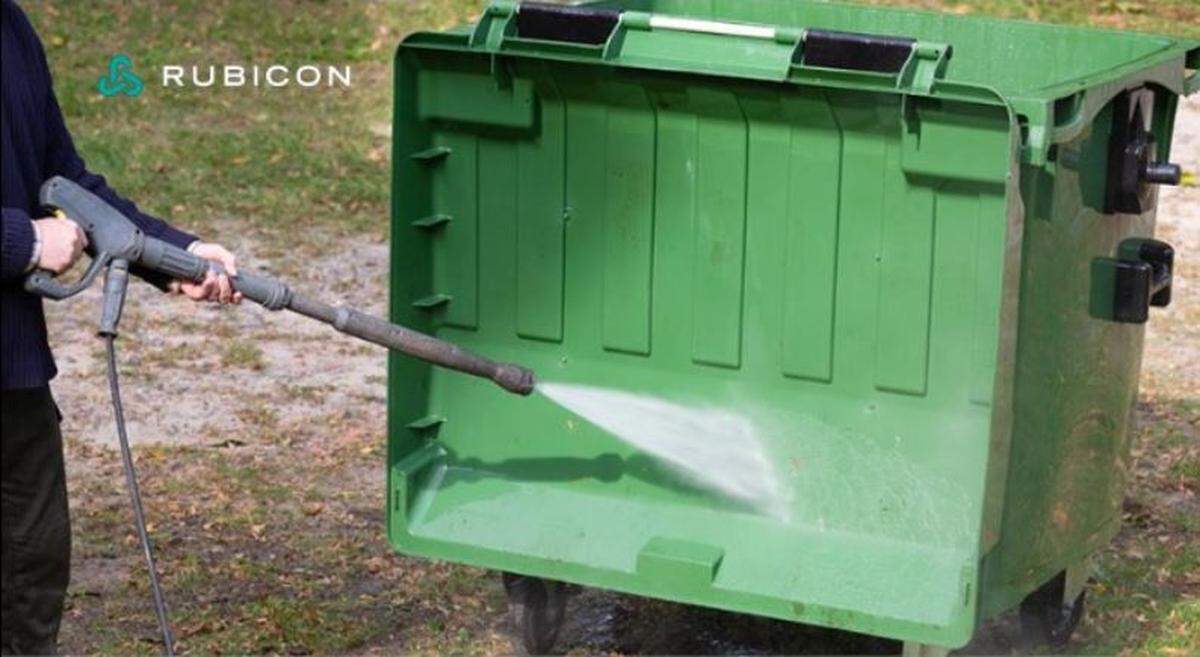
Under new management, Rubicon has turned its focus from the exclusively high-tech ideas that Morris once championed to grubbier but potentially more lucrative services, such as Dumpster rentals and power washing filthy waste bins and trash compactors.
So, was Rubicon the success that Morris claims?
Morris insists it was. He’s a millionaire thanks to Rubicon and lives with his family on a 14-acre horse farm outside Lexington that he purchased four years ago.
In a recent interview with the Herald-Leader, Morris acknowledged that not everything went as smoothly as he would have liked.
But look at it this way, he added: He helped take a start-up company from “a bedroom in Kentucky” to a valuation of more than $1 billion on the New York Stock Exchange, however briefly. Even now, after all the financial turmoil, Rubicon still employs several hundred people around the country, he said.
If he had to do it all over again, he wouldn’t change a thing, Morris said.
“We all do the best we know how, with the information we have at the time and the way the conditions are, and I’m so proud of what we built at Rubicon,” he said.
“I stand by everything we did 100%. I mean, do I wish things had taken different turns? Sure. Every business person does. But that’s entrepreneurship. There’s no guarantee for anything.”
Rubicon and Morris’ early partners in the company did not respond to Herald-Leader requests seeking comment.
The company shuttered its downtown Lexington headquarters two years ago, although its large sign was left hanging on the outside of the City Center building on West Main Street.
Stumbling on Wall Street
Rubicon’s biggest fumble probably was how it went public in 2022.
In a traditional IPO, or initial public offering, a company that wants to sell shares to the public must undergo months of scrutiny by investment banks and regulators at the U.S. Securities and Exchange Commission. These outside eyes are supposed to determine if the company is managed well and how it should be valued.
A quicker, easier but more controversial path involves a SPAC, or a special purpose acquisition company. The SPAC is an empty shell with no operations, an already publicly traded entity raising money from investors. It’s waiting to merge with a company that actually does business and wants to go public.
Rubicon, with Morris as CEO, went the SPAC route. It merged with an entity known as Founder SPAC and declared for itself a valuation of $1.7 billion.
Unfortunately for Rubicon, not everyone agreed it was worth $1.7 billion.
As soon as it went public in August 2022, it suffered what’s known as a “high redemption rate.” That means skittish early SPAC investors cashed out while they still could get what they feared might be the best price for their stock. They took with them the capital that Rubicon had counted on to fund its future operations.
The company’s vice president of finance later described this in an online interview as “a difficult time.” Rubicon scrambled to slash tens of millions of dollars in costs, with rounds of job cuts.
Rubicon’s stock dropped from an opening day price of $7.55 per share to $6 by the closing bell. It kept dropping to about $1 by the time Morris resigned two months later.
In June 2024, 19 months after that, the New York Stock Exchange delisted Rubicon and suspended its share trading. The NYSE said the company’s average market capitalization fell below $15 million for 30 consecutive days.
Rubicon disputed that valuation, but it was ejected from the stock exchange.
What investors want
Some Wall Street analysts raised concerns about Rubicon.
In an Oct. 5, 2023, essay for Seeking Alpha, financial analyst Ramkumar Raja Chidambaram credited Rubicon for its large customer base and a global reach. But the company was hemorrhaging money, Chidambaram warned. He advised investors to avoid it.
Red flags at Rubicon include a growing accumulated deficit, deepening operational losses and negative cash flows, he wrote.
“So to sum it all up, the company seems to be losing money across its operating activities, is not investing much for the future and is increasing its reliance on short-term borrowings,” Chidambaram wrote.
“The quality of earnings, reflected in both types of free cash flows, is not promising. Overall, the financial data paints a picture of a company in a precarious situation with few, if any, promising signs for future stability or growth.”
John Saliling, a 30-year investment professional who teaches finance at the University of Kentucky Gatton College of Business and Economics, recently told the Herald-Leader he’s not familiar with Rubicon.
But speaking generally, investors want to back a company that’s gaining value, not losing value, Saliling said. If the company is not yet making a profit, investors want to see a realistic explanation of how the company plans to turn that around, he said.
“You know, a startup or an early stage company can be not profitable, but there has to be a plan that shows how they’re going to grow and at some stage, get to profitability,” Saliling said.
“You can’t be unprofitable for 100 years and know that they’re going to invest in you, right?”
Overwhelmingly, most companies that sell shares to the public prefer a traditional IPO, so their finances undergo the rigorous analysis and scrutiny that hopefully makes them stronger for everyone in the long run, Saliling said.
By contrast, a speedier SPAC does not carry equal benefits for all involved, he added.
“Who is a SPAC good for? Well, it depends on which stakeholder you are,” Saliling said. “Are you the investor that initially got into the SPAC or the original owners of the company? Or are you a retail investor or some other investor that came in later, after the SPAC gets listed?”
“Because a SPAC can make a lot of money for the initial people who owned that company or the initial sponsors of that SPAC,” he said. “They can lift its price high, and then they can get out. They can make a lot of money. For them, a SPAC can be good.”
A missed opportunity
Morris told the Herald-Leader that using a SPAC initially seemed like a good idea.
Rubicon started to ponder going public as early as 2017, five years before it finally did, he said. Serious talks on the board of directors followed in 2020 and 2021, as the SPAC market heated up, he said.
“Our board decided, and a lot of our larger investors, that we want to take advantage of the window that we see,” Morris said. “It’s a hot IPO market — a hot SPAC market — and this, we believe, would be the best path to monetize the investment for all shareholders.”
Unfortunately, Morris said, several things happened before the company could pull the trigger, all of which made investors nervous.
Interest rates rose. Russia invaded Ukraine and China threatened to invade Taiwan. And the SEC announced through a series of “investor alerts” and other public statements that it would be taking a more aggressive look at SPACs, including several investigations by its Enforcement Division.
By the time Rubicon closed the deal on its SPAC and started selling shares in August 2022, the optimal moment had passed, Morris said.
“I think we missed a window given things beyond our control,” he said.
“(Cable television and sports billionaire) Mark Cuban would famously say, ‘If I had tried to sell my company six weeks later, I would have gotten zero,’” he said. “That’s the case in entrepreneurship, and that’s the case when you build a business. Sometimes these windows when you go out there are not favorable times.”
As for Rubicon’s decision to tack in a different direction after his resignation, trying to make new revenue from old-fashioned services, Morris said he understands.
Five years ago, the company sponsored ambitious initiatives like Project Clear Constellation, where a Harvard astrophysicist helped judge entries from college students on how to clean space waste out of Earth’s orbit. Now it’s selling services like Dumpster rentals and waste bin cleaning.
“So that’s a radical departure from the original thesis, (speaking) as the entrepreneur,” Morris said.
“Look, this happens,” he said. “The classic example we all read about is what became of Apple after (co-founder) Steve Jobs. It turned into a radically different company after he left. And certainly I know that’s a very aggressive comparison.
“But when the entrepreneur leaves, the vision oftentimes can do a 180. In the case of Rubicon, that certainly was the case.”
This story was originally published September 10, 2025 at 4:30 AM.