KY nixed his idea to treat addiction with a psychedelic drug. Texas said yes
AI-generated summary reviewed by our newsroom.
- Texas allocated $50 million to study ibogaine as a treatment for addiction.
- Bryan Hubbard shifted his ibogaine advocacy from Kentucky to national arenas.
- Ibogaine research gained GOP backing amid rising public and political attention.
Bryan Hubbard had a big idea.
The former chair of Kentucky’s Opioid Abatement Advisory Commission, tasked with spending the state’s hundreds of millions in opioid lawsuit settlement money, wanted to try something that had never been done before in the country.
Hubbard had a vision to make Kentucky the first state to study the psychedelic drug ibogaine as a way to combat drug addiction.
In a region that’s ground zero for the opioid epidemic, drugs are still addicting — and killing — thousands of Kentuckians each year, despite record investment in combating that scourge.
Hubbard posed a question: What if there was an alternative to the medication-assisted treatment options on the market, like the Food and Drug Administration-approved Suboxone, that could help keep addiction at bay?
But in December 2023, just weeks before Hubbard was slated to call the project for a vote before the commission, he was asked to resign by incoming Republican Attorney General Russell Coleman, who did not share Hubbard’s enthusiasm for investing in the experimental — and currently illegal — psychedelic.
Hubbard, who still lives in Lexington, turned that failure into an opportunity.
Just a year-and-a-half after his efforts were thwarted in the Bluegrass State, he found success in Texas.
Texas Gov. Greg Abbott in June signed a bill into law to invest $50 million of the state’s money into studying ibogaine as a treatment for opioid use disorder, traumatic brain injuries and severe post-traumatic stress and anxiety disorders. At the ceremonial bill signing, Hubbard stood just over Abbott’s right shoulder, looking on.
The goal with the record investment, to be matched by private donations, totaling $100 million, is to earn the FDA’s approval to prescribe the drug legally.
Hubbard hopes to bring a proposal to Kentucky lawmakers at the interim Health Services Joint Committee‘s Aug. 27 meeting that would allow the commonwealth to partner with Texas in that research, he told the Herald-Leader.
Nicholasville Republican state Sen. Donald Douglas, a member of the health services committee, plans to file a bill in the 2026 regular session that funds in Kentucky research into ibogaine as a therapy for opioid dependence. He filed a similar bill in 2025, but it never received a committee hearing.
“Ibogaine offers the possibility of breaking the cycle (of addiction) entirely,” Douglas said in a statement earlier this month.
Texas’ venture — and Kentucky’s possible partnership — comes at a time when the national GOP has started to flip the political script on its stance toward psychedelic drugs. President Donald Trump and his Health and Human Services Secretary Robert F. Kennedy, Jr. have both signaled a desire to make the government more open to psychedelic therapies.
Hubbard, who now leads the nonprofit Americans for Ibogaine and describes Ibogaine advocacy as his “life’s work,” sees himself as riding that wave.
“When we look at how public health issues have been managed, whether it’s the opioid epidemic, COVID-19, or veteran suicide, we can point to far more broad-based failure than success,” Hubbard said in May.
“Failure provides an opportunity to create a new paradigm. I think the accumulation of failure (and) the despondency that it has produced has translated into a willingness to entertain alternatives.”
Who is Bryan Hubbard?
Hubbard grew up in the Appalachian region of Southwest Virginia, not far from the Kentucky state line, and is no stranger to addiction.
“I come from a family that just has a generationally wicked relationship with alcohol,” he said. “It has caused devastation for us for as long as anyone can remember.”
He spent his formative professional years, from 2000 to 2016, working in the region as a workers’ compensation lawyer and witnessing the “onset and explosion of the opioid epidemic out of coal-field Appalachia” up close.
“I saw it from every angle,” he added. “From the devolution of social conditions in my hometown of Virginia, and I saw it at the granular level in my caseload.”
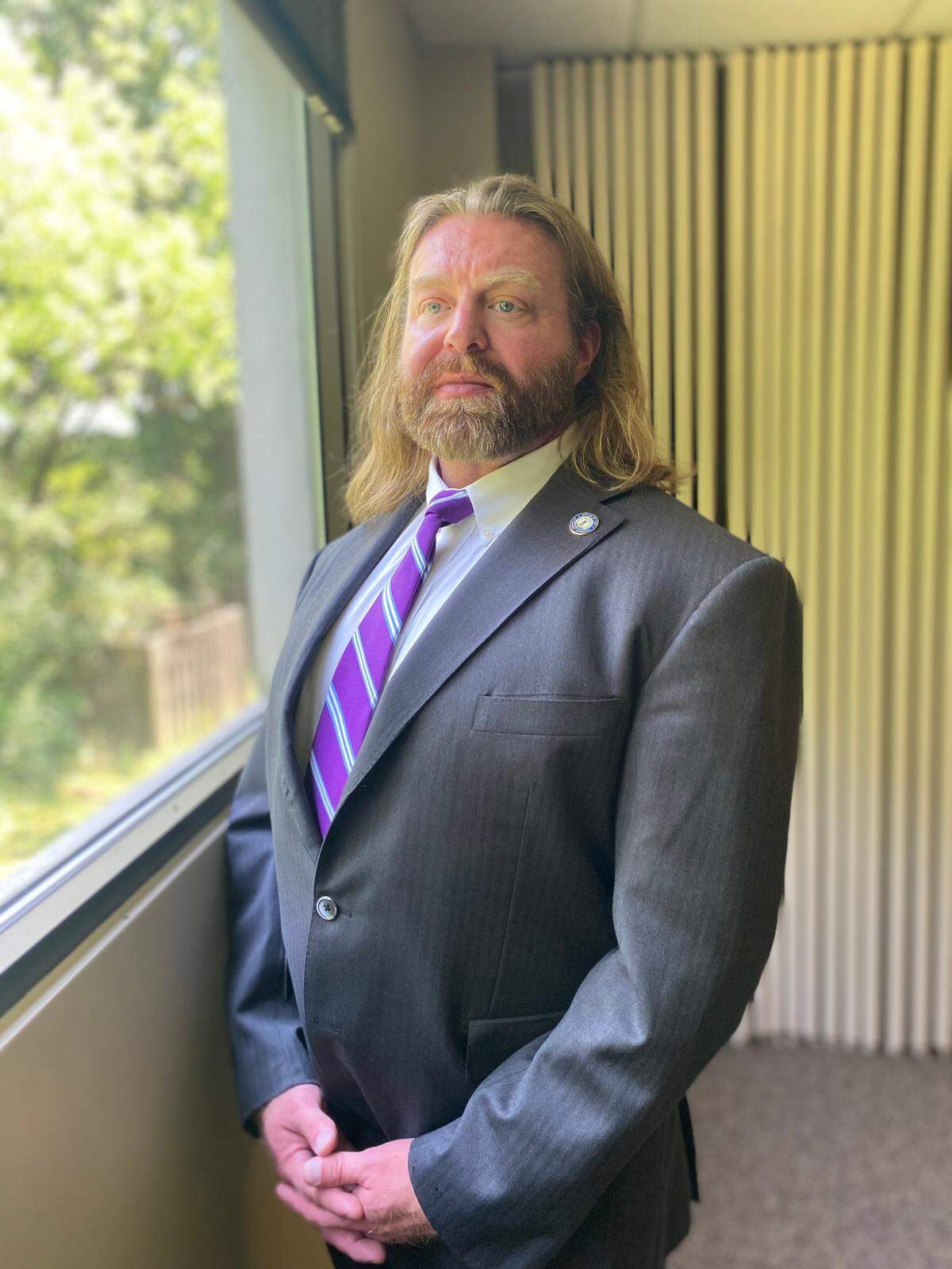
In 2016, Hubbard got a call from former Republican Gov. Matt Bevin’s team about piloting a Social Security and disability reform project. Bevin in 2017 named Hubbard commissioner of the Kentucky Department of Income Support, where he served until he was removed when Democratic Gov. Andy Beshear was elected in 2019.
From there, former Republican Attorney General Daniel Cameron used Hubbard as special counsel in his Office of Medicaid Fraud and Abuse Control, before he was named chair of the Opioid Abatement Advisory Commission in 2021.
One of his first orders of business in that new role was to host 20 town halls across Kentucky from September 2022 to May 2023, to hear from public about how the commission could best invest its hundreds of millions in opioid lawsuit settlement money back into communities ravaged by the drug epidemic.
Typically held on Tuesdays after work hours, dozens of people attended and poured their hearts out, Hubbard said.
From those town halls, a few themes became clear: people’s families and communities continue to be devastated by opioids, and people “don’t have any confidence in (the government’s) ability to honestly and competently do our job in a way that’s responsive to their reality,” Hubbard said.
And lastly, what works for some isn’t working for everyone.
Available treatment options like Suboxone aren’t “working nearly as effectively as (they need) to for everyone who is becoming habitually dependent and dying from this opioid epidemic,” Hubbard said.
By this point, Hubbard had already begun to consider the possibility of earmarking settlement funds to explore the potential of psychedelics. In late May 2023, just a few weeks after the last town hall, he unveiled his proposal to invest in ibogaine.
Hubbard’s ibogaine experience
After months of championing the potential of ibogaine, Hubbard’s life changed in November 2023, when he decided to get a taste of his own medicine.
He went to Mexico, where the drug is legal and administered in specialized centers under a multi-day regime.
Ibogaine is derived from the root bark of a shrub native to West Central Africa. In the last decade, it has amassed an international following among war veterans, some of whom have taken it to treat severe PTSD after exhausting more traditional options.
In addition to quelling PTSD, ibogaine has been studied in other countries and found to treat anxiety, depression and opioid use disorder.
But there are risks associated with the drug, including fatal heart arrhythmia, which is part of the reason some University of Kentucky researchers warned against it in 2023 when Hubbard was championing the drug in the Bluegrass State.
In addition to prompting extreme and prolonged hallucinations, ibogaine blocks what are known as the hERG potassium channels in the heart, which help to regulate a heartbeat — a primary reason some researchers say the FDA has balked at giving it formal approval for widespread use.
Ibogaine, specifically, has caused fatal heart attacks, according to the National Institute of Health. People with pre-existing heart conditions are at a greater risk for this happening.
But proponents, including Hubbard, say administering ibogaine in a clinical setting, with medical care teams overseeing all aspects of the trials, reduces this risk.
Hubbard found his two doses of ibogaine to be “the most beautifully profound spiritual experiences I have ever had in my life.”
He doesn’t struggle with addiction, but Hubbard claims it healed him spiritually and mentally — “multi-dimensional,” he called it. He spoke of the drug like an evangelist, saying ibogaine gave him “absolutely, concrete confirmation that I am a spiritual being who has unique significance and purpose on this side of eternity.”
The experience also relieved him of his struggles with anxiety, which he said he’s dealt with his entire adult life. The takeaway: championing the drug for wider use became his “life’s mission.”
Hubbard took ibogaine when he was still employed as the chair of the Kentucky Opioid Abatement Advisory Commission under the Office of the Attorney General.
Acting as the state’s opioid recovery czar, Hubbard had, up to that point, helped shepherd a plan to spend $42 million of the state’s opioid-related lawsuit settlement money — which was then around $900 million — to make Kentucky the first state to research ibogaine. More specifically, that money was to be invested in conducting clinical trials using ibogaine.
Early signs looked promising for his cause.
Across the initial event in May 2023 unveiling the proposal and two subsequent public hearings later that year, the commission heard from medical experts who championed ibogaine and emotional stories from people who’d taken the drug: veterans who were suicidal, unable to overcome PTSD, others who lived with chronic addiction, unable to break free after exhausting all other alternatives.
They painted ibogaine as the clear demarcation in their lives.
“I consider my life pre-ibogaine and post-ibogaine,” Paria Zandi, a marriage and family therapist in Los Angeles, said at the Kentucky Capitol in May 2023.
“The best way I can explain it is ibogaine gave me a fresh pair of eyes with which to see the world and myself,” she said.
Behind the scenes, Hubbard did his best to whip commission members’ votes, with the help of some key leaders.
Cameron, who is now running for the U.S. Senate, backed Hubbard’s venture. At the unveiling of Hubbard’s proposal in 2023, Cameron called ibogaine a “breakthrough opportunity” to tamp down the “gravest existential threat to this state’s future.”
But Coleman, a former U.S. Attorney and FBI agent who takes a more traditional law and order approach to combating addiction, did not share Cameron’s enthusiasm when he took office in January 2024.
The commission was poised to green light Hubbard’s proposal when, in early December, Hubbard got a letter from Coleman, then the attorney general-elect, ordering him “not take any further action on the ibogaine project” until the new administration had time to be briefed.
A week later, Hubbard says Coleman told him ibogaine research had no business in the office. Coleman urged him to resign, and so he did. Coleman named a new Kentucky Opioid Abatement Advisory Commission chair four days later.
“I just felt sick over what was being taken from this state,” Hubbard said. It was “a magnificent chance for Kentucky to lead the country in something, and it was just unceremoniously trashed.”
On the walk out of Coleman’s office the day he was asked to resign, Hubbard said a prayer: “Lord, please help me hold this together and help me find a place where it can be planted and have the opportunity to grow.”
Hubbard was ousted just a month after his firsthand “restorative” experience with the drug.
In response to inquiries for this story, a spokesperson for Coleman pointed to previous statements that weren’t outright dismissive of ibogaine and praised Hubbard’s replacement, Chris Evans.
One of those statements came in March 2024 when Coleman asked the commission to step away from ibogaine, calling the “blood money” from the opioid settlement fund too precious to “gamble away.”
“That’s not to say that this commission shouldn’t be on the cutting edge of innovation,” Coleman said at the time. “I believe we can push the boundaries of addiction response, and we should.”
Coleman said he would ask Evans to create a proposal for a $5 million pool for research and innovation grants instead. Applications for those grants close at the end of the year.
“If someone brings forward an ibogaine research proposal that fits the criteria of this new innovative grant program, I hope the commission would give it full and fair consideration,” Coleman said.
A little help from his friends
Within weeks of resigning from his chairmanship in Kentucky, Hubbard in early 2024 pivoted to a similar role in Ohio.
He was contracted by the state to help build public-private partnerships to pursue “innovative” ways to address Ohio’s “most pressing social and public health challenges,” according to the Treasurer’s website at the time. Those public health challenges included PTSD, traumatic brain injuries and opioid dependency.
That work included a partnership with Ohio-based REID Foundation, run by ibogaine proponent Rex Elsass, to “create the framework for ibogaine clinical trials in Ohio,” Hubbard told the Herald-Leader at the time.
Though those trials have yet to happen in Ohio, Hubbard continued building out his network of psychedelic allies, including Rick Perry, the former governor of Texas and former U.S. Department of Energy secretary under Trump.
Calling him a “good friend,” Perry had championed Hubbard’s cause previously, appearing virtually to praise the ibogaine proposal in Kentucky at a September 2023 meeting of the Opioid Abatement Advisory Commission.
The duo’s most notable public appearance came in January 2025, when they touted the need for ibogaine research stateside from one of their biggest and most influential platforms yet: the Joe Rogan Experience, a podcast which boasts tens of millions of monthly followers.
Listeners were enthralled and compelled by Hubbard’s disarming combination of Appalachian drawl and medical and legal acumen.
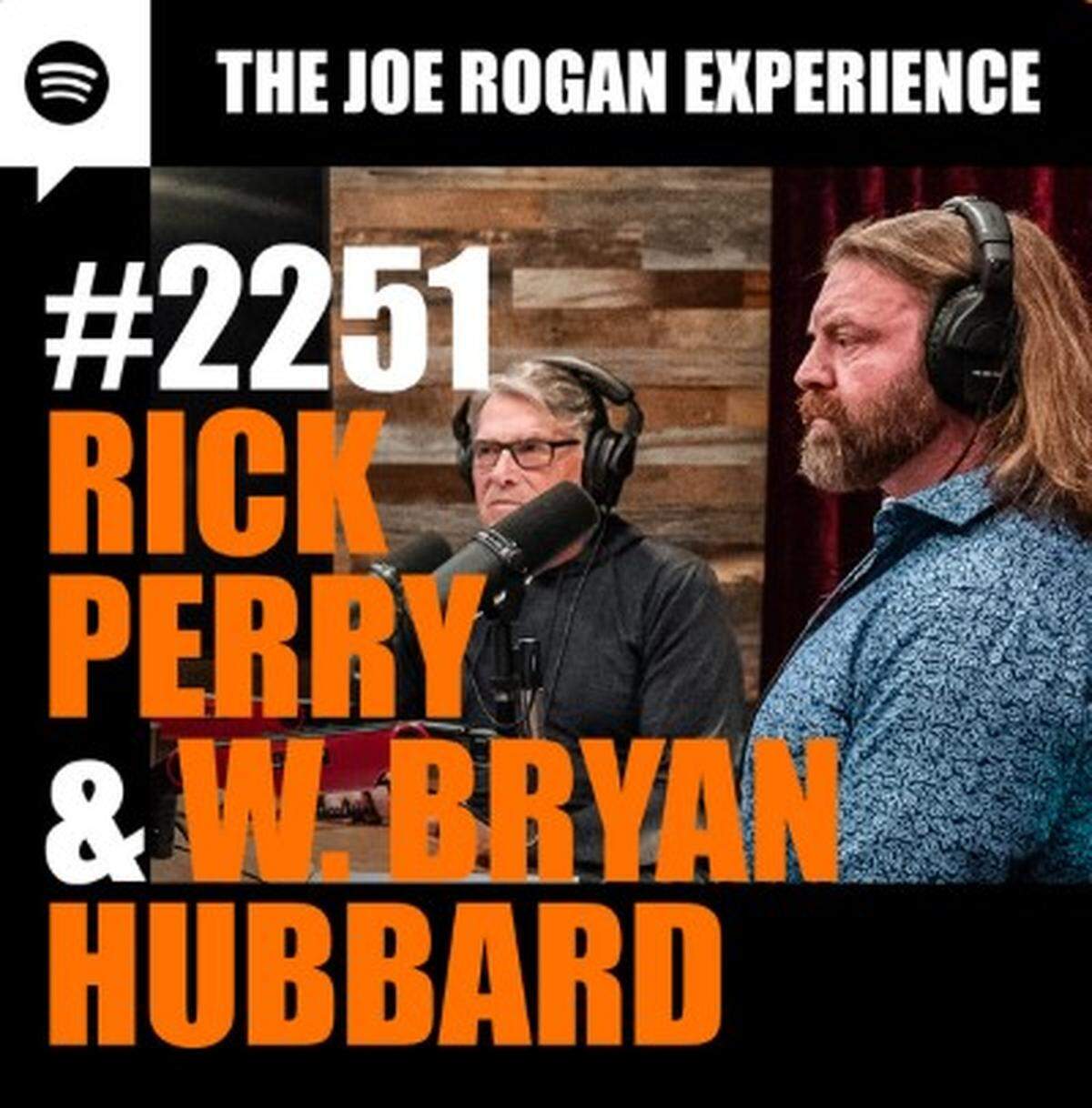
Standing at 6’1 with shoulder-length hair and a beard, Hubbard’s most noticeable characteristics are his accent and wide-ranging vocabulary. When he talks about ibogaine, he does so with the gumption of a preacher at a pulpit.
“One of the greatest displays of public speaking I’ve heard. He didn’t waste a single word. Incredibly powerful and intentional,” one listener commented on the YouTube release of the podcast.
“He speaks like an AI medical journal trained to sound like a wild west sheriff,” another wrote of Hubbard.
Rogan’s podcast is seen as a direct line to the young male demographic that has become more vital to Republican successes in recent years. Trump and Vice President JD Vance both absconded to Rogan’s Austin, Texas, studio for one-on-one interviews during the heat of their successful 2024 campaign.
It worked for Trump, and it seems to be working for Hubbard. In Kentucky, Hubbard was on something of an island in his ibogaine crusade. Now, he’s got political heft and an expanding social media following.
His friendship with Perry helped get the attention of the Texas legislature.
Brandon Rottinghaus, a University of Houston political science professor who recently published a book on the three-term governor’s impact on Texas politics, said Perry can still get things done in state politics even though he hasn’t held public office there for a decade.
“His relationships, his presence and his brand of politics are still very alive in Texas,” Rottingthaus said. “That’s not to say that he’s able to get the same degree of pull he did when he was governor, but he certainly has enough allies that he can help to push legislation through.”
Recently, Jillian Michaels, a former star of weight-loss reality show “The Biggest Loser,” who has joined a growing network of conservative-leaning wellness influencers, beat the drum on ibogaine. Michaels extolled the drug on Fox News in April after hosting Hubbard on her podcast in March.
.JPG "IMG_9976 (1).JPG")
Ibogaine was reaching audiences like never before. Capitalizing on public influencers like Michaels and Rogan, and the political clout from Texas powerhouse Perry, Hubbard finagled his way into rooms with top policymakers in the nation’s second-biggest state.
Less than a month before the Texas legislature gave final approval to appropriate the $50 million allocation, Hubbard was mentioned on the House floor.
Republican Rep. Mike Olcott, who represents an area of Texas just west of Fort Worth, said he was an initial skeptic of the bill.
“Fifty million dollars to play around with some psychedelic drug?” he said. “That would go against almost every principle I have.”
But then three people visited his office unannounced one day. One of them, he said, was Bryan Hubbard, who helped convince him why ibogaine should be studied as a viable alternative to Suboxone — an FDA-approved drug to combat opioid addiction.
And less than a week before the final bill was approved, it was Hubbard who helped sway House Speaker Dustin Burrows and Lt. Gov. Dan Patrick, who also serves as Senate president.
In a group text provided to the Herald-Leader that was sent to Hubbard and other ibogaine proponents, Patrick wrote that after he and Burrows met with Hubbard, “Dustin and I decided late that night to give it a chance. (Hubbard) is persistent and one fully committed man to the cause.”
Hubbard gets easily choked up talking about his journey from Kentucky to Texas, and what it portends for the future of ibogaine research.
“I am overjoyed. As you might be able to tell, I can’t even hardly talk about it without becoming so emotional,” he said by phone from Lexington after he learned the proposal would become law in Texas.
“While my time around this has been short relative to the amount of time and effort others within the psychedelic world have devoted to all this, it’s been everything I’ve lived and breathed for three years now. To have taken it from what I thought was certain death here, and to see, of all places, the state of Texas — the eighth-largest economy in the world, a tremendously dynamic and consequential state — embrace this,” he said.
“I just rejoice and thank God from the bottom of my heart for opening that pathway.”
This story was originally published August 26, 2025 at 5:00 AM.