KY juvenile justice staff skip safety checks on youths, falsify observation logs
AI-generated summary reviewed by our newsroom.
- Investigators found staff at Kentucky juvenile centers falsified observation logs.
- Security video and interviews show youths were not checked while in their cells.
- DJJ plans new tech for bed checks, imposed discipline on staff who broke rules.
Staff at Kentucky’s juvenile detention centers routinely skip the mandatory every-15-minutes visual safety checks of youths who are locked alone in cells, and they falsify paperwork afterward to make it appear they performed those checks, according to a Herald-Leader investigation.
Speaking to investigators this year, juvenile justice workers admitted that it’s common practice to “catch the sheet up” at the end of their shifts by retroactively filling in the blank spots in observation logs with their initials and the times they were supposed to be making their rounds.
Twenty-three employees at juvenile detention centers in Adair, Fayette, McCracken and Warren counties were identified as having failed to conduct safety checks from January through May of this year in reports submitted by internal investigators from the Kentucky Justice and Public Safety Cabinet.
The Lexington Herald-Leader obtained the public records under the Kentucky’s Open Records Act.
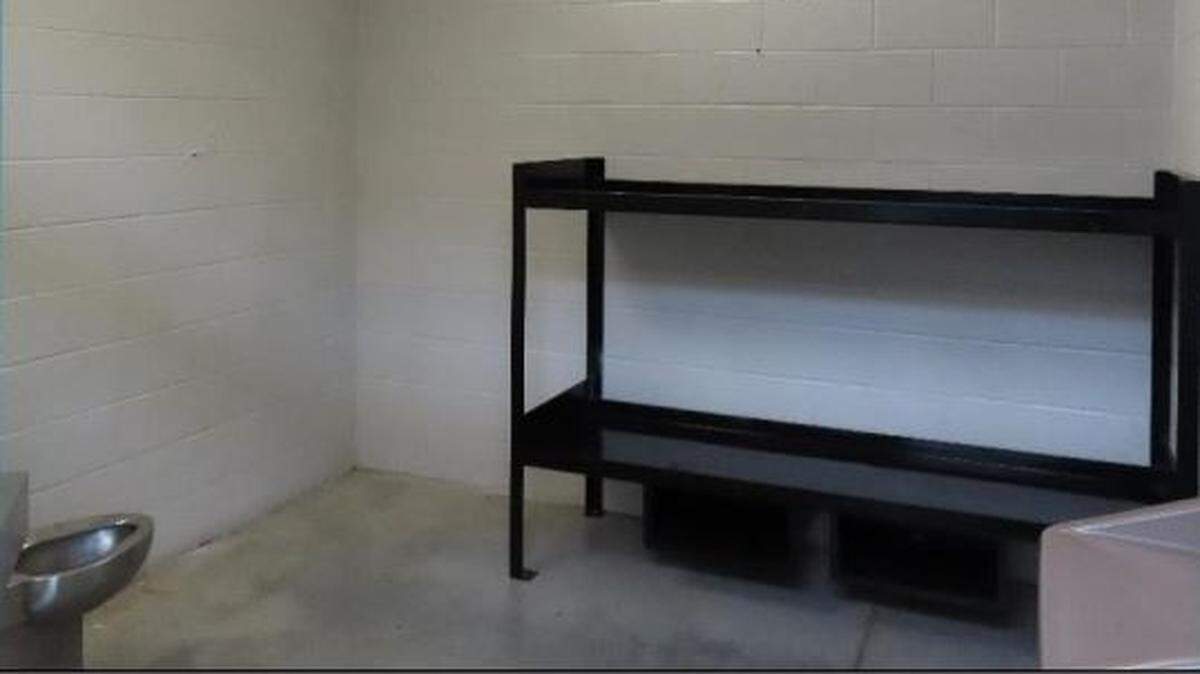
In one case, in April, a teen boy who had been hospitalized overnight with a concussion from a touch football game was left alone to recuperate in a cell at the Fayette Regional Juvenile Detention Center in Lexington.
Not only did the staff fail to check on the boy every 15 minutes as required, they did not respond when he developed a severe headache, began sweating, felt like he was going to pass out and banged on his cell door, crying out for medical assistance, investigators wrote.
Leaving youths unmonitored while in state custody — many of them suffering from mental or physical health problems — isn’t a hypothetical risk. Some youths in detention try to hurt or kill themselves.
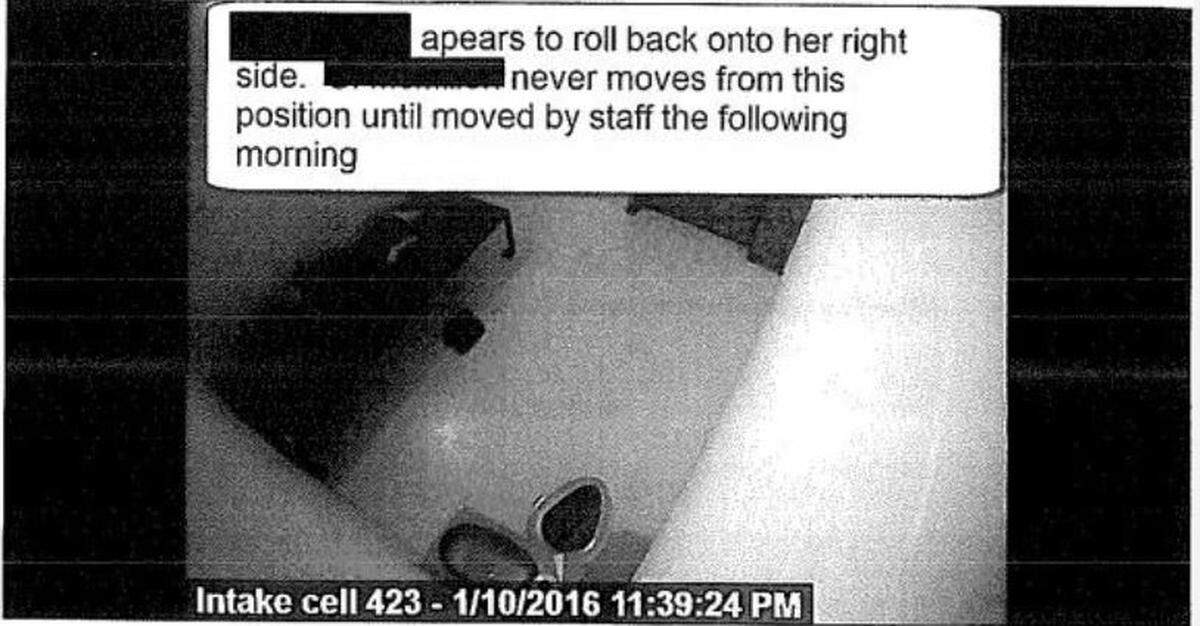
And in 2016, 16-year-old Gynnya McMillen died from a heart condition while she was ignored in a cell at a now-shuttered juvenile detention facility in Hardin County. Her death went undiscovered for more than 10 hours. An investigation showed that staff falsified logs to make it appear they checked on Gynnya throughout the night.
Gynnya’s death led to at least three firings and the dismissal of the juvenile justice commissioner, years of litigation and a scathing report about the Department of Juvenile Justice’s systemic failures from the nonprofit Center for Children’s Law and Policy of Washington, D.C., for which Kentucky taxpayers paid $130,000.
Skipped safety checks and falsified observation logs join a long list of other problems at the Department of Juvenile Justice, including the physical and sexual abuse and neglect of youths in custody, that has led to an ongoing civil rights investigation by the U.S. Department of Justice.
“It blows my mind in this day and age, after all Kentucky has been through, for them to still be in this situation. It’s just disgusting,” said Earl Dunlap, who in 1995 was appointed by U.S. Attorney General Janet Reno to monitor the newly created Department of Juvenile Justice for several years under a federal consent decree.
The consent decree between Kentucky and President Bill Clinton’s Justice Department was meant to settle allegations of mistreatment of youths held in state custody.
However, the Department of Juvenile Justice in modern times has remained embattled. Its current commissioner, Randy White, is the sixth person in that post since 2018 — the third so far under Gov. Andy Beshear.
“If something catastrophic happens to a kid because you weren’t making your 15-minute checks, because you just weren’t bothering despite having a written policy, any lawyer worth his salt is going to be able to come in and make a case against you for deliberate indifference,” Dunlap told the Herald-Leader last week.
“They’re going to nail not only the staff but the supervisors, the DJJ commissioner, the governor and everybody else, they’re going to nail them to the wall,” he said. “Honestly, it’s better to not have a written policy at all than to have a policy and ignore it.
“If I was the governor, I’d rip somebody’s head off over this one.”
Caught by video
Security video footage from the detention centers showed that employees were not walking the halls making safety checks when they claimed to be, investigators wrote. In some instances, the employees weren’t even in the buildings at the time they claimed, investigators wrote.
Investigators at the Justice Cabinet typically looked into skipped safety checks after youths called a complaint hotline to say that nobody was keeping an eye on them.
In one case, in Adair County, investigators were watching security video because of a questionable restraint by an officer when they noticed that staff didn’t go into a unit for a while. Curious, they pulled the observation logs for that period and discovered that staff claimed to visit the cells in that unit every 15 minutes.
In another episode, in January, a sergeant at the Warren Regional Juvenile Detention Center in Bowling Green wrote in the observation log that a teen boy stood at his cell door, loudly cursing, when the officer made his 15-minute safety check.
But a review of security video footage did not show any staff present in the boy’s unit at that time, making safety checks or doing anything else, investigators wrote. The video also showed the boy sitting quietly at his desk, not standing and shouting profanity as the sergeant alleged, they wrote.
“For most of the time in his room, (the boy) either laid in bed or sat at his desk and did not exhibit any signs of aggression,” investigators wrote.
Confronted by the investigators, employees blamed under-staffing. There often aren’t enough officers on duty, they said. Supervisors instructed them to falsify observation logs rather than leave blank spaces that could get everyone in trouble for dereliction of duty, they said.
In an April 30 interview with investigators at the Lexington juvenile detention center, Lt. Kelan Weems “hated to say that is the status quo, but stated, ‘It kind of is,’” investigators wrote.
Dunlap, the former Justice Department monitor, said he understands why detention center employees are worried about under-staffing. But when that happens, Dunlap said, they should document their concerns for their bosses rather than pretend they’re doing their jobs as normal.
“If you’re short-staffed, then you need to document that on your shift report every time so that there’s some assurance that you, as an individual, are doing everything that you can to let them know that, ‘Look, it’s just not possible for me to do my job because we’re down 60% or 40% or whatever,” Dunlap said.
Officials promise reforms
State officials told the Herald-Leader last week that reforms are coming.
“Upon my appointment as executive director of the Office of Detention in August, I immediately placed an emphasis on the bed check requirements,” said Troy Pollock, a former Kentucky state prison and jail official who started in his job two months ago.
“It had come to my attention that employees were not adhering to policy, and that is not acceptable,” Pollock continued. “Bed checks are in place for the safety and security of our juveniles’ health and wellbeing, and failure to adhere to policy will result in discipline.”

The Department of Juvenile Justice is launching a pilot project at the McCracken Regional Juvenile Detention Center in Paducah that can be expanded in the months that follow, said agency spokeswoman Morgan Hall.
Staff will use a data-tracking tool that must be physically scanned at each cell door as they perform their safety checks, Hall said.
“The system will then automatically create an electronic record of the employee’s name, date and time,” Hall said. “This will hinder falsifying of paperwork and allow DJJ to verify that bed checks are happening. Should there be any question of accuracy DJJ leadership will review video footage to verify.”
Punishment handed down to the lax employees identified by this year’s internal investigations included demotion, suspension and firing, Hall added.
Of the nine Lexington employees identified as skipping 15-minute safety checks, she said, suspensions ranged from a period of three to 10 days, and a captain and lieutenant among the group were demoted to correctional officers.