Kentuckians feared the post-war world. So they burned their kids’ comic books
AI-generated summary reviewed by our newsroom.
- Historian Brian Puaca maps mid-20th century comic book burnings in U.S.
- Local churches, schools and civic groups staged public burnings to signal moral control.
- The episode led to state bans and the Comics Code, shaping industry content and law.
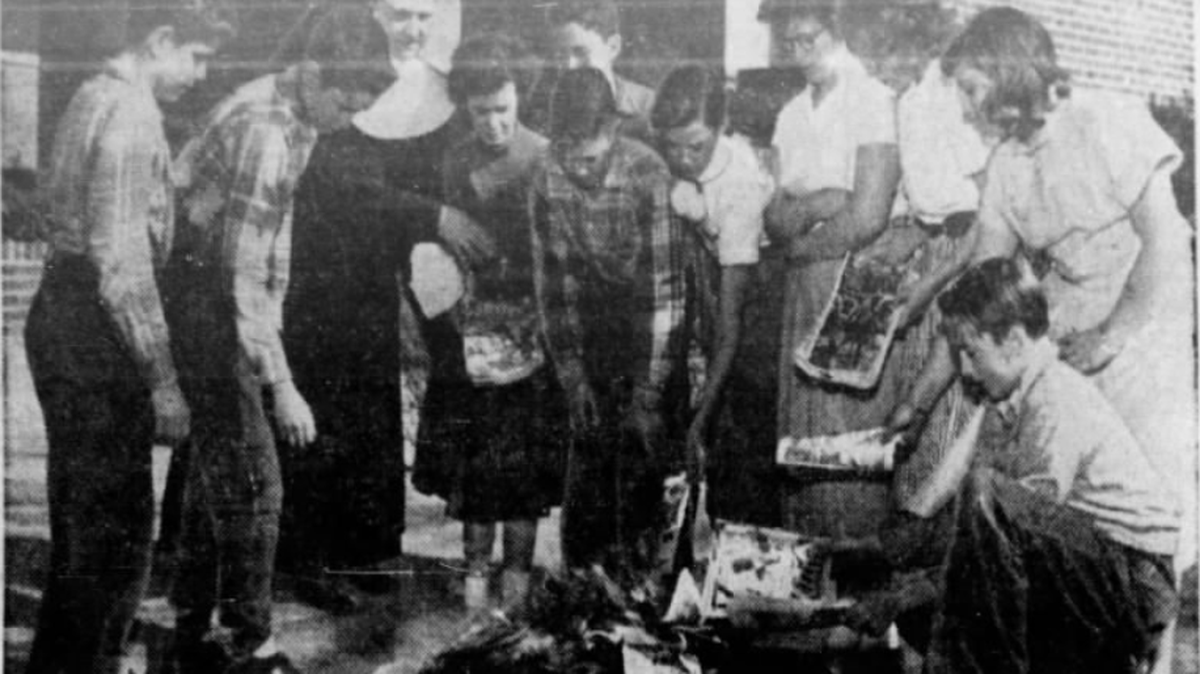
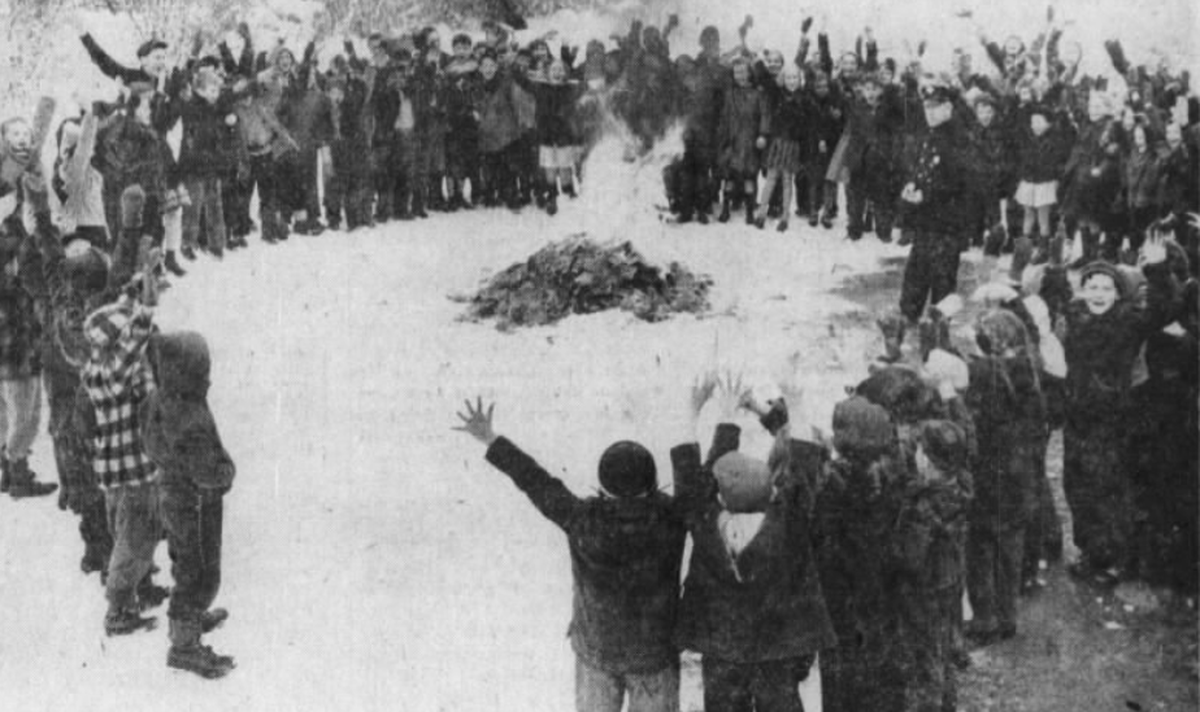
The 12- and 13-year-old students scowled at the burning pile of comic books outside St. Rita’s Parochial School in Louisville. Several leaned over to toss more comics onto the fire. Behind them, in a traditional nun’s habit, seventh grade teacher Sister Clarice watched with a grim smile.
It was February 1954. Many Americans had decided comic books corrupted their children’s minds. A perceived rise in juvenile delinquency could be blamed on kids getting dangerous ideas from the colorfully violent images in horror, crime and superhero comics, according to a chorus of critics.
The children at the Louisville bonfire echoed that message.
“It’s surprising how willingly kids stop reading bad comics when they realize what it’s doing to them,” 12-year-old Richard Chadwell, vice president of his seventh grade’s Civics In Action Club, told a visiting newspaper reporter.
“They show you 50 pictures on how to commit a crime and only one showing it doesn’t pay,” added 12-year-old Jean McAdams.
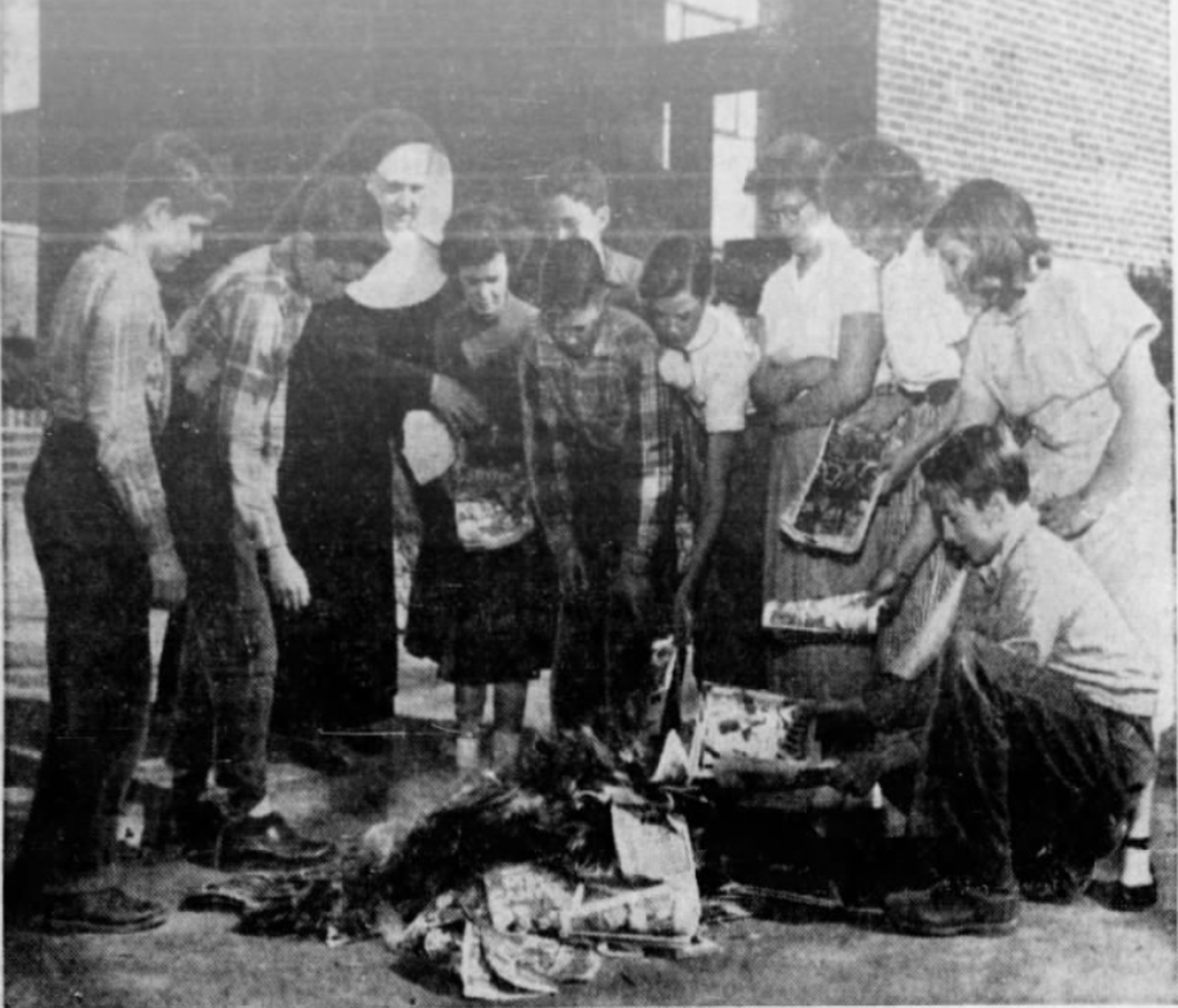
A few errant students who tried to sneak away with some of the collected comics were caught and held up to public ridicule by their peers, according to an account the next day in The Courier Journal.
Two years later, the Kentucky legislature — prompted by righteous protests like the one in Louisville — unanimously approved a criminal ban on “the publication, sale and distribution to minors of comic books devoted to crime, horror, physical torture, brutality or illicit sex.”
Penalties included fines up to $1,000, a year in jail or both. Kentucky kept its ban until 1975.
“I just thought that maybe I should do something about that,” recalled the ban’s sponsor, state Rep. John Isler, a Covington Democrat, in an oral history interview toward the end of his life.
“Everybody got behind that bill, all the churches, all the denominations, religions,” Isler said. “And it was just a — if you wanted to come back (to Frankfort), it was just pretty near impossible for you to vote against that bill. That’s right.”
Locally, groups like the Bourbon County Ministerial Association in Paris, outside Lexington, announced it would scrutinize the contents of comic books sold at area stores, acting as the self-appointed “committee in charge of public morals.”
Newspapers were quick to report when children were seemingly inspired by comics to do terrible things.
“Comic books blamed in hanging of boy,” read a front-page headline in the Lexington Herald in 1947 about a 12-year-old near Pittsburgh who hung himself with clothesline — “probably” because he saw such a scene in one of the comics he hoarded, the boy’s mother told a coroner’s inquest.
“I burned every one I found,” his mother cried. “But Billy always found ways of hiding them.”
The Comic Book Burnings Project
The comic book industry barely survived this era, which can be hard to believe today.
Seven decades later, comics provide the source material for billions of dollars in movies, television shows and video games. Graphic novels and digital comics are popular reading for an estimated 40% of American children.
Now, a historian is documenting the comic book scare that gripped Kentucky and the rest of America in the mid-20th century.
The Comic Book Burnings Project is an online work in progress by Brian Puaca, a history professor at Christopher Newport University in Newport News, Virginia. Puaca has mapped dozens of burnings across the country from 1945 to 1955 that were organized by churches, schools and civic groups.
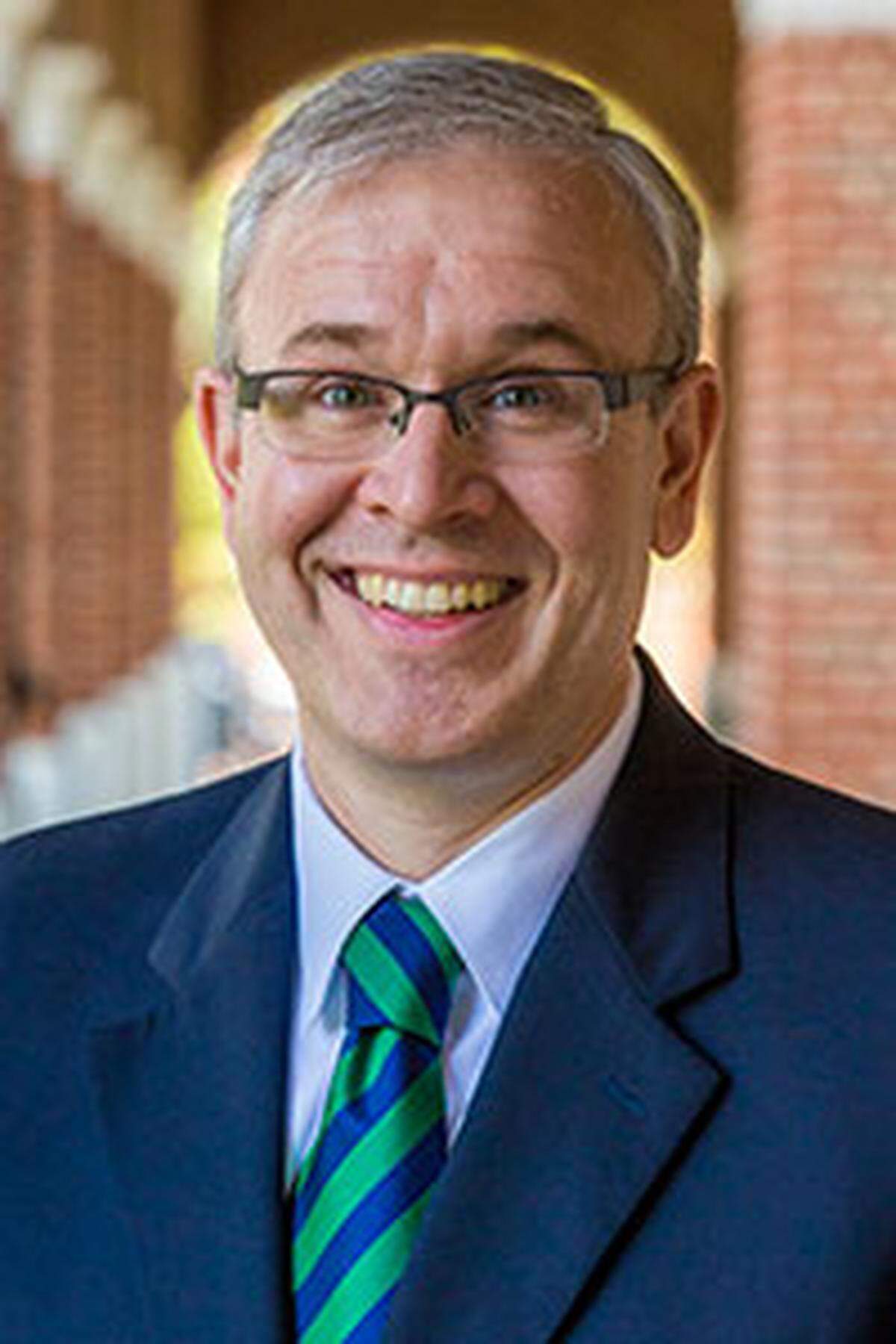
Puaca’s studies usually focus on modern German history. That got him interested in the damage that censorship by a frightened mob of people can inflict on a society.
Cold War America provided plenty of material, he said in a recent interview. Only a few years after they defeated the book-burning Nazis, Americans were proudly burning books themselves, he said.
“The irony is, in the United States they’re teaching about democracy. They’re the model for everybody else,” Puaca said. “And if the United States is burning comic books, then it’s a head-spinning irony.”
“As I started doing a little research, I was shocked at how widespread it was,” he added.
“Comic books become a scapegoat for all of America’s cultural insecurities and fears and anxieties after the war ended in 1945,” he said. “There were fears of the Cold War, anxieties about deviant sexuality, a loss of control over young people in the post-war world — all these things combined, and comic books became a really convenient scapegoat.”
“And to be perfectly honest with you, no one was willing to stand up for them. I mean, no one was going to go to bat for comic books.”
Book burnings are ‘powerful events’
So far, Puaca has uncovered two publicized comic book burnings in Kentucky, both in Louisville: the February 1954 blaze at St. Rita’s Parochial School and a fire in January 1949 organized by fifth graders at the now-closed F.T. Salisbury School in the city’s West End.
There also was a comics roundup that might or might not have ended in a burning in Cynthiana, 30 miles northeast of Lexington, in April 1955.
The Cynthiana Democrat reported that the Junior Woman’s Club arranged for elementary school students to get “good” books in exchange for surrendering their comic books to be burned. One school gave its kids an ice cream party and an extra 30-minute play period as a reward for turning in their comics, the Democrat wrote.
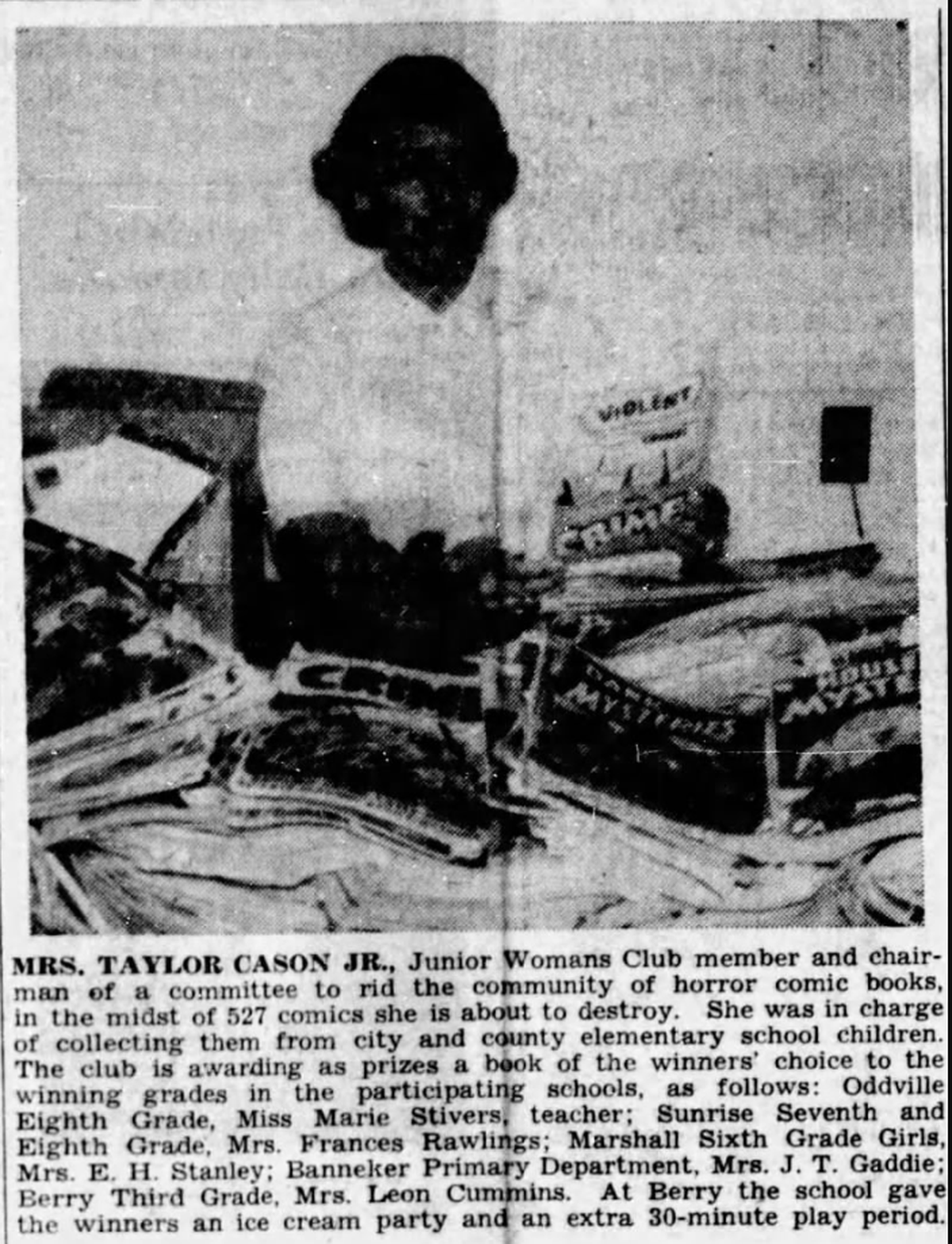
In addition, the club inspected local newsstands and told the merchants to toss any comics “of questionable character.” Ten titles were identified and pulled off the shelves to prevent people from buying them.
A follow-up article a week later indicated that the club collected 527 comics to be destroyed, but this second story didn’t specify how they were destroyed or show pictures of a fire, Puaca said.
That makes a difference, he said. A public book burning carries special power.
“I mean, it has practical value in the sense that it literally destroys the literature, but it’s also symbolic value, because it sets an example for everyone. It’s meaningful to the community who participates,” Puaca said.
“At a lot of those events, you’ve got things like the police chief, the fire chief. There are pictures of nuns at the school participating. There are parents and PTA members,” he said. “We have the fire in California where the United States Army incinerated hundreds of thousands of comics that they were using to recruit soldiers because a senator had criticized them.”
At that 1951 event, the Army spent nearly $18,000 to buy 500,000 copies of the humor comic Sad Sack, featuring a bumbling Army private. Then it burned them at Fort Ord, California, according to news accounts.
The Army ordered the burning after U.S. Sen. Homer Capeheart, R-Ind., called the comic “socialist propaganda aimed at discrediting American industry.” The comic offended Capeheart with a story making fun of how little money Sad Sack earned in civilian life, encouraging him to reenlist.
“To me, burnings are very powerful events, and not the same thing as, you know, a couple of women sitting in a school office tearing up comics,” Puaca said.
If the ladies of Cynthiana’s Junior Woman’s Club hoped to purge their Central Kentucky community of shocking comics, they won the battle but lost the war.
More than 20 years later, Cynthiana would be the hometown of two young comic book enthusiasts, Robert Kirkman and Tony Moore. They created a horror comic called The Walking Dead, about flesh-munching zombies taking over the world. It was adapted into a popular TV franchise of the same name.
Today, Cynthiana proudly promotes its connection to The Walking Dead as a tourist attraction.
Covington preacher takes the lead
More than a thousand individual comic book titles were published in the years following World War II, selling millions of copies each month.
Some were kiddie-friendly humor cartoons. Some were superhero adventures starring still-familiar costumed characters like Superman, Batman and Wonder Woman.
And some were pretty shocking stuff aimed at older teen-aged readers, such as the bullet-riddled Crime Does Not Pay from Lev Gleason Publications and the blood-soaked Tales From the Crypt and The Vault of Horror from EC Comics. The crime and horror comics were what tended to cause the most controversy.
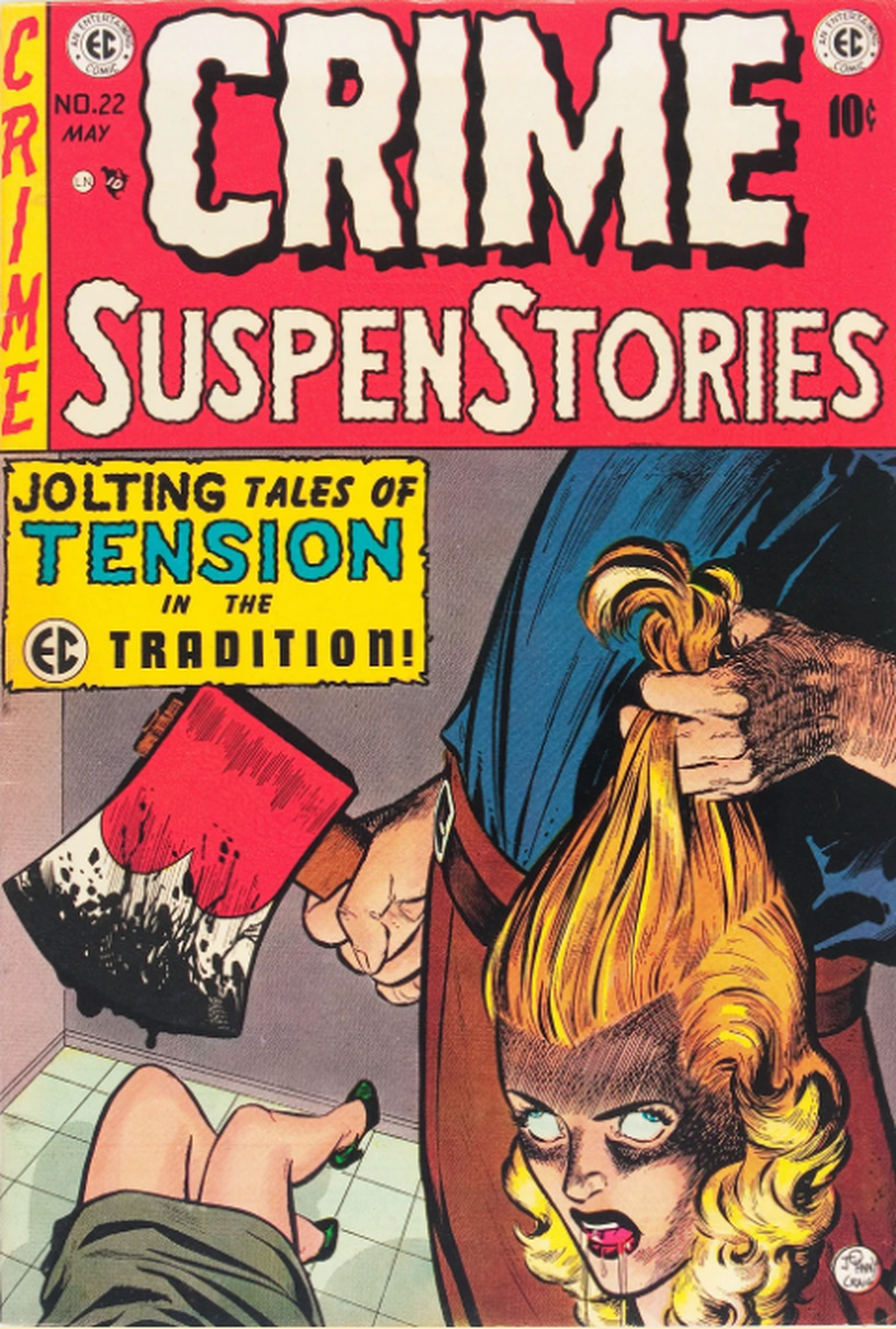
EC’s comics are considered to be classics today. They employed first-rate artists on suspenseful stories. But some parents legitimately might believe them inappropriate for their young children, Puaca said. He said he’s only now letting his son, who is 13 going on 14, read the more mature comics in his own collection.
“It’s got to be an individual decision for parents,” Puaca said.
“I think that we’re in danger when someone else gets the power to decide what folks can read,” he said. “And that’s the takeaway. Like, it doesn’t matter if you’re left or right, if you’re religious or not. When we give certain people the right to decide what other people can read, we’ve crossed a dangerous line.”
Not everyone in Kentucky felt that way in the late 1940s.
“Comic books are a poisonous mushroom growth of the last decade,” thundered the Rev. Jesse L. Murrell, a Methodist preacher in Covington, in the Sunday sermon he gave to kick off National Family Week in May 1948.
“Superhuman heroics, voluptuous females in scanty attire, blazing machine guns, hooded ‘justice’ and cheap political propaganda are found on almost every page. The old-time dime novels were classic literature compared to this sadistic drivel!” Murrell shouted.
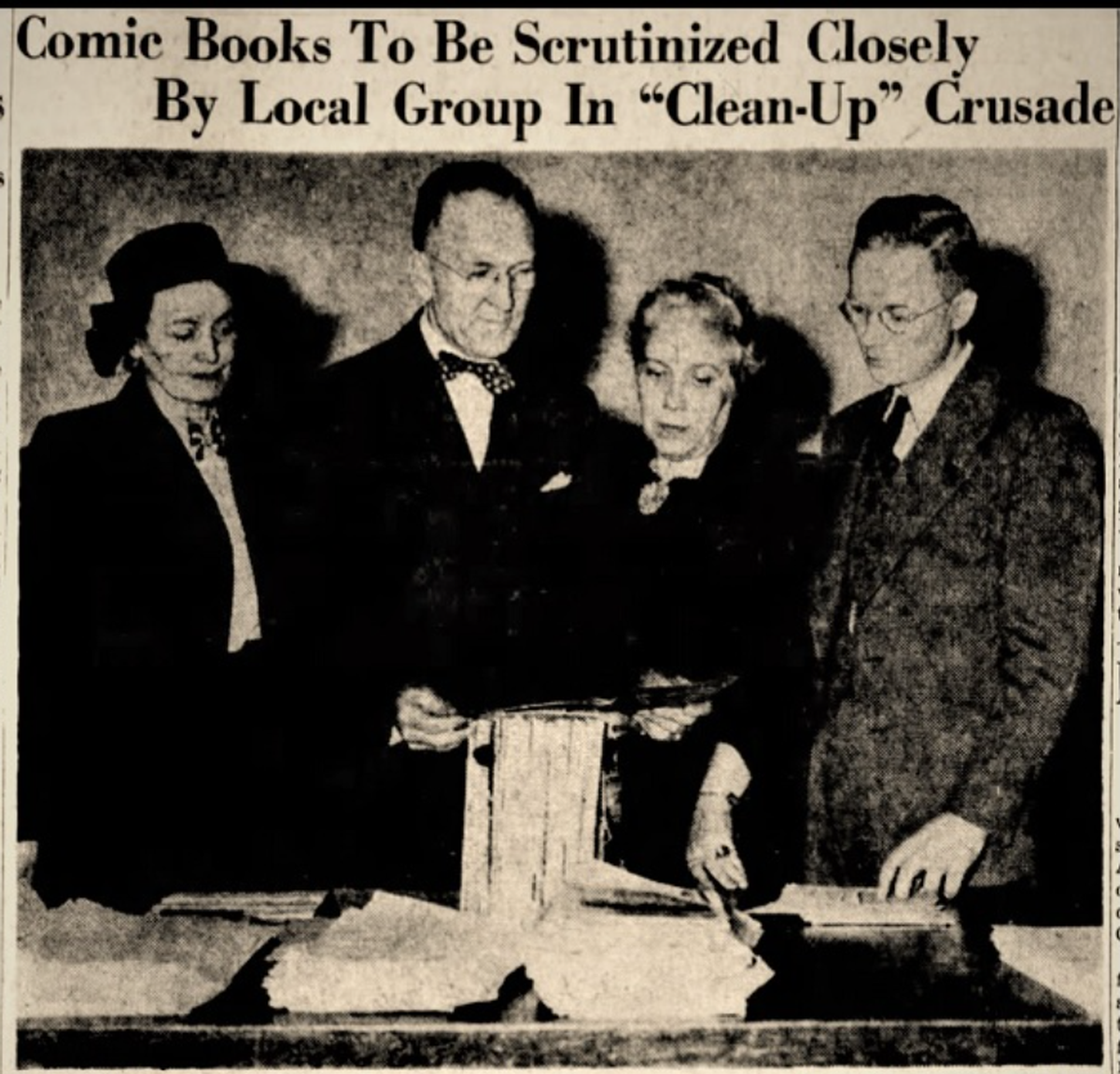
Murrell’s sermon — which he lifted nearly verbatim from a widely reprinted 1940 anti-comics essay in the Chicago Daily News, written by children’s author Sterling North — won him national headlines.
Murrell made sure of that by handing his note cards to a friendly reporter for the Cincinnati Enquirer, who got the sermon published prominently the next day and onto the broadcast air waves and news wires.
Before long, Murrell was heading up the Cincinnati Committee on Evaluation of Comic Books. It started by inspecting all comics sold in Northern Kentucky and Cincinnati; rating them based on their contents; and pressuring vendors to drop titles the group found objectionable or else face a possible boycott.
Soon, the Cincinnati committee shared its moral code ratings in stories in national magazines. It wrote to comics publishers in New York City, strongly recommending that they clean up their acts.
Fearing bad press, most publishers rushed to soothe Murrell.
“We do not claim to be perfect — but we do claim that we strive to keep our standards up; if we occasionally are guilty of a minor lapse, we usually recognize the lapse ourselves, and redouble our efforts to see that such lapses are reduced to the irreducible minimum,” DC Comics editorial director Whitney Ellsworth wrote him in June 1948.
Comics publishers agree to self-censor
But the tide of public opinion was flowing against DC and other comic book publishers.
A New York psychiatrist, Dr. Fredric Wertham, published an influential 1954 book called “Seduction of the Innocent.” Wertham not only blamed comics for the pathological problems of kids who read them, he called Superman a fascist and suggested that Batman and Robin were secret lovers who lived together in sin.
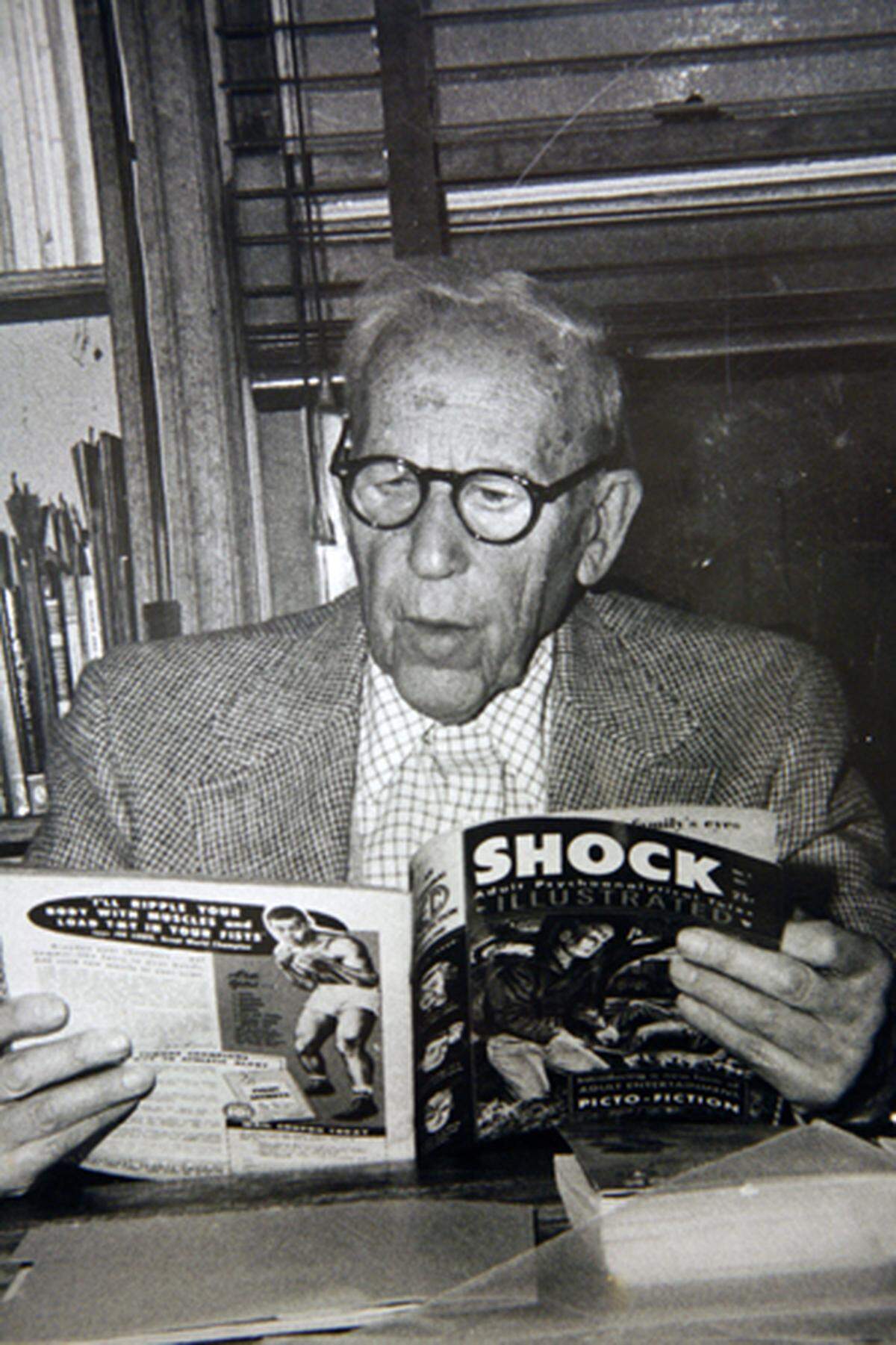
Wertham made exaggerated claims without empirical evidence. His articles were published not in peer-reviewed scientific journals but in popular magazines with huge audiences, like Ladies Home Journal and Reader’s Digest.
“I think Hitler was a beginner compared to the comic book industry. They get the children much younger,” Wertham testified in 1954 to a televised U.S. Senate subcommittee investigating the alleged ties between comic books and juvenile delinquency.
In a frantic tactical retreat, comics publishers either closed their doors or agreed to self-censorship.
Most of the battered surviving companies adopted a Comics Code Authority in 1954 to restrict their books’ contents. A staff of censors would review the pages prior to publication and frequently demand last-minute changes.
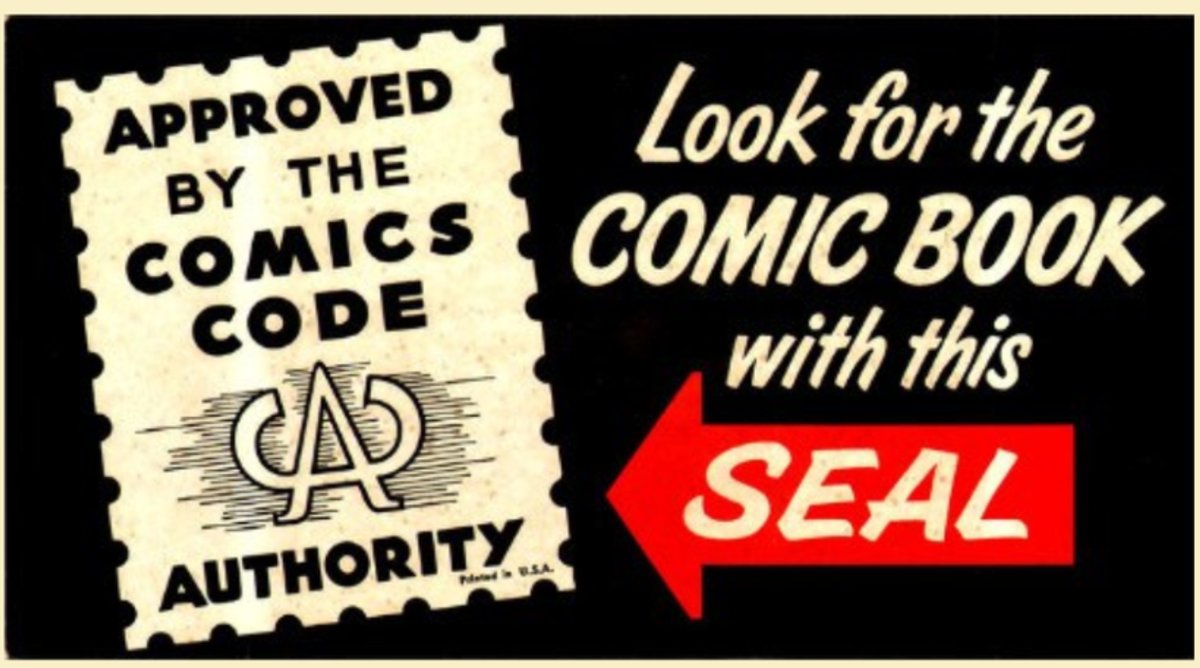
Among the Code’s rules: The words “horror” and “terror” could not appear in a title. Vampires, ghouls and werewolves were banned. There could be no gruesome or salacious illustrations. Romance stories had to emphasize the sanctity of marriage and home. Children had to respect their parents. Policemen, judges and government officials must be revered authority figures. If crime had to be shown at all, it must be entirely negative and unrewarded, and no details of a criminal act could be depicted.
Potentially objectionable comics — more than half of the roughly 600 titles published, by one estimate — disappeared.
So did the careers of the people who produced them. In his book “The Ten-Cent Plague: The Great Comic-Book Scare and How it Changed America,” David Hajdu included an appendix listing by name more than 800 artists and writers who never worked in the industry again after the mid-1950s.
Nearly everything remaining on the spinner racks looked like it was aimed at pious second graders on their way to Sunday school. Standards eventually would relax to allow more sophisticated material, welcoming back older readers, but not until the 1970s.
The Comics Code and subsequent watering down of content seemed to satisfy anti-comics protest groups, Puaca said. The bonfires mostly came to an end after 1955, he said.
At least for a while.
Comic books yesterday, graphic novels today
In recent years, with many Americans targeting public libraries and schools, complaining about the content of their books, Puaca said the protested titles often include graphic novels, the lineal descendant of comic books.
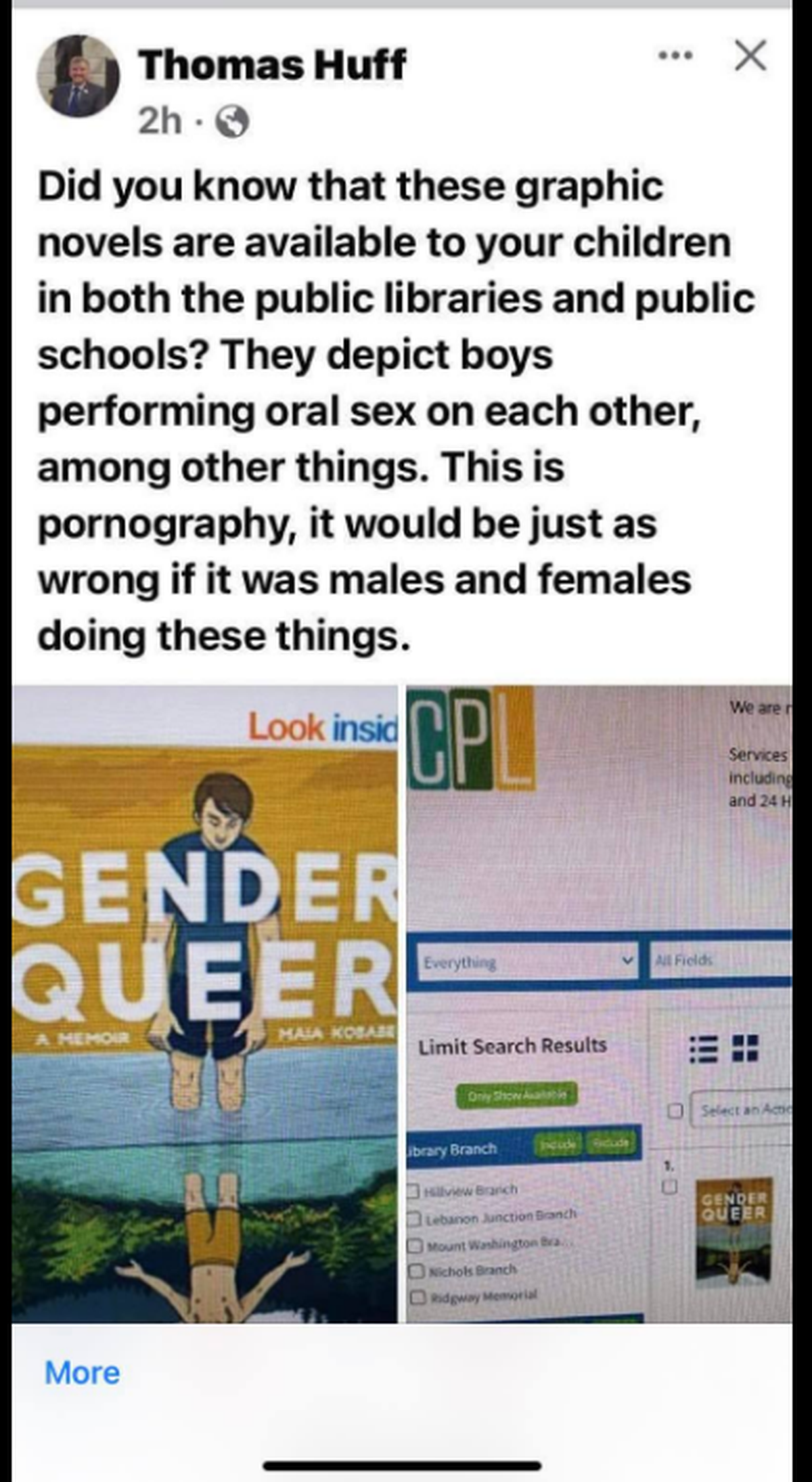
One of the most challenged books, according to the American Library Association, is “Gender Queer: A Memoir,” a graphic novel by Maia Kobabe, because of its LGBTQ themes and explicit pictures.
A Kentucky state representative, Thomas Huff, a Shepherdsville Republican, attacked his local library on Facebook in 2021 for having a copy of “Gender Queer.” The Bullitt County sheriff walked into the library not long afterward, asked to see the graphic novel and left with the contact information of library managers.
“I think it’s safe to say it was a little jarring to the staff,” Joe Schweiss, the library’s director, said later. Schweiss would quit his job and leave Kentucky not long afterward, citing a growing anti-library sentiment in the state.
And in 2022, a Tennessee school district voted to ban “Maus,” the Pulitzer Prize-winning graphic novel about the Holocaust by Art Spiegleman, from its eighth grade curriculum. District officials said they objected to the book’s use of profanity and nudity.
“I read the school board minutes, and it was clear that the people on the committee who banned the book had not read it,” Puaca said. “The comments they made indicated that they had, at best, opened it and maybe flipped through it. How is it that you can make a judgment like that having not even read the materials?”
The current fight over what’s in books and who should be allowed to read them shows why last century’s comic book scare remains relevant, he said.
“The issues today are on some level the same as they were 75 years ago,” Puaca said. “We had fears in society then, we have fears in society now. It’s not communism and juvenile delinquency today; it’s LGBTQ issues and sexuality and other things that make some people uncomfortable.
“But each time, the solution seems to be to remove it — to say that this book is what’s causing the problem, that it’s corrupting the children, and so let’s get rid of it.”
This story was originally published December 10, 2025 at 5:00 AM.