Bill revising KY law limiting teacher-student communication filed in Senate
Sen. Lindsey Tichenor, R-Smithfield, filed a bill clarifying a law on electronic communications between public school employees and students.
The current law, which was Senate Bill 181 and passed during the 2025 legislative session, requires school staff and volunteers to communicate with students through traceable forms of communication, unless explicit consent is given from the parent.
Examples of traceable forms in the bill included a school-approved and monitored app and school emails.
Tichenor was the primary sponsor of the 2025 bill. Her intention was to tackle the increasing number of teachers and coaches who have been accused of sexual misconduct.
In 2022, a Herald-Leader investigation found that 61% of teachers whose teaching licenses were voluntarily surrendered, suspended or revoked by the Kentucky Education Professional Standards Board from 2016 to 2021 traced back to sexual misconduct.
Although the bill passed with unanimous support from the legislature and was signed into law by Democratic Gov. Andy Beshear, some criticized the law for its broad scope, believing it infringed upon free speech and harmed relationships built between educators and students.
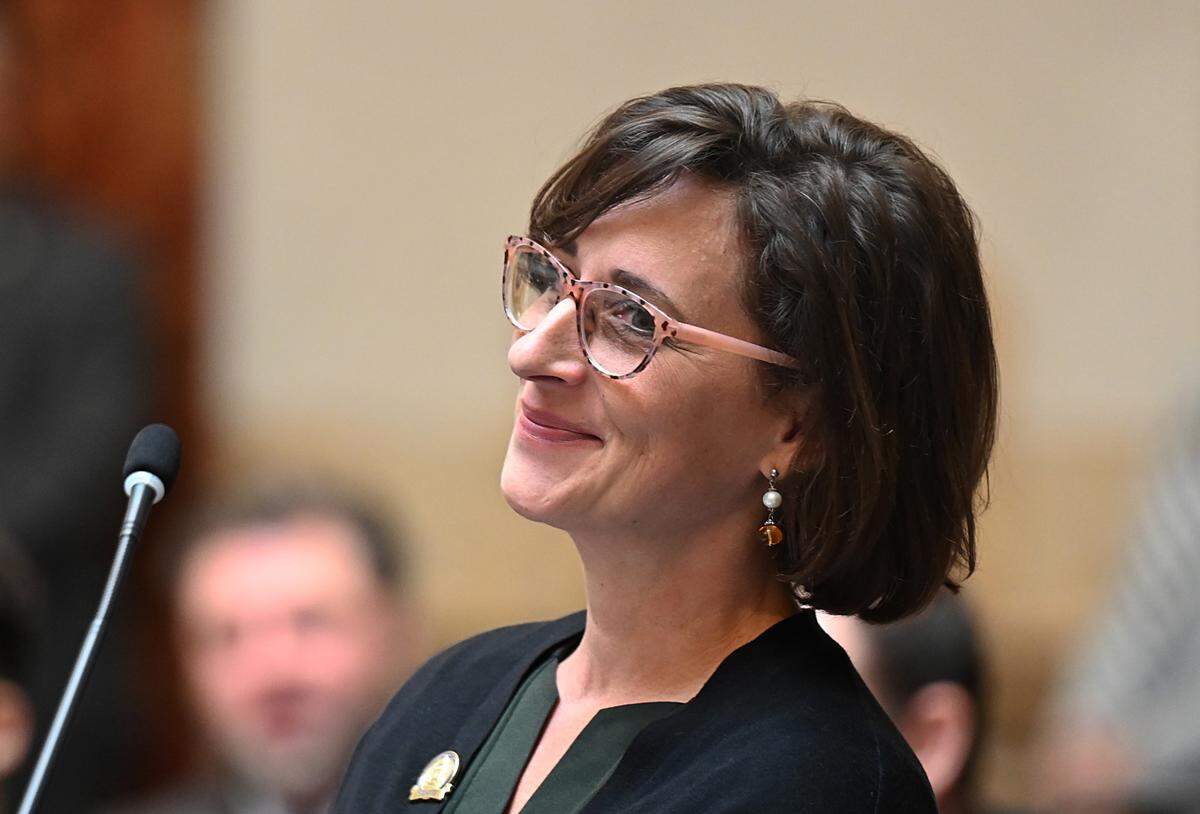
Tichenor filed legislation on Jan. 6, a new Senate Bill 181, that listed exceptions on what does not constitute “private electronic communication” that is prohibited between school teachers and coaches and students without explicit consent from the parent.
According to the bill’s language, private electronic communication is defined as “electronic communication that involves direct one-on-one or small group conversations that are only accessible to participants” and includes a personal email account, text messaging, social media and private electronic communication programs.
Among the list of exceptions include “virtual school instruction,” “electronic translation services” and “electronic communication in which a parent of a student is included as a participant or recipient,” among others.
The bill also creates an exception that private electronic communication can be used if there is belief an emergency exists that creates “an imminent risk to any person or property.”
The current law uses the term “unauthorized electronic communication,” which includes a personal email account, text messaging, social media or “other electronic and communication programs outside of the traceable communication system.”
The law does not apply to public schools and volunteers who are immediate member or legal guardians of public school children.
It can also forbid contact between a team coach to a player in their district. However, the law doesn’t clearly define whether a coach and student may communicate through unauthorized communications if the student is outside of their district.