
Budget, Medicaid, AI: 7 things to watch as the KY General Assembly begins

In many ways, we know what to expect from the 2026 legislative session.
In its biennial 60-day “long session,” the GOP-led General Assembly is constitutionally required to pass a budget. They have also discussed, and ultimately signaled they won’t pursue, another cut to the state’s personal income tax. We know, too, that they need to address federal cuts to both Medicaid and the Supplemental Nutrition Assistance Program.
But there are some unknowns.
For one, the legislature is convening in entirely different, much smaller, temporary chambers connected to the State Capitol Annex. The fact that there are no in-person accommodations for the public will change the pace of session days — long dominated by hours of page introductions and community member shoutouts — and has raised concerns among open government advocates.
Plus, the group of legislators may face some pressure on one of the hottest political topics of last year: redistricting. As of now, the timing of the Jan. 9 filing deadline seems to be stopping Frankfort Republicans from joining the wave of state governments redistricting for partisan advantage.
Unlike redistricting, there are some issues that have long been considered by the legislature that might see some movement in the coming months. We’ve summarized a few of those issues we anticipate coming up again, especially after a lot of hand-wringing last session and over the interim on rising prices for housing, data centers and energy, Medicaid, school choice and more.
Then there is the matter of a big push on social issues. Without fail in recent years, the Republican caucuses have pushed bills targeting a popular issue in national conservative discourse. It’s an open question as to which one or ones will rise to the top.
Money matters
Republicans appear likely to tighten the fiscal belt more than they’ve done in previous years.
The federal money pumped into the economy from the pandemic years has dried up, and income tax rates just decreased again on Jan. 1. State revenues are not in free fall, but they are, technically speaking, projected to be in a shortfall, meaning less revenue will come in than expected.
Spending was not much of an issue in the 2024 legislative session, when the legislature OK’d a $2.7 billion one-time package littered with individual projects. That was in addition to the roughly $15 billion recurring budget passed.
One other reason they’ll look to spend relatively less: they likely aren’t passing a bill to cut personal income tax again after missing “triggers” to do so, but they’re hoping to cut it next session.
“Whether or not we end up doing it, I would say this: I fully anticipate that the House, and probably the Senate too, are committed to budgeting to hit the next set of triggers. That’s going to require discipline and not spending all the money,” House Majority Floor Leader Steven Rudy, R-Paducah, told the Herald-Leader.
As of Jan. 1, Kentuckians pay 3.5% in state taxes on their personal income, down from 4%. When the Republican-led state legislature began its quest to slash taxes, the rate was 5%.
Expect more pushback on continuing the tax cut from both progressive legislators and the prominent think tank Kentucky Center for Economic Policy. The center has routinely warned against the cuts, claiming they will eventually lead to cuts to key public services like education, infrastructure and health care.
In a recent report, think tank staff said the drop from 5% to 3.5% means the state is taxing about $2.1 billion less than before. They also have polling claiming just 9% of Kentuckians say they’ve benefited from the tax cuts.
“Expensive tax cuts skewed to the wealthy aren’t helping workers and families get by. Kentuckians want real action on affordability and greater support for basic services like schools and health care. And they want lawmakers to tax the wealthy more to make that possible,” Executive Director Jason Bailey wrote in the report.
Tax credit scholarships
Federal legislation passed in 2025 could give Kentucky the opportunity to opt into a federal tax scholarship program.
U.S. House Resolution 1, also known as the ‘One, Big Beautiful Bill’ created a federal tax credit program that would allow people get one-to-one credit up to $1,700 every year for contributions to scholarship-granting organizations. The program begins on Jan. 1, 2027.
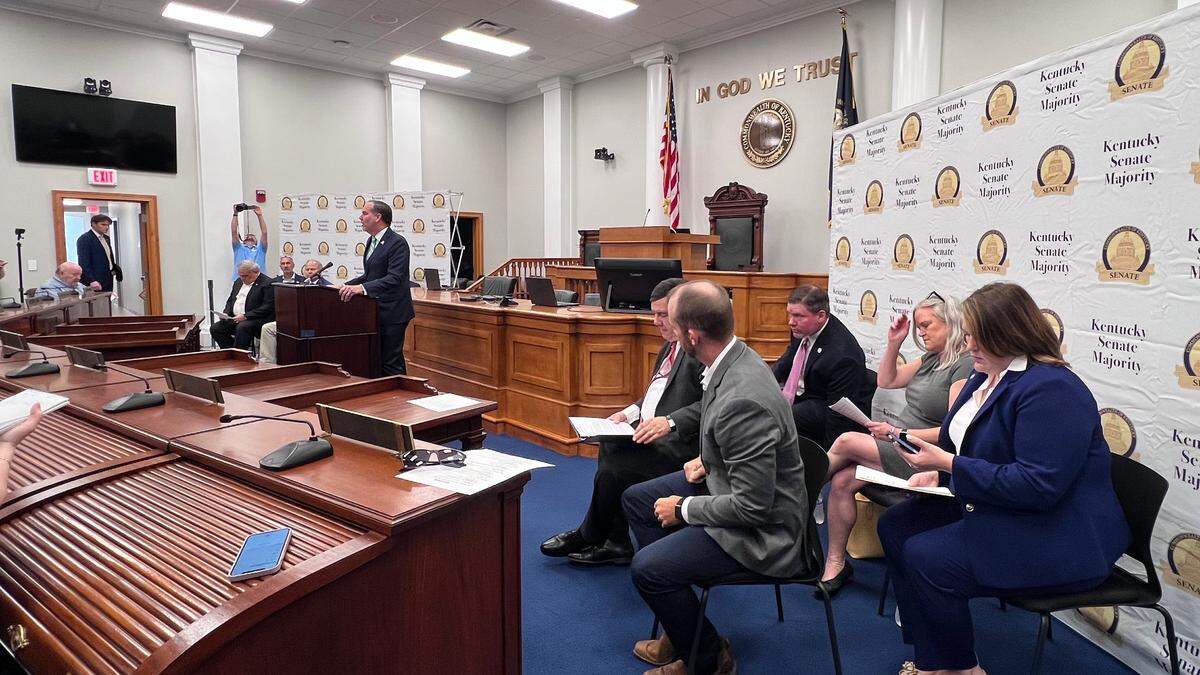
State Senate Majority Floor Leader Max Wise previously said at the Kentucky Chamber’s 2026 Legislative Preview in November lawmakers are waiting for the program’s regulations to be released, so they will “wait and see what the information is” to make appropriate decisions.
The federal program could bypass prohibitions in the Kentucky constitution dealing with public school funding.
In the state’s constitution, public tax dollars can only be used to fund “common schools,” which the Kentucky Supreme Court has interpreted as public schools when striking down laws the legislature passes that would create school choice options, like charter schools.
During the 2024 election, Kentuckians rejected a constitutional amendment that would have allowed state funds to be used outside the public school system.
Redistricting?
Some Republicans have expressed interest in drawing out the state’s lone Democrat in Congress, Louisville’s Morgan McGarvey. President Donald Trump himself put the screws to the Indiana state legislature to draw out a Democrat, helping the GOP in its fight to keep the majority of the U.S. House. That didn’t work, and it seems like a similar effort in Kentucky might face the same fate.
Leadership in both the House and Senate, with the budget top of mind and the candidate filing deadline looming, has mostly poured cold water on the idea.
Spokespeople for the state Senate have said there’s “around zero chance” it would happen and Rudy, one of the top House Republicans, told the Herald-Leader Monday he hadn’t discussed it with anyone.
Social issues
The last three sessions have featured major pushes on conservative issues big in national political discussion. This one could be no different.
In the Senate, Sen. Lindsey Tichenor, R-Smithfield, has been shopping a bill to stop diversity, equity and inclusion initiatives in K-12 schools, which appears to apply mostly to school districts in Fayette and Jefferson counties, the two largest in the state.
Those initiatives, commonly known by the acronym DEI, were the subject of a bill passed in 2025 limiting them in public postsecondary education institutions in Kentucky. A similar bill was hotly contested in 2024 and ultimately died in the Senate.
Democrats have said the bill sows division, but Tichenor claimed at a recent committee meeting that DEI programs are divisive and ineffective. She filed a similar bill last year that did not advance.
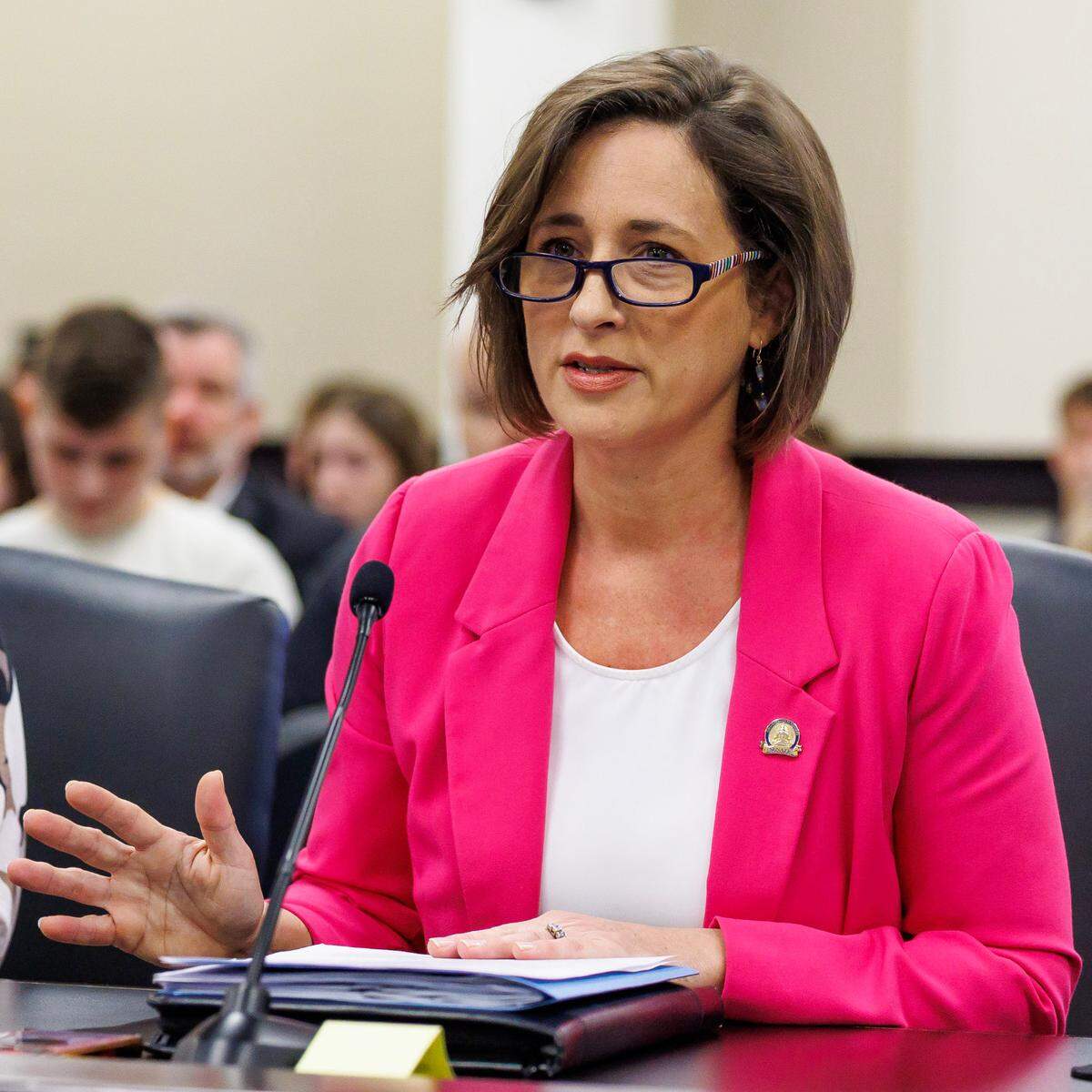
In the House, there’s been some early chatter regarding a push from Rep. Marianne Proctor, R-Union, to combat child grooming. Child grooming is when an adult builds trust or emotional dependence with a child with the goal of exploiting or abusing the child, often sexually.
The effort could be similar to one in Texas, which passed a bill on the topic in 2023. That law made grooming a felony in the Lone Star State, defined as when an adult intends to commit a sexual offense involving a child.
It was in a similar spirit that 2025’s Senate Bill 181, prohibiting K-12 teachers from contacting students via text or social media, got passage through the legislature. That bill is likely to be revised this year after complaints from teachers and students.
Task forces
Potential legislation stemming from task forces that met during the 2025 interim could also come up during session.
While the Disaster Prevention and Resiliency Task Force and Make America Healthy Again Task Force were new, the Air Mobility and Economic Development Task Force, Artificial Intelligence Task Force and Kentucky Housing Task Force received extensions to continue meeting beyond the 2024 interim.
Task forces are responsible for studying a specific topic on a temporary basis, and the groups release policy recommendations ahead of session.
The Disaster Prevention and Resiliency Task Force released its recommendations in December, which included creating a state resiliency office that would track data on post-disaster recovery and focus on mitigation efforts.
The group’s recommendations come after Kentucky experienced multiple natural disasters, including deadly tornadoes in Western Kentucky in 2021, historic flooding in Eastern Kentucky in July 2022, massive storms and flooding in April 2025 followed by deadly tornadoes in May 2025.
Meanwhile, the Make America Healthy Again, also known as MAHA, Task Force is suggesting the legislature focus on improving access for healthier foods and holistic health care options.
The task force, meant to bring national Make America Healthy Again principles from Health Secretary Robert F. Kennedy Jr. to Kentucky, also focused on improving physical health and wellness.
Among the policy recommendations include improving healthy meals in public schools, addressing purchasing healthy foods with SNAP dollars and strengthening physical education requirements for high school graduation.
Public education
It’s likely we might see some strong-arming between the state’s public education institutions and the legislature as the former asks for financial aid and the latter won’t pony up.
The state’s two largest school districts — Fayette County Public Schools in Lexington and Jefferson County Public Schools in Louisville — have faced financial turmoil this school year, both reporting multi-million dollar deficits.
Kentucky Senate President Robert Stivers has already said state leaders are considering policy that would put more oversight on the Lexington school district’s finances. Details of what the oversight looks like — whether in the form of reports to the state, funding formulas or some other mechanism — remains unclear.
The Manchester Republican’s comments come after local school officials said last summer the district faced a $16 million budget shortfall and depleted fund balance.
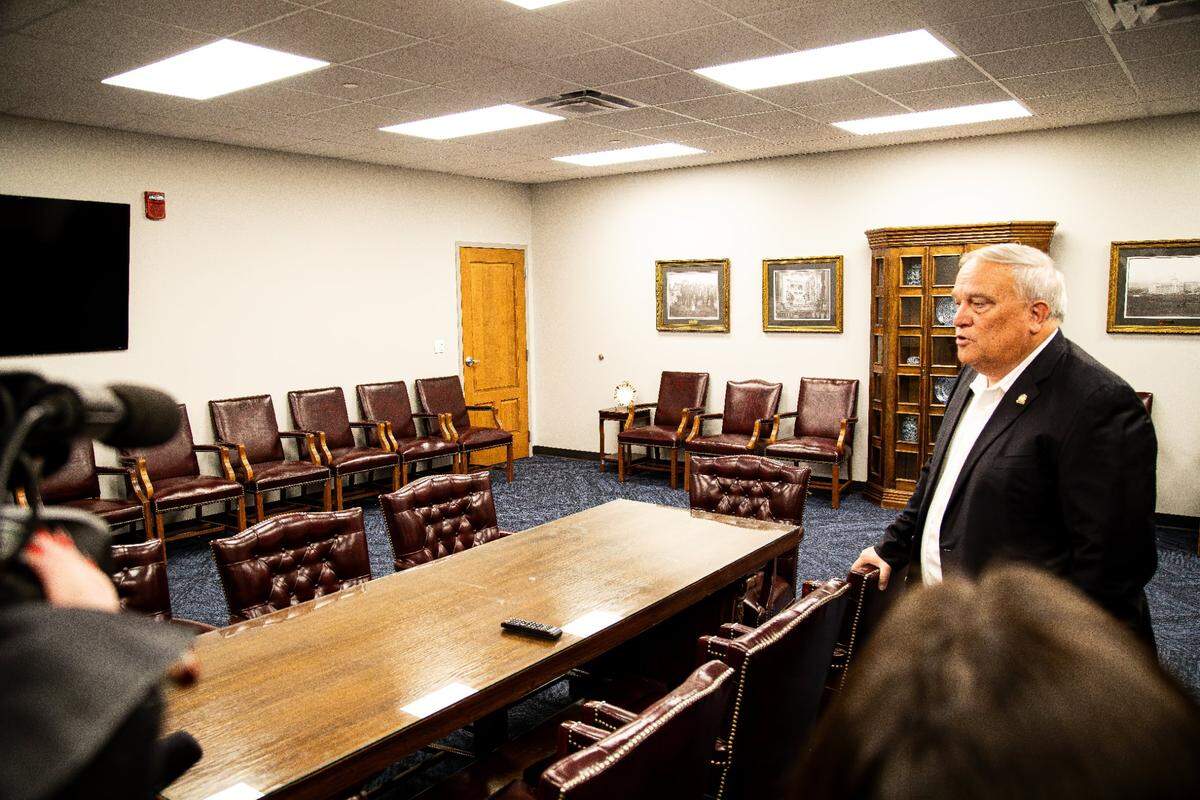
Since, Superintendent Demetrus Liggins has said the district has plans in place that are already working to right its budget and will continue reviewing program cuts to make up for losses.
And FCPS is not alone — JCPS reported a $188 million budget deficit.
Stivers said on WKYT’s Jan. 4 Kentucky Newsmakers show that oversight legislation “has a high likelihood of passing.” The suggested oversight legislation applies to Fayette County, Stivers said, since JCPS Superintendent Brian Yearwood started July 1 and hasn’t had time yet to correct course.
Other legislative leaders, including Sen. Chris McDaniel, R-Ryland Heights, who chairs the Senate Appropriations and Revenue Committee, hinted already they won’t prioritize finding money to pull both school districts out of a deficit. There likely won’t be extra money to cover for losses and shortfalls reported by the school districts, they’ve said.
AI, data centers & energy costs
In the interim, the Special Committee on Artificial Intelligence Task Force met monthly to discuss the developing technology and its use across the Commonwealth.
The group of legislators — co-chaired by Sen. Amanda Mays Bledsoe, R-Lexington, and Rep. Josh Bray, R-Mount Vernon — made 10 broadly-worded recommendations for their peers to form a more long-term plan for governing AI.
One of those recommendations includes amending the Kentucky Consumer Data Protection Act. Another asks the General Assembly to promote collaboration between health care service providers, state agencies and research universities for the shared use and study of Medicaid data for preventative care that could lower costs.
The AI task force’s members, and other legislators, are likely to spend time talking about data centers including their water and power usage. A data center is a dedicated facility for servers and other technology to collect, process and distribute data. It serves as the backbone for cloud services and artificial intelligence, the technology Republican policymakers want to make sure Kentucky remains competitive in.
While the GOP-led legislature has signaled its interest in keeping Kentucky in the AI conversation, it will be imperative, Stivers said in early December, that there needs to be more discussion about the costs associated with construction and the upkeep of data centers.
The burden of payment for additional infrastructure support ought to be on the companies using the data center and not residential consumers of the same water and electricity a data center would use, Stivers said.
Just one data center is being built in Kentucky in the South Louisville area, but the user of it has yet to be announced.
In July, the U.S. Department of Energy said four pieces of federal land, including the Paducah Gaseous Diffusion Plant, could be utilized to lower energy costs and power AI.
And in October, the Public Service Commission responsible for regulating the state’s utility rates and projects said Kentucky Utilities and Louisville Gas & Electric can move forward with plans to spend $3 billion on two natural gas power plants to support high-energy demand customers, namely data centers.
The increase of data center projects is in part a result of a 2024 policy that created a tax incentive program to attract companies to build in Kentucky, citing job creation and economic development benefits. The 2024 law targeted just Jefferson County, but was expanded in 2025.
.JPG)