Kentuckians could vote to change state constitution this fall. Here’s how
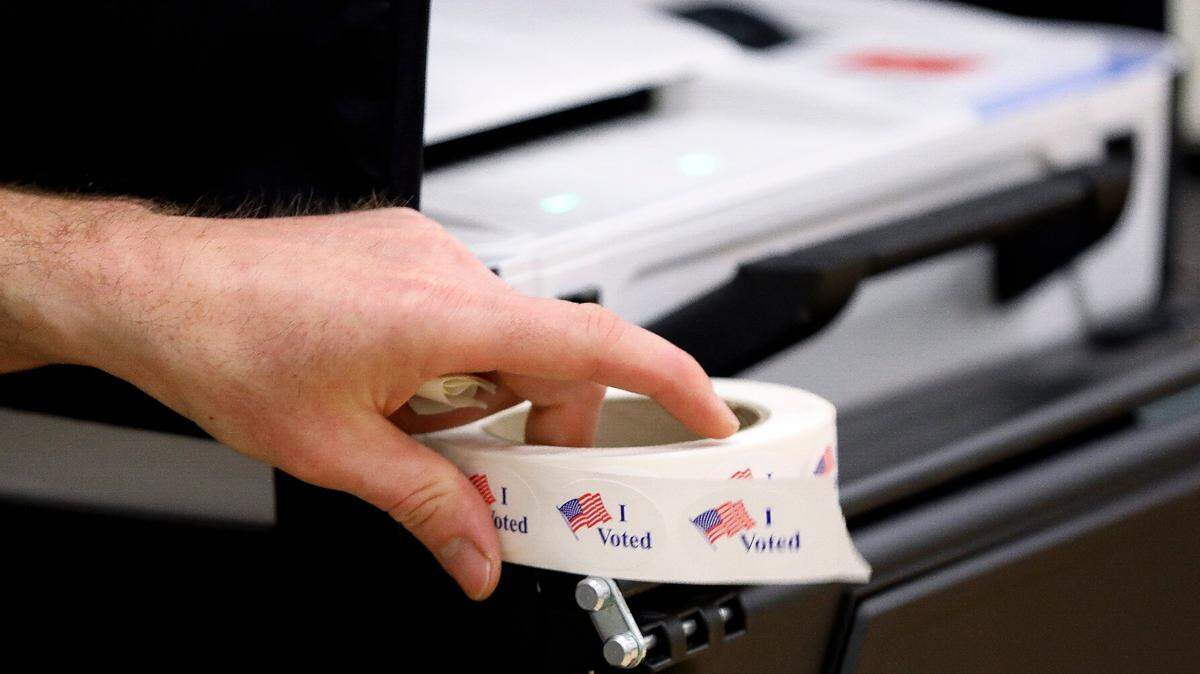
Kentuckians could have the chance to change the state’s constitution in November.
Lawmakers introduced around 40 bills during the 2026 legislative session to add constitutional amendment questions to the general election ballot in November. But before these proposals reach voters, they need to be approved by three-fifths of lawmakers in both legislative chambers; none have crossed that threshold as of March 9.
Those proposed changes to the state constitution then require a simple majority of support from voters to pass. Up to four questions can be on the ballot at once.
With a plethora of proposals filed, that doesn’t mean it will be easy for both chambers to decide which ones to add to the ballot — if legislative leadership agree on adding any at all.
“We don’t have the greatest track record of passing constitutional amendments here, so we’ll continue to have conversations about the things that we believe might benefit the commonwealth as a whole to see whether or not there’s anything we want to put on the ballot or not,” House Speaker David Osborne, R-Prospect, told reporters in January.
Kentuckians last voted on constitutional amendments in 2024: Amendment 1, which bans noncitizens from voting in local elections, passed, but Amendment 2, which would have allowed the state to fund private and charter schools, failed. The school choice amendment in particular was a Republican priority.
The GOP supermajority was also dealt a blow in 2022, when Kentucky voters rejected both proposed amendments put on the ballot: Amendment 1 would have allowed lawmakers to call themselves back into session, and Amendment 2 would have added a section stating abortion was not a protected right in Kentucky’s constitution.
Senate President Robert Stivers, R-Manchester, meanwhile said their caucus will have to negotiate with the House, and it’s hard to tell what will make it across the finish line.
“Both bodies may not agree that we do four,” Stivers said. “We may only do two or one or none, so we’ll have to if that, again, is another process, knowing that we have a constitutional limitation of only four on the ballot.”
While lawmakers filed a plethora of amendments, the Herald-Leader identified which one’s we’ll be watching closely this session:
Senate leadership looks to summarize constitutional amendments on the ballot

The Senate’s most powerful Republican wants to change how constitutional amendments are presented to voters.
Stivers filed Senate Bill 262, which would allow constitutional amendments to appear as a ballot question or “summary that clearly and accurately states the substance and effect of the proposed amendment.”
The bill is already making moves and passed out of the State and Local Government Committee, with Sen. Cassie Chambers Armstrong, D-Louisville, casting the only no vote on March 4.
Supporters of Stivers’ bill say it’s needed to put constitutional amendments in more understandable language so that voters won’t automatically check the “no” box.
“I would argue that the way we’re doing them now, it’s almost impossible to pass a constitutional amendment no matter how good it may be,” Sen. Greg Elkins, R-Winchester, said.
Opponents are concerned this bill is anti-transparency and will let lawmakers handpick a summary that isn’t accurate.
Kelsey Coots, a consultant who ran the campaign against the 2024 education amendment, previously said Kentuckians deserve to know what they’re always voting on.
“Allowing lawmakers to handpick a summary instead of printing the full amendment text on the ballot is a transparency problem, and it raises serious questions about who benefits when voters are kept in the dark,” Coots wrote in a statement.
The proposal comes after the Kentucky Supreme Court issued a ruling on this subject almost six years ago. In 2019, the Kentucky Supreme Court ruled against the “Marsy’s Law,” a constitutional amendment adding a new list of rights for crime victims, after voters OK’d it in 2018 because the full text wasn’t included on the ballot.
In 2020, Kentuckians approved the amendment with the full text.
House Speaker wants to let lawmakers call special sessions — again

Osborne is trying again to allow voters decide who can call for a special legislative session.
House Bill 8 would ask Kentuckians if they want to let the House Speaker and Senate President reconvene for up to 12 days total over no more than two additional sessions each year. Under the current constitution, that power is given to only the governor.
Democratic Gov. Andy Beshear last called a special session in 2022 to address massive flooding in Eastern Kentucky. A $213 million relief package with almost unanimous support was passed and signed into law by the end of the three-day special session.
The proposal also asks voters to eliminate the session’s required end dates, which is March 30 in odd-numbered years and April 15 in even-numbered years, and let legislators meet later in the year if three-fifths of each legislative chamber approve.
Beshear was critical of the amendment at a press conference Thursday afternoon.
“How about they actually use the time that they have?” Beshear said. “We are two-thirds through this session, and three bills have reached my desk. That is 40 of 60 days that if they would use, they wouldn’t need to call themselves into session again. “
This idea isn’t the first time it’s been pitched to voters. In 2022, the lengthy Amendment 1 asked Kentuckians to give this scheduling flexibility to the legislature.
Supporters viewed this bill as a way to help legislators be more adaptive to modern day problems, including natural disasters and economic crises. Critics saw it as a “power grab” from Republicans and targeting Beshear as a Democratic governor in a red state.
Nearly 54% of Kentuckians voted “no” on the amendment.
HB 8 has yet to get assigned to committee, but its cosponsors include all of House Republican leadership. Osborne filed a similar proposal in 2024, House Bill 4, but it never received a committee hearing.
Senate passes ballot measures surrounding gubernatorial pardons, property tax exemption

Some other constitutional amendments introduced may sound familiar.
Senate Bill 10 is from Sen. Chris McDaniel, R-Ryland Heights, which would halt a governor’s pardon powers during the final portion of their term.
The ballot measure would ask voters if they want to prohibit sitting governors from issuing pardons beginning 60 days before a gubernatorial election through Inauguration Day.
McDaniel’s bill passed the Senate with 36 members voting yes on Jan. 20. But the next hurdle will be garnering at least three-fifths support from the House. While McDaniel’s amendment has passed the Senate in previous sessions too, it has consistently gotten stuck in the House.
Osborne told reporters on Jan. 14 it hasn’t met the threshold to pass in previous years, and the caucus will continue to discuss the measure during session.
The Senate also passed Senate Bill 51 from Sen. Mike Nemes, R-Shepherdsville, which would ask voters if they want to limit property taxes for Kentuckians who are at least 65 years old.
The legislation would freeze the taxable value of seniors’ homes at the given value when the resident turns 65 or when the home is acquired if that occurs later on.
SB 51 passed the Senate unanimously. Two similar measures have also been filed in the House by Rep. Wade Williams, R-Earlington, and Rep. Daniel Grossberg, D-Louisville. House Bills 235 and 317 pose a similar question as Nemes’ and have been assigned to the House Elections, Constitutional Amendments, and Intergovernmental Affairs Committee.
Term limits for some office holders
Some lawmakers are hoping to limit the number of terms elected officials can serve in office.
House Bill 288, which was filed by Rep. Kim Banta, R-Fort Mitchell, would ask Kentuckians if they want to prevent state senators from serving more than four terms in office and state representatives from serving more than six terms. There are currently no term limits for state legislators in Kentucky’s constitution.
A state representative’s term is two years, and a state senator’s term is four years.
Meanwhile, Rep. Kim Holloway, R-Mayfield, introduced House Bill 413 that would limit the governor and lieutenant governor to serving up to two terms in office. While the state constitution does not limit the number of terms a governor can serve, it does limit someone from serving more than two consecutive terms, or eight years in office, in a row.
Restoration of voting rights
There’s also a renewed effort to restore voting rights in the state constitution for people convicted of some felonies.
In 2019, Beshear signed an executive order that restored voting rights to more than 140,000 non-violent felons. A future governor could nullify Beshear’s executive order, leading some lawmakers to push for ballot measures that would protect the restoration.
Senate Bill 80, which was filed by Rep. Jimmy Higdon, R-Lebanon, would ask Kentuckians if they want to automatically restore voting rights for people who have been convicted of a felony “not involving treason, bribery in an election, election fraud, a violent felony offense, a felony sexual offense, or a criminal offense against a child” once their sentence is completed.
Sen. Keturah Herron, D-Louisville, who has previously filed similar legislation, is a co-sponsor of the bill. SB 80 passed the Senate on a 35-3 vote. Sen. Danny Carroll, R-Paducah, Sen. Phillip Wheeler, R-Pikeville and McDaniel voted no.
Meanwhile, Rep. George Brown Jr., D-Lexington, filed House Bill 420, which proposes changing the state constitution to allow people who have been convicted of felonies “not involving treason, bribery in an election, or election fraud” to have their voting rights automatically restored five years after their sentence is completed.

Medicaid expansion
Some Democrats are hoping to protect Medicaid amid concerns that federal cuts will harm rural hospitals and Kentuckians.
Rep. Lindsey Burke, D-Lexington, is the primary sponsor behind House Bill 265, which would add two new sections to the state constitution surrounding the Medicaid program.
They would enshrine Medicaid expansion coverage and prohibit Kentucky from imposing “greater or additional burdens or restrictions on eligibility or enrollment standards, methodologies or practices on anyone who is eligible for Medicaid under Kentucky law.”
Armstrong, the Louisville Democratic senator, filed similar legislation, Senate Bill 93, that also protects Kentucky’s Medicaid expansion.
“Kentuckians should not have to live with the constant fear that their health care can be taken away because of shifting political winds,” Chambers Armstrong said in a press release.
“Medicaid expansion has been one of the most successful public health policies in our state’s history,” she continued.” It has saved lives, strengthened rural hospitals, and helped working families stay healthy enough to keep their jobs and care for their children. This legislation is about stability, dignity, and putting people ahead of politics.”