KY legislators have a new approach to cracking down on metal, copper wire thefts
AI-generated summary reviewed by our newsroom.
- Bill would license scrap dealers, require background checks and deny permits for recent felons.
- Dealers must log purchases in a statewide database with ID, plate and photo within two days.
- Failure to report creates presumption of knowledge and a Class B misdemeanor for dealers.
Thieves continue to strip their communities of valuable metal they sell to scrap dealers despite the Kentucky legislature’s efforts to hit the criminals with stronger penalties.
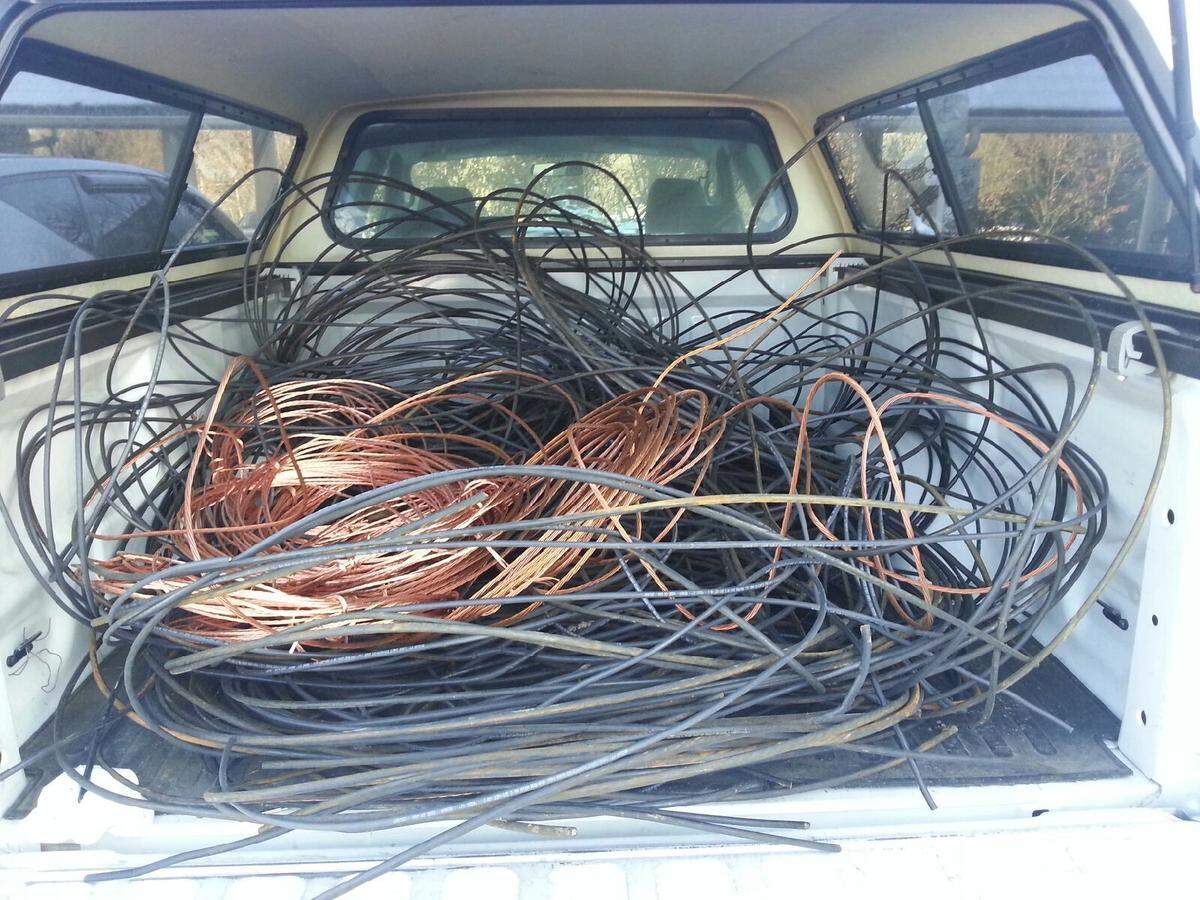
In January, for example, someone stole 1,500 feet of copper cable along U.S. 25 in Laurel County, knocking out internet and 911 service for hours. Over a recent 12-month period, according to one industry report, Kentucky saw 487 acts of theft and vandalism incidents against internet service provider lines at a cost of $3.7 million.
Now, a bill headed to the Senate floor is trying a new tactic: It’s targeting the people who buy the metal.
Senate Bill 291 would require scrap metal dealers to undergo a criminal background check by Kentucky State Police and be licensed by the state Motor Vehicle Commission. Licenses would be denied to anyone with felony convictions in the last five years for theft, burglary or drug offenses.
Scrap metal dealers would have to report their transactions in a state database within two days, along with a photo of the seller’s driver’s license, vehicle and license plate and a photo of what they sold. Dealers couldn’t buy metal from anyone listed on a registry of convicted thieves, which would be provided by law enforcement.
Failing to report metal purchases in the database would legally establish that a dealer knew the metal was stolen, making it a Class B misdemeanor theft offense.
The bill does not say how much scrap metal dealers would pay for a license or include a fiscal note estimating how much the new regulatory system might cost. It suggests the Motor Vehicle Commission could “coordinate” with police to enforce the new rules.
The scrap metal industry will cooperate with the proposal, a lobbyist told the Senate Transportation Committee on Wednesday.
“I have to say that the bill does present significant changes, some challenges for our operators and some costs associated with that in terms of the operational procedures we’re going to have to do,” said lobbyist Rebecca Hartsough, who represents the Recycled Materials Association and River Metals Recycling.
“But we also remain a committed partner to solving this crisis, and it’s what’s become a public safety issue,” Hartsough said.
The committee unanimously approved the bill, which is sponsored by state Sen. Brandon Storm, R-London.
Another lobbyist, this one for Charter Communications, said the telecommunications industry’s lines are often targeted by metal thieves around Kentucky. Small businesses, schools, hospitals and other places suddenly lose service once their lines are cut, said Tyler Campbell, Charter’s director of state government affairs.
“When these things are stolen, services can go down. Critical services can go down to many of these institutions,” Campbell said.
“We just feel that this bill lays out clear lines of authority, strong enforcement mechanisms and greater accountability,” he said. “It’s going to help ensure that bad actors can’t exploit gaps that are in the current system.”
The General Assembly last year passed Senate Bill 64, also sponsored by Storm, in an attempt to reduce copper theft by declaring that cable, telephone, broadband and electrical lines “critical infrastructure.” That bill brought stronger felony penalties for anyone who tampers with them.
In 2022, lawmakers passed Senate Bill 114, requiring anyone selling a catalytic converter from a vehicle to produce personal identification, proof of ownership and a receipt for the replacement. Catalytic converters, which are part of a vehicle’s exhaust system, contain valuable metals and often are targeted by thieves.
Over the preceding decade, lawmakers ordered scrap metal dealers to register with the Public Protection Cabinet; required payment by check instead of cash for certain “restricted” metal items, like manhole covers, light poles, guardrails and street signs; and gave the attorney general the power to prosecute unlawful sales to scrap metal dealers.
But thieves keep clanking their way to the scrapyards.
In 2022, the Kentucky Transportation Cabinet reported up to 66,000 feet of copper wire stolen from roadway lighting poles and junction boxes along interstate highways just around Louisville. Two years later, in 2024, the Louisville Metro Police Department said it responded to 328 reports of metal theft inside the city.
The city of Louisville responded to the thefts by creating a critical infrastructure task force to track down and charge people stealing copper wire.
That was an inspiration for the new Senate bill, said Campbell, the lobbyist for Charter.
“We’re trying to take that statewide, because, as Sen. (Phillip) Wheeler knows, in Pikeville, it’s the No. 1 county in the entire United States as a victim of copper thefts,” Campbell said.
Pike County would happily forfeit such a “prize,” said Wheeler, R-Pikeville, while voting for the bill.
“So I do appreciate your efforts to combat this, and hopefully we can report back after this bill passes that maybe I can fall off the top spot,” Wheeler said.