KY lawmakers push bills to save road, gun and pesticide industries from lawsuits
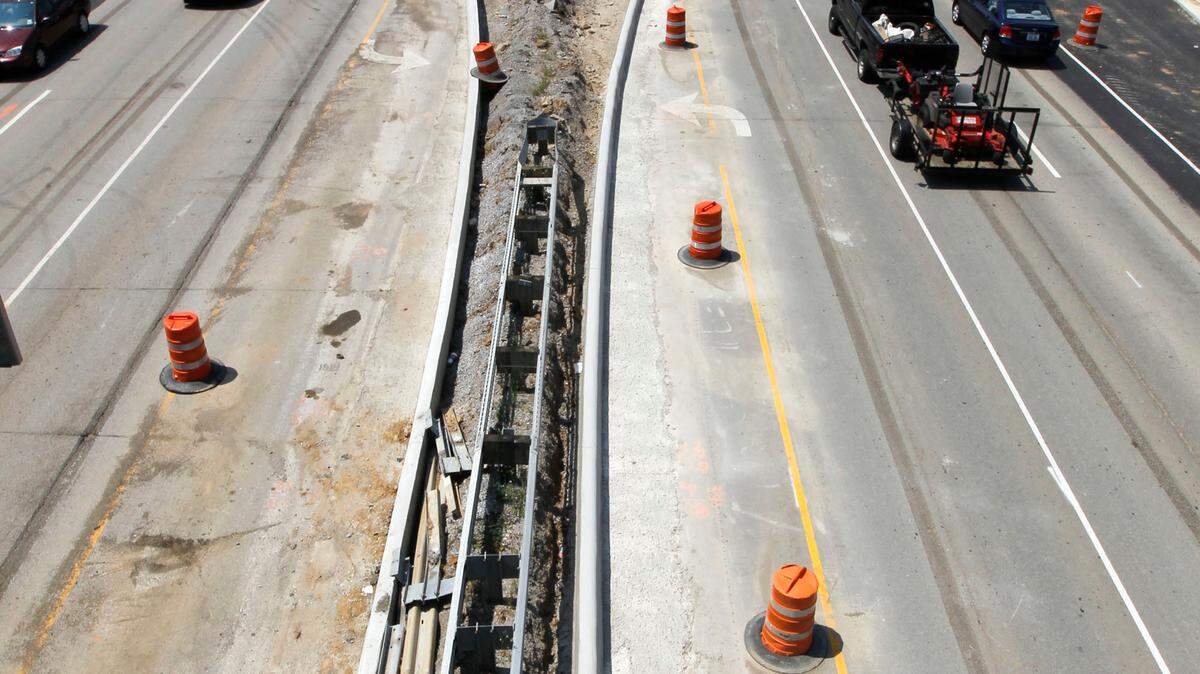
Kentucky lawmakers have been pushing several “immunity bills” this month to shield specific industries — guns, pesticides and road construction — from lawsuits filed by people who say those industries harmed them or their loved ones.
Senate Bill 195, for example, awaiting action in the House, would help protect road contractors from lawsuits filed by motorists if contractors stick to specifications handed to them by local or state governments that hire them.
The bill is sought by the Kentucky Association of Highway Contractors, which has given nearly $60,000 in campaign donations to state politicians in Frankfort over the past year, including the House speaker and the Senate president. The group also has spent nearly $25,000 lobbying the legislature in that time.
Road construction firms are unhappy about a series of large jury verdicts in recent years, awarding tens of millions of dollars in damages, following fatal crashes around construction zones.
Lawmakers’ attempts to insulate different industries comes despite sections of the state Constitution that guarantee Kentuckians access to the courts when they are injured and the right to jury trial, describing these rights as “sacred.”
As a result, it’s not clear the immunity bills would survive a constitutional challenge if they become law.
In December, the Kentucky Supreme Court handed the legislature a defeat by putting limits on a COVID-19 legal liability shield the General Assembly crafted to help nursing homes and other businesses that operated during the pandemic. A negligence and wrongful death lawsuit against a nursing home was allowed to proceed.
“In my opinion, the most recent version of these bills that I’ve seen, they probably all are unconstitutional,” said Jay Prather, a partner at the Lexington law firm of Garmer & Prather and an adjunct professor who teaches about liability at the University of Kentucky College of Law.
“Kentucky has a long history of trusting the ordinary people who sit on juries to make important decisions using all of the facts in front of them,” Prather said. “Immunity bills are the legislature’s attempt to substitute their own judgment for the judgment of juries.”
But another civil liability expert said he isn’t so sure the legislature’s efforts are doomed.
Richard Ausness, a UK professor emeritus of law, said the proposed liability shield for road contractors, for example, has its roots in existing common law recognized by courts around the country.
“Under the government contractor specification doctrine, if you follow the specifications the government provided you — and many of those cases arose in connection with road contractors — then you’re immune,” Ausness said. “If they depart from the contract specification, then they don’t get the immunity.”
The legislature apparently wants to write that doctrine into Kentucky law, Ausness said.
Kentucky’s Constitution guarantees people access to the courts, but that doesn’t mean nobody can be made immune from legal liability, Ausness said.
“There are plenty of immunity provisions,” he said. “The state, of course, has immunity, or at least, it channels litigation through a statutory procedure (the Board of Claims, which caps awards at $250,000). The fact that they’re immunizing something or someone, I don’t think that’s necessarily in conflict.”
Protecting the road builders
The Senate voted 31-to-5 to approve Senate Bill 195 on March 19 and send it to the House.
The sponsor, state Sen. Craig Richardson, R-Hopkinsville, said the bill would create a “rebuttable presumption” that a road contractor won’t be held liable for claims of property damage, injury or death arising from work it performed if it faithfully followed the plans and specifications.
That presumption could be challenged, but a plaintiff would have to prove that it was more likely than not that the road contractor in some way failed in its job or was responsible for the dangerous defect.
The bill also would allow a plaintiff’s case to be weakened if it’s established they were speeding, driving drunk or driving while using a phone at the time of the crash in question.
“This legislation does not eliminate claims, does not cap damages and does not protect negligent actors,” Richardson said. “What it does is provide a structure and predictability and how liability is evaluated in our court system, ensuring that responsibility is placed where it truly belongs.”
One of the five senators to oppose the bill, Democrat Cassie Chambers Armstrong of Louisville, said she trusts juries “to get it right” when presented with all the facts.
“We’ve seen a lot of big verdicts involving road contractors in recent years,” Armstrong said.
“However, these big verdicts have been because there have been big damages,” Armstrong said. “We have seen instances where people have died, people have died in front of their children. People have died not just because of negligence but because of gross negligence on the part of parties. And so I’m not sure I understand exactly why we are changing our justice system for this issue.”
Helping the gun and pesticide industries
The other immunity bills the legislature is moving this session include House Bill 78, to expand on existing state and federal liability protections for gun manufacturers and gun dealers as a lawsuit continues in Louisville over the 2023 mass shooting at the Old National Bank that left five people dead and eight wounded.
The bill also would punish people who sued gun-related businesses in violation of the liability shield, including the dismissal of their lawsuits and civil penalties that could be enforced by the attorney general.
The House voted 75-to-17 to approve House Bill 78 on March 17 and send it to the Senate, where it’s assigned to the Senate Judiciary Committee.
There also is Senate Bill 199, which critics say would shield the pesticide industry from failure-to-warn health and environmental claims against their products even as the U.S. Supreme Court prepares to hear a major case against Monsansto’s weedkiller Roundup.
In that case, John Durnell of St. Louis sued Monsanto in 2019, blaming it for his contracting non-Hodgkin lymphoma, a type of cancer. Durnell claims the company failed to adequately warn consumers of the risks of cancer from using a glyphosate-containing product, like the one it sold.
Under Senate Bill 199, the federally required warning label on pesticides “shall be deemed a sufficient warning label” to alert consumers to any of the pesticides’ potential hazards.
The Senate voted 24-to-11 to give final passage to Senate Bill 199, on March 19, concurring with changes made in the House, and sent it to Gov. Andy Beshear’s desk for his signature or veto.