KY lawmakers trim broad and costly crime bill to focus on Ronald Exantus case
AI-generated summary reviewed by our newsroom.
- Senate trims House Bill 422 to six pages focusing on reentry and insanity.
- Bill removes repeat violent offenders and prior violators from reentry eligibility.
- Bill bars split insanity verdicts and allows involuntary hospitalization after sentence.
Kentucky lawmakers on Thursday scaled back an expensive anti-crime bill to focus narrowly on the controversial criminal case of Ronald Exantus, who stabbed 6-year-old Logan Tipton to death in Versailles in 2015.
“There’s nothing we can do about Logan,” Dean Tipton, the boy’s father, told the Senate Judiciary Committee, “but this is about protecting the next family from going through the heartache that we’ve been through over the last 10 or 11 years.
“No family should ever have to walk down the street and fear seeing their child’s murderer on the sidewalk. This law will help protect families across Kentucky,” he continued.
The Senate committee unanimously approved a substitute version of House Bill 422 and sent it to the full Senate. The bill would be called “Logan’s Law.”
As passed by the House on Feb. 24, the 28-page bill was a sprawling measure that would have — among other things — lengthened prison sentences for many hundreds of people serving time for serious crimes. But the cost of the bill, estimated by the state Department of Corrections, would have been hundreds of millions of dollars over coming years.
Kentucky spends more than $830 million a year on its Department of Corrections.
The much simpler six-page bill approved by the Senate committee Thursday focuses on two objectives.
It further restricts who’s eligible for the state’s mandatory reentry supervision program, eliminating repeat violent offenders and those sent back to prison for previous violations of early release. It also instructs the corrections department to publish an annual report on the early release program.
Additionally, it sets new rules for insanity pleas in criminal cases, establishing that a jury can’t find a person was sane for one part of a criminal act but insane for a different part. It also allows for the involuntary hospitalization in a psychiatric facility of a person, once their sentence ends, if they were found guilty but mentally ill and a treating physician decides they need further treatment.
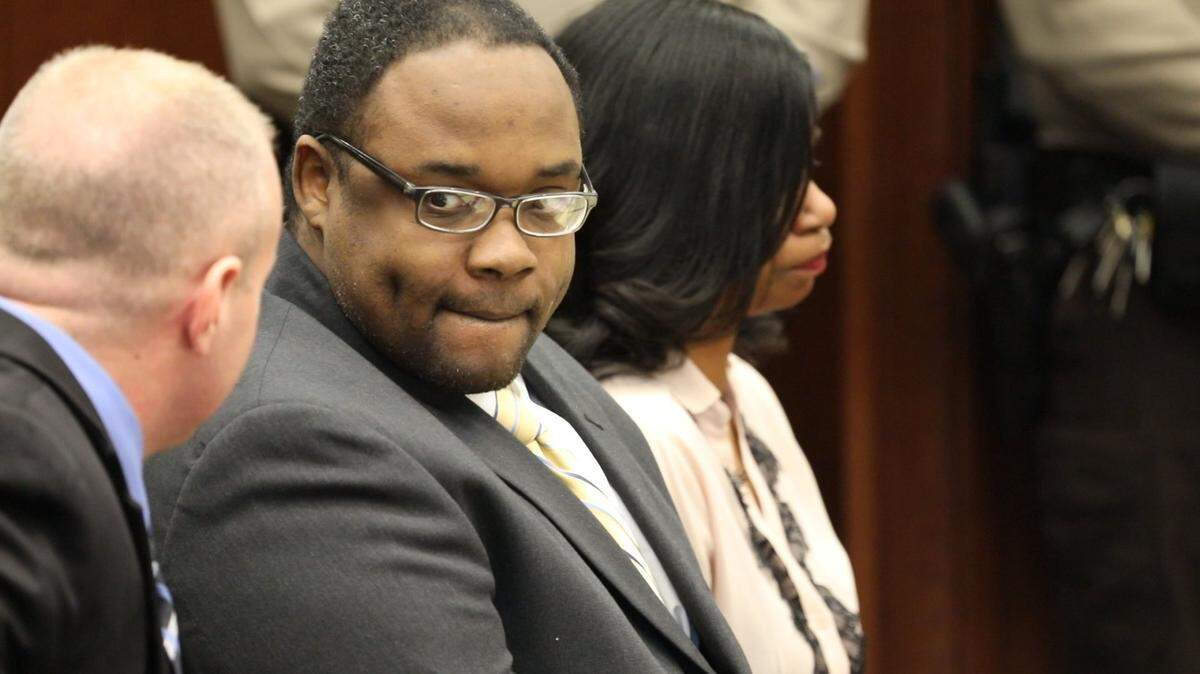
Both of these changes refer to how Exantus, a dialysis nurse from Indiana, moved through the court system after he killed Logan Tipton.
A Fayette Circuit Court jury found Exantus not guilty by reason of insanity on a murder charge in Logan’s death, absolving him of criminal responsibility, but guilty of second- and fourth-degree assault in his attack on other family members in the Tipton home.
The split verdict was appealed to the Kentucky Supreme Court, which upheld it.
Further outraging the community in Woodford County, where Logan lived, Exantus was released from prison last October on mandatory reentry supervision after serving less than half of his 20-year sentence. He was arrested in Florida 12 days later for violating the terms of his release by failing to register as a convicted felon.
Mandatory reentry supervision is reserved for inmates who are — like Exantus — denied discretionary parole by the state Parole Board. When lawmakers created the program 15 years ago, they said they wanted these inmates to have some supervision and guidance when they return to the community rather than just walk free.
“The purpose of House Bill 422 is to bring some sanity to the insanity statutes, to build on the Safer Kentucky Act passed in 2024, to put guardrails on mandatory early release statutes, disallow juries from splitting the insanity defense, as it did in this case, and protect our citizens by getting those suffering from mental illness the help they needed,” the bill’s sponsor, state Rep. Daniel Fister, R-Versailles, told the Senate committee.
Voting for the bill, state Sen. Phillip Wheeler, R-Pikeville, said the split verdict in the Exantus case has always sounded like a procedural error to him.
“As an attorney, I struggle with how a person could be found to have the mens rea (guilty mind) intent to commit assault but not to commit murder,” Wheeler told Dean Tipton, sitting at the witness table. “It sounds like maybe that some (jury) instructions weren’t given properly or something. But that’s clearly an injustice done to your son’s memory.”