
KY voters will get to decide if governor’s pardon powers should be restricted
Voters will decide this fall whether to restrict the Kentucky governor’s pardon powers.
Senate Bill 10, which proposes a constitutional amendment to prevent the governor from pardoning someone 60 days before an election and up until inauguration, was approved by the state House of Representatives and Senate Wednesday.
The proposal will appear on the November 2026 ballot.
Sponsored by Sen. Chris McDaniel, R-Ryland Heights, the proposed amendment would halt a governor’s pardon power during the final part of their term. The state constitution spells out pardon powers for the executive, giving the governor the ability to issue them and commute sentences.
McDaniel has repeatedly tried to pass some version of the bill, but it has consistently gotten stuck in the House.
In a statement following final passage, McDaniel thanked his colleagues for sending the proposal to the ballot so voters could decide for themselves if they “want unchecked gubernatorial pardon power to operate with greater accountability and within more reasonable parameters.
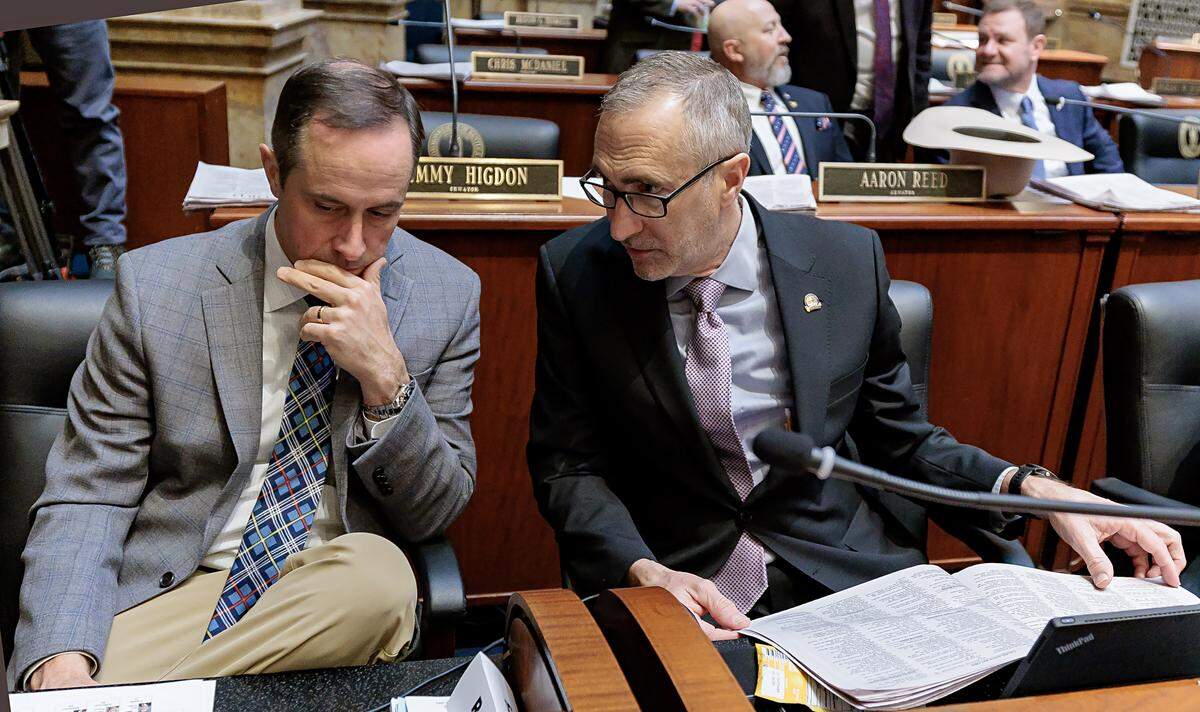
“My message to Kentucky voters is simple: If you were outraged by the heinous late-hour pardons of the past, take those motivations to the ballot box,” McDaniel said. “Let’s reform our state constitution to better respect the will of Kentucky’s justice system.”
Though McDaniel doesn’t name former Gov. Matt Bevin, in his final days in office, the Republican governor issued more than 400 pardons, including to violent offenders convicted of homicide, child rape and to some whom Bevin had political and financial connections.
In his weekly news conference Thursday, sitting Gov. Andy Beshear said he understands the ballot measure because of Bevin’s series of pardons.
“The pardon power can be abused, but I don’t think we ought to take what one governor and almost one governor alone did that was horrendous and change the law simply because of that,” Beshear said. “I think we ought to elect better governors. We ought to elect people who have better judgment. We ought to elect people that don’t believe in conspiracy theories.
“But I get it. I mean, I don’t consider this an attack on me. I don’t think they’re doing this because I’m a Democrat,” he continued. “I think they’re doing this because Matt Bevin pardoned some really awful people showing some really bad judgment.”
This session, there were several other bills filed to add constitutional amendment questions to the general election ballot in November.
One would allow constitutional amendments to appear as a ballot question or a summary of the amendment. Another would have asked Kentuckians if they wanted the Speaker of the House or the Senate President to convene a special legislative session, instead of the power solely lying with the governor.
Those bills did not make it far enough to receive final passage.
Bills that propose constitutional amendments need to be approved by three-fifths of lawmakers in both chambers before they reach voters. The governor cannot veto constitutional amendment bills.
For passage in the ballot box, a simple majority of support is required.
This story was originally published April 1, 2026 at 9:39 PM.
.JPG)