
KY lawmakers override Beshear vetoes on election laws, Medicaid oversight, more
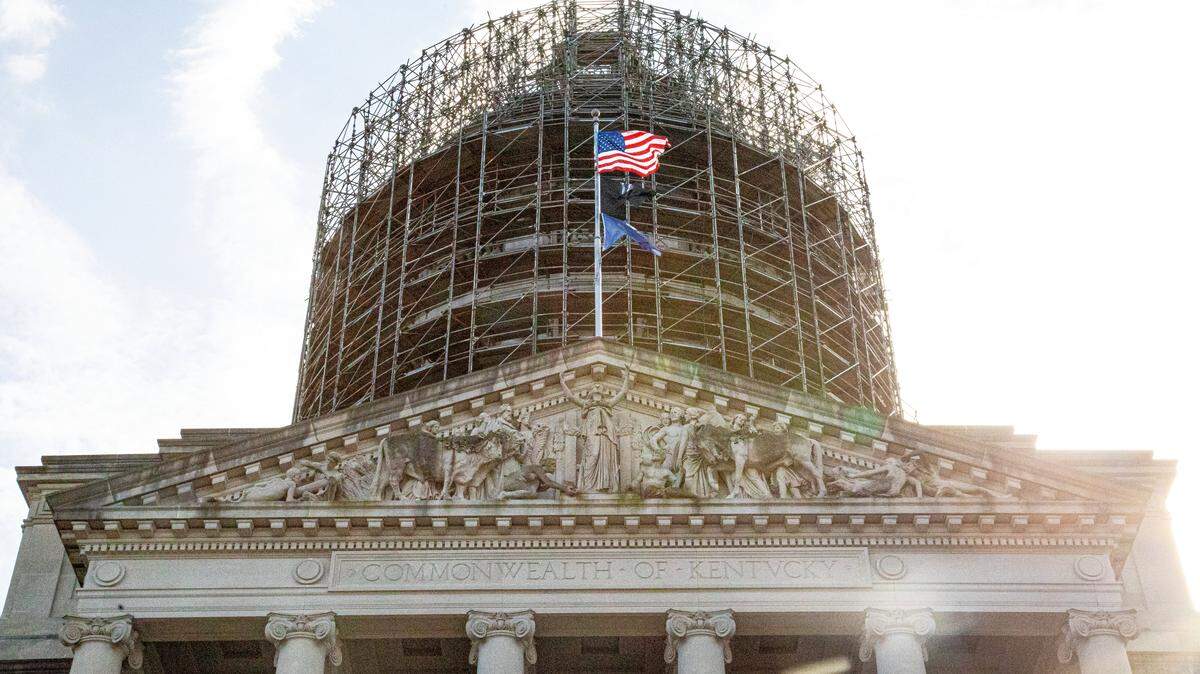
The Kentucky General Assembly overrode Gov. Andy Beshear’s vetoes of and gave final passage to bills that make changes to election laws, increase Medicaid oversight, expand liability protections for gun dealers and more.
In the final two days of the 2026 legislative session — April 14 and April 15 — the legislature’s main focus is overriding the more than two-dozen vetoes Beshear issued during a 10-day period. With a Republican supermajority in both the House and Senate, the GOP has the votes to override whatever it chooses.
The final two days are also fair game for legislators to pass more policy, but they forfeit the opportunity to override complete or line-item vetoes the state’s Democratic governor may issue after they adjourn.
Here’s what bills the legislature decided to override Tuesday:
Senate Bill 4: School board membership

Senate Bill 4 changes board membership for the largest school districts in the state, Jefferson County Public Schools and Fayette County Public Schools, including reducing the number of seats from seven to five in JCPS. The FCPS school board already has five members.
The bill also prohibits Fayette County School Board Chair Tyler Murphy from running for reelection due to a provision barring school board members from teaching in another district. Murphy is a Boyle County teacher. His term ends this year, and he has yet to file for reelection.
Sen. Steven West, R-Paris, is the bill’s sponsor and previously confirmed with the Herald-Leader the bill does not affect Murphy from finishing his term.
In Beshear’s veto message, he said the bill violates the Kentucky Constitution “by attempting to control common schools.”
“Decisions regarding reorganization of these boards of education and all others across Kentucky should be made locally by the people who live there, not the General Assembly in Frankfort,” Beshear said.
The Senate overrode the veto on a 30-8 vote. All six Democrats voted no, while Sen. Brandon Smith, R-Hazard, and Sen. Robin Webb, R-Grayson, crossed party lines. The House concurred and overrode the bill on a 78-19 vote, also along party lines.
Senate Bill 59: School districts ballot questions
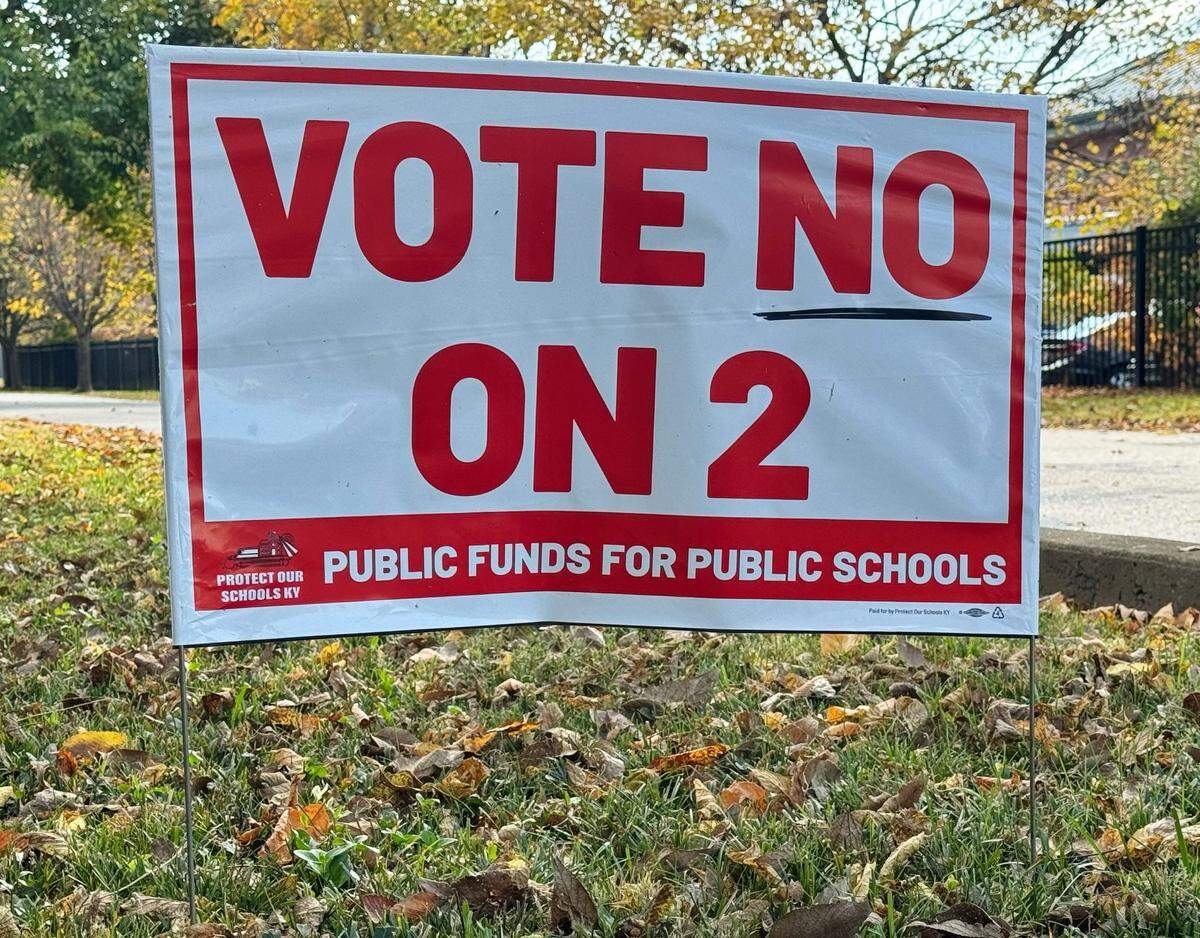
Senate Bill 59 would levy criminal penalties on those who use tax dollars to advocate for or against a public question on the ballot. That includes constitutional amendments, which have to be voted on by the public in order to pass.
The bill would subject violators to fines, and they also could be found guilty of a misdemeanor. The bill’s sponsor said in January he introduced the bill because many lawmakers saw superintendents and school officials advocate against Amendment 2 in 2024, a school choice ballot measure.
While Kentucky law already prevents tax dollars from being used to advocate for or against a public question, adding enforceable penalties is a necessary safeguard, the sponsor said.
Beshear said he vetoed the bill because it violates the First Amendment.
The Senate overrode the veto on a 31-7 vote. All six Democrats voted no, with Webb also crossing party lines. The House concurred and overrode the bill with a 79-19 vote.
Senate Bill 77: Ibogaine
Senate Bill 77 would create a framework to fund and conduct clinical trials of ibogaine, an experimental psychedelic drug to treat addiction.
The bill would set up a public-private partnership for development of ibogaine — which can cause hallucinations and intense physiological symptoms — reportedly resolves many addiction and mental health issues when used under the supervision of a physician.
Beshear said he vetoed the bill because “it would send state taxpayer dollars to companies conducting clinical trials of ibogaine.”
“The bill picks one treatment and one drug, and not a class of potential treatments or drugs,” Beshear said. “This raises the concern that this legislation is meant to pay a specific company.”
The House overrode the veto on a 77-18 vote, and the Senate overrode the veto on a 31-6 vote.
Senate Bill 173: Increased Medicaid oversight
Senate Bill 173 creates a process for lawmakers to find what it would consider to be deficient sections of the state’s health plan that is submitted to the federal Centers for Medicare and Medicaid Services by the executive branch.
Beshear called the bill a “legislative power grab.”
“Through Senate Bill 173, the General Assembly once again ignores the clear ruling of the Kentucky Supreme Court in 1984 that filing regulations like those to implement these state health plans are executive branch functions that the legislature cannot interfere with,” Beshear wrote in his veto message.
The Senate overrode the veto on a 32-6 vote, with all Democrats voting no. The House concurred and overrode the bill with an 80-19 vote.
House Bill 2: Changes to Medicaid
House Bill 2 makes sweeping changes to the way Medicaid patients pay for care. The governor vetoed portions of it that would have required Medicaid patients be charged copays and would have added a work requirement — a process by which recipients show proof of “community engagement” for three months before attempting to renew their coverage.
Beshear took issue with copayments and said they would “deprive the Commonwealth of a significant amount of federal funds available to Kentucky’s health care providers, since copayments are not an eligible state share to draw down matching federal dollars.”
The Senate lowered copays in its work to get the bill passed, but Beshear said it was still “overly prescriptive and limits the flexibility of the Department for Medicaid Services to design cost-sharing approaches that best meet program goals, federal requirements, and the needs of members and providers.”
The House voted 80-18 along party lines, with two Democrats not voting, to override the partial veto. The Senate voted 32-6 to override.
House Bill 10: Limiting and changing governor’s powers
The legislation prevents the state’s governors from taking action with the attorney general and the Finance and Administration Cabinet on executive branch-related legal settlements more than $1 million, especially toward the end of their term.
The bill also would hand the Senate the power and responsibility of confirming the governor’s appointments of cabinet secretaries.
Beshear said in vetoing the bill that it was unconstitutional and could impact constitutional officers from carrying out their responsibilities, especially in cases where that person is also running for governor.
The House voted 79-19 to override the veto, and the Senate voted 32-6.
House Bill 78: Gun manufacturer protections

The legislation would expand on existing state and federal liability protections for gun manufacturers and gun dealers. Lawsuits against those parties sometimes follow lawsuits deadly mass shootings.
The bill would also punish people who sue gun-related businesses as they would be in violation of the liability shield; suits could be dismissed, and civil penalties could be enforced.
Beshear vetoed the bill, he said, in honor of the five people who were killed in a 2023 mass shooting at an Old National Bank in Louisville, including the governor’s friend, Tommy Elliott.
“Instead of working to reduce gun violence, the General Assembly passed House Bill 78 to shield firearms manufacturers and sellers from liability for gun violence committed by their customers. House Bill 78 then punishes victims who attempt to bring a lawsuit in violation of the Act,” the governor wrote. “Justice for victims requires our courts and out legal process to bring the facts to light so that anyone with responsibility for violent acts may be held accountable.”
The House voted 80-19 to override the governor’s entire veto, and the Senate voted 31-6.
House Bill 139: Election policies
House Bill 139 combines several pieces of election statute clean up legislation. Parts of it would remove Social Security and food assistance cards from the list of acceptable voter IDs in addition to permitting the State Board of Elections to enter into agreements with the federal government to identify any noncitizens voting in Kentucky.
Another part would increase the maximum political donation cap from $2,200 to $3,500; it also doubles the amount donors can give to political parties and executive committees from $5,000 to $10,000. The bill also allows members of the General Assembly to transfer funds from one account to another if they are seeking a statewide office.
The bill also lets judicial candidates disclose their party affiliation, but keeps judicial races nonpartisan.
Beshear vetoed the bill.
“As with previous election-related bills passed by this General Assembly, the foxes are guarding the henhouse,” he said.
The House voted 80-20 to override the veto, and the Senate voted 32-6.
House Bill 904: Gambling age
.JPG "LEX_20230907_sportsbetting_1180 (1).JPG")
House Bill 904 would raise the legal age to wager on sports in Kentucky from 18 to 21. In addition, the bill bans prop bets on college athletes playing for Kentucky schools and would allow racetracks to offer fixed-odds wagers in addition to parimutuel bettings.
The betting age for horse racing, including on historical horse racing machines, would remain 18.
It would legalize fantasy sports wagering, which would be regulated under the Kentucky Horse Racing and Gaming Corporation.
Kentucky lawmakers legalized sports betting in 2023 and the first bets were placed that September, but those regulations did not address fantasy contests. In fiscal year 2025, more than $2.8 billion was wagered online and in retail betting locations operated by racetracks, generating $41 million in Kentucky excise taxes. So far in fiscal year 2026, almost $1.9 billion has been wagered on sports betting in Kentucky.
Beshear vetoed the bill because it would authorize the Kentucky Lottery Corporation and the Kentucky Horse Racing and Gaming Corporation, two executive branch agencies, to make emergency and other administrative regulations without his review and signature. Doing so would “prevent the Governor from carrying out his constitutional duties and allow boards and agencies to impose rules on Kentuckians without executive oversight,” he said.
The House overrode his veto with a 67-7 vote, and the Senate voted 26-5.
Other veto overrides
- Senate Bill 1 deals with education governance for JCPS. The bill would delegate long-term strategy, fiscal oversight and performance monitoring to school boards while superintendents would oversee day-to-day operations, personnel, transportation and administrative management. The Senate overrode the veto on a 31-6 vote, and the House overrode on a 79-20 vote.
- Senate Bill 65 would nullify allowing prescriptions of GLP-1s in the state’s Medicaid program, among other administrative regulations. The Senate overrode the veto on a 32-6 vote, and the House overrode on a 79-19 vote.
- House Bill 312 says Kentuckians can carry concealed firearms at 18 instead of 21. Beshear vetoed the bill, citing other minimum age limits and doing it in honor of one of the Old National Bank shooting victims. The House overrode the veto on an 81-18 vote. The Senate overrode the veto on a 28-9 vote.
- House Bill 96 and 379 both restructure the Council on Postsecondary Education including changing membership rules to allow lawmakers to be voting members and removing the definition of a group of educators and business representatives. Beshear vetoed both saying the policy “turns an executive branch working group into a legislative committee overnight” and said HB 379 would require the Kentucky Department of Revenue to collect debt, a process that takes more resources than it returns to public universities. The House overrode vetoes on both with votes of 80-19 on HB 96 and 80-17 on HB 379. The Senate overrode both vetoes on a 32-6 vote.
- House Bill 490 would add provisions to state law allowing universities to remove employees for financial reasons. Critics of the bill, including Beshear said the policy was an attack on tenure and was not specific enough in defining fireable offenses. The House overrode the veto on an 80-19 vote. The Senate overrode the veto on a 32-6 vote.

.JPG)