
Kentucky Democratic US Senate candidate Dale Romans on healthcare, immigration
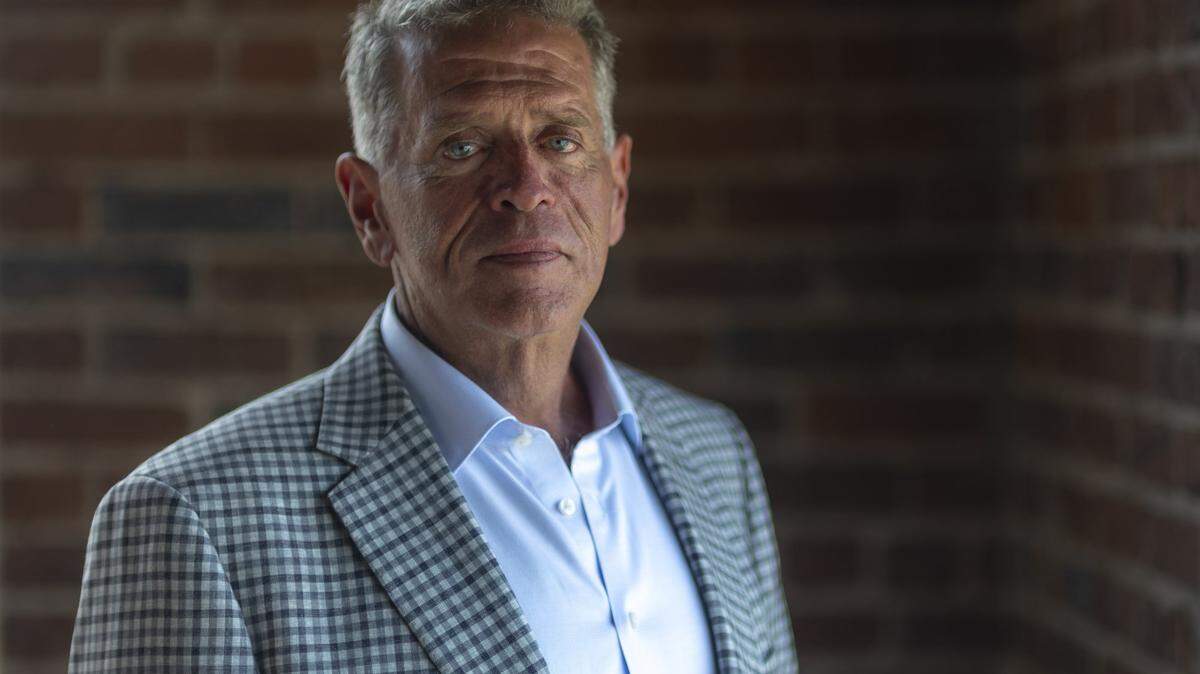
The Herald-Leader posited six written questions to the candidates, both Democrat and Republican, seeking to be Kentucky’s next U.S. senator.
For Democrats, those questions addressed issues like Sen. Mitch McConnell’s legacy, their electability in Kentucky, healthcare policy and more.
Candidates were limited to 150 words in their responses and agreed not to use artificial intelligence in generating their answers.
Below are Democratic contender Dale Romans’ answers. Other candidate questionnaires can be viewed here.
How would you describe Mitch McConnell’s impact on Kentucky?
While Mitch McConnell brought a great deal of federal money to Kentucky, I don’t agree with his federal politics. McConnell manipulated the Senate process to deny Merrick Garland a Supreme Court appointment, and manipulated it again to ram through Amy Coney Barrett, each time recklessly injecting politics into the nomination process. McConnell’s vote for Trump’s massive “big ugly” bill last year gave huge tax breaks to the super-rich and big corporations while gutting Medicaid for working people and putting many rural hospitals in Kentucky at risk of closing. And McConnell is a big supporter of the flawed Citizens United decision that allows unregulated political spending to flood our elections, and gives the powerful and the wealthy more control over our democracy at the expense of everyday Kentuckians. It’s time to nominate a Democrat who can actually win this Senate seat, and bring real change to Washington.
If you had your way, what healthcare policy would the U.S. pursue and ultimately enact?
Healthcare costs are out of control. Working people, small businesses and everyday Kentucky families struggle to get quality healthcare — and are then crushed financially when they do — all while insurance companies and CEOs rake in massive profits. This is wrong, and we need to change our healthcare system. We need to restore the Affordable Care Act subsidies that provided so many people with resources to get healthcare. We also need to repeal Trump’s “big ugly” Medicaid bill that strips working and low-income people of health insurance while showering the rich and big corporations with tax breaks. And we need to ban prescription drug companies from advertising their medications on TV. That decision should be between a doctor and a patient, and all these ads do is needlessly jack up the costs of your medication so big drug companies can make more money at your expense.
Should the U.S. Senate keep the filibuster, which allows the minority to block most legislative action without 60 votes? Why or why not?
The U.S. Senate should absolutely keep the filibuster. It’s a key part of checks and balances, and prevents a simple majority from jamming radical and dangerous legislation through to passage. This is how the House of Representatives currently works, if you can call the current dysfunction in Congress ‘working’. Without the filibuster, the pendulum of power would swing too wildly from one extreme to the other whenever the majority changes hands. The filibuster ensures legislation that passes is well-considered and draws consensus support — valuable assets in this broken era of hyper-partisanship and extreme politics.
Democrats haven’t won a U.S. Senate seat in Kentucky since 1992. Make your case for why this year is different, and why you’re the one to make it happen.
I’m an Independent Democrat. That means I’ll never be beholden to the Democratic Party bosses in D.C., and I’ll never be a puppet of President Trump the way a Republican senator would have to be. My only priority is Kentucky First. As a first-time candidate, I’m also a new, fresh voice. I’m not a career politician like my primary opponents, who have run statewide previously multiple times, and are combined 0-4 in those races. As a thoroughbred trainer, I know that if a horse goes 0-4 they should be put out to pasture. Gov. Beshear shows a Democrat can win in Kentucky. But they need to be commonsense candidates who won’t embrace the far radical extremes of the party. And the voters of Kentucky know that only an Independent Democrat can get elected from a red state to get things done and break the partisanship that plagues Washington.
Can you describe your ideal U.S. immigration policy? Please be specific.
We need to maintain strong border safety and security. We also need to get ICE out of US cities and let local and state law enforcement police our communities. ICE agents need to remove their masks, obtain judicial warrants, and wear body cameras. Their lawless tactics are not keeping people safe; they’re only harassing communities. We need real immigration reform that empowers hard-working, law-abiding immigrants to come out from the shadows and provide the labor force our economy needs to grow and keep costs down. We need to apprehend dangerous criminals, certainly — but we also need to vet and document the many honest, productive immigrants so businesses can sponsor them for jobs that Americans don’t or won’t do with a renewable work permit. Typical Washington insider partisan politics has made our immigration system cumbersome and dysfunctional. It’s time for much needed change so immigration actually works for Kentucky.
What committees would you like to join and why?
I would like to serve on committees that address immigration, education and affordability. The immigration system in our country is dysfunctional because of exhausting partisan D.C. politics, and we need a fix. Affordability is a top concern for working people in Kentucky. Rising health care costs that destroy household budgets; damaging tariffs that make everything more expensive; and now rising gas and diesel prices caused by the poorly-planned Iran war, are making life exceedingly hard for everyday Kentucky workers, families and businesses. I’d also like to serve on education committees. Growing up I was diagnosed severely dyslexic, which made traditional learning methods hard for me. We need to provide new educational approaches for those who, like me, learn differently. This includes more visual instruction where appropriate, and making sure there aren’t large age gaps between children in the same grade, which can also hamper a young person’s ability to learn.
Dale Romans’ website can be found here.
This story was originally published May 11, 2026 at 11:00 AM.