
‘My heart can’t take no more.’ E. Ky. woman addicted to opioids gets a last chance at recovery
READ MORE
New heart, new chance
Last April, Megan Simpson graduated from Freedom House, a recovery center in Clay County that specializes in recovery for mothers and pregnant women. This time was different for Simpson: relapsing was not an option.
Expand All
‘My heart can’t take no more.’ E. Ky. woman addicted to opioids gets a last chance at recovery
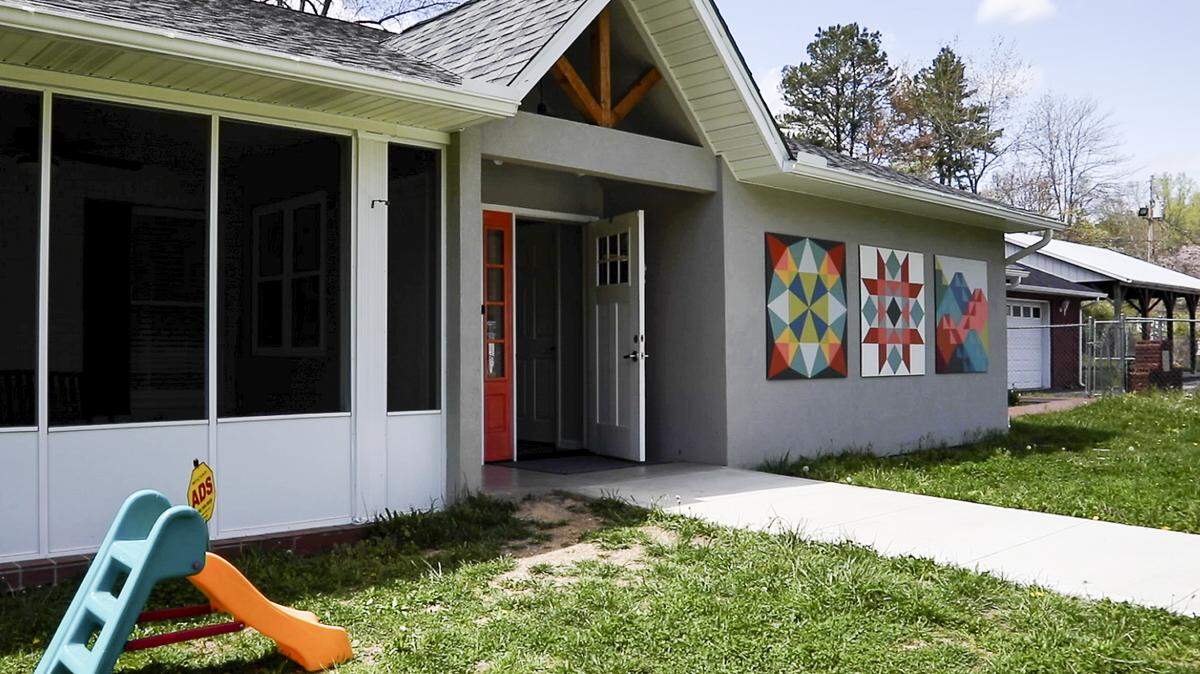
Eastern Ky. recovery center keeps mothers with their kids during addiction treatment

Need help recovering from addiction? These resources are a good place to start
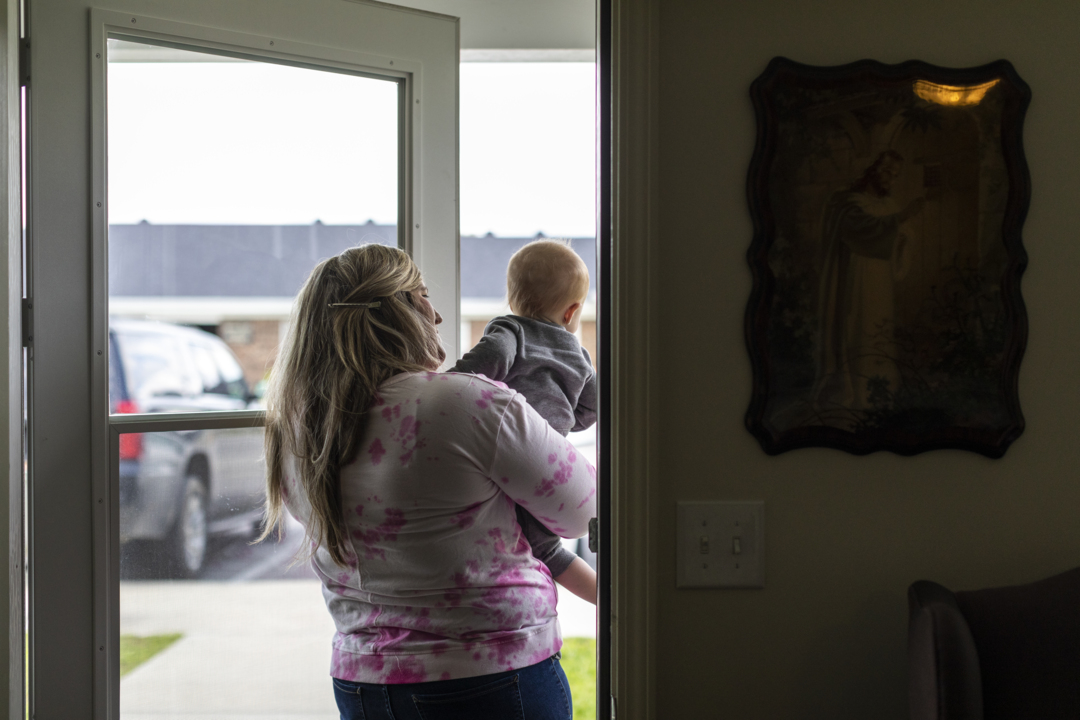
A new heart, a new chance at recovery
‘The opposite of addiction is connection.’ How isolation during COVID fueled addiction crisis.
On a Friday afternoon last May, three brothers thumped around in a family friend’s living room, played games on a phone with their cousin and rode around on a scooter waiting to go to a Barbourville playground.
Megan Simpson lifted her youngest son Jaxson above her head — something she wasn’t able to do a month before.
Megan, 32, has been struggling with substance use disorder for a decade. She has been in and out of jail and recovery centers. Her life has been derailed again and again sliding back into addiction.
Last April, Megan graduated from Freedom House, a recovery center in Clay County, which specializes in recovery for mothers and pregnant women. This time felt different for Megan: relapsing was not an option.
Her years of drug use resulted in an open heart surgery.
“I feel like one door is closed and this huge door is opened — a completely different life,” Megan said a week before she graduated from the recovery center. “I’ve got a new heart. Everything is brand new this year and it’s a good new.”
Megan was excited to return home to her three sons, four-year-old Charlie, two-year-old Sawyer and less-than-a-year-old Jaxson, who were being cared for by Morgan Simpson, her identical twin sister.
‘She chose to numb her pain’
Morgan and Megan Simpson are close. Their mother died in an ATV accident when the sisters were 8, leaving the sisters with their mamaw Helen to be raised. Morgan said her and Megan went through everything together. The two were honor students and cheered growing up, but in high school, Megan quit the team.
The two had their differences.
Megan was more brave to try drinking and sneaking out of the house in high school. Morgan said she “was always too scared” and Megan “was a daredevil.”
Megan also coped with the loss of their mother differently. Megan had more aggression, Morgan said.
Megan also went through a bad break up, her first heartbreak in high school.
During her senior year, Megan was suffering from depression and was admitted to a psychiatric facility in Lexington. During her 18-day stay, Megan did what she could to be discharged to visit her ex-boyfriend. The reunion wasn’t what she expected. She went home and took all of her antidepressant medication. She woke up several days later in the ICU. Megan entered treatment for depression in Corbin her senior year. Morgan helped with Megan’s schoolwork allowing her to graduate high school with honors.
Things began looking up for Megan. She started going to Union College in Barbourville and had more freedom. Soon, she started partying and socially using drugs, like smoking marijuana and taking pills. She tried crack cocaine and “got on it so bad I couldn’t even go to school,” Megan said.
Megan dropped out of college after a year. She could not stay out of trouble. She was in and out of jail. She was addicted to opioids.
“I don’t think she chose to be an addict,” Morgan said. “I think she chose to numb her pain.”
Megan was first arrested in 2010 at age 21 for receiving stolen property and public intoxication. She was given the choice to go to rehab or to sit in jail. She stubbornly chose jail.
“If I can’t get high here, I’ll get high when I get out,” she recalled thinking at the time.
Eventually, she decided to try out rehab associated with the jail but was kicked out and had to finish up her year-long sentence.
Megan planned initially to stay clean once she got out of jail. One of her best friends fatally overdosed. Her grandmother Brenda who enabled her addiction died in August 2011. She relapsed a month later.
One night, she was celebrating with her cousin Billy who recently got out of jail. They got high together. She remembers telling him that he used too much. Billy insisted he was fine. She made him a sandwich and they went to bed. He was snoring loudly. She kept kicking him and telling him, “Hush Billy. Stop snoring. You’re so loud.”
She tried to wake him the next day.
“I went to shake him, and he was dead,” she said. “I laid in bed with him for six to eight hours with him dead. I blamed myself for that for a long, long time.”
The noise had been him choking, Megan said.
After Billy’s death, she only got high by herself. She worried about witnessing another fatal overdose, she said.
“I remember doing CPR on him and foam was in his mouth,” Megan said. “It’s something you would never want to see.”
Billy’s death pushed her further into her addiction.
“I will never forget that noise,” Megan said. “It should’ve been an eyeopener. I had so much guilt.”
Sliding further into addiction
She was arrested again in April 2012 for facilitation of burglary. She had a newborn daughter. She raised the girl until she was 6 months old before Megan had to return to jail in September for 31 months.
After her sentence ended in April 2015, Megan attempted to get her daughter back. Once she realized she could not regain custody, she relapsed.
“That was my justification of me getting high: I have nothing to live for. It doesn’t matter what I do,” she said.
Morgan questions what Megan’s life would have been like if she was able to get her daughter back.
“I sit and wonder if Megan would have still done drugs. Would she kept on doing them if she had not lost (her daughter)?” Morgan said.
She soon found out she was pregnant with her second child.
“I was like ‘Oh my gosh, who am I to have another kid? I have lost my girl,’” Megan said.
She gave birth to Charlie in June 2016.
When Charlie was four-months-old, her mamaw turned Megan and Charlie’s father in for identity theft and forged checks.
She served another 14 months.
The relationship with Charlie’s father was unhealthy and he controlled Megan’s life even as he remained in jail and she was out, she said. The stress of the relationship pushed her to get high again. She eventually left the relationship.
Morgan said Megan was at the lowest point of her life. She was homeless, crashing with family or at one point, in an abandoned home with no heat, electricity or running water with their father Scott in the wintertime.
Morgan decided to no longer enable Megan by letting her stay with her, give her money or buy her food. She said before she would have taken them in no questions asked, no matter how much they stole off of her or no matter how much they had done, but she had her own son and Megan’s sons to care for. It was also taking a mental toll on her chasing Megan around.
“I was always so worried and just strung, just constantly high strung worrying about her,” Morgan said. “Just seeing that no matter what I do, nothing was going to help her, unless she wanted to help herself. If she wasn’t willing to help herself I couldn’t keep helping her, because it was taking everything I had.”
Megan found out she was pregnant again. She did not have custody of Charlie and was not prepared to have another kid. She weighed giving up her second son or having an abortion, but she said she would be unable to live with herself if she did. In January 2018, she went to Independence House in Corbin, a facility that serves women with substance use disorder, including women who are pregnant.
Morgan said Megan’s pregnancy with Sawyer woke her up. She gave birth to Sawyer in August and graduated from Independence House in October.
Megan stayed sober. She reunited with Charlie and Sawyer. She started to date her current fiance Jamie Messer.
“I’ve been in so many unhealthy relationships I didn’t know what a healthy relationship would look like,” Megan said. “Not getting talked to bad, not getting smacked around, not cheating on me, I wasn’t used to that.”
In July 2019, Megan and Morgan’s father Scott Simpson died at age 49 of complications from endocarditis, an infection of the heart valve from IV drug use.
Megan said her father’s heart was in bad shape with frequent blockages. He was also diabetic. Before he died, he had recently relapsed, and within two weeks, he became sick. The day before his death he called Megan asking to stay with her. It was the first time she ever told him no, she said. She was worried about relapsing herself. Megan thought he would pull through like he normally did, but he didn’t
Megan relapsed after, bringing Jamie down with her.
“I’ve had a hard time letting go of my dad,” she said. “I have so much guilt over his death. … In all reality, my dad made the decisions that he had, and for that, it cost him his life.”
‘My heart can’t take no more.’
Megan, too, had heart troubles. She was first diagnosed with endocarditis in 2011. But that year her health began to decline. She was hospitalized in August 2019. Morgan said she walked into the hospital nearly dead.
She stayed in the hospital for 12 months out of a 15-month period. She had endocarditis four times in a year.
Megan gave birth to her third son Jaxson while on life support. Jamie stayed by her side at the hospital, violating his parole and ending back in jail on a previous drug trafficking charge.
In December 2020, Simpson joined Freedom House, a recovery center that opened in Manchester earlier that year. It works with pregnant women and mothers, focusing on reunification of their kids. During her intake, she saw familiar faces: one was peer support specialist Theresa Johnson who she was in jail with before and VOA Freedom House Program Manager Stephanie Hoskins who previously worked at Independence House.
“Megan is an amazing person, and she has so much potential,” Stephanie said about Megan while she was at the recovery center. “She just really struggled with long-term recovery.”
Stephanie said Megan needed to stay away from people from her past and lean on her support system. For Megan, this time in recovery is her last chance, she said.
In March, Megan had open heart surgery, promising she would stay clean. It would potentially be life or death if she relapsed.
“My heart can’t take no more,” she said.
She returned to Freedom House to recover and continue treatment.
Nichole Ott, Megan’s clinical therapist at Freedom House, said she considered Megan a “living, breathing, walking miracle” after surviving addiction and open heart surgery. She said Megan shared her experiences with other Freedom House clients to hopefully spare them from the heartache she had.
Theresa gave Megan hope. Like Megan, Theresa struggled with her addiction and lost custody of her kids, which she later regained.
Megan was different from a typical client at Freedom House. Her sons wouldn’t be eventually joining her at the recovery center, because of her heart surgery. They instead stayed with Morgan.
At Freedom House, Megan learned structure and returned to a healthy routine, while avoiding boredom, which is the “devil’s playground when you’re a user, ” she said. She attended meditation sessions, Narcotics Anonymous and other workshops.
She set goals: returning back to her kids that she called momma’s boys, reuniting with Jamie, going to church and becoming a peer support specialist herself at Freedom House. She looked forward to a normal life.
Heart is ‘filled with good things, happy things.’
On April 15, Megan graduated. She spoke about the guilt she had after the death of her father.
“In all reality, my dad made the decisions that he had, and for that it cost him his life,” Megan. “But that being said I don’t want his death to be in vain. I want to use my life to lift him since he didn’t get that opportunity to get back right.”
She spoke about her relationship to substance use disorder.
“We have a disease that tells us we don’t have a disease because for so long I thought I could beat it or think that I could manage and control my using — just use every now and again,” she said. “I always had it under my belt, but I never. I always sunk deeper and deeper.”
The staff gave Megan advice.
Mariah Langdon, the director at Freedom House, told Megan “a bad day or a setback is not worth going back.” She said she admired Megan’s determination to return home and be reunited with her family.
Stephanie admitted to Megan she was terrified to see her walk out the Freedom House doors.
“I promise you if you get to long-term recovery your worst day clean will not compare to your best day high,” Stephanie told Megan. “I promise you that.
“I love you.”
“I love you too,” Megan replied.
Megan received a coin as a part of graduation: a butterfly on the front with “If nothing changed there’d be no butterflies.”
.jpg "IMG_1953 copy (1).jpg")
Butterflies were becoming symbolic for Megan: she was in a cocoon of her addiction and now she was ready to fly into her new life, she said.
“I feel like my heart is a lot different today than it was before,” she said after graduating. “I feel like it used to be filled with unworthiness, hopelessness. Today it’s not. It’s filled with good things, happy things.”
The challenge of a new life
Megan moved back to Barbourville, her hometown.
She began setting her life up with help from Morgan and her mamaw.
She celebrated Jaxson’s first birthday.
She made brownies with Charlie and Sawyer.
She landed a job at a pizza restaurant, but it closed numerous times due to Covid outbreaks.
She went back to church.
But adjusting to her new sober life after heart surgery was difficult for Megan. Finding stable work was challenging as she was still recovering from her heart surgery. She struggled to find a recovery community in Barbourville. Sobriety became harder and harder.
By the end of June, Megan relapsed, once again pushing further into her addiction.
Read Part two of Megan’s recovery story in the March 27 edition of the Herald-Leader.
This story was originally published March 20, 2022 at 5:00 AM.