
You may be seeing more coyotes out and about in Kentucky this time of year. Here’s why
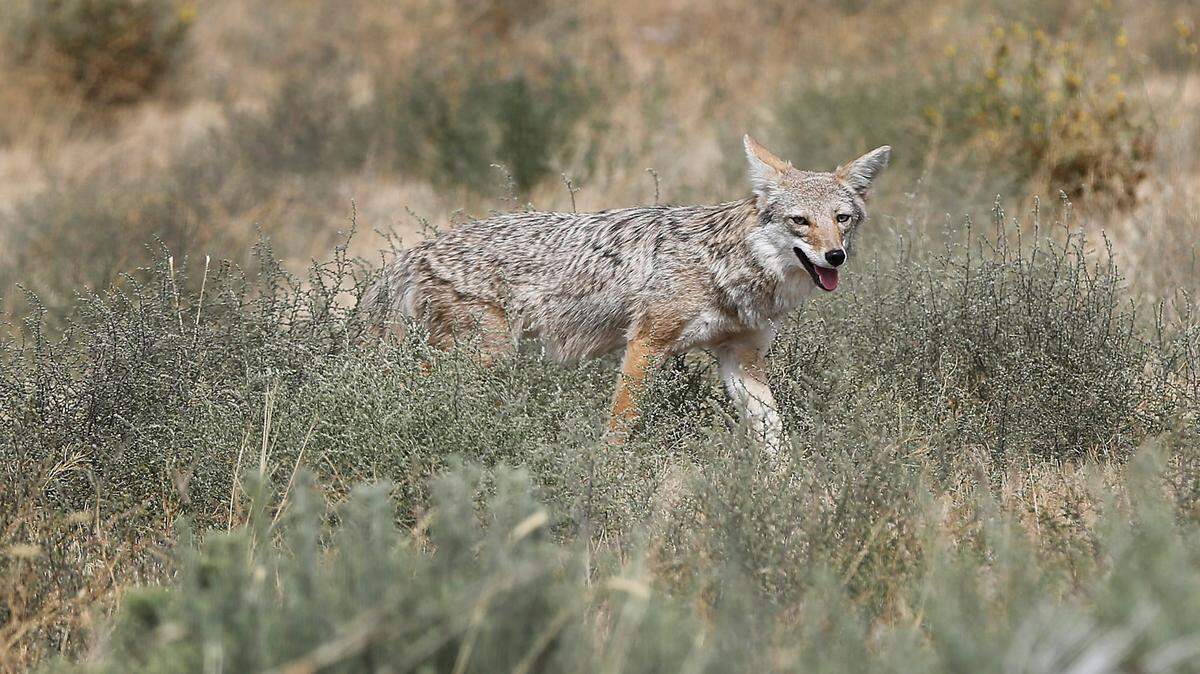
Coyote sightings are on the rise this time of year as breeding season gets underway.
For Jason Nally, the Bluegrass regional coordinator for the Kentucky Department of Fish and Wildlife Resources, his office regularly sees an uptick in phone calls in late February and early March.
“During that time, these animals are much more territorial and much more interested in maintaining their space,” Nally said.
Generally speaking, coyotes prefer to avoid contact with humans. That said, it’s not unheard of to encounter one while out walking your dog, especially in the early spring, when they show up in new places, Nally said.
When a chance encounter does occur, sometimes the animals can feel threatened, Nally said.
“A coyote is viewing that dog as a potential threat to its territory. They don’t seem to be predatory in nature in that the coyote is trying to eat the dog,” Nally said.
Here’s what to know about how to keep your pets safe this time of year as coyote activity heats up.
How to protect your pets from coyotes
According to Nally, small dogs can sometimes be targeted as prey by coyotes, “but typically most of the attacks that we see on small dogs, they’re either defensive or territorial. They don’t consume the animal.”
While the state agency doesn’t maintain a database of coyote attacks on pets, in more than 10 years with the Kentucky Department of Fish and Wildlife, Nally reports getting only a handful of calls about them.
“I would typically receive a call every couple of years about a coyote that has attacked an unattended dog. I wouldn’t say that it is incredibly common, but it does happen,” Nally told the Herald-Leader. “Cats and small dogs can be seen as prey, but most of the attacks on medium- to larger-sized dogs appear to be in response to the coyote defending their territory, fighting over a food source or protecting its pups.”
If you are out walking your dog in an area where you know coyotes have been spotted, Nally advises keeping your dog on a really short, brightly colored leash.
If you do see a coyote, and frightening the animal away doesn’t work, pick up your pet and hold it in your arms. Coyotes are much less likely to pose a threat to a human, Nally said.
Outdoor cats or dogs left unattended in backyards could also be a target for coyotes, Nally said.
Nally calls coyotes “opportunistic omnivores.” While they mostly eat small rodents, they have a sweet tooth. Your backyard strawberries or watermelon vine could also be a draw for them, he said.
“Some of the things that people don’t think about are bird feeders,” Nally said. “Bird feeders will also attract rodents … If you’ve got a food resource, that opportunistic omnivore is going to move in and try to exploit that.”
To a coyote, Nally said humans are “wallpaper in their world.” We’re a familiar presence to them, especially as they’re pushed into urban areas in search of food, but coyotes generally prefer to have little to do with humans.
“They typically don’t want to interact with us much at all. They try to generally avoid us, unless they’re being intentionally fed,” Nally said.
This is why Nally encourages the public to help coyotes maintain that healthy level of fear while still respecting the species.
“It’s really important that you make that encounter with them not pleasurable. You want to yell at it. You want to make a big scene … You want them to go ‘those bipedal mammals are crazy!’” Nally said.
How to identify coyotes
According to Nally, the biggest difference between the coyote and another backyard canine critter, the fox, is size. Adult foxes are typically less than 20 pounds, while coyotes can easily surpass 30 to 40 pounds, he said.
The red fox has a characteristic red coat, black feet and a white-tipped tail. Gray foxes are typically gray with a reddish brown underbelly and a black-tipped tail.
Coloration for coyotes, by comparison, can vary widely, meaning size is probably your best bet for telling them apart from foxes when viewed at a distance.
Asked for an estimate of the size of Kentucky’s coyote population, Nally said his agency generally focuses population studies on animals that are threatened, rather than abundant and stable.
“Coyotes are abundant in every county in the commonwealth, but for the most part stay hidden. Trail cameras are a great way for homeowners to see what types of wildlife inhabit their property,” Nally said.
How can I have a nuisance coyote removed?
If you find yourself dealing with a coyote that’s lost its fear of humans, you can turn to a licensed wildlife control operator or trapper to have the animal relocated somewhere else.
The Kentucky Department of Fish and Wildlife maintains a running list of professionals online.
Do you have a question about critters in Kentucky for our service journalism team? We’d like to hear from you. Fill out our Know Your Kentucky form or email ask@herald-leader.com.