
How long could it take to find KY I-75 shooter? Similar manhunts show it may be a while.
READ MORE
Interstate 75 shooting
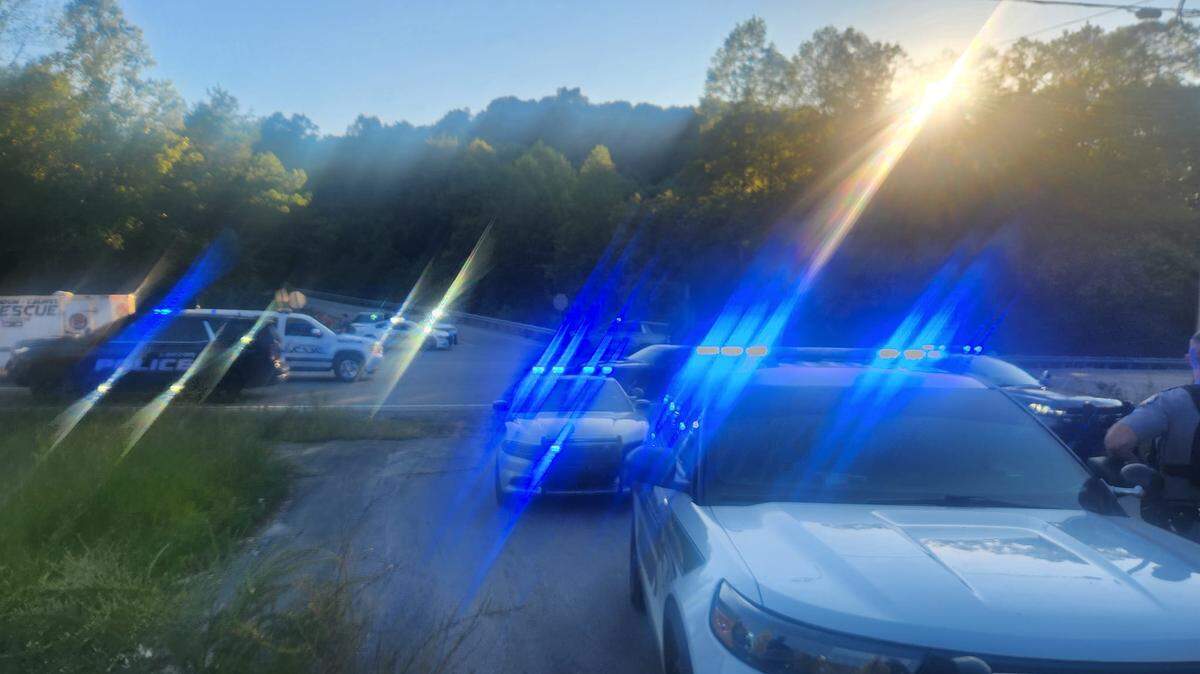
Several people were injured Saturday evening in shootings along Interstate 75 in Southern Kentucky near London in Laurel County
Expand All
Police combing the brush for a fugitive in a vast, wooded area. Helicopters circling overhead. Residents on edge, locking their homes and cars for the first time as the manhunt stretches on for nearly a week.
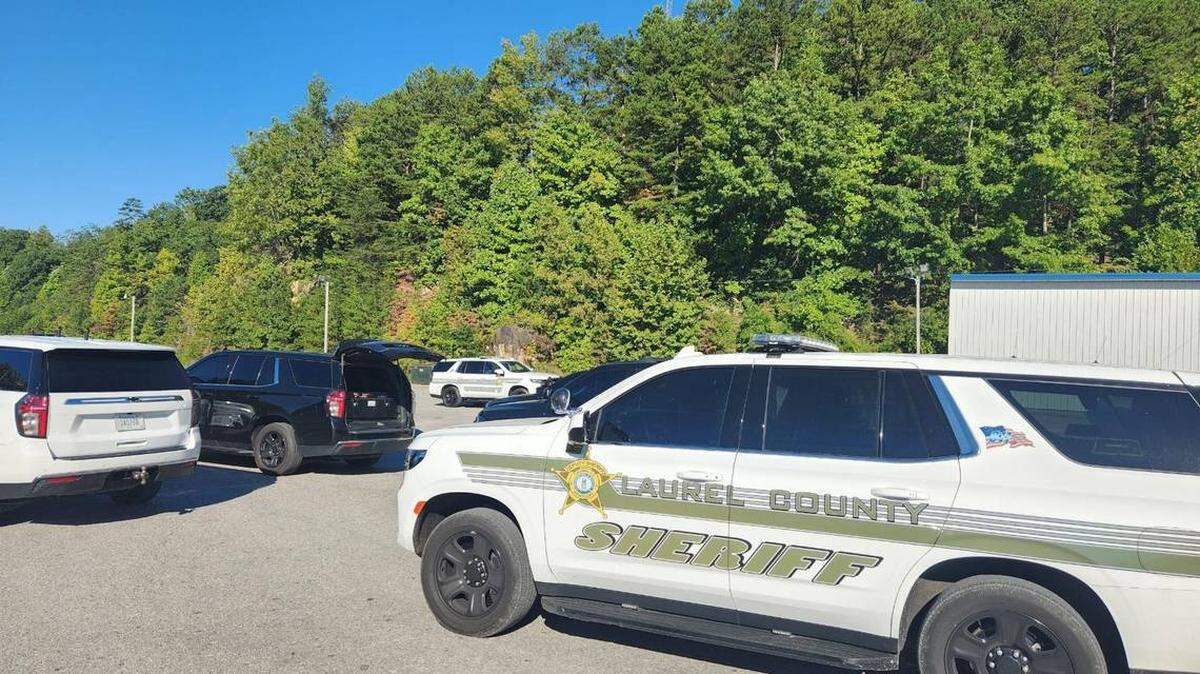
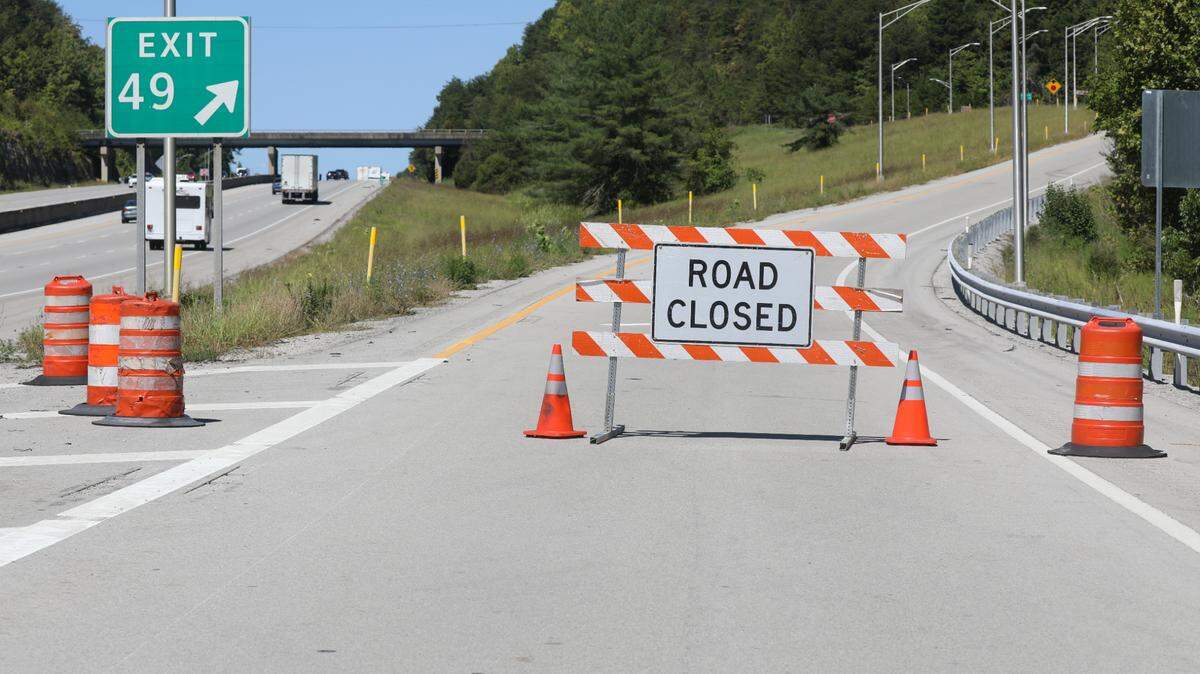
That’s the reality in Southern Kentucky this week as police try to catch a man accused of shooting into a dozen cars on Interstate 75 in Laurel County on Sept. 7, leaving five people injured, before fleeing into the woods.
One officer said police are “working their guts out” to find the suspect, 32-year-old Joseph A. Couch. Residents yearn for his capture so they can get back to their normal lives.
But some other manhunts across the U.S. show that searches of this nature can go on for quite a while — or, in at least one case, forever.
‘Very difficult thing to do’
When two convicted murderers escaped a maximum-security prison in upstate New York in June 2015, it was 20 days before police encountered the first escapee, even with hundreds of officers on the lookout.
In that case, as in Kentucky, the search for the escapees covered an area of thousands of acres, much of it rural, lightly populated, heavily wooded and relatively rugged, including part of the vast Adirondack Park.
“It has a striking resemblance to what we had up here,” Clinton County, N.Y. Sheriff David Favro said of the manhunt for Couch.
Many people have an impression of New York as bustling, crowded New York City, but the state’s North Country, where the two men escaped from the Clinton Correctional Facility, is rural.
“You can walk for four hours and not come across a residence” in some places, said Maj. Nicholas Leon, Favro’s chief deputy.
Favro, whose office took part in the search for the escapees nine years ago, said he’s been keeping up with news about the search in Kentucky.
There, as in the Kentucky search, local, state and federal agencies joined forces. They used tracking dogs, helicopters and drones, and faced challenges that included thick forest cover and rough, hilly terrain.
“They’ve got the obstacles we faced,” Favro said of police in Kentucky. “It’s a very difficult thing to do.”
And as in the Kentucky search, police received hundreds of tips from a wide area about potential sightings of the fugitives — an indication of high public awareness and concern.
It creates more work to check on all those tips, but police have said they welcome that public involvement in the search for Couch.
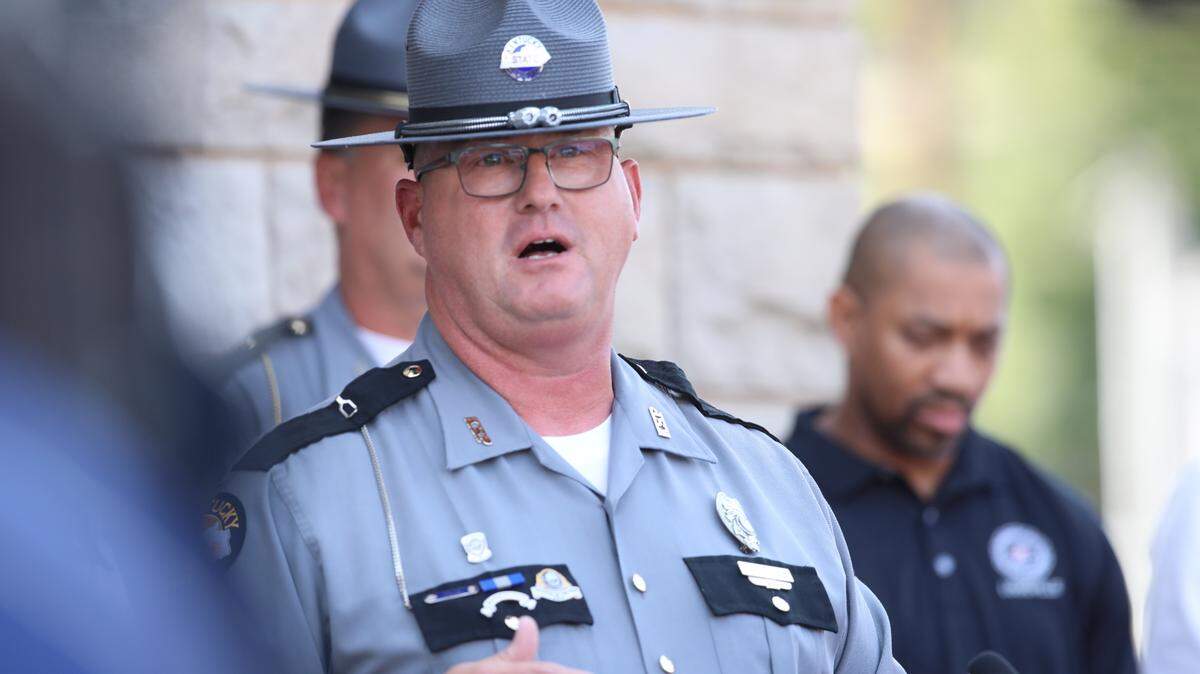
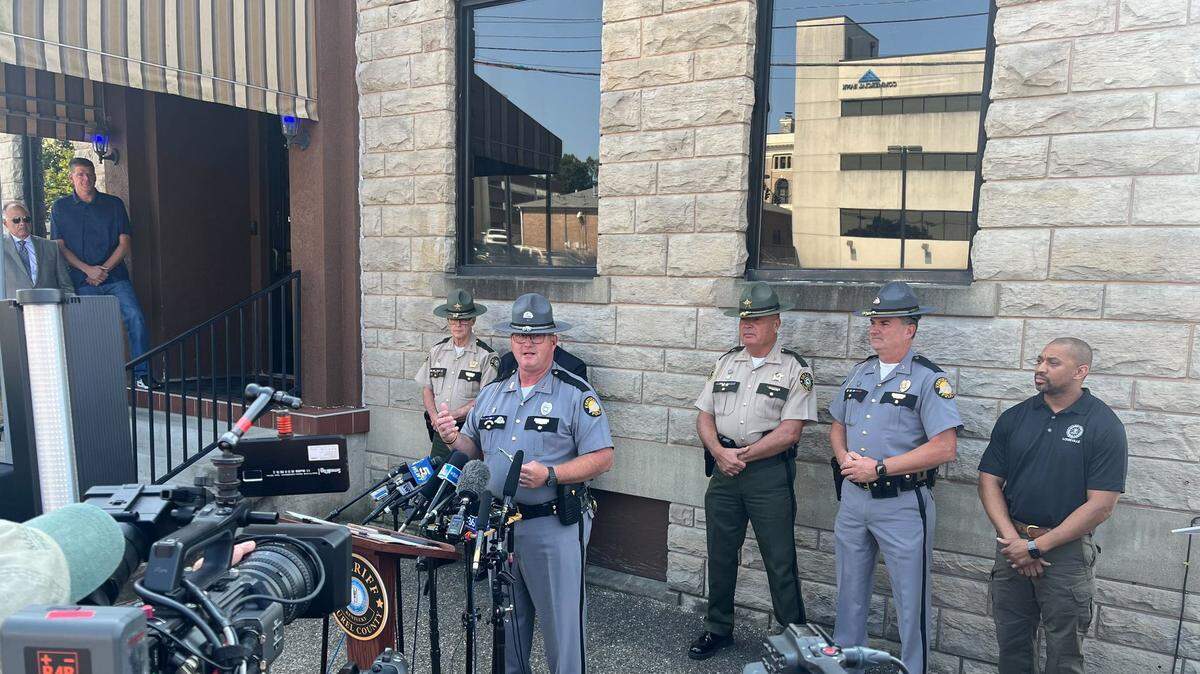
“We never know, the smallest tip, what it’s gonna lead to,” said Scottie Pennington, a spokesman for Kentucky State Police.
Favro said the public can act as a “force multiplier” for police, providing many more eyes looking for the suspect.
The New York manhunt began after inmates David Sweat and Richard Matt slipped out of their adjoining cells through holes they had cut in the back walls, then climbed down into the bowels of the prison and out through a steam pipe in which Sweat had cut a hole.
The pipe led to a manhole in the street a block outside the prison, according to a report on the escape.
The two used hacksaw blades and other tools that a prison employee, Joyce Mitchell, had smuggled to them. Matt had developed a relationship with Mitchell.
The community response was similar to what’s been seen this week in Kentucky.
“Everybody’s locking their doors and locking their cars,” said Shaun Gillilland, town supervisor in Willsboro, a city of about 1,900 people one county south of the prison. “Even my most liberal friends are pulling out their varmint guns.”
Twenty days after the escape was discovered, police responding to a report of gunshots near a small town saw Matt lying behind a log, armed with a shotgun he’d obtained, perhaps from a hunting cabin.
Police said Matt pointed the gun at officers. An agent with the U.S. Customs and Border Patrol shot him in the head with an M-4 rifle, NBC News reported at the time.
Two days later, a New York state trooper saw Sweat on a rural road two miles from the border with Canada and shot him when he tried to run away.
Sweat survived and ultimately went back to prison. The men had gotten about 10 miles from the prison, Favro said.
A state report said there were more than 1,300 local, state and federal officers involved in the manhunt at times.
The search cost the state of New York $23 million in law-enforcement overtime. That didn’t count the cost to local and federal agencies, the report said.
Favro said it’s understandable for communities to want a quick conclusion to the search for Couch because of the safety concerns and disruption.
But people should remain vigilant, be patient and understand police are doing all they can, including work behind the scenes that officers can’t disclose and the public can’t see, Favro said.
In Laurel County, Couch told a woman before the shooting that he planned to kill a lot of people and then kill himself.
Police have said they can’t assume Couch is dead, however, because of the potential he has food and water to wait them out, then emerges and shoots someone.
Police will want something definitive, such as Couch’s body or solid reason to believe he has left the woods, before moving on from the search, Favro said.
“It gives you some momentum to keep things going, knowing what the gravity of the situation is,” Favro said.
In a statement issued Friday morning, Pennington said state police had extended the search for Couch deeper into the Daniel Boone National Forest, but would continue to provide increased patrols in the area of shooting.
Deputy Gilbert Acciardo, spokesman for the Laurel County Sheriff’s Office, said Friday that police had not reduced the number of searchers.
Favro, the New York sheriff, said if the search for Couch goes on for some time with no solid leads — and that time can vary in every case — police will likely slim down the effort.
“If they keep running into dead end, dead end, dead end, after three-four weeks, you start saying, ‘Do we need 400 agents here? Could we do it with 300? Could we do it with 250?’ “ Favro said. “With nothing, they’re gonna have to start paring it back.”
But, he said, “You never give up.”
Survivalist caught after search in woods
Couch’s case is unique, but the effort to find him isn’t.
It took police nine days, for instance, to catch Michael Burham after he escaped custody from the Warren County, Penn., jail on July 6, 2023. He was being held on arson and burglary charges and was a suspect in a homicide investigation at the time of his escape.
Burham climbed to the roof of the jail from exercise equipment and then used sheets he’d tied together to slide down to the street, according to the Erie Times-News.
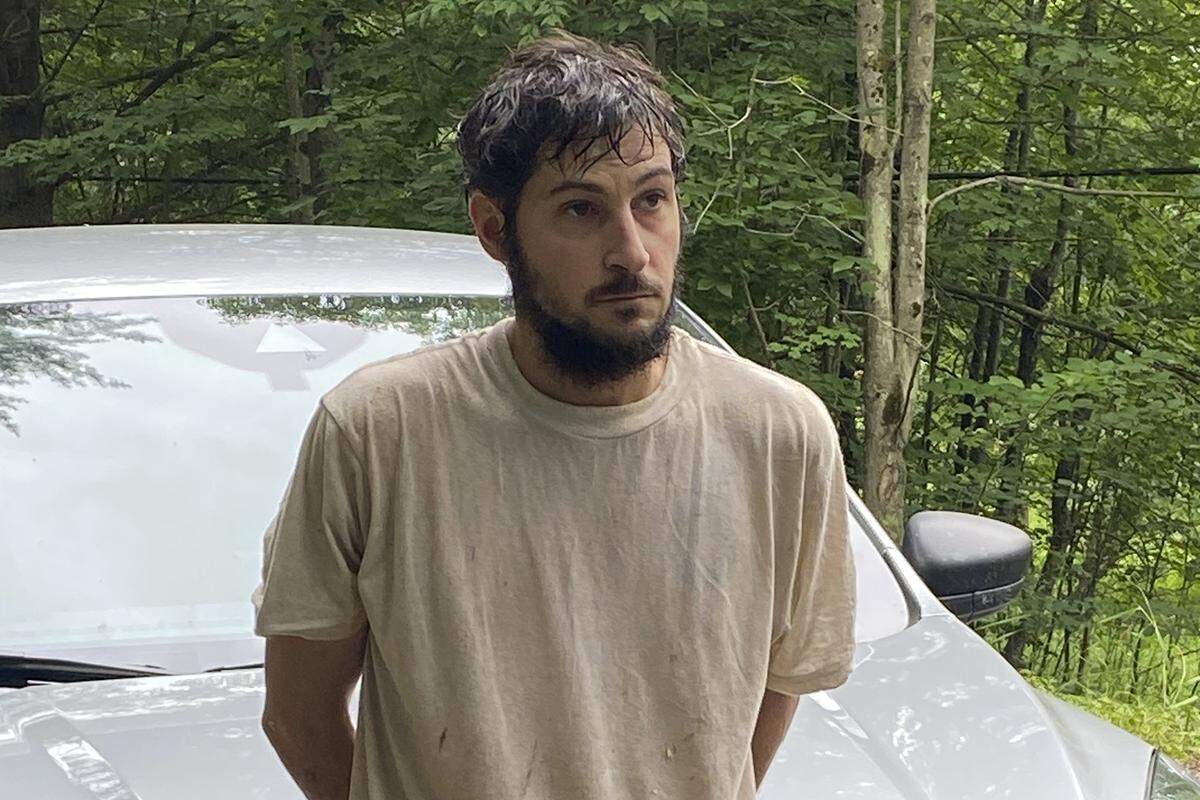
Several local, state and federal law enforcement agencies searched for Burham in an area that included the Allegheny National Forest, a 514,029-acre forest in the northwestern corner of Pennsylvania.
Burham was a “self-taught survivalist with military training,” according to the newspaper.
Burham was captured after a homeowner called police about a suspicious person on his property.
Officers set up a perimeter around the area and tracked him through the woods. Burham appeared fatigued when he was arrested, police said.
Police in Kentucky have said keeping pressure on Couch and wearing him down is part of the effort to catch him.
“I hope he’s wore out” and will give up, Pennington, the Kentucky State Police spokesman, said of Couch at a recent briefing.
‘We wanted to catch him’
Sometimes manhunts can go on for years.
That was the case after Eric Rudolph planted a bomb in July 1996 at the Centennial Olympic Park in Atlanta, killing one person and injuring more than 100 others.
In the next two years, Rudolph bombed two more targets in Atlanta, including a gay bar, and an abortion clinic in Birmingham, killing an off-duty police officer and injuring several more people.
The FBI placed Rudolph on its Ten Most Wanted list in May 1998 and scoured the woods of western North Carolina, Rudolph’s home terrain, but it was five years before a local police officer caught him rooting through the trash outside a grocery store in Murphy, N.C. looking for food.
The FBI said Rudolph was a survivalist who had stashed food in the woods.
Authorities concentrated the search in western North Carolina because of his familiarity with the area and a lack of of credible sightings anywhere else, according to Chris Swecker, who headed the Charlotte FBI office during the search.
Police searching for Couch since Sept. 7 have said a key reason they have focused on the forest near the shooting site is a lack of solid information that he’s gone anywhere else.
Swecker said Rudolph had placed caches of explosives in the woods, but that he thought pressure from police kept him from getting to them and doing more harm.
“We wanted to catch him, but we also wanted to make sure he didn’t strike again,” Swecker said. “I’m convinced that the investment of manpower we had during that time period saved lives.”
A manhunt that came up empty
One of the most famous manhunts in U.S. history came up empty.
It involved a man known as D.B. Cooper, who disappeared after hijacking an airplane in November 1971.
During a flight from Portland, Ore. to Seattle, Cooper showed a flight attendant what appeared to be a bomb in his briefcase and demanded $200,000 and four parachutes, according to the FBI.
When the plane landed in Seattle, Cooper let the other passengers off in exchange for the money and parachutes, and ordered the crew to fly to Mexico City.
Somewhere between Seattle and Reno. Nev., Cooper jumped out the back of the plane, setting in motion a manhunt that lasted decades.
There was some doubt Cooper survived the jump that rainy night, but in the ensuing years the FBI interviewed hundreds of people, sifted through an “immense” number of tips and tracked down potential leads across the country.
In 1980, a boy found $5,800 worth of rotting $20 bills that matched the serial numbers of the ransom money, but authorities never found Cooper, alive or dead.
Nearly 45 years after the hijacking, the FBI announced in July 2016 that it had switched resources away from the Cooper case.
The FBI noted that every time an agent looked into a Cooper tip, “investigative resources and manpower are diverted from programs that more urgently need attention.”
This story was originally published September 13, 2024 at 11:12 AM.




.JPG)
%20(2).png)