
Where has bird flu been confirmed in KY? See map of positive and pending test results
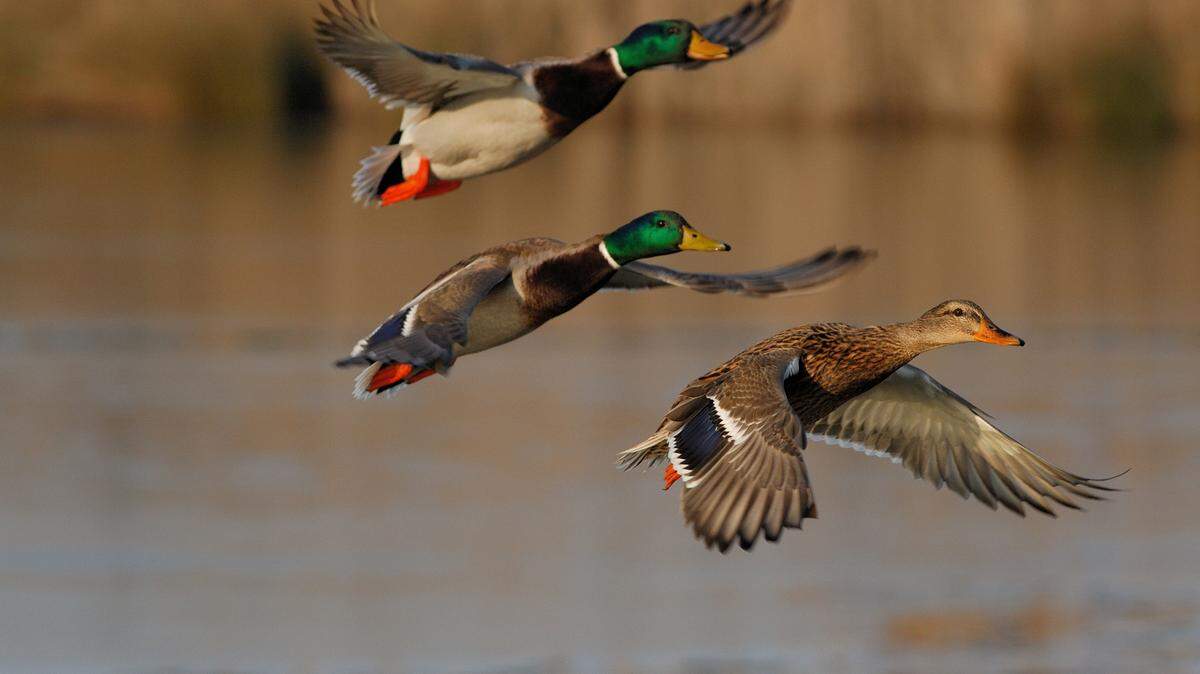
Highly pathogenic avian influenza, more commonly called bird flu, has been gradually spreading across Kentucky since December 2024, when it was confirmed in geese at a wildlife management area in Henderson County.
Its spread is made possible by migratory birds, particularly those traveling along the Mississippi Flyway, which includes Kentucky. The virus, H5N1, is highly deadly to birds, but it can also infect mammals, including humans via exposure to infected cows, for example.
In 2022, there were at least two outbreaks among commercial flocks in Kentucky and one in a backyard mixed flock in Fayette County, resulting in the deaths of hundreds of thousands of birds at the sites.
There is no known person-to-person spread of H5 bird flu, and public health authorities say the current risk to the public is low. Still, it’s worth remaining vigilant, not only to protect your pets and yourself, but also to help track the spread.
Here’s a breakdown of where bird flu has been documented among wild animals in Kentucky, including what to do if you think you’ve seen it in wild birds or livestock.
Where has bird flu been found in Kentucky as of March?
The Kentucky Department of Fish and Wildlife Resources has tracked at least 14 positive cases in counties across the state.
According to the latest available state data for March 10, the counties include Fulton, Ballard, Henderson, Hopkins, Muhlenberg, Barren, Jefferson, Bullitt, Boone, Kenton, Campbell, Franklin, Wayne and Rowan counties.
Most of those positive cases were discovered in waterfowl and wading birds. One notable exception is Boone County, where a raccoon tested positive for HPAI.
Also as of March 10, test results are pending in at least 12 Kentucky counties, including Fayette. Other counties with pending test results include Calloway, Logan, Warren, Trimble, Oldham, Henry, Nelson, Washington, Adair, Scott and Madison.
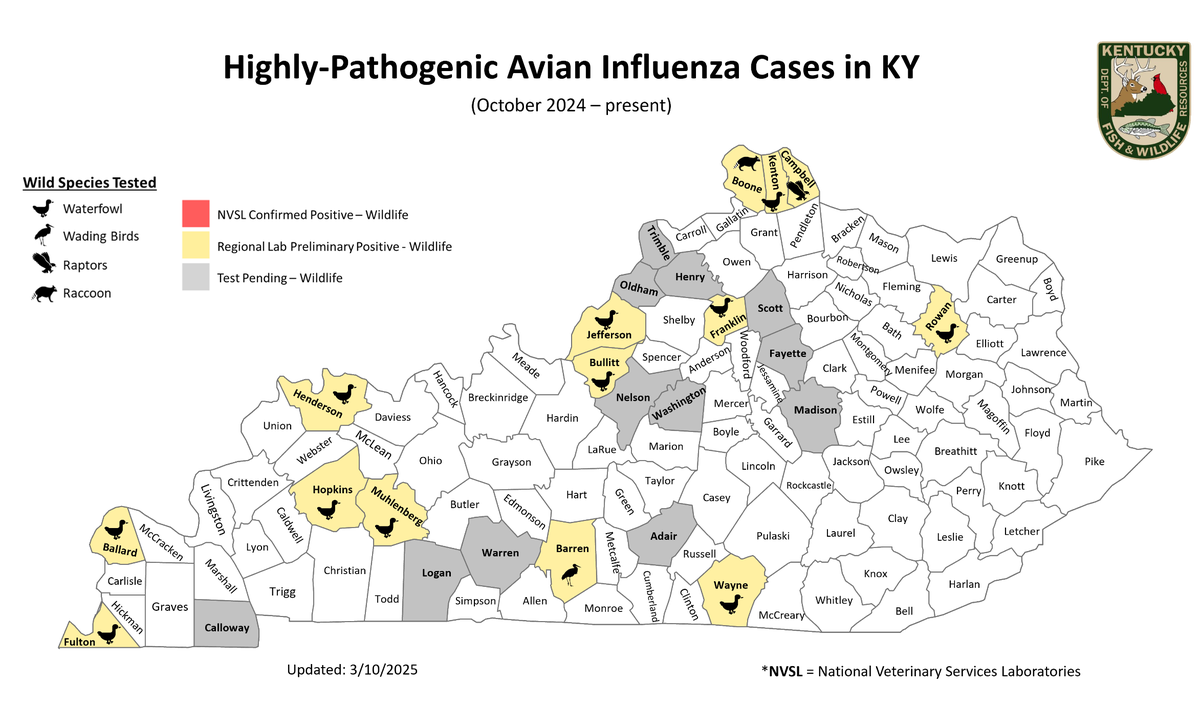
Asked about the pending results for Fayette County, Kentucky Fish and Wildlife spokesperson Lisa Jackson told the Herald-Leader in an email March 6 that a previous set of samples tested negative.
However, “as there is now a new sample for a turkey vulture that has been submitted for testing for HPAI, Fayette County will remain as grey for ‘Test Pending’ right now.”
Monday, Jackson told the Herald-Leader test results for a turkey vulture in Fayette County and a red-tailed hawk in Madison County remained pending. A test for a sample from a striped skunk collected in Scott County was shipped to a lab that day, Jackson said, adding “we do not expect this to be HPAI but are testing for it in addition to rabies and canine distemper as HPAI is possible in mammals.”
How to help track the spread of bird flu in Kentucky
According to guidance from Kentucky Fish and Wildlife, the public should be on the look out for the following symptoms in wild birds:
Swimming in circles
Lack of body coordination
Lethargy/fatigue
Unwillingness to fly
Head tremors
If you see a bird exhibiting these symptoms in Kentucky, you should:
Call Kentucky Fish and Wildlife at 1-800-858-1549. That phone line is staffed from 8 a.m. to 4:30 p.m. Eastern Standard Times on weekdays. You can also make a report online through the agency’s website.
Contact your regional biologist through Kentucky Fish and Wildlife. You can look up your county online and get contact information for the regional biologist over your area.
Make note of your observations and report them through the agency’s wildlife observation tool.
If you need to report sick or dead poultry or livestock, the agency advises calling either a local veterinarian, Kentucky’s Cooperative Extension Service, the state veterinarian (502-573-0282) or the U.S. Department of Agriculture at 1-866-536-7593.
Do you have a question about critters in Lexington or Kentucky for our service journalism team? We’d like to hear from you. Fill out our Know Your Kentucky form or email ask@herald-leader.com.