
Cicada summer is here. Where you’ve seen them in Kentucky & when to expect more
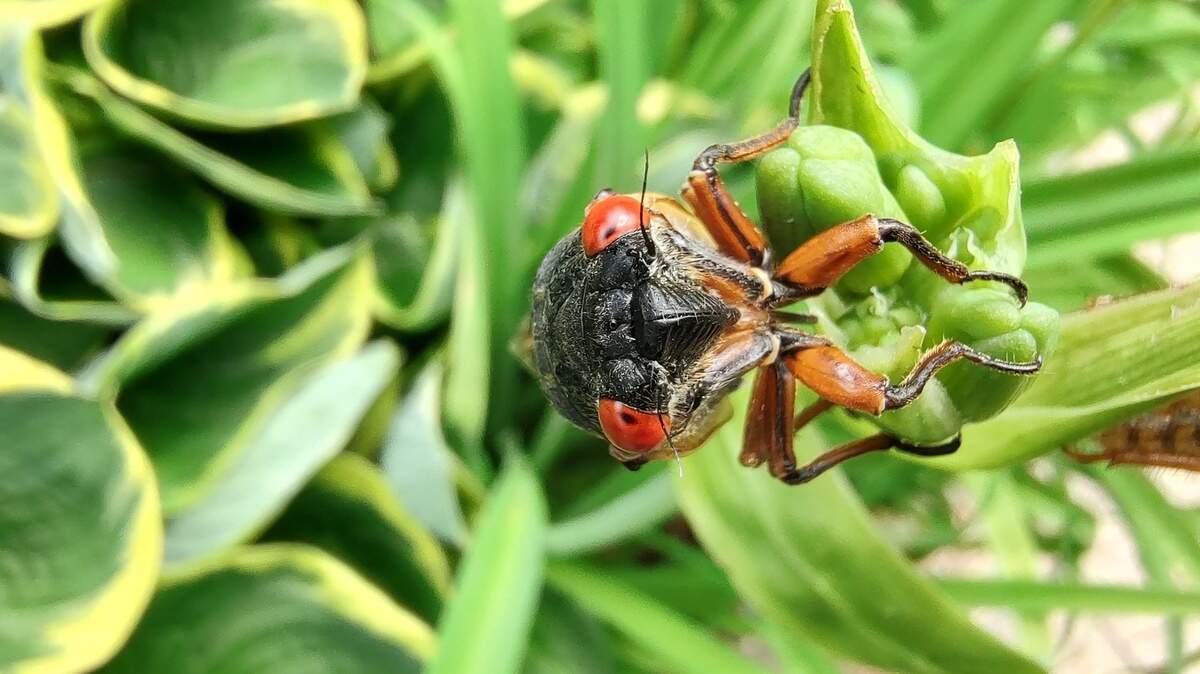
Cicadas are on the move in central Kentucky and beyond as they emerge across the state after 17 years spent waiting for a chance to mate.
Parts of central and eastern Kentucky will be the epicenter of Brood XIV’s emergence this summer, with potentially billions of the bugs expected. It’s been nicknamed the “Bourbon Brood” for its close association with Kentucky.
According to University of Kentucky entomologist Jonathan Larson, the cool, rainy weather Lexington has seen throughout the month has somewhat slowed cicada emergence here. He’s noticed stronger activity on warm, sunny days, particularly at Veterans Parks, where the songs of multiple cicada species can be heard, Larson told the Herald-Leader Wednesday.
The warmer temperatures we’re expected to get next week could serve as a signal for another wave to emerge.
“I think once it does dry out, and once it gets hot again or warm again, there’ll be another surge, and then we’ll really hear some loud noises,” Larson said.
Larson added that while Fayette County is expected to see many cicadas this summer, it won’t see nearly as many of other parts of the state.
“We’re not predicted to be one of the premier counties in Fayette, I should stress, but we are still quite high on the list. We’re not going to be probably top five, but definitely somewhere near the higher end of the pecking order for cicadas,” Larson said.
To help us track their emergence and march across the state, we asked our readers to send us their photos and observations from their backyards. They delivered.
About half of the responses we received came from readers based in or around Lexington. We also heard from several observers in eastern Kentucky and as far west as Barren and Meade counties, offering a rough sense of where cicadas are emerging.
Here’s a more detailed overview of what our readers observed across the state.
In central Kentucky
Jay Vera Summer of Lexington sent us several photographs showcasing cicada activity near Kirklevington Park.
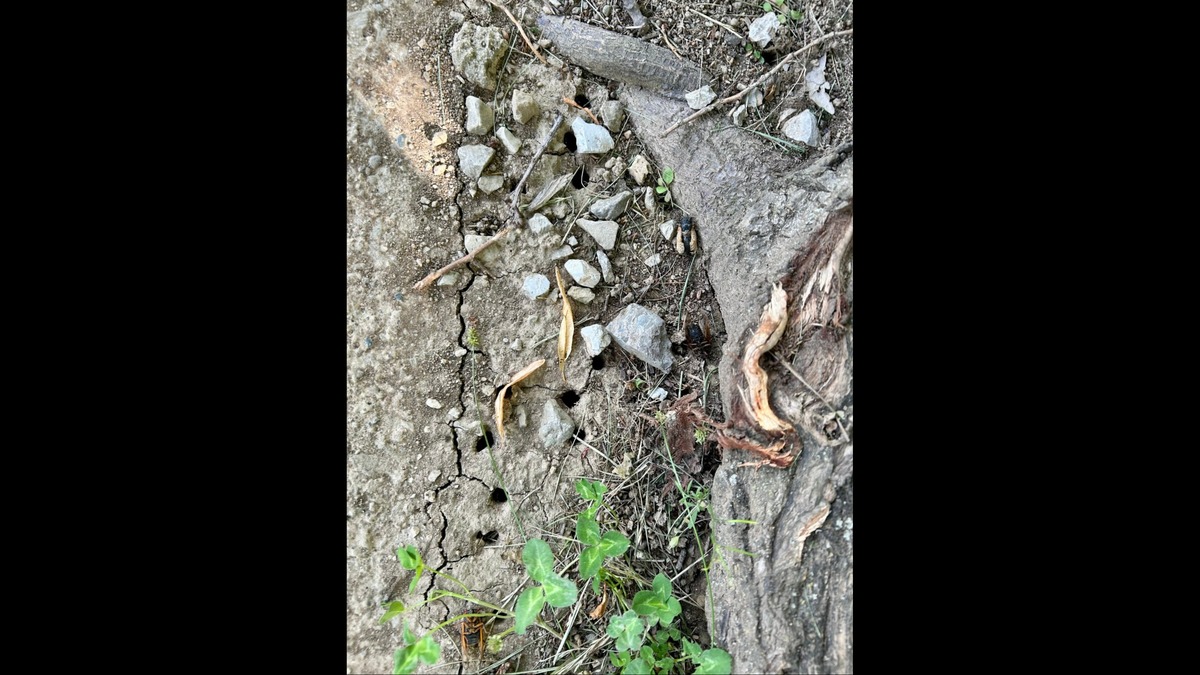
Summer snapped photos of cicada emergence holes near a tree that stands along Redding Road.
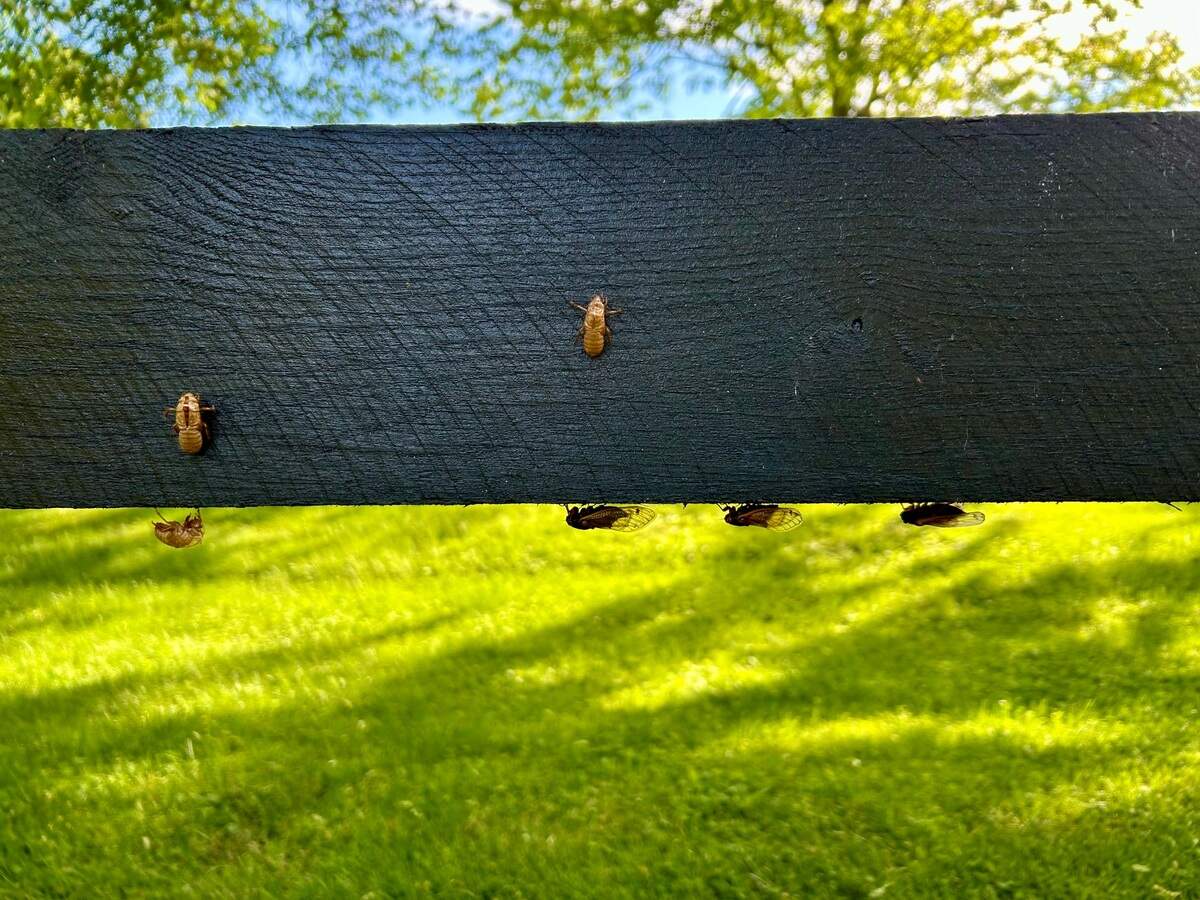
Summer also spotted cicadas hanging upside down on a horizontal fence post next to their shed exoskeletons. The cicadas were likely trying to fan out their wings, much like a butterfly does after emerging from its cocoon.
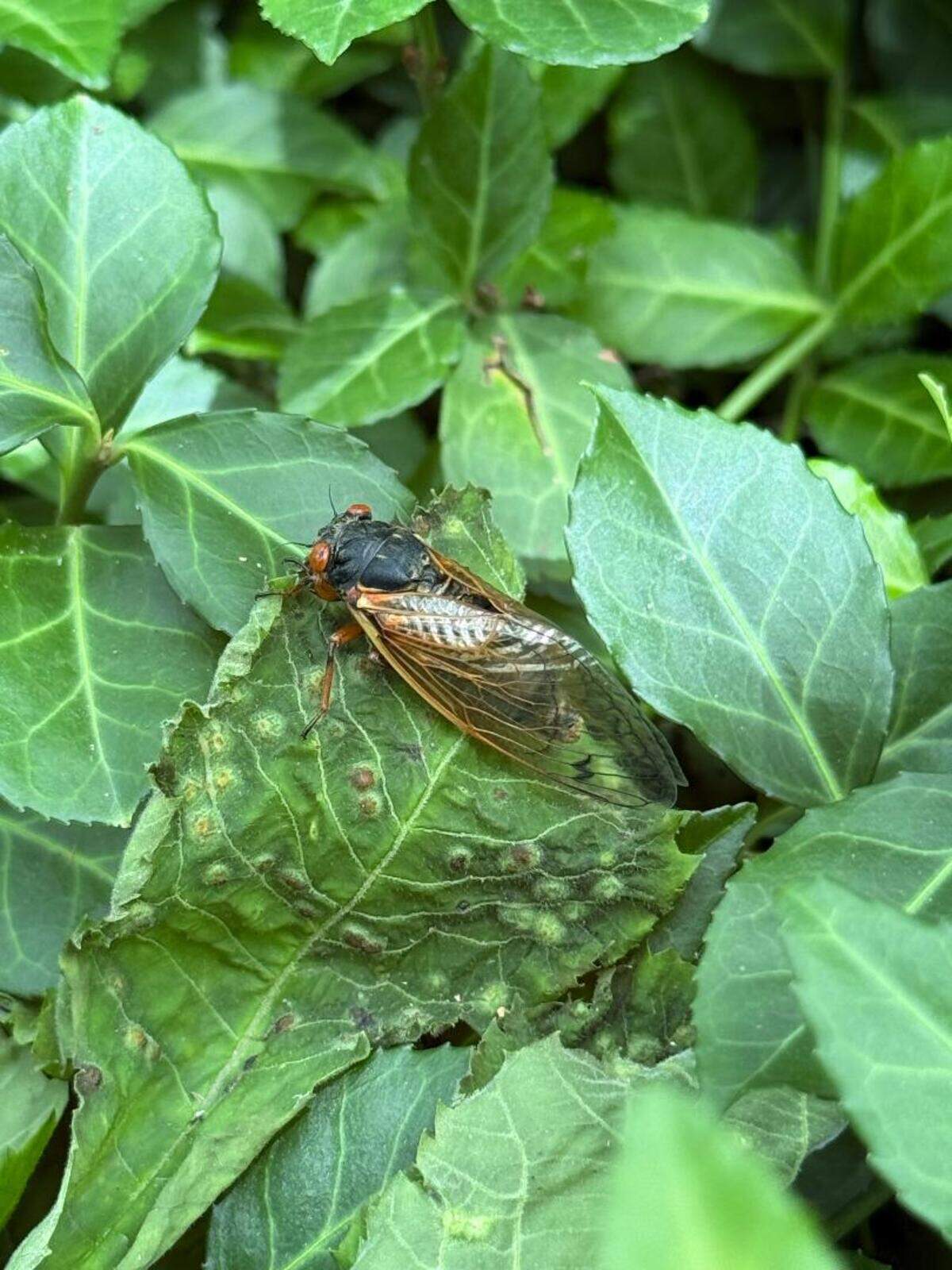
In another encounter, Summer was able to pick up and handle a cicada.
.jpeg "IMG_1616 - Jay Vera Summer (1).jpeg")
“This one was buzzing and walking on the sidewalk on Redding Road across from Kirklevington Park. I picked it up so my dog wouldn’t try to eat it,” Summer said.
Jeffrey Zahn of Lexington reported cicadas have taken over Veterans Park, too.
“They are all over Veterans Park. Sounds from them are deafening. Holes in the trails where they emerged.”
In Lexington’s Hartland neighborhood, Sarah Thompson submitted a photo of shed exoskeletons blanketing the ground.
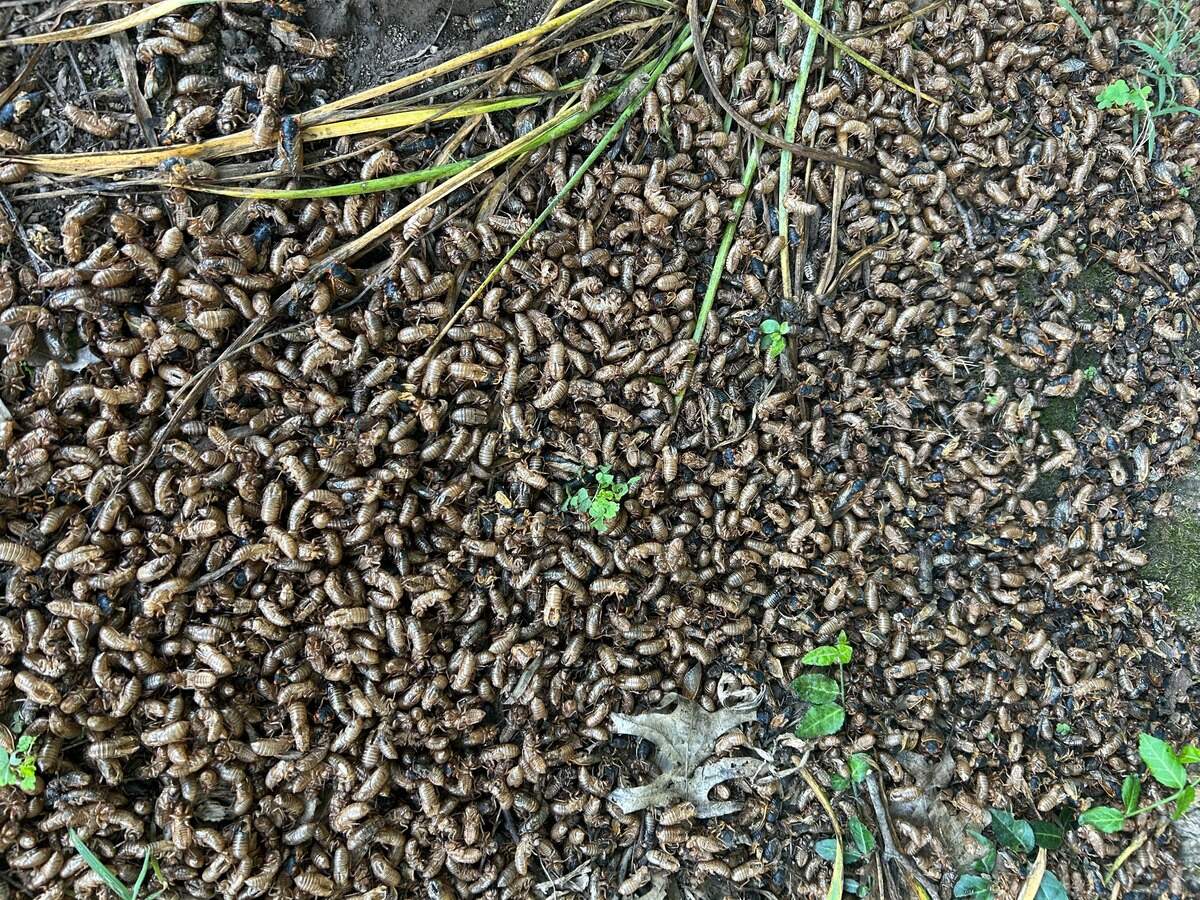
Thompson reported feeling under siege by cicadas: “They are flying around everywhere. There are thousands of shells all over our front and back yard. They are super loud. They are all over my plants and trees. They are also getting into the house and cars somehow.”
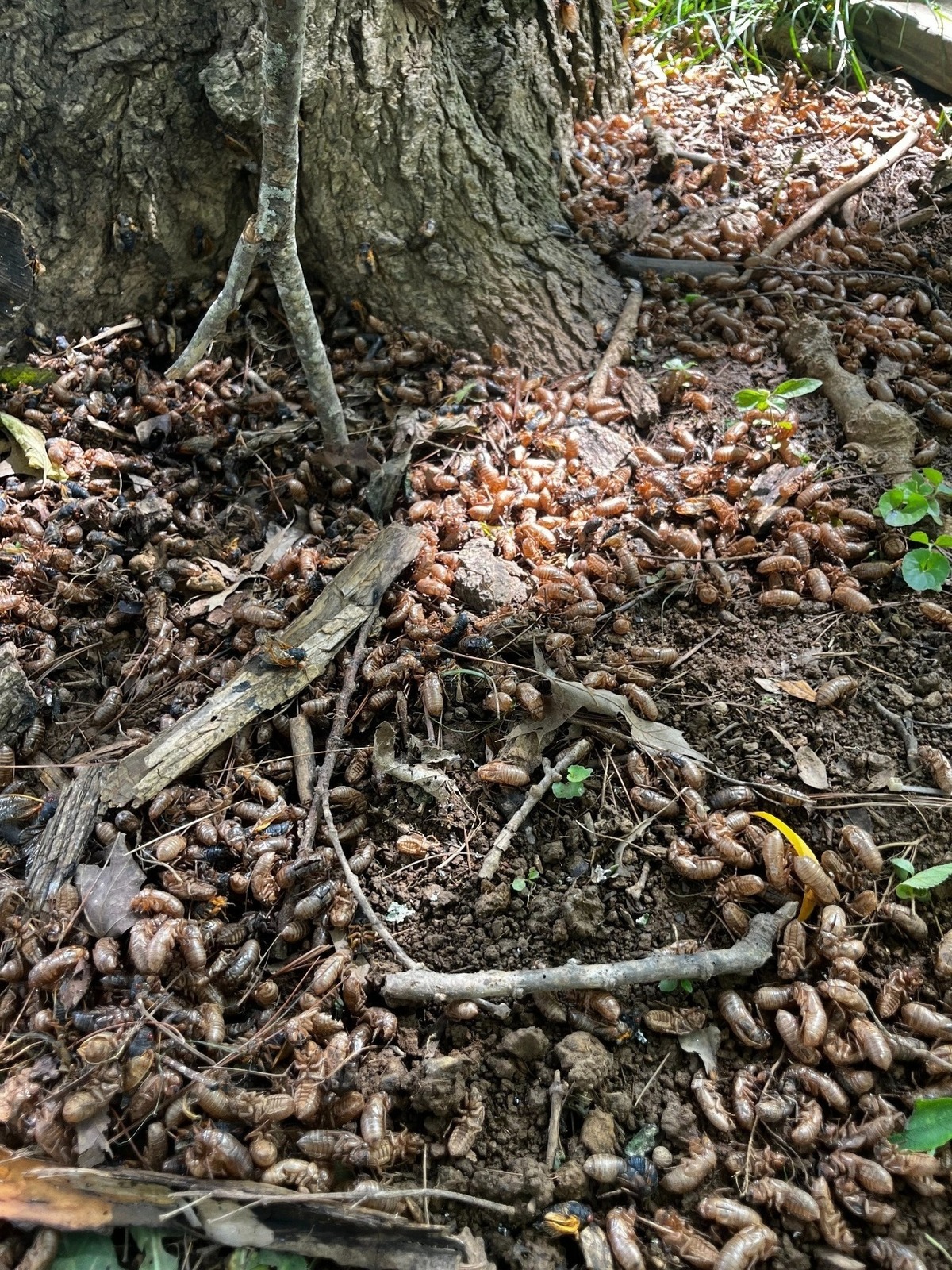
In Cynthiana, Emilie Fuhr found possibly hundreds of abandoned cicada shells near a tree.
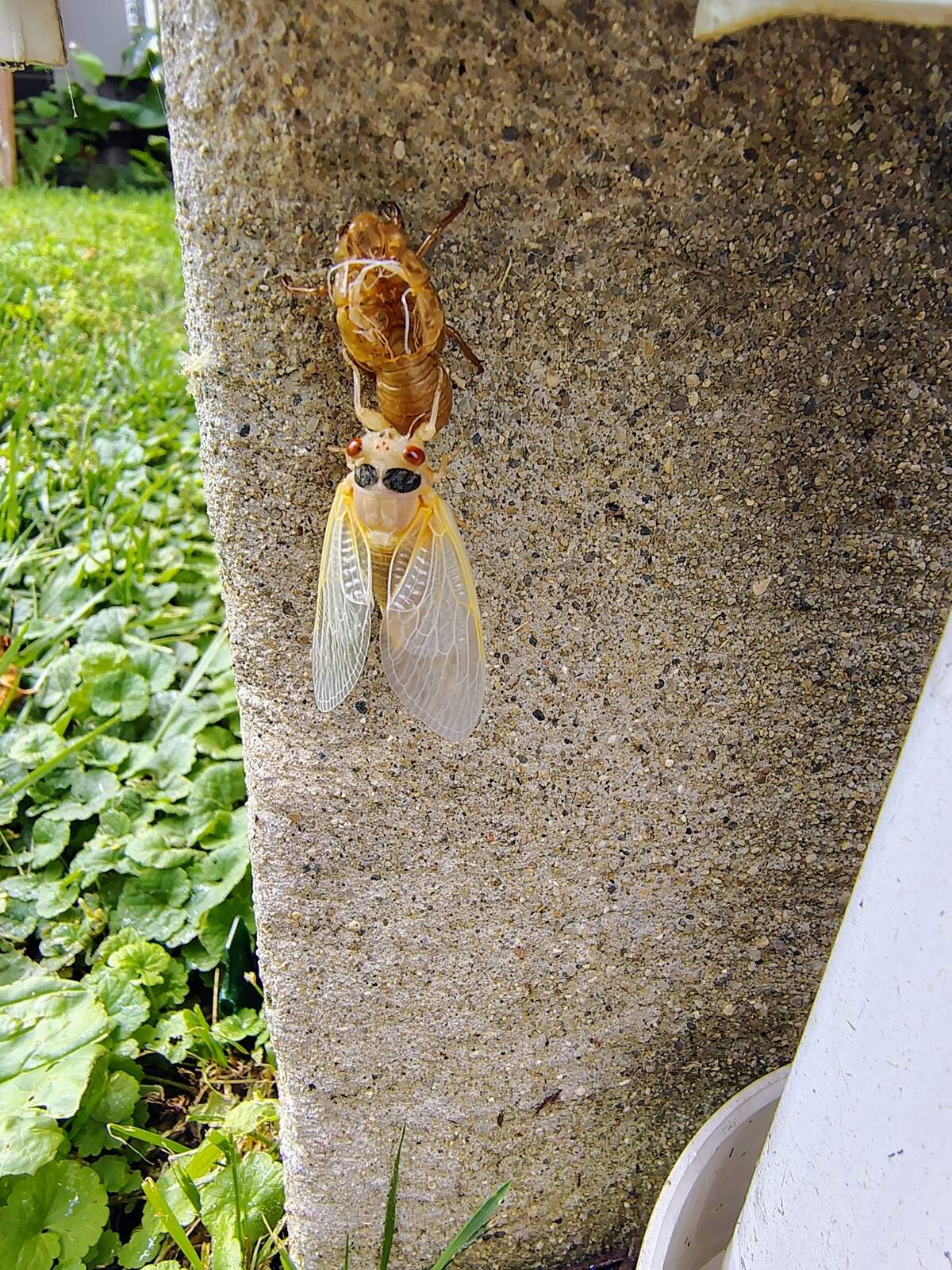
In Lawrenceburg, a reader named Justin (no last name given) shared this incredible photo of a cicada emerging from its exoskeleton. Note how white its body looks as it waits for its new exoskeleton to harden and attain the orange and black coloration fully matured adults display.
Elsewhere in Kentucky
When cicadas first emerge from the ground, their first instinct is to climb and use gravity for help shedding their nymphal exoskeletons.
Typically, they’ll use trees or fence posts, or even something like a tall blade of grass. Lynda K. Roberts in Richmond found one had climbed a daylily’s leaf.
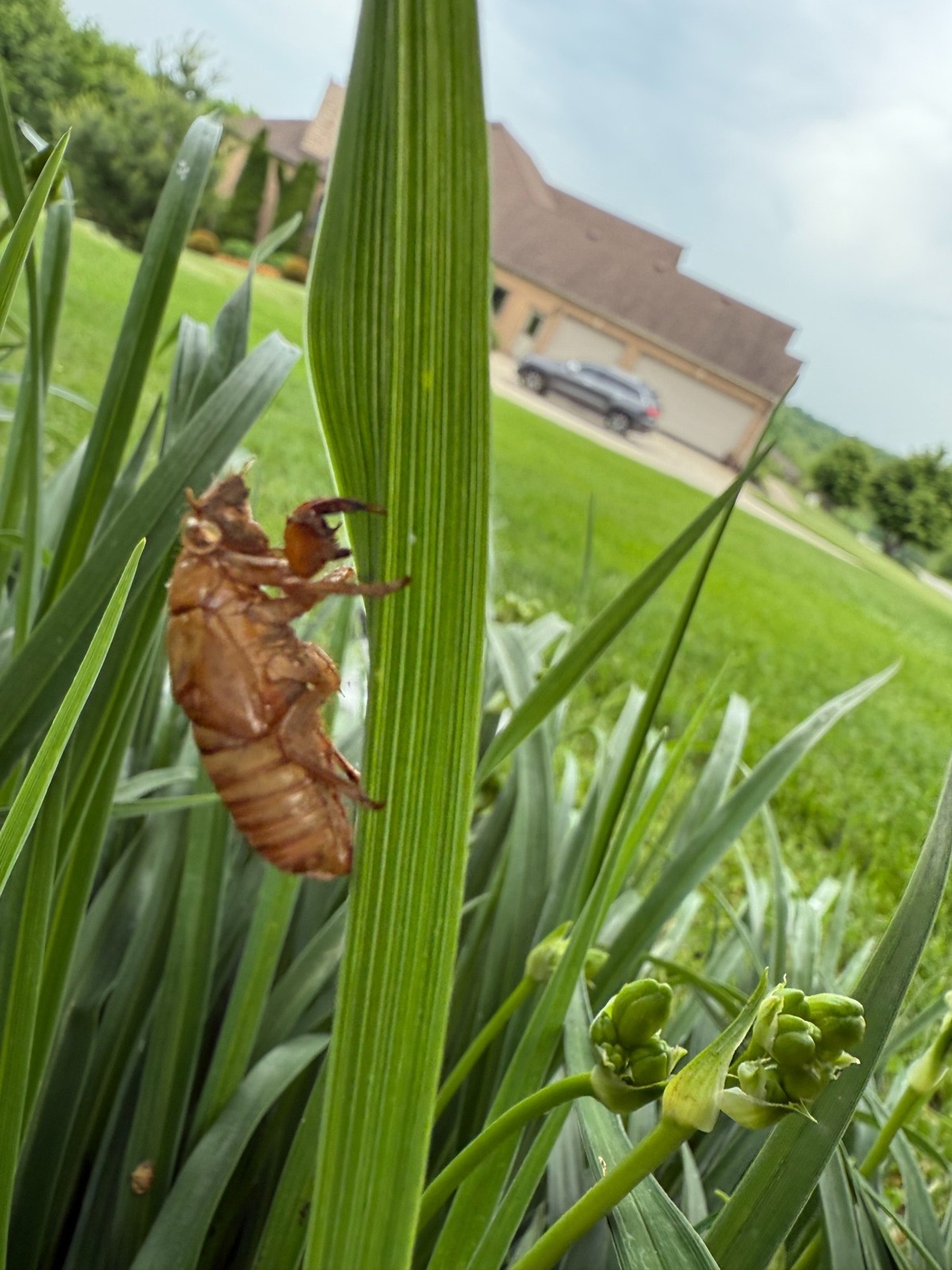
Here’s another example of that, documented by Shannon M. of Whitley City in McCreary County.
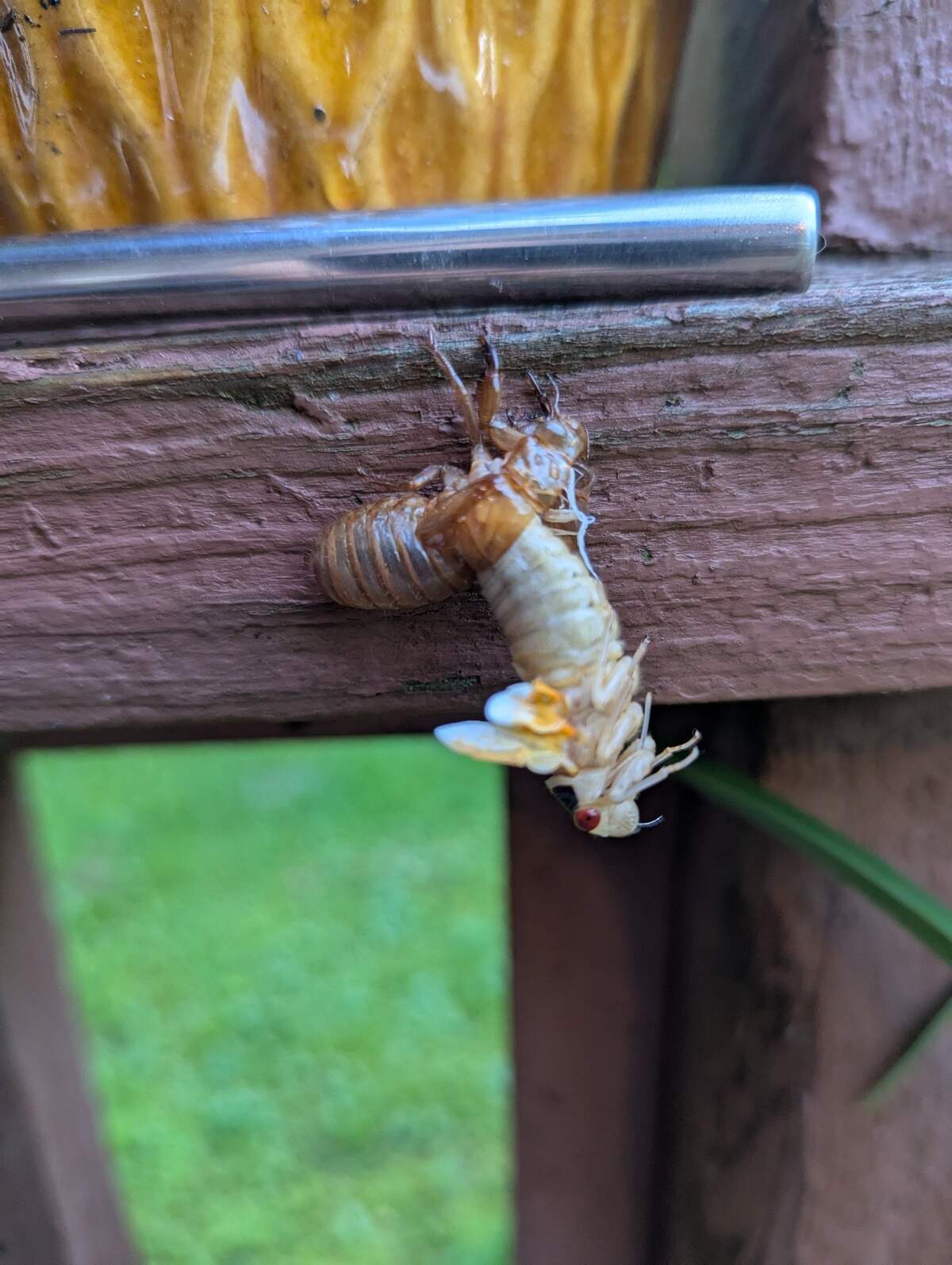
Shannon writes, “We have a large brood on our property of 11 acres. They have been bumbling around, leaving their molted carcass on our deck, trees, even on a vehicle tire. They seem to be noisiest on half of the property, closest to the house.”
The mark of a mature periodical cicada is its red eyes, as George Campbell of Means in Menifee County expertly captured here.
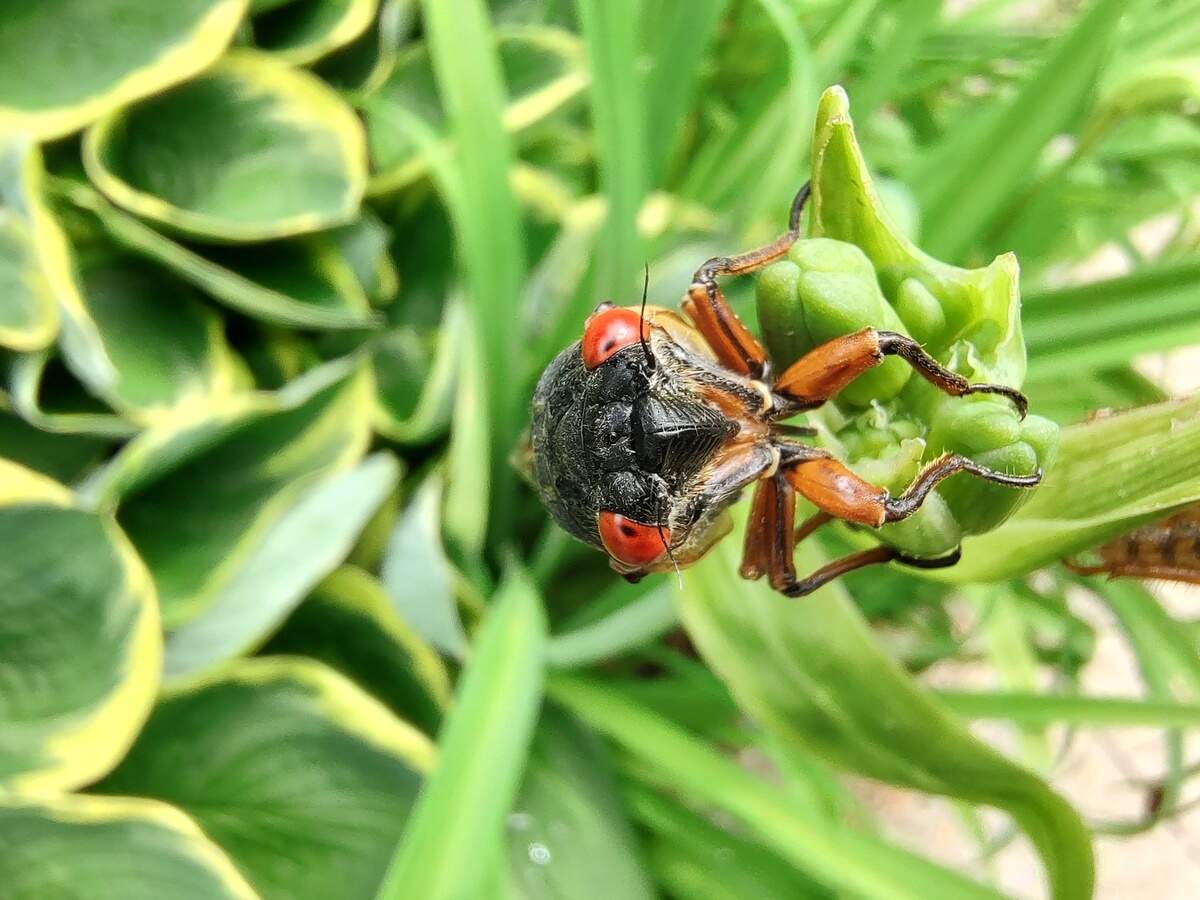
Dave Adkisson of Lexington reports cicadas are also out in full force at Lake Cumberland near Somerset.
“The males are incredibly loud and sound like a distant, screaming police siren,” Adkisson wrote to the Herald-Leader.
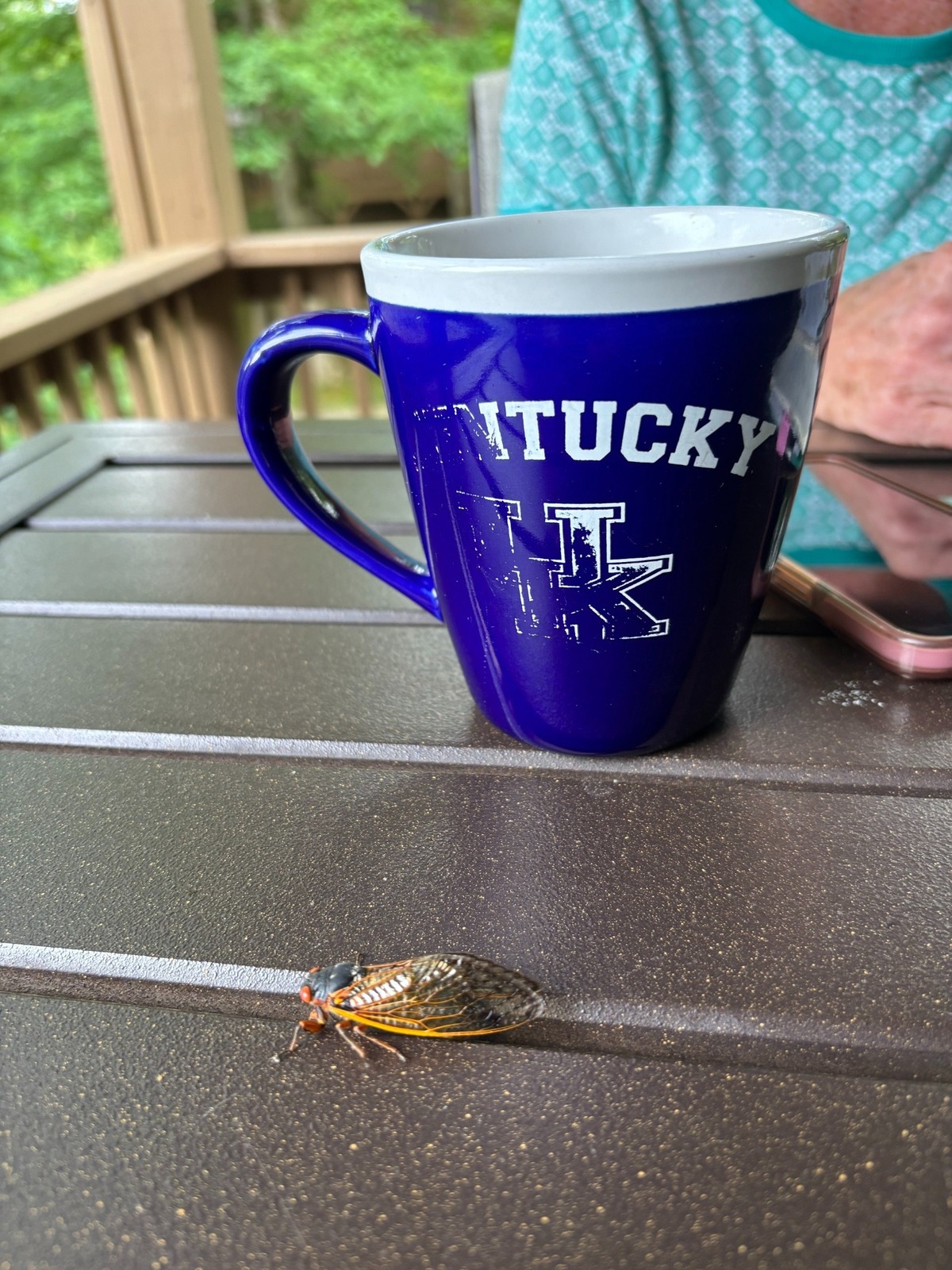
Do you have a question about the environment in Kentucky for our service journalism team? Send us an email at ask@herald-leader.com or connect with us via the Know Your Kentucky form below.