
Kentucky seeing more cases of a dangerous bacterial infection. Know the symptoms
Earlier this month, Kentucky’s Department for Public Health announced two infants died of pertussis, also known as whooping cough, in the last six months.
Neither of the babies, nor their mothers, were vaccinated, state officials said.
Sadly, it’s not surprising to Dr. Sean McTigue of UK HealthCare.
“Every year, we see a smaller and smaller percentage of school children in Kentucky that are fully up to date with all their recommended vaccines, including pertussis,” McTigue told the Herald-Leader last week.
It’s a pattern borne out by state data, which shows whooping cough immunizations for Kentucky kindergarteners have fallen from 93% in 2019 to 86% in 2024.
Last year, following an outbreak the state had not seen in years, Kentucky ultimately reported 543 cases of whopping cough. It was the most seen in the state since 2012. At least 247 cases have been reported this year as of June 6, the Kentucky Department for Public Health said.
For answers to some of the most common questions surrounding whooping cough, we spoke with McTigue, interim chief of the Division of Pediatric Infectious Diseases at the Kentucky Children’s Hospital.
What are the symptoms of whooping cough in adults and babies?
The signs and symptoms of whooping cough can look very different in adults and adolescents than they do in young children and infants.
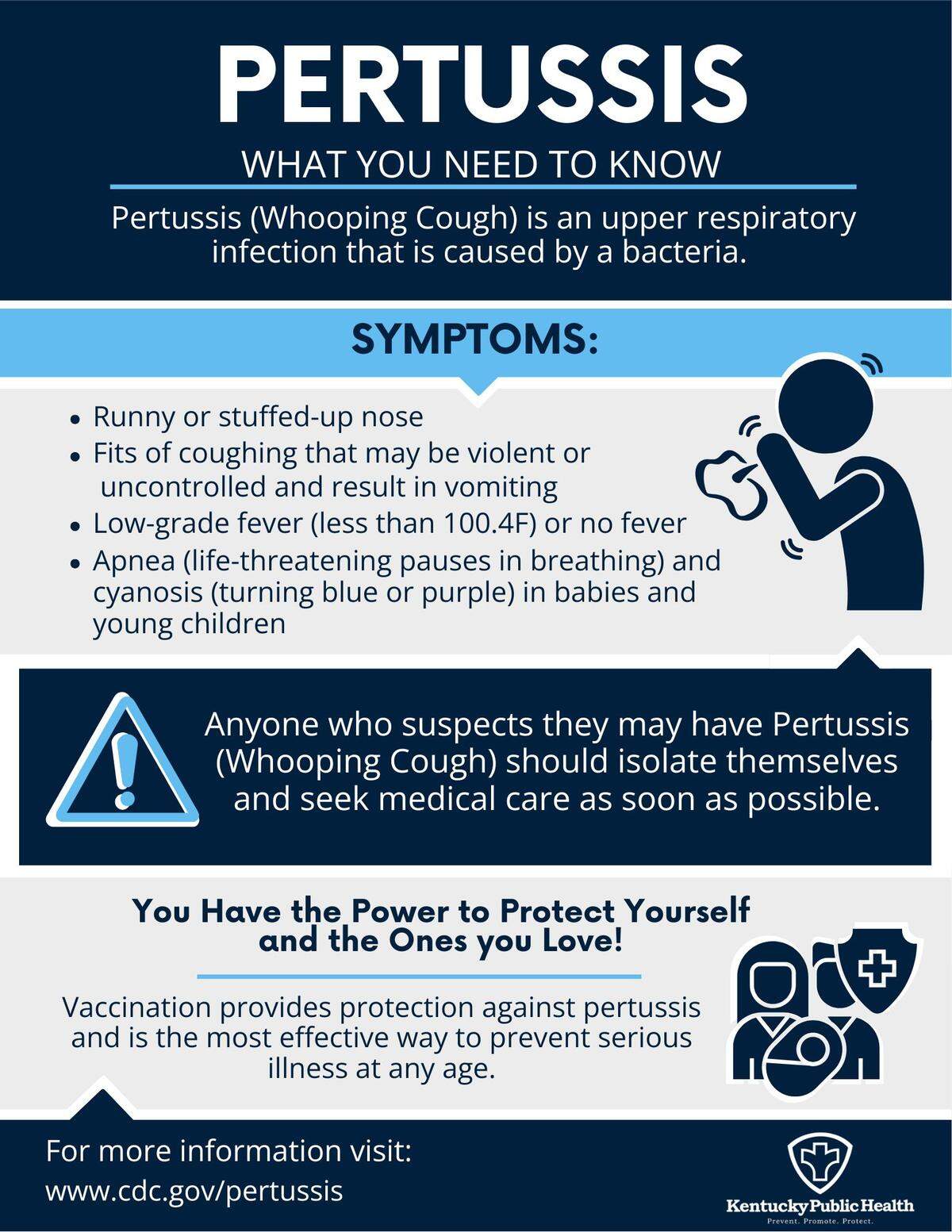
As explained by McTigue, for adults and older children, the illness at first looks like a cold that lasts a week or more before developing into a persistent cough. These coughing spells can last for weeks.
The coughing spells make it difficult to breathe normally, and the illness takes its name from the whooping sounds people make when gasping for breath.
Rather than cough, some babies with pertussis simply stop breathing altogether to the point where they can turn blue. For others, the illness may seem like a common cold all throughout, not just at the beginning, according to the U.S. Centers for Disease Control and Prevention.
The periods of apnea, or pauses in breathing, can have severe consequences for infants, McTigue said.
“If that happens at a time when they’re not being observed … when they’re sleeping in their crib at night, they can be without oxygen for a period of time that can cause serious problems for the brain,” McTigue said. “We’ve seen children present with seizures because they had anoxia, or long lack of oxygen to the brain.”
Can you get the whooping cough vaccine while pregnant?
Yes, and it’s recommended by McTigue and the CDC that expecting mothers do.
“The reason for that is because the highest risk time for an infant to have a poor outcome from pertussis is during the newborn period,” McTigue said.
The first two months of the infant’s life are when it’s most vulnerable to pertussis.
“The best protection for the infant is for mom to be vaccinated, so that mom is making lots of pertussis antibodies, which she then gives to the infant across the placenta,” McTigue said. “The infant is born with a nice, healthy amount of antibodies to pertussis to protect him or her while they’re waiting to start their pertussis vaccine series.”
After two months, the baby can start the DTAP childhood vaccine series, which also protects against diphtheria and tetanus. As explained by McTigue, the vaccines are administered to babies at 2 months, 4 months, 6 months and then after they turn 1 year old.
At age 11 or 12, children can get the Tdap vaccine, and it’s recommended adults should get a booster for the tetanus and diphtheria component every 10 years, according to the Cleveland Clinic.
McTigue said it’s recommended mothers receive their Tdap vaccine during each individual pregnancy, regardless of how close they are together.
It’s also recommended that whenever there’s a pregnancy in a family, adult members consider getting the Tdap vaccine again if they haven’t in the last 10 years.
“They tend to be the most likely sources of infection — parents, grandparents, aunts and uncles,” McTigue said.
What’s the treatment for whooping cough?
As a bacterial infection, whooping cough can be treated with a course of antibiotics prescribed by a doctor. Azithromycin, or a Z-Pak as it’s commonly called, is one go-to option, McTigue said.
According to the CDC, it’s important to treat whooping cough early to make the illness less serious and help prevent the spread to others.
If you think you may have pertussis, contact your primary care provider and get tested with a nasal swab, McTigue said.
“If positive, that person can be treated and prophylaxis can even be given to people who’ve had close contacts with them,” McTigue said, adding that prophylaxis drugs can be helpful for limiting the spread to those most at risk in a household.
Do you have a question about health in Kentucky for our service journalism team? We’d like to hear from you. Fill out our Know Your Kentucky form or email ask@herald-leader.com.