
Tired of KY’s cicadas? They may soon be hunted by creatures with a paralyzing sting
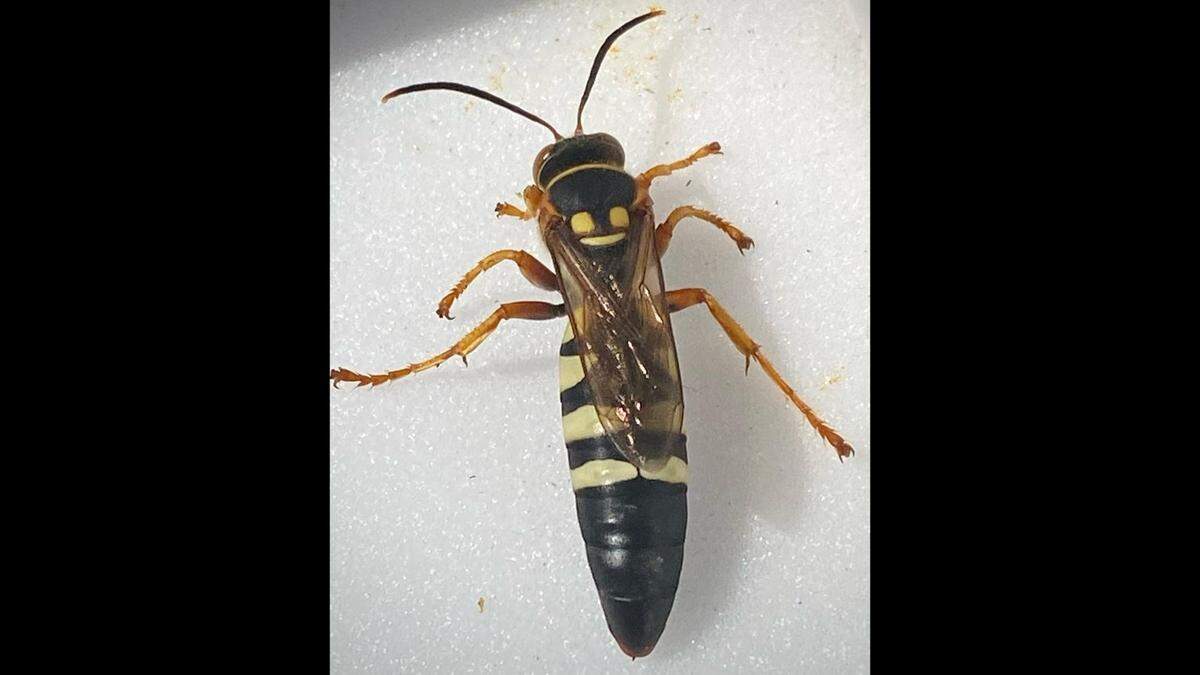
Large yellow and black wasps almost the size of a human thumb will soon be flying around the late Kentucky summer, hunting for cicadas.
The cicada killer wasp is often mistaken for the so-called “murder hornet” found in the Pacific Northwest, and the females can grow to be nearly 2 inches long. They are equipped with a paralyzing sting used to incapacitate and abduct their prey.
While cicada killers don’t normally pose a threat to humans, these burrowing wasps could move into your backyard if there is enough loose soil about. For pest management tips, as well as what to know about this imposing yet fascinating wasp, we spoke with Jonathan Larson, a University of Kentucky entomologist.
What attracts cicada killer wasps?
In Larson’s experience, fears over cicada killer wasps tend to spike whenever there’s a large emergence of periodical cicadas in the state, including current activity from Brood 14.
Periodical cicadas emerge in the spring of their 13th or 17th year. They also tend to be slightly smaller and have bright orange coloring compared to their green-accented annual counterparts.
“We always have people concerned that there will be this surge of cicada killers after a periodical emergence,” Larson said. “As far as I know, I’ve never read of an account where one has actually used periodicals successfully to provision their nests.”
This is because cicada killer wasps prefer to feed on annual cicadas, which emerge later during the hottest months of the summer. The wasps themselves begin their activity in July, and by that point, the periodicals have largely wrapped up their reproductive cycle, Larson said.
If you normally get annual cicadas on your property in late summer, it’s possible you might see a few cicada killers.
As burrowing wasps, they are also known to prefer loose soils in full sun. In some cases, they can damage lawns with their tunneling. Adding mulch and planting a shade tree can be a good way to get rid of them from problem areas, according to Larson. Insecticidal dusts can also be a good option, along with a trusty tennis racket or fly swatter.
Are cicada killer wasps aggressive? What if you get stung?
Cicada killer wasps are not harmful to humans.
Unlike yellowjackets, cicada killers prefer to go it alone. They don’t live in large nests, which gives them little to defend, Larson said.
While the males can be territorial — often hovering at eye level for intimidation — only the females have true stingers, and they prefer to reserve those for their prey.
If you get stung, it won’t feel nice, with Larson comparing it to a hornet’s sting in terms of the pain. Generally though, reports of stings from cicada killer wasps are rare. The only cases Larson is aware of involve humans picking up or handling the wasps, essentially forcing a sting.
If you’re an annual cicada though, the cicada killer wasp delivers a paralyzing sting, and then the real horrors begin.
Once the cicada is incapacitated, the female cicada killer wasp hauls it back to her burrow, where larvae quite literally eat it alive.
A larva will “eat the least important organs first,” and “save the most important organs for last,” Larson said. The result is that the cicada is gradually consumed “from the inside out.” The larvae then pupate and emerge as adult cicada killer wasps during the next season.
Larson notes many insects can survive for extended periods of time without oxygen, so it’s possible the cicada could be alive for at least part of the experience.
Further, Larson is convinced the minds behind the 1979 movie “Alien” took inspiration from the insectoid world. The cicada killer wasp is certainly a reminder of how harsh it can be.
“It’s a bug-eat-bug world, for sure,” Larson said.
Do you have a question about Kentucky critters for our service journalism team? We’d like to hear from you. Fill out our Know Your Kentucky form or email ask@herald-leader.com.
This story was originally published June 17, 2025 at 4:45 AM.