
Shake out the sheets, these KY spiders creep indoors each fall. Are they dangerous?
AI-generated summary reviewed by our newsroom.
- Most spiders mature in late summer or fall and wander indoors seeking warmth.
- Wolf, lynx and web-building spiders drive fall sightings; wolf bites are rare.
- Only black widows and brown recluses pose notable risk; reduce entry and clutter.
Temperatures are dropping, and in Lexington this week, frost is in the forecast, which means you’re likely noticing more bugs creeping indoors. On their tail: spiders searching for a meal, mate and cozy spot to spend the winter.
Kentucky doesn’t have many spider species that are truly dangerous to humans, but the cooler temperatures can create more conflict points.
Here’s what to know to reduce your chance of spider bites and how protect your home from becoming infested.
Which Kentucky spiders are most common in the fall?
Many common spiders reach maturity in the late summer or fall and leave their webs in search of a mate or warm place to wait out the winter. So if you’ve seen an uptick in large spiders in and around your home recently, that’s likely why.
According to University of Kentucky entomologist Jonathan Larson, you’re most likely to encounter wanderers — such as the lynx and wolf spiders — and web-building barn and garden spiders this time of year.
Of that group, wolf spiders are likely the most intimidating, given their larger size and ability to sprint in quick bursts as hunters and ambushers. These aren’t the kind of spiders content to sit around in a web.
Wolf spiders don’t pose much of a threat to humans. Their bites are roughly equivalent to a bee or wasp sting, but are comparatively much rarer. According to University of Kentucky’s entomology department, wolf spiders only bite humans when they’re picked up or otherwise mishandled.
“A lot of the wandering spiders, they’re bigger and stronger. Their venom is less potent,” Larson said. “Wolf spiders are an excellent example of that.”
Still, these large, hairy spiders patterned with a mix of black, brown and gray hair can startle when they do creep indoors. Wolf spiders are among the most common in Kentucky, and they’re often mistaken for brown recluse spiders, one of the state’s two spider species of medical concern.
So which Kentucky spiders are dangerous to humans?
In the Bluegrass State, there are only two spider species that pose any notable medical risk to humans: the brown recluse and the black widow.
Brown recluse spiders
Brown recluses, as the name suggests, are rarely seen out in the open, preferring dark, secluded corners.
“By and large, you’re not going to run into them, they’re in storage areas. They’re deep down in recesses of the home,” Larson said. “They’re not out and about.”
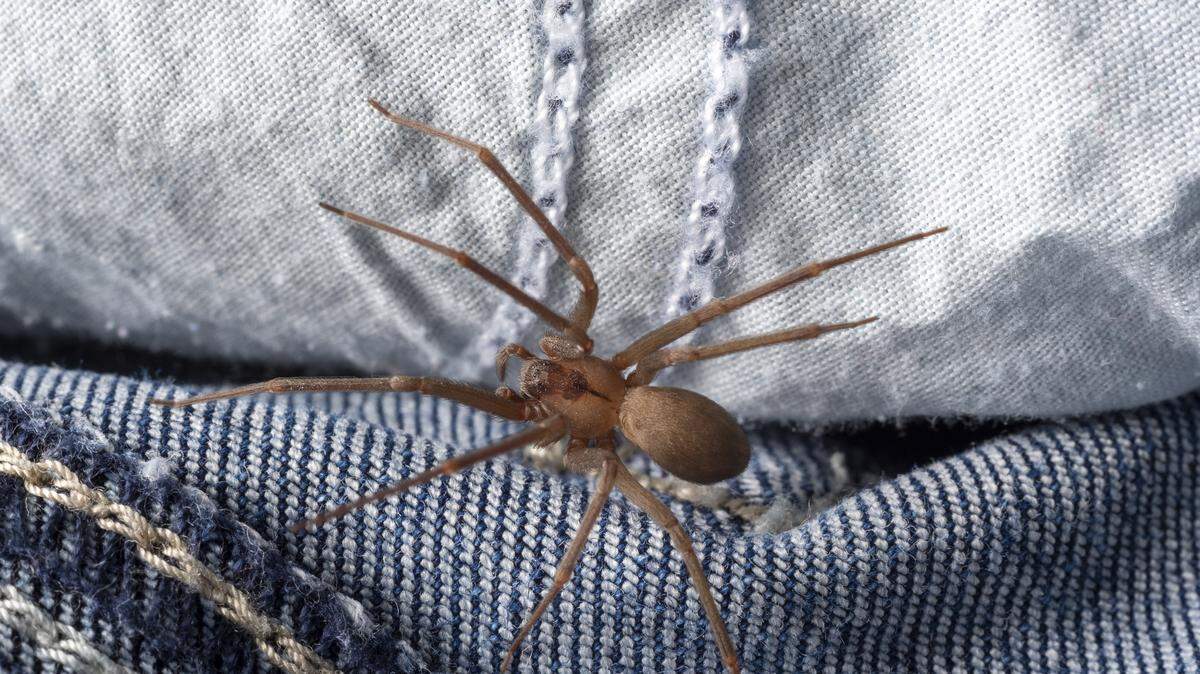
This tan-colored spider sports long legs and violin-shaped pattern on its body, which is why they’re also sometimes called fiddlers or fiddlebacks. While often mistaken for brown recluses, wolf spiders move much faster, are more likely to be out on the prowl and have thicker bodies. If you spot any fast-moving, dark-colored spider running across the floor, it’s likely a wolf spider, not a recluse.
Brown recluse spiders employ a necrotoxin against their prey: cockroaches, crickets and similar insects. While photos of brown recluse bites on humans can look grisly, Larson notes they’re often assigned blame when they don’t deserve it.
“Everything is a brown recluse bite,” he said. “They get a lot of blame, and they’re generally not responsible for very many bites.”
Brown recluse spiders can be found year-round in homes.
Black widow spiders
Black widows, infamous for their shiny black bodies and the red hourglass pattern seen on adult females, deliver a painful bite along with a nerve toxin. Their bites can bring localized swelling, nausea, sweating, stomach cramps and a tightness in the chest. While black widow bites require medical attention, they usually aren’t deadly.
“Their bite is not lethal, but it’s not very pleasant,” Larson said. “I’ve met people who’ve been bitten, and they describe it as the worst flu they’ve ever had.”
Like many other spiders, black widows are timid and only bite when threatened. In Kentucky, they’re rarely found indoors, but when they are, it’s usually in a garage or shed.
Tips for preventing spider bites
While it’s not possible to entirely eliminate spiders, there are certain things you can do to prevent infestations, thus lowering your risk for a bite:
- According to Larson, shake out clothing or bedding that’s been stored for a long time. Brown recluse spiders in particular like quiet, undisturbed spaces.
- De-clutter storage spaces. Get rid of what you don’t need, particularly cardboard boxes and old furniture that makes for a good spider nest.
- Control entry points. Install tight-fitting screens and avoid stacking firewood along the exterior of your home. Switch out all-night floodlights that draw insects (and spiders) for motion-activated lights instead. Certain insecticides can also be sprayed around the exterior of your home.
Correction: This story has been updated to reflect an accurate description of the violin-shaped pattern on a brown recluse’s body.
Do you have a question about Kentucky’s critters for the Herald-Leader? We’d like to hear from you. Fill out our Know Your Kentucky form or email ask@herald-leader.com.
This story was originally published October 22, 2025 at 7:45 AM.